
Genuine Koyo Hub Units Replacement Wholesale Supplier
Most think packaging guarantees authenticity; truly, internal grease heat-resistance and cage material matter more.
Replacing KOYO hub units requires strict installation protocols and authenticity verification to prevent premature failure in harsh environments. The process is not merely about swapping a worn part but involves verifying internal clearance, ensuring proper torque application, and confirming the traceability of the component before it ever touches the axle. For fleet managers and aftermarket suppliers, skipping these steps often leads to catastrophic hub seizure, especially in high-temperature regions where thermal expansion exacerbates any pre-existing fitment errors or material defects.
Having spent years inspecting bearings in workshops and later navigating the complexities of global supply chains, I have seen how quickly a minor oversight can turn into a major operational headache. The difference between a unit that lasts for hundreds of thousands of kilometers and one that fails within weeks often lies in the details that are invisible to the naked eye until it is too late. Understanding these nuances is critical for anyone involved in the distribution or maintenance of heavy-duty vehicle components.
How to Verify Genuine KOYO Hub Units Before Installation?
Traceability and physical inspection are the first defense against fake parts.
The market is flooded with counterfeit bearings that mimic the packaging of premium brands but lack the metallurgical integrity required for heavy loads. A genuine Genuine Koyo Hub Units Replacement Wholesale Supplier will always provide complete traceability documentation, including batch numbers that can be verified against manufacturer records. This is not just bureaucratic paperwork; it is the only way to ensure that the steel used in the bearing races meets the stringent purity standards required to resist fatigue under cyclic loading.
Physical inspection goes beyond checking the logo. The cage material is a critical differentiator. In high-temperature environments, such as those found in Middle Eastern transport routes, non-genuine cages made from inferior polymers or poorly treated steel can shatter under thermal stress. I recall a case where a fleet in Riyadh experienced hub seizures after just two weeks of operation. Upon teardown, the cage fragmentation rate was total, with debris jamming the rollers and causing immediate lockup. This is a hallmark of counterfeit products that fail to meet the thermal stability specifications of the original design.
| Inspection Point | Genuine Unit Characteristics | Counterfeit Unit Indicators |
|---|---|---|
| Packaging & Labeling | High-quality print, verifiable batch codes, consistent font | Blurry text, missing batch codes, spelling errors |
| Cage Material | Uniform color, smooth finish, high-temperature resistant polymer or steel | Brittle feel, irregular color, prone to deformation |
| Grease Quality | Consistent texture, high-temperature rating, no separation | Oily separation, inconsistent texture, low-temperature hardening |
| Surface Finish | Mirror-like raceways, precise machining marks | Rough surfaces, visible tool marks, uneven grinding |
Verifying these aspects before installation saves time and money. It ensures that the Genuine Koyo Hub Units Replacement Wholesale Supplier you are working with provides products that can withstand the rigors of daily operation. Without this step, even the most careful installation cannot compensate for substandard materials.
What Are the Critical Pre-Installation Checks?
Checking internal clearance and hub housing tolerances prevents immediate failures.
Before mounting a new hub unit, it is essential to verify the internal clearance. Most think tighter fit equals better performance; actually, incorrect internal clearance causes rapid overheating. If the clearance is too tight, the rollers will jam as they expand under operating heat, leading to premature wear and potential seizure. Conversely, excessive clearance can cause vibration and noise, accelerating fatigue in the bearing races.
The hub housing itself must also be inspected for wear and dimensional accuracy. Any damage to the seating surface can compromise the fit of the hub unit, leading to misalignment and uneven load distribution. In one instance, a maintenance team skipped this check, assuming the housing was fine because it looked clean. The resulting misalignment caused uneven wear on the bearing rollers, reducing the service life by a significant margin. This highlights the importance of using precision measuring tools to verify housing dimensions against OEM specifications.
Internal clearance measurement methods vary depending on the type of hub unit, but the principle remains the same: ensure the bearing has enough room to operate without excessive play or binding. This step is crucial for maintaining the integrity of the Genuine Koyo Hub Units Replacement Wholesale Supplier product once it is in service. Ignoring it invites failure, regardless of the quality of the bearing itself.
What Is the Step-by-Step Replacement Procedure?
Proper torque application and seal installation ensure optimal grease retention.
Installing a hub unit is a precise procedure that requires attention to detail at every step. First, clean the axle and hub housing thoroughly to remove any dirt, rust, or old grease. Contaminants can act as abrasives, damaging the new bearing surfaces during operation. Next, apply a thin layer of anti-seize compound to the axle shaft to facilitate future removal, but avoid getting it on the bearing surfaces themselves.
When mounting the hub unit, use a press or a suitable driver to ensure even force application. Hammering directly on the bearing can damage the races and rollers, compromising the integrity of the Genuine Koyo Hub Units Replacement Wholesale Supplier product. Once seated, install the axle nut and tighten it to the specified torque value using a calibrated torque wrench. Incorrect torque can lead to either loosening of the nut or excessive preload on the bearing, both of which are detrimental to performance.
Finally, install the seal carefully to ensure it sits correctly and retains grease within the hub. A damaged or improperly seated seal will allow contaminants to enter and grease to escape, leading to rapid bearing failure. This step is often overlooked but is critical for long-term reliability. Following these steps ensures that the hub unit performs as designed, providing reliable service for the vehicle.
How to Prevent Post-Installation Overheating?
Correct break-in procedures and regular temperature monitoring extend service life.
After installation, it is important to follow a break-in procedure to allow the bearing components to settle. This involves driving the vehicle at moderate speeds for a short period, avoiding heavy loads or sudden stops. During this time, monitor the hub temperature regularly. Excessive heat indicates a problem, such as incorrect clearance, improper torque, or contamination.
Regular temperature monitoring should continue throughout the service life of the hub unit. Infrared thermometers can be used to check hub temperatures during routine maintenance stops. A sudden increase in temperature compared to previous readings can signal early-stage failure, allowing for proactive replacement before a breakdown occurs. This proactive approach minimizes unplanned downtime and extends the overall service life of the vehicle.
For fleets operating in harsh environments, such as mining or construction sites, more frequent monitoring may be necessary. Dust, moisture, and extreme temperatures can accelerate wear, making vigilance even more critical. By adopting these practices, operators can maximize the return on investment from their Genuine Koyo Hub Units Replacement Wholesale Supplier purchases, ensuring that each unit delivers its full potential in terms of durability and performance.
Conclusion
Authenticity and precision define the longevity of heavy-duty hub units.
Replacing hub units is not just a mechanical task but a strategic decision that impacts operational efficiency and safety. By verifying authenticity, checking clearances, following precise installation steps, and monitoring performance, operators can prevent premature failures. Partnering with a reliable source ensures access to genuine products that meet these rigorous demands, supporting sustained productivity in challenging conditions.
Mentioned in this article
Koyo / JTEKT bearings from this guide
These are the Koyo / JTEKT bearing types discussed above. Open any product to check its details, or quote it together with the rest of your repair.

Railway Bearings
Genuine Koyo 32011 32209 32212 Tapered Roller Bearing for Railway Locomotive Axle Boxes
View Product
Railway Bearings
Genuine Koyo Tapered Roller Bearings 32019 32020 32021 32022 32024 for Railway Machinery
View Product
Tapered Roller Bearings
Genuine Koyo Tapered Roller Bearing 32212 32213 32214 32215 32216 for Fan Spare Parts
View Product
Tapered Roller Bearings
Genuine Koyo 30305D 30306D 30307D 30308d Tapered Roller Bearing Low Friction
View ProductKeep reading
More bearing selection guides for repair shops
Practical guides from KOYO Bearing Supplier on identifying Koyo / JTEKT bearings for farm machinery, construction equipment and power transmission repairs.
 Installation & Maintenance
· 6 min read
Auto Bearing Jobs Workshop Checklist: Wholesale Supplier
Prevent premature auto bearing failure with a standardized auto bearing installation checklist that addresses critical storage, inspection, and mounting protocols. Verify rotational smoothness, maintain…
Read the Guide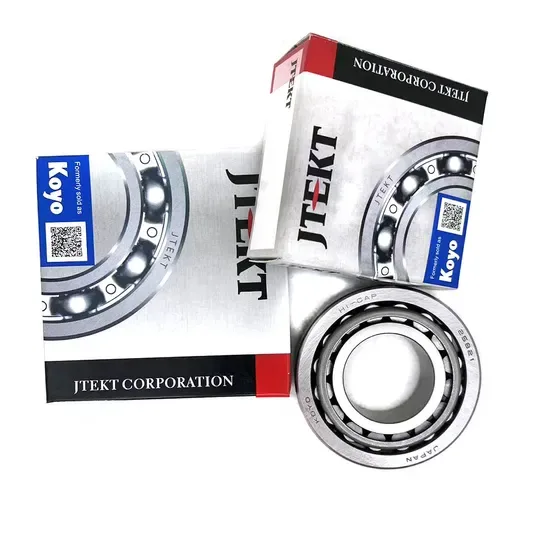 Installation & Maintenance
· 7 min read
Genuine Bearing Supplier for Garage Tools: Wholesale Bulk & MRO
Prevent premature failures with the right garage tools for bearing jobs by addressing installation errors rather than manufacturing defects. Learn systematic removal and pressing…
Read the Guide Installation & Maintenance
· 8 min read
Transmission Bearing Noise Diagnosis: Genuine Wholesale Supplier
Master transmission bearing noise diagnosis to distinguish installation errors from clearance defects in harsh environments. Use ultrasonic detection and spectral analysis to identify root…
Read the Guide
Bearing enquiry
Send your machine details. Get a written Koyo / JTEKT quote.
KOYO Bearing Supplier quotes a single bearing position or every bearing in an assembly on one enquiry, matched to your machine model and application, with model, quantity, price, lead time and quote validity in writing.
- WhatsApp+1 (702) 981-5880
- Emailinfo@koyoome.com
- Address8 Research Drive, Greenville, SC 20627, USA
"When a Koyo bearing failed on a harvest machine during the season, we needed a replacement urgently. The supplier identified the correct Koyo reference, shipped same-day, and the machine was back in the field within the day."

Request a Bearing Quote
Tell us the machine and the bearing position. Photos of the markings can follow on WhatsApp.