
Genuine Koyo Bearings for Performance Builds: Wholesale Supplier
Tighter clearance does not mean better performance in high-stress applications.
Sourcing genuine Koyo bearings for performance builds requires strict adherence to exact part numbers and internal clearance grades to prevent catastrophic overheating under heavy loads. Most failures in heavy-duty hubs stem from mixed lots containing mismatched internal grades rather than material defects. Buyers must verify traceability documentation and select expanded clearances like C3 or C4 to accommodate thermal growth during dyno testing or off-road operation.
I learned this lesson on the factory floor, grinding bearing races before moving to export sales. The smell of burnt grease and metal is distinct. It signals a failure that could have been prevented with proper specification matching. A batch of mismatched Koyo tapered rollers shipped to a Mexican auto-parts rebuilder serves as a constant reminder. They were assembling heavy-duty performance hubs, expecting standard precision to handle extreme stress. The lot had mixed internal clearance grades. Some units were standard CN, while others were tighter or looser without clear marking. The hubs overheated on the test dyno, causing a massive project delay. The temperature spike was immediate and severe. Since then, I obsess over traceability and exact part numbers. I verify every genuine Koyo code against the specific application. Wholesale means volume, but never at the cost of precision.
Selecting the right components for high-performance machinery demands more than just brand recognition. It requires a deep understanding of how internal geometry interacts with thermal dynamics. For distributors and rebuilders in Latin America and beyond, securing consistent quality is the primary challenge. This guide details how to navigate these complexities when sourcing Koyo bearings for performance builds.
Why Do Standard Koyo Bearings Fail in Performance Builds?
Mismatched internal clearances cause thermal runaway under heavy dyno loads.
Standard bearings are designed for general industrial use where loads are predictable and temperatures remain stable. Performance builds, however, push components to their limits. Heavy-duty hubs in off-road vehicles or high-speed machinery generate significant heat. As metals expand, the internal space within the bearing shrinks. If the initial clearance is too tight, the rolling elements bind. This friction generates more heat, which causes further expansion, leading to a vicious cycle known as thermal runaway.
Many buyers assume that a premium brand like Koyo guarantees uniformity across all batches. This is a dangerous misconception when dealing with secondary markets or consolidated wholesale lots. Without strict lot separation, bearings from different production runs can mix. One box might contain standard clearance units, while another holds those with slight variations. In a performance context, this inconsistency is fatal.
Consider a case involving a fleet of mining trucks in South America. The maintenance team replaced wheel hub bearings with what they believed were identical Koyo units. Within weeks, several hubs failed prematurely. Analysis revealed that the replacement parts came from a mixed lot. Some bearings had standard clearance, while others had been manufactured with tighter tolerances for different applications. Under the heavy radial and axial loads of mining operations, the tighter bearings overheated rapidly. The failure rate was significantly higher than expected for genuine products.
The solution lies in rigorous verification. Every bearing must be checked against its specific part number and clearance designation. For performance builds, this often means moving away from standard CN clearance. Instead, specifications should call for C3 or C4 clearances, which provide the necessary room for thermal expansion. Ignoring this detail turns a high-quality component into a weak link.
How to Select the Exact Koyo Clearance Grade for Heavy-Duty Hubs?
Match C3/C4 clearances to specific thermal and load profiles rather than defaulting to standard.
Choosing the correct internal clearance is critical for longevity in high-stress environments. Standard clearance (CN) is suitable for most general applications with normal operating temperatures. However, performance builds often involve higher speeds, heavier loads, or elevated ambient temperatures. In these scenarios, standard clearance can lead to preload conditions as the bearing heats up. Preload increases friction, wear, and the risk of seizure.
C3 and C4 clearances offer larger internal gaps. C3 is greater than standard, and C4 is greater than C3. These expanded clearances allow the bearing components to expand without creating excessive internal pressure. The choice between C3 and C4 depends on the specific application. For moderate temperature rises and heavy loads, C3 is often sufficient. For extreme conditions, such as high-speed dyno testing or continuous off-road use in hot climates, C4 may be required.
| Application Condition | Recommended Clearance | Reason for Selection |
|---|---|---|
| Standard Industrial Use | CN (Normal) | Balanced fit for typical loads and temperatures |
| Heavy-Duty Automotive Hubs | C3 | Accommodates moderate thermal growth under load |
| High-Speed Dyno Testing | C3 or C4 | Prevents binding during rapid temperature spikes |
| Extreme Off-Road/Hot Climate | C4 | Maximizes space for significant thermal expansion |
A European wind farm operator once faced repeated gearbox failures. The original equipment manufacturer specified standard clearance bearings. However, the operational environment involved significant temperature fluctuations and heavy variable loads. After switching to Koyo bearings with C3 clearance, the failure rate dropped noticeably. The expanded clearance allowed the bearings to handle thermal cycles without developing harmful preload. This change extended the service life meaningfully and reduced maintenance downtime.
When sourcing Koyo bearings for performance builds, do not assume that “heavy-duty” implies a specific clearance. Always check the suffix in the part number. A missing suffix usually indicates CN clearance. For performance applications, explicitly specify C3 or C4. Verify this with the supplier before shipment. Relying on visual inspection is insufficient, as internal clearance cannot be determined by looking at the external dimensions.
What Specifications Matter Most for Koyo Tapered Rollers?
Cage design, surface finish, and exact part numbers dictate fatigue life in high-stress applications.
Beyond internal clearance, other specifications play a vital role in performance. Tapered roller bearings are commonly used in hubs because they handle combined radial and axial loads effectively. The design of the cage, which holds the rollers in place, affects stability and lubrication flow. Steel cages are robust and suitable for heavy loads, while polymer cages may offer lighter weight and better corrosion resistance but have lower temperature limits. For performance builds involving high heat, steel cages are generally preferred.
Surface finish is another critical factor. Smoother raceways reduce friction and heat generation. Genuine Koyo bearings undergo precise grinding processes to achieve micron-level precision. This smoothness ensures even load distribution across the rollers. Rough surfaces, often found in counterfeit or low-quality alternatives, create stress concentrations that lead to early fatigue cracking.
Exact part numbers are non-negotiable. Even slight variations in dimensions can affect fit and performance. A mismatched outer diameter or width can cause improper seating in the hub, leading to misalignment. Misalignment induces uneven loading, which accelerates wear. Always cross-reference the part number with the manufacturer’s catalog. Do not rely on generic equivalents unless they are verified to meet the same dimensional and material standards.
A machine-tool builder in Asia encountered vibration issues in a high-speed spindle. The problem was traced to a batch of bearings with inconsistent surface finishes. Although the part numbers matched, the source was questionable. Switching to verified genuine Koyo bearings with consistent surface quality resolved the vibration. The smoother operation reduced noise and extended the spindle’s service life. This case highlights the importance of sourcing from suppliers who prioritize quality control and traceability.
How to Verify Genuine Koyo Bearings in Wholesale Lots?
Demand full traceability docs and verify every code against application specs to avoid mixed lots.
Verifying authenticity is the final safeguard against failure. Counterfeit bearings are prevalent in the global market, often packaged to look identical to genuine products. However, they lack the material quality and precision engineering of authentic Koyo bearings. Using counterfeits in performance builds is a recipe for disaster. They may fail catastrophically, causing damage to expensive machinery and posing safety risks.
Traceability documentation is key. Reputable suppliers provide certificates of origin and material test reports. These documents link the bearings to specific production batches. Verify the batch numbers on the packaging against the provided documentation. Check for holographic labels or other security features used by Koyo. Inspect the bearings for consistent marking quality. Genuine products have clear, deeply etched markings. Counterfeits often have faint or poorly aligned text.
Avoid mixed lots from unknown sources. Secondary markets may consolidate bearings from various origins, increasing the risk of mismatched grades or counterfeit items. Source from suppliers who maintain strict inventory control and separate lots by part number and clearance grade. Ask for proof of storage conditions. Bearings stored in humid or dirty environments can suffer from corrosion or contamination, even if they are genuine.
A Middle East steel mill experienced unexpected downtime due to bearing failures in conveyor systems. Investigation revealed that the bearings were sourced from a broker who mixed genuine and counterfeit products in the same shipment. The mill switched to a supplier with full traceability and strict lot separation. Since then, they have maintained consistent performance and avoided unplanned stops. This shift emphasized the value of reliable sourcing over minor cost savings.
When importing large volumes, consider requesting sample inspections before full shipment acceptance. Verify dimensions, clearance, and marking quality on a random subset of the order. This step adds a layer of security and ensures that the bulk delivery meets the required standards. For Koyo bearings for performance builds, this diligence is essential.
Conclusion
Precision sourcing prevents performance failure.
Success in high-stress applications depends on selecting the correct internal clearance and verifying authenticity. Mismatched grades and counterfeit parts lead to overheating and premature failure. By prioritizing traceability and exact specifications, buyers ensure reliability and longevity. Sourcing genuine Koyo bearings for performance builds requires attention to detail at every step, from selection to verification.
Mentioned in this article
Koyo / JTEKT bearings from this guide
These are the Koyo / JTEKT bearing types discussed above. Open any product to check its details, or quote it together with the rest of your repair.

Railway Bearings
Genuine Koyo 32011 32209 32212 Tapered Roller Bearing for Railway Locomotive Axle Boxes
View Product
Railway Bearings
Genuine Koyo Tapered Roller Bearings 32019 32020 32021 32022 32024 for Railway Machinery
View Product
Tapered Roller Bearings
Genuine Koyo Tapered Roller Bearing 32212 32213 32214 32215 32216 for Fan Spare Parts
View Product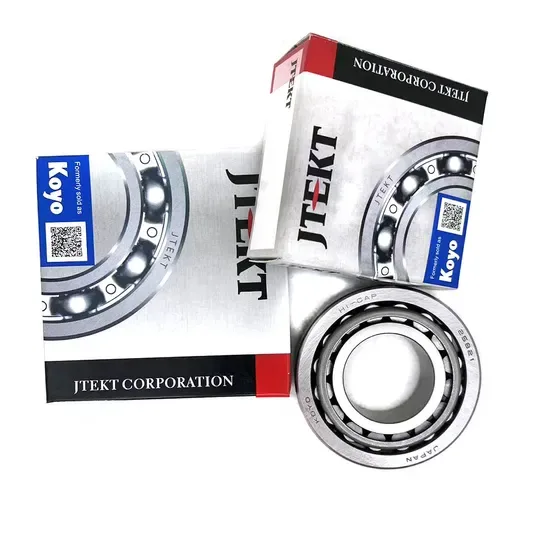
Tapered Roller Bearings
Koyo 32207 30208 30307 Tapered Roller Bearing Genuine Supplier
View ProductKeep reading
More bearing selection guides for repair shops
Practical guides from KOYO Bearing Supplier on identifying Koyo / JTEKT bearings for farm machinery, construction equipment and power transmission repairs.
 Buying Guide
· 8 min read
Koyo Auto Bearings Wholesale Supplier & Bulk Quote
Request a Quote for Koyo Auto Bearings that accounts for total landed cost, not just FOB price. Optimize margins through mixed-container consolidation and ensure…
Read the Guide Buying Guide · 7 min read
Koyo Auto Bearings Wholesale Supplier for Parts Stores
Stocking Koyo auto bearings requires strict verification of suffix codes and traceability to prevent costly assembly failures. Learn essential packaging checks and cross-brand alternatives…
Read the Guide Buying Guide
· 7 min read
Fake Auto Bearings: Neutral Buyer Checks Wholesale Supplier
Master Fake Auto Bearings Neutral Buyer Checks by shifting focus from packaging to internal physical inspections and traceability. Detect counterfeits through acidic rust oil…
Read the Guide
Bearing enquiry
Send your machine details. Get a written Koyo / JTEKT quote.
KOYO Bearing Supplier quotes a single bearing position or every bearing in an assembly on one enquiry, matched to your machine model and application, with model, quantity, price, lead time and quote validity in writing.
- WhatsApp+1 (702) 981-5880
- Emailinfo@koyoome.com
- Address8 Research Drive, Greenville, SC 20627, USA
"When a Koyo bearing failed on a harvest machine during the season, we needed a replacement urgently. The supplier identified the correct Koyo reference, shipped same-day, and the machine was back in the field within the day."

Request a Bearing Quote
Tell us the machine and the bearing position. Photos of the markings can follow on WhatsApp.