
Genuine Bearings for Manual Transmissions Wholesale Supplier
Cheaper bearings often cost more in the long run.
Selecting the right bearings for manual transmissions requires strict adherence to clearance and material standards to prevent premature failure and costly downtime. The core issue is not just the brand label, but the verification of internal geometry and cage integrity against original equipment specifications.
At a recent trade fair in Hanover, a German buyer shook his head while examining our tapered roller bearings. He recounted how previous batches of so-called “original parts” failed with noise and seizure after less than twenty thousand kilometers. Upon disassembly, the cage material and internal clearance were completely out of specification. These were merely rebranded counterfeits. Having spent years in quality inspection workshops before moving into international trade, I have witnessed too many such painful lessons. This experience drives my insistence on genuine traceability and precise model matching. When purchasing manual transmission bearings, focusing solely on unit price is a mistake. Incorrect clearance and substandard materials lead to warranty claims that can far exceed the initial savings.
Understanding the technical nuances of bearings in manual transmissions is essential for distributors and repair groups aiming to minimize returns and maintain reputation.
Why Do Manual Transmission Bearings Fail Prematurely?
Incorrect clearance and substandard cage materials are the primary culprits.
Manual gearboxes operate under high shock loads and varying thermal conditions. A common misconception is that any bearing fitting the shaft diameter will suffice. However, the internal dynamics of a manual transmission demand specific radial and axial clearances. If the clearance is too tight, thermal expansion during operation causes excessive preload, leading to rapid heat generation and seizure. If too loose, it results in gear misalignment, noise, and accelerated wear on synchronizers.
I once consulted with a heavy fleet repair workshop struggling with persistent gearbox noise. They had switched to a lower-cost supplier to reduce overhead. Within months, their comeback rate spiked. We analyzed the failed units and found that the cages, made from inferior stamped steel rather than machined brass or reinforced polymer, had deformed under load. The rollers skewed, causing edge loading on the races. This is a classic failure mode that does not appear immediately but manifests as catastrophic failure after short service intervals.
Another frequent issue is the use of standard industrial bearings where automotive-specific grades are required. Automotive applications often require tighter tolerances and specific heat treatment processes to handle the stop-start nature of vehicle operation. Using a general-purpose deep-groove ball bearing in a position designed for an angular contact or tapered roller configuration compromises the load distribution.
For suppliers of bearings in manual transmissions, understanding these failure modes is critical. It allows for better technical support when advising customers who might be tempted by lower-priced alternatives. Highlighting the risk of hidden labor costs associated with repeated failures can shift the conversation from price to value.
How to Select the Right Bearing for Manual Gearboxes?
Matching load ratings and clearance to specific shaft applications is critical.
Selection is not merely about finding a part number match. It involves verifying the dynamic and static load ratings against the specific gearbox design. Manual transmissions transmit torque through multiple stages, and each bearing position experiences different stress profiles. Input shaft bearings typically handle high radial loads with moderate axial components, while output shaft bearings may face higher axial thrust during gear engagement.
A key parameter is the clearance class. For manual transmissions, C3 or specific automotive clearance ranges are often specified to accommodate thermal expansion and mounting press-fit effects. Ignoring this specification can lead to immediate operational issues. I recall a case where an aftermarket distributor faced high warranty claims because they supplied standard clearance bearings for an application requiring expanded clearance. The press-fit installation reduced the internal clearance further, causing the bearings to run hot and fail prematurely.
Material quality is equally important. High-quality bearing steel with low oxygen content reduces the risk of subsurface fatigue cracks. Premium brands like SKF, FAG, and TIMKEN invest heavily in steel refinement processes. While domestic Chinese brands like ZWZ and HRB have improved significantly, it is crucial to source from verified lines that meet international standards.
When selecting bearings in manual transmissions, consider the operating environment. Off-road machinery and heavy commercial vehicles subject gearboxes to more vibration and contamination risks. In these cases, bearings with enhanced sealing options or robust cage designs are preferable. Technical selection support can help identify these nuances, ensuring that the replacement part not only fits but performs reliably under specific operating conditions.
Distributors should maintain access to detailed technical datasheets. These documents provide the necessary data to cross-reference OEM specifications with available aftermarket options. Without this data, selection becomes a guessing game, increasing the risk of mismatch and failure.
What Are the Hidden Costs of Using Counterfeit Bearings?
Initial savings are wiped out by catastrophic failures and labor costs.
The allure of low-cost bearings is strong, especially in competitive aftermarket segments. However, the true cost of a bearing includes not just the purchase price but also the labor for installation, the potential for collateral damage, and the reputational risk of warranty claims. A mid-six-figure loss from a single batch of failed components is not uncommon for large fleets.
Counterfeit bearings often mimic the packaging and branding of premium products but lack the internal quality control. I have seen unverified parts with substandard cage materials and incorrect clearances sold as genuine OEM replacements. These parts may pass initial visual inspection but fail under load.
Consider the scenario of an off-road machinery operator. A gearbox failure in the field leads to significant downtime. The cost of towing, emergency repair, and lost productivity far exceeds the savings from using cheaper bearings. By consolidating sourcing with a reliable supplier who offers traceable genuine parts, operators can reduce unplanned downtime significantly.
Moreover, warranty claims process administrative burdens. Each claim requires investigation, documentation, and communication with the customer. High claim rates strain resources and damage business relationships. Switching to traceable genuine parts can drop warranty claim rates noticeably, as seen in cases where distributors tightened their supply chain controls.
For those sourcing bearings in manual transmissions, emphasizing the total cost of ownership is a powerful sales tool. Educating customers about the risks of counterfeits helps them make informed decisions. Providing evidence of traceability, such as batch numbers and certification documents, builds trust and justifies premium pricing.
How to Source Genuine Replacement Bearings Efficiently?
Traceability documentation and cross-brand verification ensure reliability.
Sourcing genuine bearings requires more than just finding a supplier with low prices. It demands a partner who can provide complete traceability documentation. This includes certificates of origin, material test reports, and proof of authorization from the manufacturer.
A professional global full-range bearing supplier can offer mixed-brand consolidation. This allows buyers to source SKF, FAG, NSK, NTN, TIMKEN, KOYO, NACHI, IKO, and reliable domestic lines like ZWZ, HRB, and LYC from a single point. This simplifies logistics and reduces the risk of dealing with multiple unauthorized dealers.
Cross-brand equivalent model consultation is another valuable service. Not all applications require the most expensive premium brand. In some cases, a high-quality domestic brand may offer a cost-effective solution without compromising performance. Technical support can help identify these equivalents, ensuring that the selected bearing meets the necessary load and speed ratings.
When evaluating a supplier for bearings in manual transmissions, ask for sample verification. Check the packaging quality, marking clarity, and surface finish of the bearing. Request technical datasheets to verify dimensions and tolerances. A reputable supplier will welcome these requests and provide prompt, accurate information.
Flexibility in minimum order quantities is also important. Whether you need a single unit for an emergency repair or a full container for stock replenishment, the supplier should be able to accommodate your needs. Global shipping consolidation services can further reduce logistics costs and simplify import procedures.
Conclusion
Quality and traceability define value in manual transmission bearing sourcing.
Premature failure stems from incorrect clearance and poor materials, not just bad luck. Selecting the right components requires technical diligence and verified supply chains. By prioritizing genuine parts with full documentation, businesses can avoid hidden costs and ensure reliable performance. Sourcing bearings in manual transmissions from a trusted partner with multi-brand inventory and technical support mitigates risk and enhances operational efficiency.
Mentioned in this article
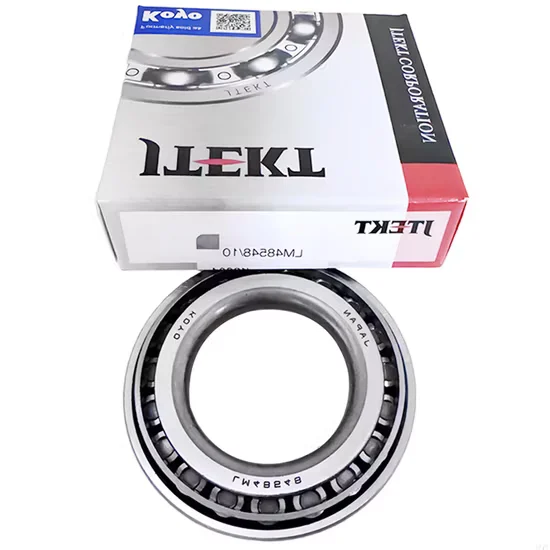
Koyo / JTEKT bearings from this guide
These are the Koyo / JTEKT bearing types discussed above. Open any product to check its details, or quote it together with the rest of your repair.

Railway Bearings
Genuine Koyo 32011 32209 32212 Tapered Roller Bearing for Railway Locomotive Axle Boxes
View Product
Railway Bearings
Genuine Koyo Tapered Roller Bearings 32019 32020 32021 32022 32024 for Railway Machinery
View Product
Tapered Roller Bearings
Genuine Koyo Tapered Roller Bearing 32212 32213 32214 32215 32216 for Fan Spare Parts
View Product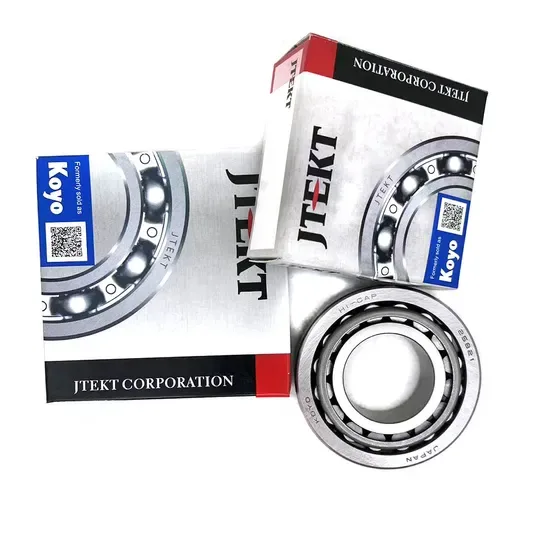
Tapered Roller Bearings
Koyo 32207 30208 30307 Tapered Roller Bearing Genuine Supplier
View ProductKeep reading
More bearing selection guides for repair shops
Practical guides from KOYO Bearing Supplier on identifying Koyo / JTEKT bearings for farm machinery, construction equipment and power transmission repairs.
 Applications & Industries
· 8 min read
Small Engine Crankshaft Bearings Wholesale Supplier
Selecting the correct Bearings in Small Engine Crankshafts requires strict clearance matching and material verification rather than simple part number lookup. Standard units often…
Read the Guide Applications & Industries · 7 min read
Forklift Mast Bearings Wholesale Supplier | Genuine SKF FAG NSK Bulk
Selecting forklift mast bearings requires matching groove profiles and clearances to harsh environments to prevent premature seizure. Sourcing only genuine SKF, FAG, and NSK…
Read the Guide Applications & Industries · 6 min read
Outboard Lower Unit Bearings Wholesale Supplier
Prevent catastrophic gearcase failures by selecting Bearings in Outboard Lower Units that balance high-speed load capacity with strict corrosion resistance. Learn why standard tapered…
Read the Guide
Bearing enquiry
Send your machine details. Get a written Koyo / JTEKT quote.
KOYO Bearing Supplier quotes a single bearing position or every bearing in an assembly on one enquiry, matched to your machine model and application, with model, quantity, price, lead time and quote validity in writing.
- WhatsApp+1 (702) 981-5880
- Emailinfo@koyoome.com
- Address8 Research Drive, Greenville, SC 20627, USA
"When a Koyo bearing failed on a harvest machine during the season, we needed a replacement urgently. The supplier identified the correct Koyo reference, shipped same-day, and the machine was back in the field within the day."

Request a Bearing Quote
Tell us the machine and the bearing position. Photos of the markings can follow on WhatsApp.