
Bearing Parts Store Fill Rate Improvement: Wholesale Supplier
Stocking more of the same popular SKUs does not guarantee a higher fill rate.
Improving parts store fill rates requires shifting from single-brand stocking to multi-brand, mixed-batch consolidation strategies tailored for MRO emergencies.
The humidity in Jakarta clings to everything, including the frustration on a plant manager’s face when a critical conveyor halts. I remember standing in a palm oil processing facility, watching the maintenance team scramble because their local dealer only stocked standard deep-groove ball bearings. The failed component was a spherical roller bearing, a specific size needed for heavy radial loads. The dealer had shelves full of common items but zero coverage for this urgent requirement. This gap between available inventory and actual operational need is where most distributors fail.
This experience highlighted a fundamental flaw in traditional inventory models. Many suppliers believe that high volume equals high availability. In reality, true availability comes from breadth and flexibility. By consolidating multiple genuine brands into a single sourcing channel, distributors can cover rare emergency models without bloating their total inventory volume. This approach transforms how a business handles parts store fill rate improvement, turning a reactive struggle into a proactive advantage.
Why Do Traditional Parts Stores Struggle with Fill Rates?
Single-brand reliance creates critical gaps during emergencies that no amount of standard stock can fill.
Most regional wholesalers operate under the assumption that sticking to one or two major brands simplifies logistics. They negotiate better tier pricing and streamline their catalog. However, this strategy leaves them vulnerable when a specific brand faces supply chain disruptions or when a client’s machinery requires a discontinued or niche model.
Consider a mining MRO site I consulted for in Southeast Asia. Their primary supplier was an authorized dealer for a single premium brand. When a crusher failed due to a specific tapered roller bearing issue, the authorized channel quoted a lead time of several weeks. The mine could not wait. The lack of alternative sources meant prolonged downtime, costing far more than the price difference of a spare part. This scenario is not unique. It reflects a systemic issue where inventory depth is mistaken for inventory resilience.
| Inventory Strategy | Coverage Scope | Emergency Response | Risk Level |
|---|---|---|---|
| Single-Brand Exclusive | Limited to brand catalog | Dependent on brand lead times | High |
| Multi-Brand Consolidation | Cross-brand equivalents | Immediate spot availability | Low |
| Just-in-Time Ordering | Zero local stock | Weeks of delay | Critical |
The table above illustrates why relying on a single source is risky. A parts store fill rate improvement strategy must account for the unpredictability of industrial failures. When a distributor limits themselves to one brand, they inherit that brand’s stockouts. By contrast, accessing a global pool of genuine bearings from manufacturers like SKF, FAG, NSK, and TIMKEN allows for immediate substitution with equivalent specifications. This flexibility ensures that the right part is available when the machine stops, not when the next container arrives.
How Does Multi-Brand Consolidation Solve the Gap?
Sourcing genuine bearings across multiple brands in one mixed batch ensures comprehensive coverage without excessive capital tie-up.
The core of effective parts store fill rate improvement lies in the ability to mix brands and sizes in a single order. Traditional wholesale channels often impose high minimum order quantities (MOQs) per SKU or per brand. This forces distributors to overstock slow-moving items to meet thresholds, tying up cash in inventory that rarely sells. Meanwhile, fast-moving emergency items remain out of stock because the budget is exhausted on static goods.
A regional wholesaler I worked with implemented a cross-brand equivalent consultation process. Instead of saying “we don’t have that brand,” they began offering genuine alternatives from other premium manufacturers. For instance, if a client requested a specific INA needle bearing that was backordered, the team provided a verified equivalent from NTN or KOYO with matching dimensional tolerances and load ratings.
This approach required deep technical knowledge. It wasn’t about swapping parts randomly; it was about understanding precision grades, internal clearances, and material standards. By leveraging a supplier who stocks full-spectrum bearing types—including cylindrical roller, angular contact, and thrust bearings—distributors can maintain a leaner inventory while covering a broader range of applications. The key is traceability. Every bearing, whether from a European or Asian manufacturer, must come with complete documentation to ensure authenticity.
Consolidation also solves the logistics puzzle. Shipping small batches from multiple official dealers incurs prohibitive freight costs. By consolidating orders from various brands into a single shipment, distributors reduce per-unit shipping costs significantly. This efficiency allows them to offer competitive pricing while maintaining healthy margins. For MRO clients, this means faster access to genuine parts at reasonable prices, directly contributing to parts store fill rate improvement.
What Are the Real-World Results of Optimized Sourcing?
Case studies show that flexible sourcing reduces downtime and improves inventory turnover noticeably.
The theoretical benefits of multi-brand consolidation become clear when applied to real-world scenarios. In one instance, a steel plant operator faced repeated failures in their rolling mill stands. Their existing supplier could only provide one brand of spherical roller bearing, which had a long lead time for large bore sizes. By switching to a supplier capable of mixing brands, the plant gained access to immediate stock from multiple manufacturers.
The result was a noticeable drop in emergency downtime. The maintenance team no longer waited weeks for a single brand to restock. They could choose from available genuine options that met the required P0 or P5 precision standards. This flexibility transformed their maintenance schedule from reactive to planned, even during unexpected breakdowns.
Another case involved a wind farm operator in a remote location. Transporting heavy equipment bearings to such sites is costly and time-consuming. By utilizing a supplier with massive spot inventory and global consolidation services, the operator reduced the lead time for urgent spare parts to a fraction of traditional channels. They ordered mixed batches of yaw and pitch bearings, ensuring they had backups for different turbine models without maintaining a huge onsite warehouse.
| Scenario | Traditional Approach | Optimized Sourcing Result |
|---|---|---|
| Urgent Breakdown | Wait for brand restock | Immediate multi-brand selection |
| Inventory Cost | High due to overstocking | Reduced via flexible MOQ |
| Technical Support | Limited to one brand | Cross-brand consultation |
These examples underscore that parts store fill rate improvement is not just about having more stock; it is about having the right stock accessible through smart sourcing. The ability to pivot between brands based on availability and specification match is a competitive edge that traditional distributors often overlook.
How to Implement a High-Fill-Rate Strategy?
Actionable steps for cross-brand consultation and flexible MOQ ordering can transform inventory management.
Implementing a strategy for parts store fill rate improvement requires a shift in procurement mindset. Distributors must move away from rigid brand loyalty and toward solution-oriented sourcing. The first step is to establish a relationship with a global supplier who offers genuine traceability for all major brands. This supplier should provide technical datasheets and cross-reference lookup services to validate equivalents.
Next, adopt flexible MOQ policies. Instead of ordering full pallets of a single SKU, negotiate mixed-container consolidation. This allows you to stock a wider variety of sizes and types, from deep-groove ball bearings to specialized insert bearings, without exceeding budget constraints.
Technical training is also crucial. Your sales and support teams must understand how to consult on cross-brand equivalents. They need to know when a substitute is acceptable and when a specific brand is mandatory due to OEM specifications. This expertise builds trust with end-site operators who rely on your advice to keep their machinery running.
Finally, leverage data. Analyze which SKUs cause the most downtime and ensure those are covered by multiple brand options. Use inventory turnover ratios to identify slow-moving stock and replace it with high-demand emergency items from diverse manufacturers. This dynamic approach ensures your inventory evolves with your clients’ needs.
By focusing on these actionable steps, distributors can achieve significant parts store fill rate improvement. The goal is to create a resilient supply chain that withstands disruptions and meets the urgent demands of industrial MRO clients.
Conclusion
True availability comes from breadth, flexibility, and technical expertise, not just volume.
Shifting to multi-brand consolidation allows distributors to cover rare emergency models and reduce unplanned downtime. By leveraging global spot inventory and flexible sourcing, businesses can achieve sustainable parts store fill rate improvement while optimizing capital efficiency.
Mentioned in this article
Koyo / JTEKT bearings from this guide
These are the Koyo / JTEKT bearing types discussed above. Open any product to check its details, or quote it together with the rest of your repair.
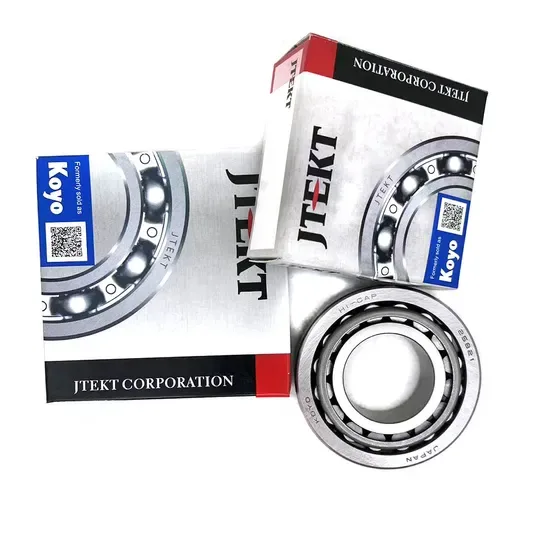
Tapered Roller Bearings
Koyo 30213 30221 30228 Tapered Roller Bearing Single Row for Machinery Part
View Product
Tapered Roller Bearings
Genuine Koyo Tapered Roller Bearing 32212 32213 32214 32215 32216 for Fan Spare Parts
View Product
Tapered Roller Bearings
Jtekt Koyo Tapered Roller Bearing 32010 30302 30303 30304 30305 30306 for Auto Parts
View Product
Railway Bearings
X&S 30304 30306 30307 Tapered Roller Bearings for Railway Axle Auto Parts
View ProductKeep reading
More bearing selection guides for repair shops
Practical guides from KOYO Bearing Supplier on identifying Koyo / JTEKT bearings for farm machinery, construction equipment and power transmission repairs.
 News & Cases
· 6 min read
EV Transmission Bearings Wholesale Supplier 2026 Trends
Master EV Transmission Trends 2026 by prioritizing strict supply chain compliance over price to prevent costly port delays. Verify batch traceability and accurate HS…
Read the Guide News & Cases · 7 min read
Genuine SKF FAG NSK Bearings Wholesale Supplier for Auto Aftermarket 2026
Navigate the 2026 Auto Aftermarket Outlook by securing genuine SKF, FAG, and NSK bearings to avoid costly refurbished part failures. Prioritize strict traceability over…
Read the Guide News & Cases
· 7 min read
Motorcycle Bearings for Asia & Africa Markets: Wholesale Supplier
For the 2026 motorcycle market in Asia and Africa, sourcing rugged bearings with multi-lip seals prevents costly warranty claims from dust and mud. Standard…
Read the Guide
Bearing enquiry
Send your machine details. Get a written Koyo / JTEKT quote.
KOYO Bearing Supplier quotes a single bearing position or every bearing in an assembly on one enquiry, matched to your machine model and application, with model, quantity, price, lead time and quote validity in writing.
- WhatsApp+1 (702) 981-5880
- Emailinfo@koyoome.com
- Address8 Research Drive, Greenville, SC 20627, USA
"When a Koyo bearing failed on a harvest machine during the season, we needed a replacement urgently. The supplier identified the correct Koyo reference, shipped same-day, and the machine was back in the field within the day."

Request a Bearing Quote
Tell us the machine and the bearing position. Photos of the markings can follow on WhatsApp.