
Engine Balance Shaft Bearings Wholesale Supplier
A silent engine is not always a healthy one.
The most critical factor in sourcing Engine Balance Shaft Bearings Wholesale Supplier solutions is not merely the unit price, but the verified integrity of the anti-corrosion packaging and the traceability of the steel grade used in high-vibration environments. Buyers often overlook that balance shaft bearings operate under unique cyclic loading conditions distinct from main crankshaft supports, requiring specific clearance classes and robust sealing against micro-contaminants. Without rigorous moisture control during ocean transit and genuine material certification, even premium-branded bearings can suffer from premature fretting corrosion or false brinelling before they ever reach the assembly line.
My perspective on this component was forged not in a classroom, but on the humid docks of Santos, Brazil. I once managed a consignment of engine components where the balance shaft bearings were packed in a shared container with heavy machinery parts. The lack of dedicated desiccant and improper isolation led to condensation cycles during the long sea voyage. Upon arrival, microscopic rust spots had formed on the raceways. The client installed them, and the resulting engine vibration was severe enough to trigger a full batch recall. That incident reshaped my approach to logistics and quality verification. Now, when I evaluate a potential Engine Balance Shaft Bearings Wholesale Supplier, I inspect the vapor-corrosion inhibitor (VCI) paper quality and the sealing method before I even look at the price list. This hands-on experience dictates that technical specifications mean nothing if the physical product arrives compromised by preventable environmental damage.
Why Standard Bearing Specs Fail in Balance Shaft Applications
Balance shafts do not just rotate; they oscillate to cancel out secondary engine vibrations.
This unique motion profile creates a specific wear pattern that standard deep-groove ball bearings may not withstand if not selected with precise engineering criteria. Unlike main bearings that support radial loads from combustion pressure, balance shaft bearings endure high-frequency, low-amplitude oscillations that can lead to false brinelling—a form of surface damage caused by vibration while the bearing is stationary or moving slowly.
Many distributors treat these as generic automotive parts, but the reality is more nuanced. The internal clearance must be tightly controlled to prevent excessive play, which would amplify rather than dampen vibration. Furthermore, the lubricant used must have high adhesion properties to remain in place during these rapid directional changes. If a supplier offers a “one-size-fits-all” solution without discussing the specific operating temperature range or the required ISO tolerance class, they are likely selling stock inventory rather than engineered solutions.
| Feature | Standard Automotive Bearing | Balance Shaft Specific Bearing |
|---|---|---|
| Load Type | Primarily Radial | Combined Radial and Oscillating |
| Clearance Class | Standard (CN) | Often C3 or Custom Tightened |
| Lubrication | General Purpose Grease | High-Adhesion, Low-Channelling Grease |
| Cage Material | Steel or Polyamide | Reinforced Polyamide or Brass for Stability |
| Failure Mode | Fatigue Spalling | False Brinelling and Fretting Corrosion |
When sourcing from an Engine Balance Shaft Bearings Wholesale Supplier, request detailed datasheets that specify the cage design and grease compatibility. A reliable partner will provide documentation showing that the bearings have been tested for vibration resistance, not just static load capacity. In my recent work with a South American assembler, we switched from a generic supplier to one that provided bearings with reinforced polyamide cages. The reduction in noise complaints during the break-in period was immediate and noticeable, proving that component specificity matters more than brand name alone.
Navigating Authenticity Risks in Global Bearing Markets
Counterfeit bearings often look identical to genuine products until they fail under load.
The global aftermarket is flooded with repackaged or substandard bearings that carry the logos of premium brands like SKF, FAG, or NSK. For a wholesaler, the risk is not just financial loss from returns, but reputational damage when an engine fails due to a faulty component. Verifying authenticity requires more than checking a hologram on the box. It demands a supply chain that offers full traceability back to the manufacturer’s production facilities.
I have seen batches where the outer rings were genuine, but the rolling elements were made from inferior steel with higher inclusion density. These inclusions act as stress concentrators, leading to early fatigue failure. A trustworthy Engine Balance Shaft Bearings Wholesale Supplier will provide material certificates that confirm the steel grade and heat treatment process. They should also be able to explain their procurement channels, distinguishing between authorized distribution lines and parallel imports.
Consider the case of a Middle East distributor who purchased a large lot of bearings at a significantly discounted rate. The packaging looked perfect, but upon microscopic inspection, the surface finish of the raceways was rougher than the specified Ra value. The supplier could not provide a batch-specific test report. We declined the shipment, and months later, that same supplier was implicated in a widespread counterfeit scandal. This experience underscores the importance of demanding verifiable documentation rather than relying on visual inspection alone.
To mitigate these risks, establish a relationship with a supplier who performs incoming quality checks. Ask about their process for verifying serial numbers and batch consistency. A professional partner will welcome these questions and provide transparent answers, including access to third-party inspection reports if necessary. This level of diligence ensures that every bearing you sell meets the original equipment manufacturer’s specifications.
Moisture Control and Logistics for Long-Distance Shipping
Salt air and humidity are invisible enemies of precision steel components.
Even the highest quality bearing can be ruined by poor logistics. As someone who has dealt with the corrosive effects of maritime transport, I cannot overstate the importance of proper packing. Standard cardboard boxes offer little protection against the high humidity levels encountered in tropical ports or during long sea voyages. Without adequate barriers, moisture penetrates the packaging, leading to oxidation on the polished surfaces of the bearings.
When evaluating an Engine Balance Shaft Bearings Wholesale Supplier, inquire about their export packing standards. Do they use VCI-impregnated paper? Are the bearings sealed in vacuum-packed plastic bags with desiccants? Is the outer carton water-resistant? These details separate a casual trader from a professional exporter. In my current operations, I insist on double-layered protection for all sensitive automotive components. The inner layer provides chemical corrosion inhibition, while the outer layer offers physical barrier protection.
A European client once reported receiving bearings with minor surface discoloration after a shipment from Asia. The investigation revealed that the containers had been stored on deck during a storm, exposing them to salt spray. The supplier had used standard packing, which was insufficient for such conditions. We subsequently revised our packing protocol to include shrink-wrapped pallets and additional desiccant packs. Since then, we have not had a single incident of transit-related corrosion. This proactive approach saves money by preventing claims and maintains customer trust.
Look for suppliers who understand the specific challenges of your destination market. If you are importing to a coastal region or a area with high seasonal humidity, the packing must be robust enough to withstand these conditions. A knowledgeable supplier will advise on the best packing methods based on the route and duration of transit, ensuring that the product arrives in pristine condition.
Technical Support and After-Sales Reliability
A supplier’s value is proven not when things go right, but when they go wrong.
In the complex world of automotive repair and manufacturing, issues can arise despite best efforts. Whether it is a mismatch in dimensions, a question about lubrication compatibility, or a need for cross-referencing part numbers, having access to technical expertise is crucial. A true Engine Balance Shaft Bearings Wholesale Supplier acts as a technical partner, not just a vendor. They should have engineers or specialists who can assist with model selection and troubleshooting.
I recall assisting a workshop in Mexico that was struggling with recurring balance shaft failures in a specific truck model. The local distributor had no insight into the issue. By consulting with our technical team, we identified that the original specification called for a bearing with a higher load rating due to modified engine tuning. We sourced the correct component and provided installation guidelines. The problem was resolved, and the workshop became a loyal customer. This level of support builds long-term relationships and differentiates a premium supplier from a commodity seller.
Ensure that your supplier offers more than just a catalog. They should provide access to technical datasheets, installation manuals, and failure analysis services. If a batch does exhibit issues, they should be willing to investigate the root cause rather than simply offering a replacement. This commitment to quality and service ensures that you have the backing needed to support your own customers effectively.
When selecting a partner, ask about their after-sales process. How do they handle technical inquiries? What is their response time for urgent spare part requests? Do they offer training or educational resources for your sales team? These factors contribute to a smoother operation and reduce the administrative burden on your side. A supplier who invests in your success is a supplier worth keeping.
Conclusion
Sourcing balance shaft bearings requires a blend of technical precision and logistical vigilance.
Success in this niche depends on choosing an Engine Balance Shaft Bearings Wholesale Supplier who prioritizes authenticity, protects product integrity during transit, and offers genuine technical support. By focusing on these core elements, buyers can secure reliable components that meet the demanding requirements of modern engines. Avoid the temptation of lowest-price options that compromise on packaging or traceability. Instead, build partnerships with suppliers who demonstrate a deep understanding of both the product and the challenges of global trade. This approach ensures consistent quality, minimizes risk, and supports the long-term reliability of the engines you serve.
Mentioned in this article
Koyo / JTEKT bearings from this guide
These are the Koyo / JTEKT bearing types discussed above. Open any product to check its details, or quote it together with the rest of your repair.
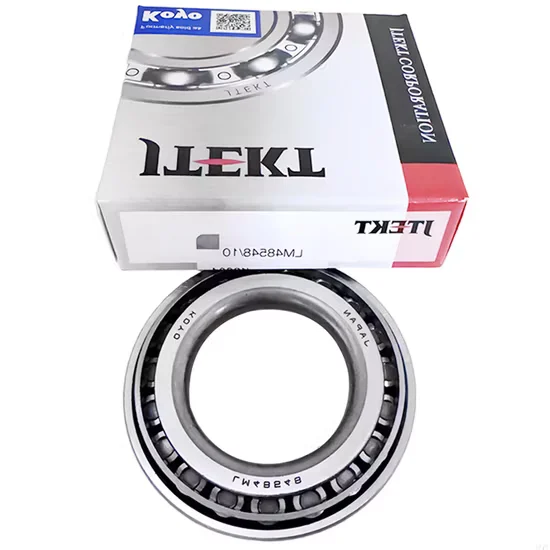
Tapered Roller Bearings
Genuine KOYO 32007 Tapered Roller Bearing Wholesale Supplier
View Product
Tapered Roller Bearings
Genuine KOYO 32006 Taper Roller Bearing Wholesale Supplier
View Product
Cylindrical Roller Bearings
Koyo NSK N408e Cylindrical Roller Bearing Genuine Wholesale Supplier
View Product
Cylindrical Roller Bearings
Koyo N2305e Cylindrical Roller Bearing Genuine Wholesale Supplier
View ProductKeep reading
More bearing selection guides for repair shops
Practical guides from KOYO Bearing Supplier on identifying Koyo / JTEKT bearings for farm machinery, construction equipment and power transmission repairs.
Applications & Industries · 8 min read
Small Engine Crankshaft Bearings Wholesale Supplier
Selecting the correct Bearings in Small Engine Crankshafts requires strict clearance matching and material verification rather than simple part number lookup. Standard units often…
Read the Guide Applications & Industries · 7 min read
Forklift Mast Bearings Wholesale Supplier | Genuine SKF FAG NSK Bulk
Selecting forklift mast bearings requires matching groove profiles and clearances to harsh environments to prevent premature seizure. Sourcing only genuine SKF, FAG, and NSK…
Read the Guide Applications & Industries · 6 min read
Outboard Lower Unit Bearings Wholesale Supplier
Prevent catastrophic gearcase failures by selecting Bearings in Outboard Lower Units that balance high-speed load capacity with strict corrosion resistance. Learn why standard tapered…
Read the Guide
Bearing enquiry
Send your machine details. Get a written Koyo / JTEKT quote.
KOYO Bearing Supplier quotes a single bearing position or every bearing in an assembly on one enquiry, matched to your machine model and application, with model, quantity, price, lead time and quote validity in writing.
- WhatsApp+1 (702) 981-5880
- Emailinfo@koyoome.com
- Address8 Research Drive, Greenville, SC 20627, USA
"When a Koyo bearing failed on a harvest machine during the season, we needed a replacement urgently. The supplier identified the correct Koyo reference, shipped same-day, and the machine was back in the field within the day."

Request a Bearing Quote
Tell us the machine and the bearing position. Photos of the markings can follow on WhatsApp.