
Transmission Rebuild Bearings: Genuine SKF, TIMKEN Wholesale Supplier
Counterfeit bearings are the silent killers of transmission rebuild profitability.
Transmission rebuild shops must source genuine bearings with full traceability to prevent catastrophic gearbox failures caused by counterfeit parts. The only way to guarantee authenticity is to demand original packaging and complete chain-of-custody documentation from a specialized global supplier who consolidates multi-brand inventory.
I still remember the smell of burnt gear oil in that workshop in Ningbo. A client had just finished rebuilding a heavy-duty transmission for a mining excavator. It looked perfect on the bench. But after just 500 hours of operation, the unit seized completely. The teardown revealed the culprit: fake tapered roller bearings that had disintegrated under load. The compensation claim for the damaged housing and lost downtime nearly bankrupted the local workshop. That disaster shifted my focus from simple assembly to the critical importance of supply chain integrity. Now, when buyers ask about sourcing, I do not just look at the price tag. I look for the paper trail.
Sourcing these components requires more than just finding a low quote. It demands a partner who understands the technical nuances of gearbox repair and the severe risks of mixed-quality batches. This is why many professional rebuilders are turning away from fragmented local markets and seeking consolidated solutions from a reliable Supplying Transmission Rebuild Shops partner.
Why Do Gearboxes Fail Prematurely in Rebuild Shops?
Counterfeit bearings destroy reputation and profitability far faster than they save money on procurement.
The assumption that cheap bearings reduce overhead is a dangerous misconception. In reality, the hidden costs of warranty claims, labor rework, and client loss dwarf the initial savings. A single failed roller can ruin an entire gearbox assembly, leading to liabilities that exceed the value of the entire rebuild contract.
When a transmission fails prematurely, the root cause is often traced back to material inconsistencies in non-genuine parts. Counterfeit manufacturers frequently use lower-grade steel with higher inclusion densities, which creates stress concentration points under heavy loads. These micro-defects lead to spalling and fatigue cracking long before the expected service life is reached.
Consider a case involving a European vehicle repair group. They sourced a batch of deep-groove ball bearings from an unverified online marketplace to cut costs. Within months, they faced a spike in comebacks for noise and vibration issues. The investigation showed that the bearings lacked the precise heat treatment required for high-speed applications. The cost of replacing the units and compensating customers was several times the amount they had saved on the initial purchase.
This risk is particularly acute in heavy-duty applications. Mining and construction equipment operate under extreme shock loads. Using bearings that do not meet the original equipment manufacturer specifications can lead to catastrophic failure. For shops specializing in these sectors, the stakes are even higher. Downtime for a mining excavator is measured in thousands of dollars per hour. A failed bearing does not just mean a repair; it means a halted production line.
To avoid these pitfalls, rebuild shops must prioritize authenticity over price. This involves verifying the source of every component. A trustworthy Supplying Transmission Rebuild Shops provider will offer transparent documentation that proves the origin of each part. Without this verification, shops are gambling with their clients’ equipment and their own business survival.
How to Verify Genuine SKF and TIMKEN Bearings?
Demand original packaging and complete traceability docs to ensure part authenticity.
Verifying genuine bearings goes beyond checking the logo on the metal. Counterfeiters have become sophisticated, often replicating markings with high precision. The most reliable method is to examine the packaging and request full traceability documentation. Genuine products from brands like SKF and TIMKEN come with specific security features and batch numbers that can be cross-referenced with the manufacturer’s records.
Original packaging is the first line of defense. Genuine bearings are packed in high-quality boxes with clear printing, holographic seals, and specific barcodes. Fake packaging often has blurry text, incorrect fonts, or missing security labels. However, packaging alone is not enough. Reputable suppliers provide a certificate of conformity or a mill test report that links the specific batch number to the production facility.
| Verification Feature | Genuine Product | Counterfeit Risk |
|---|---|---|
| Packaging Quality | High-grade cardboard, sharp printing, holographic seals | Flimsy material, blurry text, missing security features |
| Traceability Docs | Full batch-level certification, verifiable origin | Self-reported data, no independent verification |
| Surface Finish | Consistent, micron-level precision, no tool marks | Irregular finish, visible machining errors |
| Material Certification | Provided upon request, linked to batch | Not provided or falsified documents |
A US buyer once shared how they caught a fraudulent shipment. The bearings looked correct, but the batch numbers on the boxes did not match the internal stamps on the bearings themselves. When they contacted the brand directly, the numbers were invalid. This discrepancy saved them from installing defective parts into a fleet of commercial trucks.
For rebuild shops, maintaining this level of scrutiny is essential. It requires a supplier who values transparency. A professional Supplying Transmission Rebuild Shops entity will not hesitate to provide these documents. They understand that trust is built on verifiable proof, not just promises. This level of diligence ensures that every bearing installed meets the rigorous standards required for safe and reliable operation.
What Are the Risks of Sourcing from Unverified Channels?
Hidden costs from warranty claims far exceed initial savings from unverified sources.
Sourcing from unverified channels introduces significant risks that are not immediately apparent. These include inconsistent quality, lack of technical support, and potential legal liabilities. When a shop buys from a random distributor, they have no recourse if the parts fail. The supplier may disappear, leaving the shop to bear the full cost of the failure.
One major risk is batch inconsistency. Unverified suppliers often mix genuine and fake parts, or combine batches from different manufacturers without proper testing. This leads to unpredictable performance. For example, a batch of spherical roller bearings might have varying clearance levels, causing uneven load distribution and premature wear.
Another risk is the lack of technical support. Genuine brands offer extensive engineering resources to help with selection and application. Unverified sellers cannot provide this expertise. If a shop encounters a complex issue, such as selecting the right clearance for a high-temperature environment, they are left to guess. This can lead to improper installation and early failure.
Legal liability is also a concern. Using counterfeit parts can void warranties and expose shops to lawsuits if equipment failure causes injury or property damage. Insurance companies may refuse to cover claims if counterfeit parts are found to be the cause.
A Middle East steel mill experienced this firsthand. They sourced replacement bearings for their conveyor systems from a low-cost trader. When the bearings failed, causing a production stoppage, the trader refused to accept responsibility. The mill had to pay for emergency air freight for genuine replacements and compensate for lost production. The total cost was a mid-six-figure loss, far exceeding the initial savings.
To mitigate these risks, shops should work with established partners. A reliable Supplying Transmission Rebuild Shops provider offers consistency and accountability. They stand behind their products and provide the necessary support to ensure successful repairs. This partnership model protects shops from the hidden dangers of the gray market.
How to Optimize Mixed-Batch Procurement for Rebuild Shops?
Use flexible MOQ and consolidated shipping to reduce inventory costs while maintaining authenticity.
Rebuild shops often need a wide variety of bearings for different models and brands. Stocking all these parts individually is expensive and inefficient. Optimizing procurement involves consolidating orders and leveraging flexible minimum order quantities (MOQ). This approach reduces inventory holding costs and ensures that shops have the right parts available when needed.
Consolidated shipping allows shops to combine orders for different brands and types into a single shipment. This reduces freight costs and simplifies customs clearance. Instead of managing multiple suppliers and shipments, shops can deal with one partner who handles the logistics.
Flexible MOQ is crucial for small and medium-sized shops. Official brand channels often require large minimum orders, which ties up capital in slow-moving stock. A specialized supplier can offer smaller quantities, allowing shops to keep lean inventory while still accessing genuine parts. This flexibility is particularly useful for emergency repairs where speed is essential.
Technical selection support is another key benefit. A knowledgeable supplier can help shops identify cross-brand equivalents and optimize part selection. For instance, if a specific TIMKEN bearing is out of stock, they might suggest a compatible SKF alternative that meets the same specifications. This ensures that repairs can proceed without delay.
A Latin American distributor used this strategy to streamline their operations. By consolidating their orders for SKF, FAG, and NSK bearings with a single supplier, they reduced their administrative workload and lowered shipping costs by a noticeable margin. They also benefited from the supplier’s technical advice, which helped them reduce returns due to incorrect part selection.
For shops looking to improve efficiency, partnering with a Supplying Transmission Rebuild Shops expert is a strategic move. It allows them to access a broad range of genuine products without the burden of excessive inventory. This model supports both routine maintenance and urgent breakdown repairs, ensuring that shops can meet their customers’ needs reliably and profitably.
Conclusion
Authenticity and traceability are non-negotiable for sustainable transmission rebuild businesses.
Sourcing genuine bearings is not just about buying parts; it is about protecting your business from catastrophic failure. By demanding full documentation and working with verified partners, rebuild shops can ensure reliability and maintain customer trust. Consolidated procurement strategies further enhance efficiency, reducing costs without compromising quality. Choose integrity over short-term savings to build a resilient and profitable operation.
Mentioned in this article
Koyo / JTEKT bearings from this guide
These are the Koyo / JTEKT bearing types discussed above. Open any product to check its details, or quote it together with the rest of your repair.
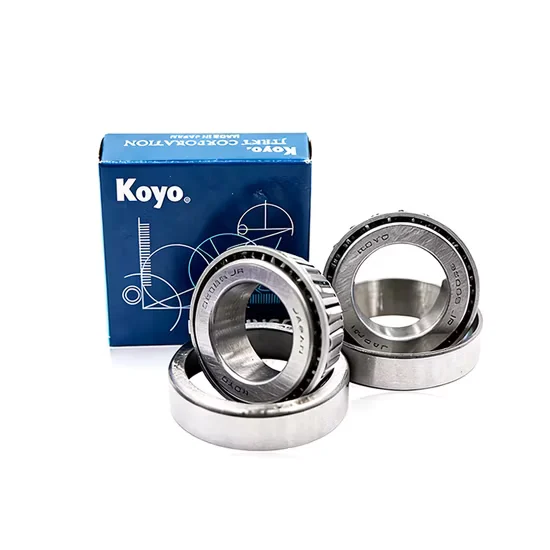
Tapered Roller Bearings
SKF 32314-32317 Series Heavy Duty Taper Roller Bearing for Automotive Chassis
View Product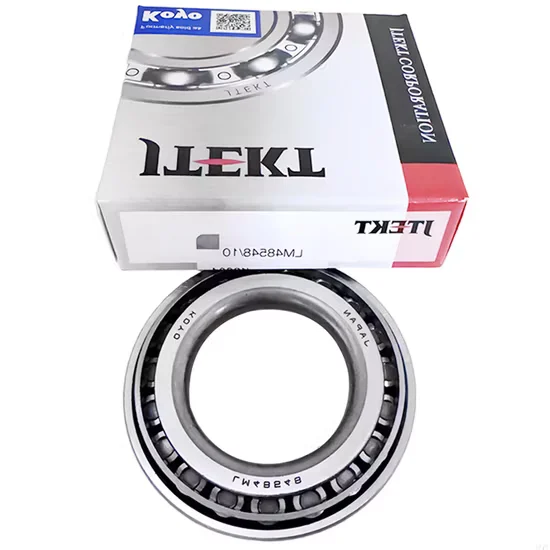
Tapered Roller Bearings
Genuine KOYO 32007 Tapered Roller Bearing Wholesale Supplier
View Product
Tapered Roller Bearings
Genuine KOYO 32006 Taper Roller Bearing Wholesale Supplier
View Product
Cylindrical Roller Bearings
Koyo NSK N408e Cylindrical Roller Bearing Genuine Wholesale Supplier
View ProductKeep reading
More bearing selection guides for repair shops
Practical guides from KOYO Bearing Supplier on identifying Koyo / JTEKT bearings for farm machinery, construction equipment and power transmission repairs.
Procurement & Trade FAQs · 7 min read
Rebuild Kit Supply for Transmission Shops: Wholesale Bearing Supplier
Transmission rebuild kit supply depends on accurate HS codes and detailed BOMs to prevent customs delays. Learn how mixed bearing consolidation and robust packaging…
Read the Guide Procurement & Trade FAQs
· 7 min read
Genuine Bearing Stock Programs for Motorcycle Dealers: Wholesale Supplier
Optimize Motorcycle Dealer Stock Programs by balancing cross-brand bearing equivalency, genuine traceability, and flexible MOQs to prevent costly warranty claims. Verify dimensional tolerance and…
Read the Guide Procurement & Trade FAQs · 7 min read
Express Shipping for Urgent Bearing Repairs: Global Wholesale Supplier
Master express shipping for urgent bearing replacements by prioritizing customs clearance over flight speed to eliminate port bottlenecks. Optimize volumetric weight, consolidate mixed-brand orders,…
Read the Guide
Bearing enquiry
Send your machine details. Get a written Koyo / JTEKT quote.
KOYO Bearing Supplier quotes a single bearing position or every bearing in an assembly on one enquiry, matched to your machine model and application, with model, quantity, price, lead time and quote validity in writing.
- WhatsApp+1 (702) 981-5880
- Emailinfo@koyoome.com
- Address8 Research Drive, Greenville, SC 20627, USA
"When a Koyo bearing failed on a harvest machine during the season, we needed a replacement urgently. The supplier identified the correct Koyo reference, shipped same-day, and the machine was back in the field within the day."

Request a Bearing Quote
Tell us the machine and the bearing position. Photos of the markings can follow on WhatsApp.