
Returns for Wrong Fitment Bearings Wholesale Supplier
The return label is the most expensive part of the bearing.
Preventing wrong fitment requires on-site failure analysis and technical verification before shipping, as return and downtime costs often exceed the bearing’s original value. Most buyers focus on the unit price, but the real financial risk lies in demurrage, customs re-clearance, and production halts caused by incorrect selection.
I still remember the smell of burnt grease and metal dust in a mining client’s workshop in Inner Mongolia. A batch of deep groove ball bearings had been installed on heavy vibrating screens. Within days, the cages shattered. The procurement team wanted to return the entire lot, citing quality issues. But when I inspected the failed units, the raceways showed no signs of material fatigue or manufacturing defects. The problem was fitment. They had selected standard clearance bearings for an application requiring specific internal clearances to handle thermal expansion and vibration loads. The bearings were genuine, but they were wrong for the job. Returning them meant paying for freight both ways, plus the cost of idle machinery. That incident shifted my perspective. I stopped looking at returns as a logistics hurdle and started treating them as a technical failure in the selection process. Today, as a Returns for Wrong Fitment Bearings Wholesale Supplier, I prioritize pre-shipment verification over post-sale refunds.
This approach saves buyers from hidden costs that rarely appear on the initial invoice. When you source from a global Returns for Wrong Fitment Bearings Wholesale Supplier, understanding the mechanics of misapplication is crucial for protecting your margin.
Why Do Bearings Fail Due to Wrong Fitment?
Misapplication of load and speed ratings causes premature structural failure, often mistaken for product defects.
Many buyers assume that if the dimensions match the shaft and housing, the bearing will work. This is a dangerous oversimplification. Internal clearance, cage material, and lubrication compatibility dictate actual fitment. For instance, a spherical roller bearing might have the same outer diameter as a cylindrical one, but their load-carrying capabilities differ significantly under misalignment conditions.
Consider the case of a heavy vibrating screen operator. They experienced repeated cage failures with deep groove ball bearings. The vibration frequency of the screen created dynamic loads that exceeded the static capacity of the selected bearing type. The failure cycle was short, and replacement labor hours piled up. The root cause was not the brand quality but the selection of a bearing type unsuited for high-vibration environments. A switch to spherical roller bearings, which can accommodate angular misalignment and higher radial loads, resolved the issue.
Another common scenario involves mixed-batch consolidation. A buyer ordered a container of assorted bearings for MRO stock. Upon arrival, a minor size mismatch was found in a subset of needle bearings. While the dimensional deviation was within standard tolerances, it caused interference fits in precision housings. The defect rate per container was low, but the sorting labor time required to identify and separate the non-conforming units was substantial. This highlights why technical verification is essential before consolidation.
When working with a Returns for Wrong Fitment Bearings Wholesale Supplier, ensure that the technical datasheets align with your operational parameters, not just your dimensional drawings.
What Are the Hidden Costs of Bearing Returns?
Freight, demurrage, and downtime often triple the initial procurement cost, making prevention far cheaper than correction.
Most think returns are just a logistics issue; actually, hidden costs dwarf the bearing price. When a shipment arrives at a port with incorrect specifications, the clock starts ticking. Demurrage charges accumulate daily if the containers are not cleared or returned promptly. In one instance, a port customs delay occurred because the wrong spec was shipped. The demurrage cost ratio quickly surpassed the value of the bearings themselves. The lead time delay meant the end-user’s production line remained idle, incurring losses far beyond the storage fees.
For MRO operators, the cost of downtime is critical. If a critical pump fails due to a wrongly fitted thrust bearing, the loss in production output can be significant. The return process involves packing, documentation, and international shipping, which can take weeks. During this time, the equipment remains offline. A Returns for Wrong Fitment Bearings Wholesale Supplier must help you avoid these scenarios by ensuring accuracy before dispatch.
Additionally, restocking fees and traceability documentation requirements add to the financial burden. Some manufacturers charge a percentage of the order value for processing returns, especially if the packaging has been opened or if the items are non-standard. Clear clauses on these fees are essential for budgeting.
Understanding these hidden costs reinforces the value of rigorous pre-shipment checks when sourcing from a Returns for Wrong Fitment Bearings Wholesale Supplier.
How to Verify Bearing Selection Before Shipping?
Cross-brand technical consultation and on-site parameter checks prevent errors by validating assumptions against real-world conditions.
Verification is not just about checking part numbers. It involves a cross-reference lookup matrix and load calculation formulas to ensure the selected bearing meets the application’s demands.
Start with an on-site failure inspection checklist. If you are replacing a failed unit, analyze the old bearing. Look for signs of overheating, corrosion, or electrical fluting. These clues indicate whether the previous selection was appropriate. For new installations, consult with engineers who understand the specific operating environment. For example, in wind power applications, bearings must withstand variable loads and harsh weather conditions. Standard industrial bearings may not suffice.
Our team provides cross-brand equivalent consultation to lock in risks before dispatch. We compare technical specifications across brands like SKF, FAG, NSK, and TIMKEN to find the best fit for your needs. This service is particularly valuable for MRO clients who need to replace obsolete models with available alternatives without compromising performance. By verifying the internal clearance and load ratings against your operational data, we ensure that the bearing will perform as expected.
This proactive approach distinguishes a reliable Returns for Wrong Fitment Bearings Wholesale Supplier from a simple box mover.
What Are the Standard Return Policies for Wrong Fitment?
Clear clauses on restocking fees and traceability documentation are essential for managing expectations and minimizing disputes.
Return policies vary widely among suppliers. Some accept returns for any reason, while others only accept defective goods. For wrong fitment, the policy usually depends on whether the error originated from the supplier’s recommendation or the buyer’s specification. If the buyer provided the part number, the responsibility typically lies with them. However, if the supplier recommended the model based on provided application data, they may share the liability.
Key elements to look for in a return policy include:
- Restocking Fees: Usually a percentage of the invoice value to cover handling and inspection.
- Condition Requirements: Items must be unused and in original packaging.
- Traceability Documentation: Proof of purchase and batch numbers are required to verify authenticity.
- Time Limits: Returns must be initiated within a specified period after delivery.
A US buyer once faced a situation where a mixed-batch consolidation included a few incorrectly sized insert bearings. Because the supplier had clear traceability documentation, they were able to quickly identify the affected batch and arrange a partial replacement without returning the entire container. This efficiency saved significant time and money.
When engaging with a Returns for Wrong Fitment Bearings Wholesale Supplier, clarify these terms upfront to avoid surprises.
Conclusion
Prevention is the only cost-effective strategy for bearing procurement.
Wrong fitment leads to failures that are costly to rectify. By focusing on technical verification and understanding the hidden costs of returns, buyers can protect their operations. Partnering with a knowledgeable Returns for Wrong Fitment Bearings Wholesale Supplier ensures that your bearings are selected correctly the first time, avoiding the pitfalls of demurrage and downtime.
Mentioned in this article
Koyo / JTEKT bearings from this guide
These are the Koyo / JTEKT bearing types discussed above. Open any product to check its details, or quote it together with the rest of your repair.
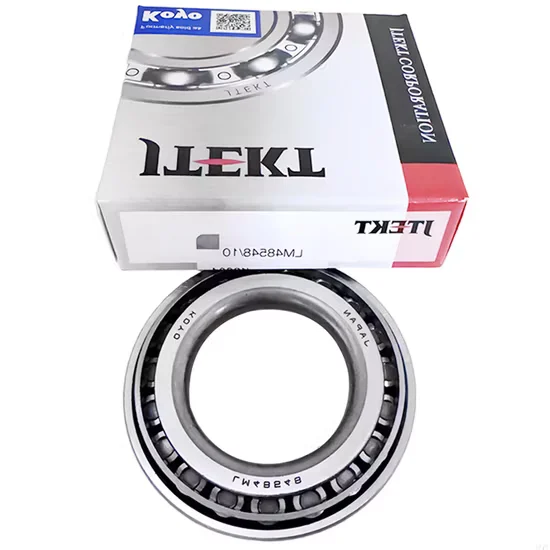
Tapered Roller Bearings
Genuine KOYO 32007 Tapered Roller Bearing Wholesale Supplier
View Product
Tapered Roller Bearings
Genuine KOYO 32006 Taper Roller Bearing Wholesale Supplier
View Product
Cylindrical Roller Bearings
Koyo NSK N408e Cylindrical Roller Bearing Genuine Wholesale Supplier
View Product
Cylindrical Roller Bearings
Koyo N2305e Cylindrical Roller Bearing Genuine Wholesale Supplier
View ProductKeep reading
More bearing selection guides for repair shops
Practical guides from KOYO Bearing Supplier on identifying Koyo / JTEKT bearings for farm machinery, construction equipment and power transmission repairs.
Procurement & Trade FAQs · 7 min read
Rebuild Kit Supply for Transmission Shops: Wholesale Bearing Supplier
Transmission rebuild kit supply depends on accurate HS codes and detailed BOMs to prevent customs delays. Learn how mixed bearing consolidation and robust packaging…
Read the Guide Procurement & Trade FAQs
· 7 min read
Genuine Bearing Stock Programs for Motorcycle Dealers: Wholesale Supplier
Optimize Motorcycle Dealer Stock Programs by balancing cross-brand bearing equivalency, genuine traceability, and flexible MOQs to prevent costly warranty claims. Verify dimensional tolerance and…
Read the Guide Procurement & Trade FAQs · 7 min read
Express Shipping for Urgent Bearing Repairs: Global Wholesale Supplier
Master express shipping for urgent bearing replacements by prioritizing customs clearance over flight speed to eliminate port bottlenecks. Optimize volumetric weight, consolidate mixed-brand orders,…
Read the Guide
Bearing enquiry
Send your machine details. Get a written Koyo / JTEKT quote.
KOYO Bearing Supplier quotes a single bearing position or every bearing in an assembly on one enquiry, matched to your machine model and application, with model, quantity, price, lead time and quote validity in writing.
- WhatsApp+1 (702) 981-5880
- Emailinfo@koyoome.com
- Address8 Research Drive, Greenville, SC 20627, USA
"When a Koyo bearing failed on a harvest machine during the season, we needed a replacement urgently. The supplier identified the correct Koyo reference, shipped same-day, and the machine was back in the field within the day."

Request a Bearing Quote
Tell us the machine and the bearing position. Photos of the markings can follow on WhatsApp.