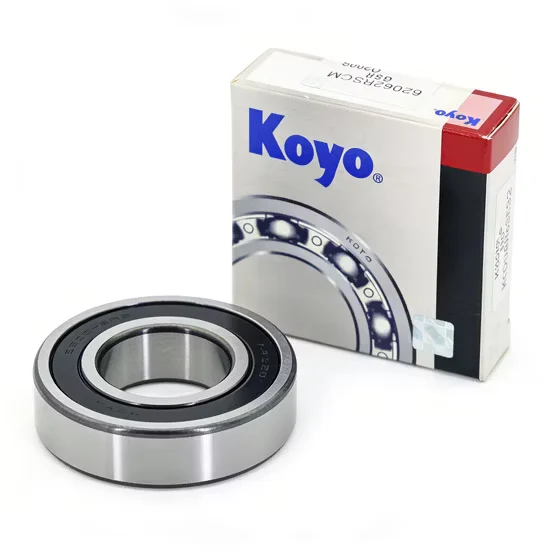
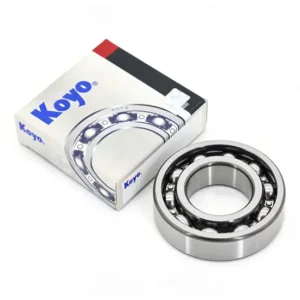
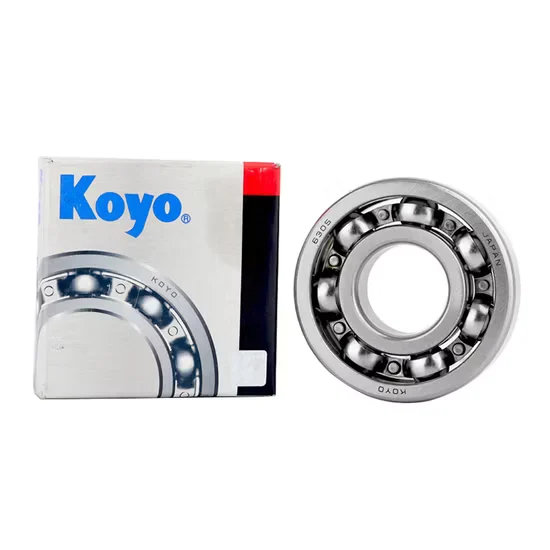
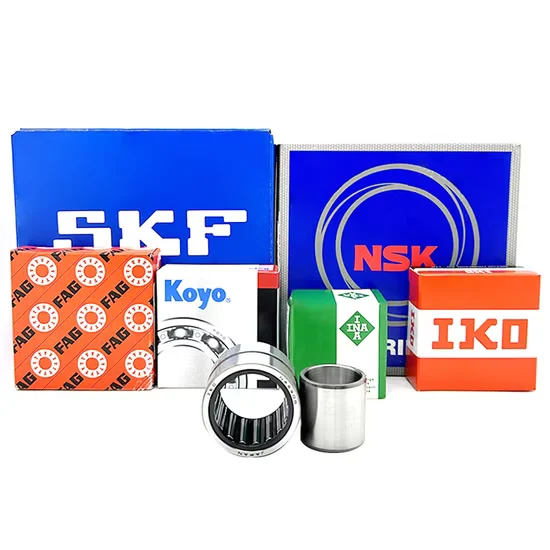
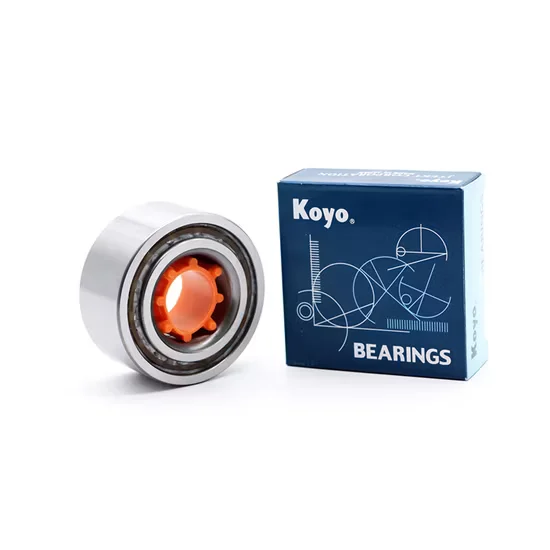
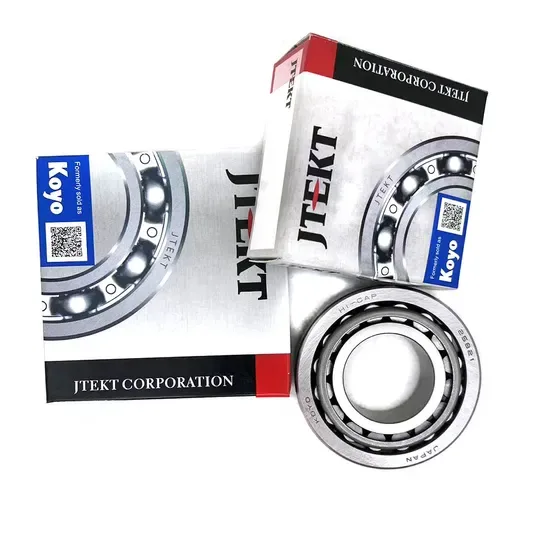
Mixed-Brand Sourcing — Consolidate your koyo 6209 deep groove ball bearing orders with other premium lines in a single shipment without juggling multiple suppliers.
Technical Specifications
| Parameter | Value |
| Designation | koyo 6209 |
| Bearing Type | Deep Groove Ball Bearing |
| Bore Diameter (d) | 45 mm |
| Outside Diameter (D) | 85 mm |
| Width (B) | 19 mm |
| Material | Gcr15 Chrome Steel |
| Lubrication | Grease or Oil |
| Origin | Japan |
| HS Code | 8482300000 |
Application Suitability
| Industry | Typical Applications |
| Electric Motors | Stator and rotor support assemblies |
| Industrial Motors | Motor drive coupling joints |
| Pumps & Conveyors | Impeller shaft supports and drive rollers |
| Household Appliances | High-speed spindle and fan motor mounts |
Why Standard Clearance Fails in High-Temperature Motor Housings
Thermal expansion silently eliminates internal clearance before the winding insulation breaks down.
When specifying a koyo 6209 deep groove ball bearing for continuous-duty electric motors, engineers often default to standard clearance without calculating the operating temperature delta. I have seen entire batches of low-noise motors seize and burn out because the internal gap vanished under thermal load, turning a simple replacement into a catastrophic line stoppage. The inner ring expands faster than the outer ring due to its proximity to the heat-generating rotor, rapidly consuming the microscopic clearance. If the baseline configuration is forced into a high-heat application without adjusting the internal geometry, the rolling elements will skid rather than roll, generating immense friction and destroying the raceway within hours.

Matching the 45x85x19mm Envelope to Motor Shaft Dynamics
The 45 mm bore and 85 mm outer diameter provide a rigid footprint for standard IEC motor frames, absorbing both radial magnetic pull and minor axial thrust from the drive coupling. Sourcing this exact koyo 6209 deep groove ball bearing dimension requires verifying the cross-brand equivalence to ensure the shaft fit remains within the prescribed interference limits. A loose fit leads to fretting corrosion on the shaft journal, while an overly tight press fit reduces the internal clearance to dangerous levels. We consolidate these specific motor-grade dimensions alongside other MRO requirements to keep your maintenance inventory lean, ensuring that every replacement part aligns perfectly with your existing rotor assemblies without requiring machining modifications.
Navigating Heat, Vibration, and Electrical Pitting
Electric motor environments subject bearings to continuous high-speed rotation, generating internal friction heat that demands careful clearance selection and lubrication planning. If the motor operates near heat sources or experiences poor ventilation, standard lubricants can degrade, necessitating high-temperature grease variants that resist oxidation. Furthermore, variable frequency drives can induce shaft currents, leading to electrical pitting on the raceways if insulated variants are not considered by the design team. Proper sealing is equally critical to keep conductive dust out of the grease cavity, as particulate contamination acts as an abrasive lapping compound that accelerates fatigue and increases the acoustic noise signature of the motor during operation.
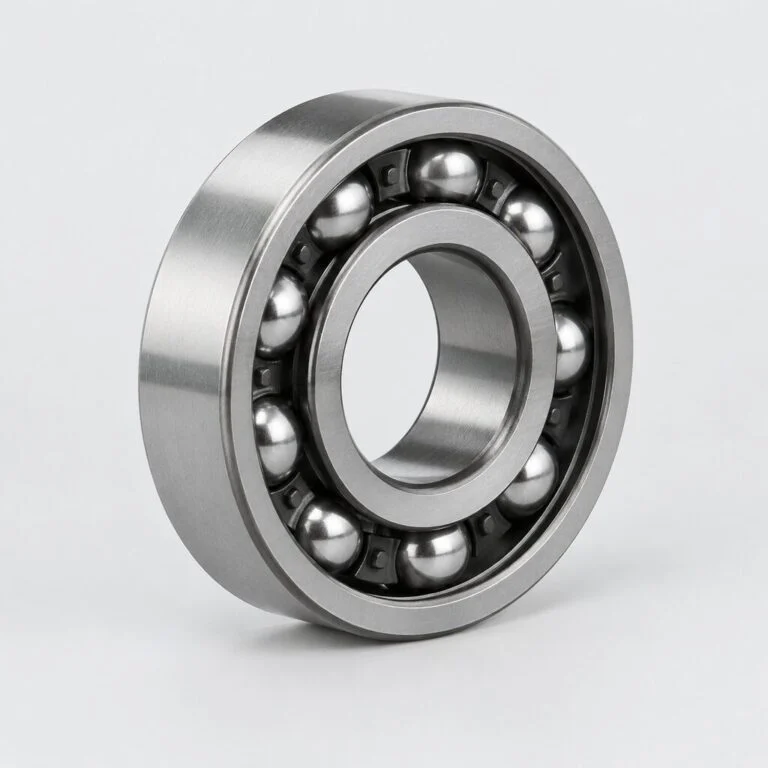
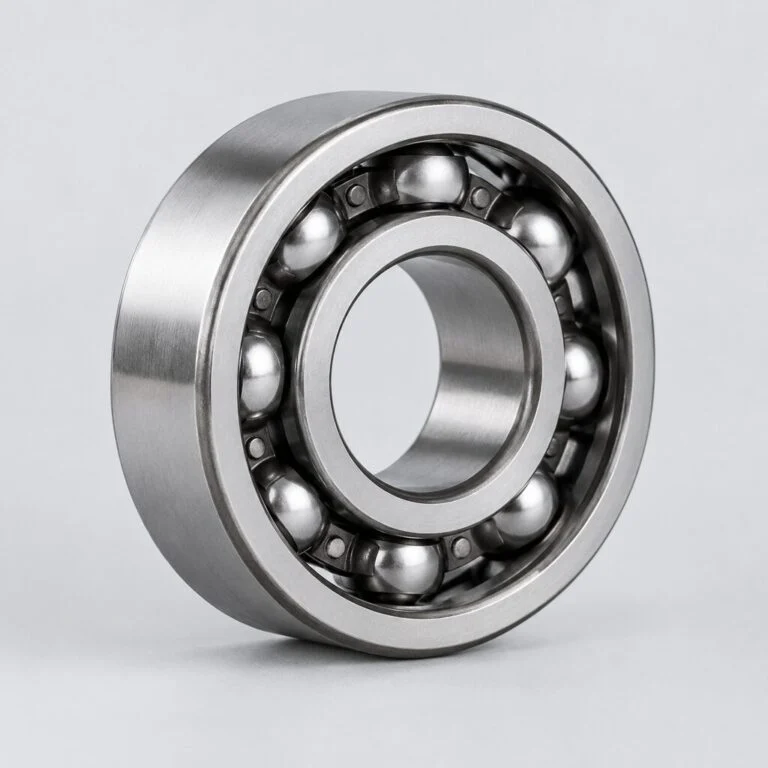
Decoding the Baseline 6209 Configuration
This designation represents the baseline open-type configuration with standard radial internal clearance and a pressed steel cage, optimized for low-noise performance. The Gcr15 chrome steel construction offers high hardness and wear resistance, making it highly suitable for clean, controlled motor assemblies where external sealing is guaranteed. Because no specific suffix is present in the identifier, the bearing relies entirely on the motor housing to provide environmental protection and initial lubrication. For applications with higher thermal loads or tighter shaft fits, engineers must explicitly request a C3 clearance suffix to compensate for shaft and housing expansion during startup. Similarly, adding rubber contact seals transforms the unit into a self-contained, maintenance-free component for dusty environments, though this introduces additional friction that slightly lowers the limiting speed.
The Financial Ripple Effect of Incorrect Fit and Clearance
Selecting the wrong internal clearance or ignoring shaft tolerance stacks leads to premature fatigue and unplanned downtime across the entire production line. A bearing that runs too tight will overheat and seize, while excessive looseness causes destructive vibration that damages the motor windings and misaligns the driven equipment. These failures often void equipment warranties and trigger cascading damage to adjacent drive components, multiplying the replacement costs far beyond the price of the bearing itself. Following ISO 281 guidelines for dynamic load rating adjustments helps prevent these costly miscalculations by accounting for real-world operating conditions rather than relying on theoretical catalog values.
Securing Traceable Motor-Grade Inventory
Sourcing authentic Japanese-origin bearings for critical motor applications requires strict channel verification to avoid counterfeit stock that lacks proper metallurgical treatment. We provide complete batch traceability for every koyo unit, ensuring the material properties and dimensional tolerances match the original equipment specifications exactly. Our massive spot inventory covers thousands of standard motor sizes, allowing us to fulfill both single-unit emergency replacements and full-container project consolidations without delaying your assembly schedule. When cross-referencing legacy motor prints, our technical team verifies the exact suffix requirements to prevent the clearance mismatches and cage material errors that frequently cause field failures in demanding industrial environments.
Documentation & Authenticity
- Certificate of Conformity validating the Japanese origin and Gcr15 material grade.
- Original factory batch traceability linking the 45x85x19mm dimensions to the production run.
- Official app QR authentication for verifying genuine koyo packaging and anti-counterfeit seals.
- Dimensional inspection reports confirming the 45 mm bore and 85 mm OD tolerances.
- Running accuracy test data ensuring low-noise performance for electric motor assemblies.
Storage, Handling & Mounting
- Store the open-type bearings in original packaging to prevent moisture ingress before motor assembly.
- Use induction heating for the 45 mm bore to achieve proper interference fit without damaging the raceway.
- Apply clean gloves during handling to avoid fingerprint corrosion on the polished chrome steel surfaces.
- Verify the motor housing seal condition before mounting, as this open variant relies on external sealing.
- Ensure the grease applied during motor assembly is compatible with the bearing's baseline factory rust preventive.
Engineering Data Required for Selection
To ensure the baseline 6209 configuration suits your specific motor design, please share the operating temperature range, continuous speed, and radial load profiles. If you are replacing an existing unit, provide the OEM motor nameplate data or the exact suffix markings from the failed bearing to avoid repeating past selection errors. Our engineering team will use these parameters to calculate the required internal clearance, evaluate the shaft fit, and recommend the optimal lubrication strategy for your specific application, ensuring reliable operation throughout the motor's intended service life.
Frequently Asked Questions
Q: How do I verify the authenticity of the koyo 6209 deep groove ball bearing?
A: Authenticity is verified through the official manufacturer app by scanning the QR code on the individual box. We also supply original factory batch traceability documents and a Certificate of Conformity. This ensures the Gcr15 chrome steel material and Japanese origin meet your quality management system requirements without relying on third-party guesswork.
Q: What clearance class should I specify for high-temperature electric motors?
A: For motors operating at elevated temperatures or with tight shaft fits, a C3 clearance class is typically required to prevent thermal seizure. Standard clearance may close up completely once the motor reaches its steady-state operating temperature. Provide your exact thermal data so we can confirm the correct internal gap before shipment.
Q: Can this open-type bearing be used in dusty industrial environments?
A: The baseline open configuration relies entirely on the motor housing for sealing and is not recommended for exposed, dusty environments. If external sealing is inadequate, you should specify a variant with integrated rubber contact seals or metal shields. We can cross-reference your housing design to determine the most appropriate sealed suffix for your application.
Q: How do I cross-reference this bearing with other international brands?
A: The 6209 dimension and basic deep groove design are standardized globally, allowing direct cross-referencing to equivalent SKF, FAG, or NSK models. However, internal clearance, cage materials, and noise grades may vary between manufacturers. Share your precise operational requirements so we can match the exact performance characteristics rather than just the basic envelope dimensions.
Q: What mounting method is recommended for the 45 mm bore?
A: For a 45 mm bore on a standard motor shaft, induction heating is the preferred mounting method to expand the inner ring evenly. This prevents uneven mechanical stress and protects the polished raceways from scoring. Ensure the heating temperature does not exceed the thermal limit of the bearing steel to maintain its structural hardness.