
Needle Bearings HS Codes: Wholesale Supplier for Bulk Import & Sourcing
Not all roller bearings share the same customs code.
The correct HS code for most needle bearings is 8482.50, specifically under subheadings that distinguish them from cylindrical or tapered rollers. However, uncaged needle rollers often fall under 8482.99, and misclassification here triggers immediate customs holds.
I still remember the humidity in the Los Angeles port warehouse two years ago. A long-time client in the agricultural machinery sector had a container of urgent spare parts stuck in customs. The paperwork listed the items simply as “roller bearings.” To the untrained eye, a needle bearing looks like a slim cylindrical roller. But to customs officers applying the General Rules of Interpretation, that visual similarity is a trap. The shipment was flagged because the HS code used matched cylindrical rollers, not needle bearings. The resulting detention fees ate into the margin of the entire order, and the delay halted a production line back in the Midwest. That incident wasn’t about bad intent; it was about technical nuance. Needle bearings have specific structural definitions in the Harmonized System that separate them from their bulkier cousins.
Understanding these distinctions is not just bureaucratic box-ticking. It is the foundation of smooth clearance for global distributors and OEMs who move mixed-brand containers across borders. When you source from a professional global full-range bearing supplier, the expectation is that the physical product matches the documentation down to the last digit of the tariff code.
What is the Correct HS Code for Needle Bearings?
Needle bearings are classified under heading 8482, but the specific subheading depends on whether they are caged or uncaged.
The Harmonized System is precise. Heading 8482 covers ball or roller bearings. Within this, subheading 8482.50 is designated for “other cylindrical roller bearings.” This is where many importers get confused. While needle bearings are technically a type of cylindrical roller, the WCO and national customs schedules often treat them with specific attention due to their unique geometry—high load capacity in a small cross-section.
For caged needle bearings, which include the rolling elements held in a cage, the classification typically aligns with 8482.50. However, some jurisdictions may have further breakdowns. For uncaged needle rollers (loose rollers), the code often shifts to 8482.99, which covers “other” parts of bearings. This distinction is critical. If you import a mix of caged and uncaged units under a single code, you risk partial rejection of the entire entry.
| Bearing Type | Structural Feature | Typical HS Subheading | Classification Risk |
|---|---|---|---|
| Caged Needle Bearing | Rollers held by a cage | 8482.50 | Low if specified correctly |
| Uncaged Needle Roller | Loose rollers without cage | 8482.99 | High if grouped with caged |
| Cylindrical Roller | Standard diameter-to-length ratio | 8482.50 | Medium if confused with needle |
The key is to look at the technical specification, not just the brand name. A needle bearing from SKF, INA, or NSK will have the same fundamental classification logic as a domestic Chinese bearing from ZWZ or HRB. The brand does not dictate the code; the design does. When sourcing from a wholesale supplier for bulk import, ensure your commercial invoice specifies “caged” or “uncaged” explicitly. This small detail prevents the customs broker from guessing.
Why Do Needle Bearings Get Misclassified at Customs?
Most misclassifications stem from the assumption that all roller bearings are interchangeable in the eyes of tariff schedules.
It is a common counter-intuitive reality: what engineers see as a minor design variation, customs authorities see as a different taxable entity. Many procurement teams assume that because needle bearings and cylindrical roller bearings both use cylindrical rolling elements, they share the same code. This is incorrect. The length-to-diameter ratio of the rollers defines a needle bearing. If the rollers are significantly longer than their diameter, they are needles. If not, they are standard cylindrical rollers.
Another frequent error is relying on the supplier’s proforma invoice without verification. In one case, a European distributor received a shipment where the supplier had used a generic “bearing parts” code to simplify paperwork. The result was a manual inspection that delayed clearance by weeks. Customs officers do not accept “generic” codes for specialized components like needle bearings. They require specificity.
Furthermore, mixed-shipment pitfalls are real. A container holding deep-groove ball bearings, spherical roller bearings, and needle bearings cannot be cleared under a single dominant code. Each line item must be declared separately. When you work with a supplier who offers complete traceability documentation, this separation should be reflected in the packing list. The invoice must mirror the physical segregation of goods.
How to Prepare Documents for Mixed-Bearing Shipments?
Detailed packing lists with technical specs are non-negotiable for mixed-brand consolidation orders.
When you consolidate products from multiple brands like FAG, NTN, TIMKEN, and KOYO into one container, the documentation burden increases. The customs authority needs to verify each line item. A vague description like “bearings” is insufficient. The description must include the type (needle), the structure (caged/uncaged), and the application context if relevant.
Start with the commercial invoice. Each SKU should have its own line item with the correct HS code. Do not bundle different types of needle bearings under one aggregate quantity if they have different structural classifications. For example, do not mix caged needle bearings and loose needle rollers under 8482.50. Separate them.
Next, the packing list. It must match the invoice exactly. Include the brand, part number, and a brief technical note. For needle bearings, noting the inner and outer diameter can help justify the classification if questioned. If you are sourcing from a provider that offers one-stop mixed-brand consolidation, leverage their expertise. They should provide a pre-clearance document set that aligns with the destination country’s requirements. This reduces the risk of human error in data entry.
Risk checklist for mixed shipments:
- Verify HS code for each distinct bearing type.
- Ensure invoice descriptions match physical labels.
- Confirm that uncaged rollers are not listed under caged bearing codes.
- Check for any destination-specific restrictions on steel products.
What are the Risks of Wrong HS Code Classification?
Incorrect classification leads to fines, seizures, and costly tariff audits that far exceed the initial savings.
The financial impact of a wrong HS code is not limited to the difference in duty rates. It includes demurrage charges, storage fees, and potential penalties for negligence. In severe cases, repeated errors can trigger a comprehensive audit of your import history. This means every past shipment could be re-evaluated, leading to retroactive duties and interest.
For OEMs and distributors, time is money. A customs hold stops the supply chain. If a critical machine component is stuck at the port, production lines halt. The cost of downtime dwarfs the cost of correct classification. Moreover, intentional misclassification to lower duties is considered fraud. Even unintentional errors can damage your relationship with customs authorities, leading to stricter scrutiny on future shipments.
Accurate classification ensures compliant rates and smooth clearance. It protects your business from unexpected costs and legal risks. When you partner with a supplier who understands these nuances, you gain more than just products. You gain peace of mind. The right documentation, prepared with precision, is your best defense against customs delays.
Conclusion
Precision in HS code classification is as critical as the precision of the bearings themselves.
Misclassifying needle bearings as generic rollers invites unnecessary delays and costs. By distinguishing between caged and uncaged designs and preparing detailed, accurate documentation, importers can ensure smooth clearance. Trust in technical specificity, not generalizations, to keep your supply chain moving efficiently.
Mentioned in this article
Koyo / JTEKT bearings from this guide
These are the Koyo / JTEKT bearing types discussed above. Open any product to check its details, or quote it together with the rest of your repair.
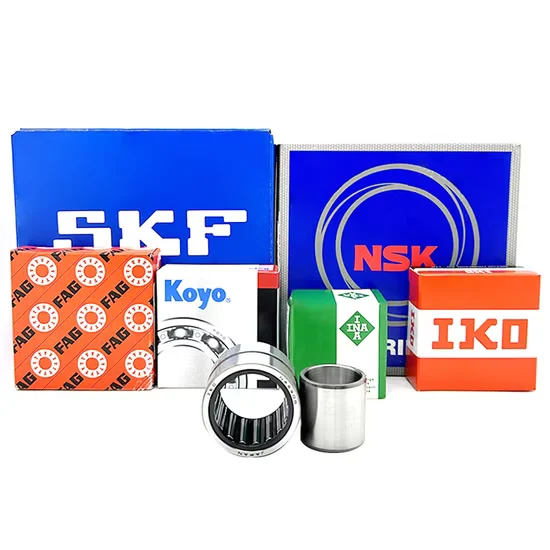
Needle Roller Bearings
Koyo RNAV4903 RNAV4904 RNAV4905 RNAV4906 RNAV4907 Needle Roller Bearings
View Product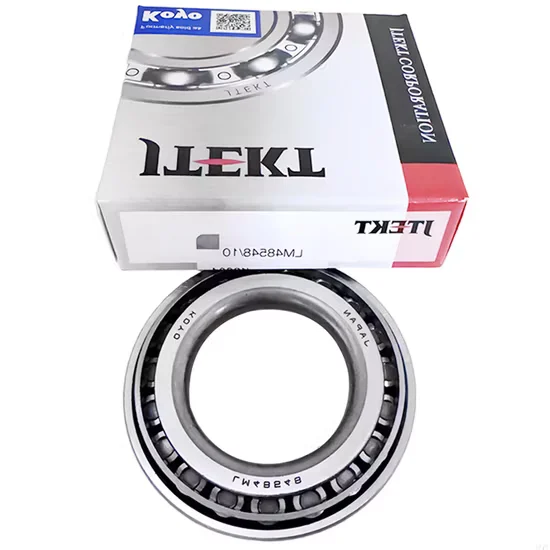
Tapered Roller Bearings
Genuine KOYO 32007 Tapered Roller Bearing Wholesale Supplier
View Product
Tapered Roller Bearings
Genuine KOYO 32006 Taper Roller Bearing Wholesale Supplier
View Product
Cylindrical Roller Bearings
Koyo NSK N408e Cylindrical Roller Bearing Genuine Wholesale Supplier
View ProductKeep reading
More bearing selection guides for repair shops
Practical guides from KOYO Bearing Supplier on identifying Koyo / JTEKT bearings for farm machinery, construction equipment and power transmission repairs.
Procurement & Trade FAQs · 7 min read
Rebuild Kit Supply for Transmission Shops: Wholesale Bearing Supplier
Transmission rebuild kit supply depends on accurate HS codes and detailed BOMs to prevent customs delays. Learn how mixed bearing consolidation and robust packaging…
Read the Guide Procurement & Trade FAQs
· 7 min read
Genuine Bearing Stock Programs for Motorcycle Dealers: Wholesale Supplier
Optimize Motorcycle Dealer Stock Programs by balancing cross-brand bearing equivalency, genuine traceability, and flexible MOQs to prevent costly warranty claims. Verify dimensional tolerance and…
Read the Guide Procurement & Trade FAQs · 7 min read
Express Shipping for Urgent Bearing Repairs: Global Wholesale Supplier
Master express shipping for urgent bearing replacements by prioritizing customs clearance over flight speed to eliminate port bottlenecks. Optimize volumetric weight, consolidate mixed-brand orders,…
Read the Guide
Bearing enquiry
Send your machine details. Get a written Koyo / JTEKT quote.
KOYO Bearing Supplier quotes a single bearing position or every bearing in an assembly on one enquiry, matched to your machine model and application, with model, quantity, price, lead time and quote validity in writing.
- WhatsApp+1 (702) 981-5880
- Emailinfo@koyoome.com
- Address8 Research Drive, Greenville, SC 20627, USA
"When a Koyo bearing failed on a harvest machine during the season, we needed a replacement urgently. The supplier identified the correct Koyo reference, shipped same-day, and the machine was back in the field within the day."

Request a Bearing Quote
Tell us the machine and the bearing position. Photos of the markings can follow on WhatsApp.