
Genuine Wheel Bearings Wholesale Supplier for Fleet Agreements
The cheapest bearing on the invoice is often the most expensive component in your fleet’s annual budget.
Fleet agreements for wheel bearings must prioritize genuine traceability and total cost of ownership over initial unit price to prevent catastrophic fleet downtime. Sourcing strategies should focus on verifying authenticity through original mill certificates and customs declarations, while consolidating mixed-brand orders to optimize logistics and ensure consistent supply chain reliability.
I still remember the smell of burnt grease and overheated metal that hung over a maintenance yard in South America a few years ago. A transport fleet manager had decided to cut costs by switching to unbranded aftermarket wheel bearings for his heavy-duty trucks. The savings on the purchase order looked impressive on paper. But within tens of thousands of kilometers, the bearings began to fail. It started with a low hum, then progressed to severe vibration, and finally, complete seizure. Half the fleet was grounded. The towing penalties alone amounted to a mid-six-figure loss, not counting the lost contracts and reputational damage. That incident reinforced a hard truth I learned early on in the workshop: the price gap between genuine and counterfeit parts is dwarfed by the cost of a single batch failure.
This experience shapes how I approach every inquiry today. When buyers ask for a Genuine Wheel Bearings Wholesale Supplier for Fleet Agreements, they are not just looking for a vendor; they are looking for an insurance policy against operational chaos. The following sections break down how to structure these agreements effectively, verify what you buy, and understand why cutting corners destroys profitability.
What Should Be Included in a Wheel Bearing Fleet Agreement?
A robust fleet agreement is defined by its clarity on specifications, flexibility in minimum order quantities, and ironclad traceability clauses.
Many procurement managers treat bearing purchases as simple commodity transactions. This is a mistake. Wheel bearings are safety-critical components. A vague contract leaves room for suppliers to substitute lower-grade materials or refurbished units that look new but lack the structural integrity of genuine products.
When drafting your agreement, focus on three core elements:
- Explicit Brand and Origin Specifications: Do not just list “wheel bearing.” Specify the brand (e.g., SKF, TIMKEN, FAG), the exact part number, and the country of origin. Require that all goods match the manufacturer’s current packaging and labeling standards.
- Traceability Documentation: Mandate that every shipment includes original mill certificates, factory test reports, and full customs declaration copies. These documents prove the goods moved through legitimate channels from the factory to your warehouse. Without them, you have no proof of authenticity.
- MOQ Flexibility and Consolidation: Fleet maintenance needs vary. Sometimes you need a full container of standard sizes; other times, you need urgent, small-batch replacements for specific models. Your agreement should allow for mixed-brand and mixed-size consolidation. This reduces inventory holding costs and ensures you can respond to unexpected breakdowns without waiting for a full container load.
By embedding these requirements into your Genuine Wheel Bearings Wholesale Supplier for Fleet Agreements, you shift the risk from your operation back to the supply chain. You ensure that every box opened in your warehouse contains exactly what you paid for.
How to Verify Bearing Authenticity in Bulk Orders?
Authenticity is verified through a triad of original documentation, physical inspection, and brand warranty validation.
Counterfeiters have become sophisticated. Packaging can be replicated, and labels can be forged. Relying solely on the box is insufficient. To protect your fleet, you must implement a multi-layer verification process before accepting any bulk delivery.
Start with the paperwork. Request the original certificate of quality from the manufacturing plant. Cross-reference the batch numbers on the certificate with the numbers printed on the bearing rings and packaging. Then, check the customs declaration. Genuine imports will have a clear trail from the exporting country to your port. If the supplier cannot provide these documents instantly, consider it a red flag.
Next, conduct a physical spot check. Genuine bearings from brands like NSK, NTN, or KOYO exhibit precise machining marks, consistent laser etching, and high-quality sealing materials. Counterfeits often show rough edges, inconsistent font depths, or poor-quality grease seals. While visual inspection requires experience, it is a critical first line of defense.
Finally, leverage the brand’s warranty infrastructure. Major manufacturers like INA and NACHI offer verification services for distributors and large end-users. Register your purchase with the brand if possible. This not only confirms authenticity but also secures your right to technical support and claims processing if a defect arises.
Integrating these verification steps into your relationship with a Genuine Wheel Bearings Wholesale Supplier for Fleet Agreements ensures that your procurement process is bulletproof. It transforms buying from a gamble into a controlled, auditable procedure.
Why Do Cheap Wheel Bearings Destroy Fleet Profitability?
The initial savings from cheap bearings are illusory when weighed against the hidden costs of premature failure and unplanned downtime.
Most fleet managers operate under the assumption that lowering the unit price improves the bottom line. In reality, the total cost of ownership (TCO) tells a different story. A bearing that fails at half its expected lifespan does not just cost twice as much per kilometer; it triggers a cascade of secondary expenses.
Consider the direct costs: towing fees, emergency repair labor rates, and the price of replacement parts. These are significant. But the indirect costs are often larger. A truck off the road means a missed delivery deadline. Missed deadlines lead to penalty clauses in customer contracts. Repeated failures damage your reputation, leading to lost future business.
Furthermore, premature bearing failure can cause collateral damage. A seized wheel bearing can destroy the hub, axle, and even the brake system. What started as a fifty-dollar saving on a bearing ends up requiring thousands of dollars in comprehensive axle repair.
In contrast, genuine bearings from brands like ZWZ, HRB, or LYC, when sourced correctly, offer predictable lifespans. They allow for planned maintenance schedules rather than emergency responses. Planned maintenance is cheaper, faster, and less disruptive.
Understanding this dynamic is crucial when negotiating with a Genuine Wheel Bearings Wholesale Supplier for Fleet Agreements. You are not buying metal; you are buying uptime. The slight premium paid for verified genuine parts is an investment in operational stability.
How to Consolidate Mixed-Brand Bearing Orders Efficiently?
Efficient consolidation leverages one-stop sourcing to optimize container loading and simplify logistics for diverse fleet needs.
Large fleets rarely use a single brand for all applications. Some trucks may specify TIMKEN for heavy-load axles, while others use SKF for steering knuckles. Managing multiple suppliers for each brand creates logistical nightmares, increased shipping costs, and administrative overhead.
A more effective strategy is to work with a supplier who offers full-spectrum sourcing. By consolidating orders for SKF, FAG, INA, NSK, NTN, TIMKEN, KOYO, NACHI, and IKO into a single shipment, you maximize container space and reduce freight costs per unit. This approach also simplifies customs clearance, as you deal with one set of documents and one point of contact.
Moreover, a consolidated supplier can provide cross-brand technical support. If a specific model is discontinued or backordered, they can recommend a compatible equivalent from another premium brand, ensuring your maintenance schedule stays on track. This flexibility is invaluable in volatile supply chains.
This level of service defines a true partner in your supply chain. When you engage a Genuine Wheel Bearings Wholesale Supplier for Fleet Agreements that supports mixed-brand consolidation, you gain efficiency, flexibility, and peace of mind.
Conclusion
Prioritizing traceability and total cost of ownership transforms wheel bearing procurement from a cost center into a strategic advantage.
Fleet agreements must be built on verified authenticity and flexible logistics. By demanding proper documentation, understanding the true cost of failure, and consolidating mixed-brand orders, you protect your operations from the high price of downtime. Choose partners who provide not just parts, but proven reliability.
Mentioned in this article
Koyo / JTEKT bearings from this guide
These are the Koyo / JTEKT bearing types discussed above. Open any product to check its details, or quote it together with the rest of your repair.
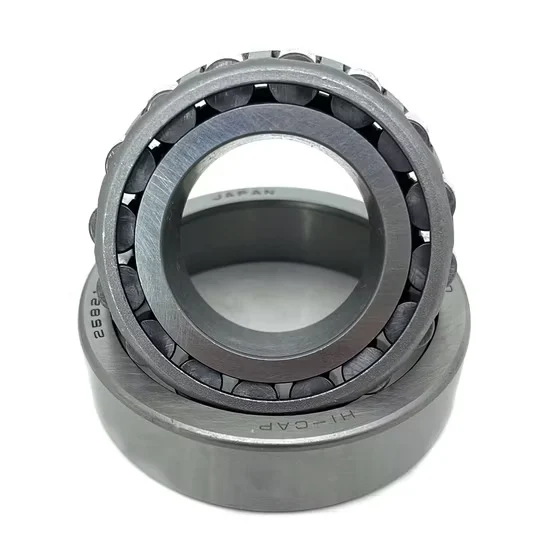
Tapered Roller Bearings
Genuine Koyo Tapered Roller Bearing 30123 30214 30215 30216 30217 for Car Wheel Hub
View Product
Wheel Bearings
Koyo Dac34640037 Wheel Hub Bearing Genuine Auto Spare Parts
View Product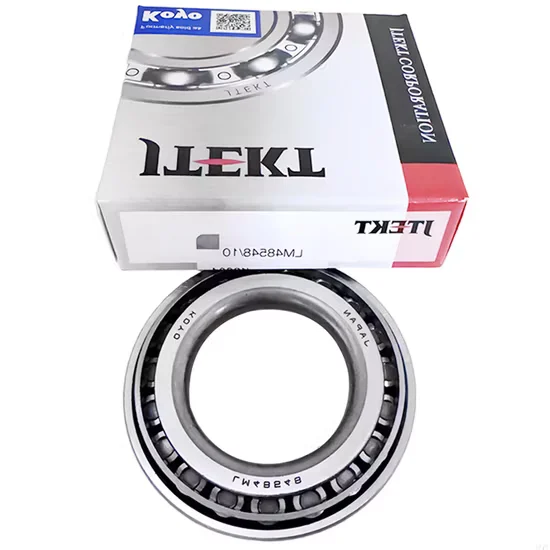
Tapered Roller Bearings
Genuine KOYO 32007 Tapered Roller Bearing Wholesale Supplier
View Product
Tapered Roller Bearings
Genuine KOYO 32006 Taper Roller Bearing Wholesale Supplier
View ProductKeep reading
More bearing selection guides for repair shops
Practical guides from KOYO Bearing Supplier on identifying Koyo / JTEKT bearings for farm machinery, construction equipment and power transmission repairs.
Procurement & Trade FAQs · 7 min read
Rebuild Kit Supply for Transmission Shops: Wholesale Bearing Supplier
Transmission rebuild kit supply depends on accurate HS codes and detailed BOMs to prevent customs delays. Learn how mixed bearing consolidation and robust packaging…
Read the Guide Procurement & Trade FAQs
· 7 min read
Genuine Bearing Stock Programs for Motorcycle Dealers: Wholesale Supplier
Optimize Motorcycle Dealer Stock Programs by balancing cross-brand bearing equivalency, genuine traceability, and flexible MOQs to prevent costly warranty claims. Verify dimensional tolerance and…
Read the Guide Procurement & Trade FAQs · 7 min read
Express Shipping for Urgent Bearing Repairs: Global Wholesale Supplier
Master express shipping for urgent bearing replacements by prioritizing customs clearance over flight speed to eliminate port bottlenecks. Optimize volumetric weight, consolidate mixed-brand orders,…
Read the Guide
Bearing enquiry
Send your machine details. Get a written Koyo / JTEKT quote.
KOYO Bearing Supplier quotes a single bearing position or every bearing in an assembly on one enquiry, matched to your machine model and application, with model, quantity, price, lead time and quote validity in writing.
- WhatsApp+1 (702) 981-5880
- Emailinfo@koyoome.com
- Address8 Research Drive, Greenville, SC 20627, USA
"When a Koyo bearing failed on a harvest machine during the season, we needed a replacement urgently. The supplier identified the correct Koyo reference, shipped same-day, and the machine was back in the field within the day."

Request a Bearing Quote
Tell us the machine and the bearing position. Photos of the markings can follow on WhatsApp.