
Bearing Staff Training: Global Supplier Guide for Bulk Orders
Most buyers assume bearing procurement is a price-driven commodity game. They are wrong.
Effective training counter staff on bearings transforms a simple parts transaction into a risk-mitigation strategy, preventing catastrophic line shutdowns and ensuring that mixed-brand sourcing delivers genuine value rather than hidden liabilities.
The cement plant in Ethiopia was silent, but not in a good way. The main crusher had seized. A bulk order of mixed spherical roller bearings had arrived weeks prior, packaged in unmarked crates alongside other industrial supplies. The local maintenance crew, lacking specific guidance, installed them without verifying internal clearance or alignment tolerances. Within days, severe overheating triggered a complete line shutdown. The cost of replacing the damaged housing and lost production time dwarfed the savings achieved by sourcing from the lowest bidder. That failure was not due to the quality of the steel, but to a gap in technical clarity at the point of handover. When counter staff understand the application, they become the first line of defense against misapplication.
This experience reshaped how I approach global distribution. It is not enough to ship boxes; we must ensure the knowledge travels with the hardware. For regional distributors and MRO buyers, the competence of the person behind the counter determines whether a purchase solves a problem or creates one.
Why is technical training crucial for bearing counter staff?
Technical competence at the sales counter prevents costly misapplications that lead to unplanned downtime and erodes buyer trust in mixed-brand sourcing.
Many distributors believe that bearing sales rely primarily on competitive pricing and part number accuracy. This view ignores the reality of industrial operations. A bearing is not just a SKU; it is a precision component operating under specific load, speed, and temperature conditions. When counter staff lack this context, they cannot identify red flags in a buyer’s request.
Consider the scenario of a mining operator in West Africa requesting a replacement for a vibrating screen. An untrained clerk might match the outer diameter and bore size but miss the critical requirement for a C3 internal clearance needed for high-temperature operation. The result is premature seizure. In contrast, a trained staff member recognizes the application environment and advises on the appropriate clearance class, preventing a repeat failure.
The financial implication extends beyond the part itself. A single misidentified bearing can cause secondary damage to shafts, housings, and connected machinery. The return rate for wrong parts also generates significant freight waste, particularly in cross-border transactions where shipping costs are high. By investing in training counter staff on bearings, distributors reduce these hidden costs and build a reputation for reliability. Buyers begin to view the supplier as a technical partner rather than just a logistics channel.
What core bearing knowledge must counter staff master?
Counter staff must master bearing identification methods, basic load and speed calculations, and cross-brand equivalent lookup logic to provide accurate advice.
The foundation of effective sales is accurate identification. Counter staff should be proficient in decoding bearing suffixes and prefixes, which indicate internal design, clearance, and cage material. For instance, understanding the difference between a standard deep-groove ball bearing and one with a polymer cage can prevent failures in chemically aggressive environments.
Beyond identification, staff need a grasp of fundamental mechanical principles. They do not need to be engineers, but they must understand the relationship between radial and axial loads. When a buyer describes a heavy-duty conveyor application, the staff should recognize the need for spherical roller bearings or tapered roller bearings capable of handling combined loads. Similarly, knowledge of speed limits helps in selecting appropriate lubrication types and cage designs.
Cross-brand equivalence is another critical skill, especially in mixed-brand sourcing. Buyers often seek alternatives to premium brands due to availability or cost. Staff must know how to verify dimensional and performance equivalence between brands like SKF, FAG, NSK, and domestic lines such as ZWZ or HRB. This requires more than matching part numbers; it involves checking dynamic load ratings and precision classes. A well-trained team can confidently recommend a reliable alternative without compromising operational safety.
How to handle mixed-brand procurement FAQs at the counter?
Standardizing responses to questions about minimum order quantities, lead times, and traceability builds confidence in mixed-brand container shipments.
Buyers of mixed-brand containers often have specific concerns regarding documentation and consistency. One frequent question involves the authenticity of goods from multiple manufacturers. Counter staff must be prepared to explain the supply chain transparency measures in place, such as verifiable origin certificates and quality assurance protocols.
Another common inquiry relates to lead times for urgent spare parts versus bulk project orders. Staff should clarify the distinction between spot inventory availability for standard part numbers and the production timelines for special specifications. For example, a deep-groove ball bearing might be available for immediate shipment, while a precision angular contact bearing for a machine tool may require a longer lead time. Clear communication here prevents operational disruptions for the buyer.
Minimum order quantity (MOQ) flexibility is also a key discussion point. Small repair workshops may need single-unit replacements, while large distributors prefer full container consolidation. Trained staff can navigate these requirements by explaining how mixed-size packages are optimized for cost-efficiency without imposing unnecessary volume constraints on smaller buyers. This flexibility is a significant advantage in serving diverse market segments across regions like the Middle East and Latin America.
What documentation proves authenticity to B2B buyers?
Providing verifiable origin and quality certificates is essential for establishing trust in genuine bearing procurement.
In markets where counterfeit products are a concern, documentation serves as the primary proof of authenticity. Counter staff should be familiar with the specific certificates provided by different manufacturers, such as material test reports and conformity declarations. These documents confirm that the bearings meet international standards and are produced in authorized facilities.
For mixed-brand shipments, consolidating these documents into a clear, accessible format is crucial. Buyers need to easily match each batch of bearings to its corresponding certification. Staff should explain how this documentation supports customs clearance and internal quality audits. In industries like wind power or marine operations, where regulatory compliance is strict, having complete paperwork is non-negotiable.
Furthermore, staff should be able to discuss the inspection services available during consolidation. Explaining how goods are verified for damage and correctness before shipping adds another layer of assurance. This proactive approach reduces the risk of receiving defective or incorrect items, which is particularly important for long-distance shipments to remote sites.
Conclusion
Training counter staff on bearings is not an optional extra; it is a core component of reliable industrial supply.
By mastering technical identification, understanding application requirements, and providing clear documentation, staff transform potential risks into trusted solutions. This expertise ensures that every mixed-brand order delivers genuine value, protecting buyers from costly failures and strengthening long-term partnerships.
Mentioned in this article
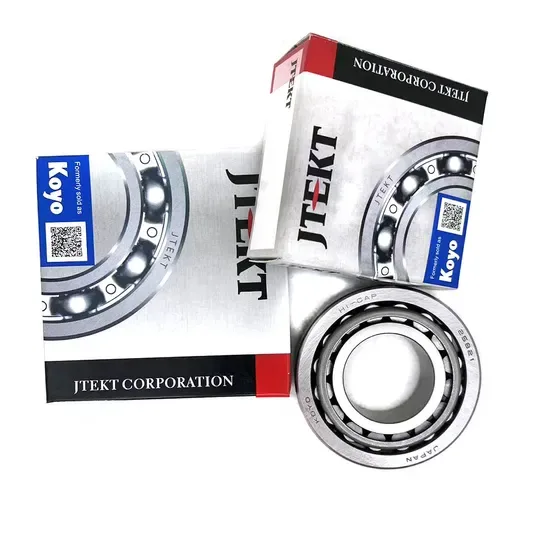
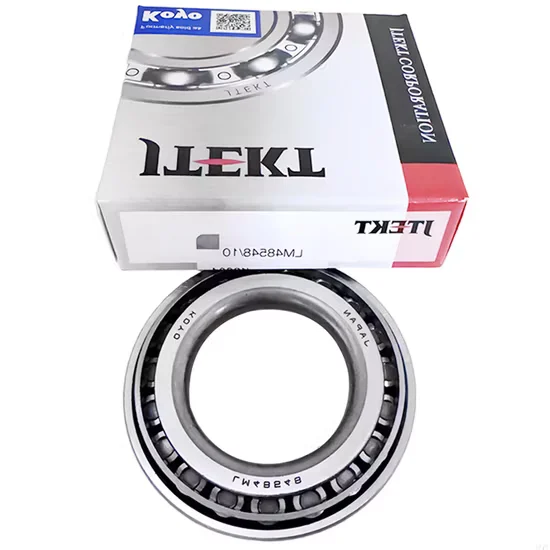
Koyo / JTEKT bearings from this guide
These are the Koyo / JTEKT bearing types discussed above. Open any product to check its details, or quote it together with the rest of your repair.
Tapered Roller Bearings
X&S 33209 Tapered Roller Bearing for Industrial Mining Gearbox
View Product Tapered Roller Bearings
Koyo 30213 30221 30228 Tapered Roller Bearing Single Row for Machinery Part
View Product
Marine Bearings
Koyo 32212 Tapered Roller Bearing for Marine Engines
View Product
Tapered Roller Bearings
Koyo Tapered Roller Bearing 31313 33215 33017 33214 30313 32919 30217 33016
View ProductKeep reading
More bearing selection guides for repair shops
Practical guides from KOYO Bearing Supplier on identifying Koyo / JTEKT bearings for farm machinery, construction equipment and power transmission repairs.
 Procurement & Trade FAQs
· 7 min read
Rebuild Kit Supply for Transmission Shops: Wholesale Bearing Supplier
Transmission rebuild kit supply depends on accurate HS codes and detailed BOMs to prevent customs delays. Learn how mixed bearing consolidation and robust packaging…
Read the Guide Procurement & Trade FAQs · 7 min read
Genuine Bearing Stock Programs for Motorcycle Dealers: Wholesale Supplier
Optimize Motorcycle Dealer Stock Programs by balancing cross-brand bearing equivalency, genuine traceability, and flexible MOQs to prevent costly warranty claims. Verify dimensional tolerance and…
Read the Guide Procurement & Trade FAQs · 7 min read
Express Shipping for Urgent Bearing Repairs: Global Wholesale Supplier
Master express shipping for urgent bearing replacements by prioritizing customs clearance over flight speed to eliminate port bottlenecks. Optimize volumetric weight, consolidate mixed-brand orders,…
Read the Guide
Bearing enquiry
Send your machine details. Get a written Koyo / JTEKT quote.
KOYO Bearing Supplier quotes a single bearing position or every bearing in an assembly on one enquiry, matched to your machine model and application, with model, quantity, price, lead time and quote validity in writing.
- WhatsApp+1 (702) 981-5880
- Emailinfo@koyoome.com
- Address8 Research Drive, Greenville, SC 20627, USA
"When a Koyo bearing failed on a harvest machine during the season, we needed a replacement urgently. The supplier identified the correct Koyo reference, shipped same-day, and the machine was back in the field within the day."

Request a Bearing Quote
Tell us the machine and the bearing position. Photos of the markings can follow on WhatsApp.