
Transmission Shop Rebuild Kits: Genuine Bearing Wholesale Supplier
Buying the cheapest bearings for your rebuild kits is the most expensive mistake a shop can make.
Sourcing genuine, traceable bearings for transmission rebuild kits prevents catastrophic failures, requiring reliable suppliers offering mixed-brand consolidation and strict authenticity. This approach ensures that every component, from tapered roller bearings to deep-groove ball bearings, meets original equipment manufacturer specifications, thereby eliminating the risk of premature seizure and costly warranty claims.
I still remember the smell of burnt gear oil in a workshop in Riyadh. It was a mid-summer afternoon, with ambient temperatures pushing past fifty degrees Celsius. A heavy-duty truck had come in for a routine transmission overhaul. The owner, trying to cut costs on a tight budget, had sourced a batch of tapered roller bearings that looked identical to the genuine TIMKEN parts but cost a fraction of the price. Within weeks, the transmission seized completely. The heat generated by the inferior steel and poor manufacturing tolerances caused the rollers to weld themselves to the races. The resulting damage wasn’t just a bearing failure; it destroyed the housing, the gears, and the shafts. The cost to fix the mess was several times the initial savings. That incident shifted my entire perspective on supply chain integrity. I realized that in the automotive aftermarket, especially for high-stress applications like transmission rebuilds, the part number is only half the story. The provenance of the part is the other half.
The market is flooded with components that look right but fail under load. For repair shops and distributors, the challenge isn’t just finding parts; it’s finding parts that won’t come back. This is where the role of a specialized Transmission Shop Rebuild Kits provider becomes critical. It is not merely about stocking boxes; it is about curating a supply chain that guarantees authenticity across multiple brands.
Why Do Transmission Rebuilds Fail Prematurely?
Counterfeit bearings under extreme loads cause rapid thermal failure and seizure.
When a transmission is rebuilt, it is subjected to rigorous testing and then immediately placed under heavy operational stress. If the bearings used are not genuine, the microscopic imperfections in the steel or the incorrect heat treatment become fatal flaws. In my experience dealing with workshops across the Middle East and Latin America, the majority of premature failures stem from two issues: material fatigue and dimensional inaccuracy.
Genuine bearings from brands like SKF, FAG, or TIMKEN undergo strict quality control processes that ensure consistent hardness and precise geometry. Counterfeit parts often skip these steps. They may use lower-grade steel that cannot withstand the high contact stresses inside a transmission. Under heavy loads, these inferior materials deform, leading to increased friction, heat buildup, and eventual seizure.
Consider a fleet maintenance operator in Latin America who faced recurring issues with their heavy-truck transmissions. They were sourcing bearings from various local vendors to get the best price. However, the lack of consistency meant that some batches contained parts with improper clearance fits. This led to delayed lead times as they had to constantly reorder and replace failed units. By switching to a consolidated sourcing strategy that prioritized genuine parts, they saw a noticeable drop in repeat repairs. The key was not just the brand, but the assurance that every single bearing met the original design specifications.
For shops assembling Transmission Shop Rebuild Kits, understanding this failure mode is essential. It is not enough to simply match the part number. The internal quality of the bearing determines the longevity of the entire assembly. A single fake bearing can compromise the entire rebuild, leading to reputational damage and financial loss that far outweighs the initial cost difference.
How to Verify Bearing Authenticity Before Installation?
Traceability documentation and precise dimensional checks are mandatory for genuine parts.
Verifying the authenticity of bearings requires a multi-layered approach. Visual inspection is the first step, but it is rarely sufficient on its own. Counterfeiters have become sophisticated in replicating packaging and laser etching. Therefore, relying solely on the box or the marking on the ring is risky.
A more robust method involves cross-referencing lookup methods and checking for complete traceability documentation. Genuine manufacturers provide batch numbers that can be traced back to the production facility. This documentation is crucial for customs clearance and for proving authenticity in case of a dispute.
In Southeast Asia, a distributor once faced significant delays at customs because their shipments lacked proper certification documents. The authorities suspected the goods were counterfeit due to the absence of verifiable paperwork. By implementing a system where every order came with full traceability docs, they reduced clearance time significantly. This experience highlights that authenticity is not just a technical issue but a logistical one as well.
When inspecting bearings for Transmission Shop Rebuild Kits, look for these indicators:
- Packaging Quality: Genuine boxes have high-quality printing, correct logos, and secure sealing.
- Surface Finish: The metal should have a uniform, smooth finish without rough spots or discoloration.
- Markings: Laser etchings should be crisp, evenly spaced, and match the manufacturer’s standard font.
- Documentation: Always request certificates of origin and conformity.
Without these checks, shops risk installing components that may fail prematurely. The effort spent on verification is a small price to pay for the peace of mind that comes with knowing every part in the kit is genuine.
What Are the Hidden Costs of Sourcing Cheap Bearings?
Initial savings are wiped out by repeat labor costs and reputational damage.
Many shop owners believe that buying cheaper bearings saves money. This is a dangerous misconception. The true cost of a bearing is not just its purchase price but the total cost of ownership, which includes installation labor, potential downtime, and warranty claims. When a counterfeit bearing fails, the shop must remove the transmission again, disassemble it, and replace the failed parts. This double labor cost, combined with the loss of customer trust, makes cheap bearings incredibly expensive.
I have seen workshops lose long-term clients because of a single bad rebuild. The customer does not blame the bearing; they blame the shop. This reputational damage is hard to quantify but easy to feel. In contrast, using genuine bearings from reputable brands like NSK, NTN, or KOYO ensures reliability. While the upfront cost is higher, the return rate drops noticeably.
Furthermore, the administrative burden of handling warranty claims is significant. Processing returns, negotiating with suppliers, and managing unhappy customers takes time away from core business activities. By sourcing from a supplier who guarantees authenticity, shops can minimize these hidden costs. The focus shifts from firefighting failures to delivering consistent quality.
For those assembling Transmission Shop Rebuild Kits, the choice of supplier is a strategic decision. It is not just about procurement; it is about risk management. Choosing a partner who prioritizes quality over low price protects the shop’s bottom line and its reputation.
The math is simple: paying more for genuine parts saves money in the long run. It reduces the frequency of comebacks and keeps customers satisfied. This is why smart shop owners prioritize quality in their sourcing decisions.
How to Optimize Mixed-Brand Sourcing for Repair Shops?
Consolidating orders from a single global supplier reduces lead times and ensures authenticity.
Sourcing bearings from multiple vendors is inefficient and risky. Each vendor has different quality standards, delivery times, and documentation practices. Managing these relationships creates administrative overhead and increases the chance of error. A better approach is to consolidate orders with a single global supplier who offers mixed-brand solutions.
This strategy allows shops to access a wide range of genuine products from brands like INA, NACHI, and IKO through one channel. It simplifies procurement, reduces shipping costs, and ensures consistent quality.
In my work, I have helped numerous repair groups streamline their supply chains. By moving to a consolidated model, they reduced their ordering time and improved inventory accuracy. They no longer had to chase down multiple suppliers for different part numbers. Instead, they could place one order and receive a complete kit with all necessary components.
For Transmission Shop Rebuild Kits, this means having access to all the required bearings in one shipment. Whether it is a deep-groove ball bearing for the input shaft or a spherical roller bearing for the output, everything comes from a verified source. This eliminates the risk of mixing genuine and counterfeit parts from different vendors.
Moreover, a reliable supplier provides technical support. They can help with cross-reference lookups and offer advice on equivalent models if a specific part is unavailable. This level of service is invaluable for shops dealing with complex rebuilds. It ensures that the right part is used every time, reducing the risk of errors.
Conclusion
Quality sourcing is the foundation of reliable transmission repairs.
Avoiding counterfeit bearings and ensuring traceability are not optional extras; they are essential practices for any serious repair shop. By consolidating sourcing with a trusted global supplier, shops can reduce risks, lower total costs, and improve customer satisfaction. The goal is to deliver rebuilds that last, and that starts with the parts inside the box.
Mentioned in this article
Koyo / JTEKT bearings from this guide
These are the Koyo / JTEKT bearing types discussed above. Open any product to check its details, or quote it together with the rest of your repair.

Tapered Roller Bearings
Genuine KOYO 32007 Tapered Roller Bearing Wholesale Supplier
View Product
Tapered Roller Bearings
Genuine KOYO 32006 Taper Roller Bearing Wholesale Supplier
View Product
Cylindrical Roller Bearings
Koyo NSK N408e Cylindrical Roller Bearing Genuine Wholesale Supplier
View Product
Cylindrical Roller Bearings
Koyo N2305e Cylindrical Roller Bearing Genuine Wholesale Supplier
View ProductKeep reading
More bearing selection guides for repair shops
Practical guides from KOYO Bearing Supplier on identifying Koyo / JTEKT bearings for farm machinery, construction equipment and power transmission repairs.
News & Cases · 6 min read
EV Transmission Bearings Wholesale Supplier 2026 Trends
Master EV Transmission Trends 2026 by prioritizing strict supply chain compliance over price to prevent costly port delays. Verify batch traceability and accurate HS…
Read the Guide News & Cases · 7 min read
Genuine SKF FAG NSK Bearings Wholesale Supplier for Auto Aftermarket 2026
Navigate the 2026 Auto Aftermarket Outlook by securing genuine SKF, FAG, and NSK bearings to avoid costly refurbished part failures. Prioritize strict traceability over…
Read the Guide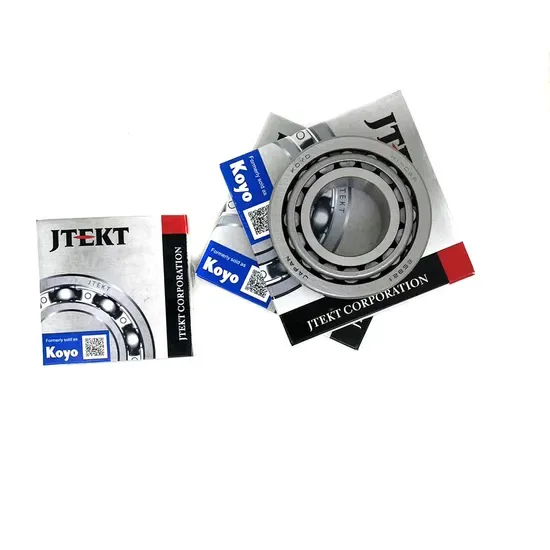 News & Cases
· 7 min read
Motorcycle Bearings for Asia & Africa Markets: Wholesale Supplier
For the 2026 motorcycle market in Asia and Africa, sourcing rugged bearings with multi-lip seals prevents costly warranty claims from dust and mud. Standard…
Read the Guide
Bearing enquiry
Send your machine details. Get a written Koyo / JTEKT quote.
KOYO Bearing Supplier quotes a single bearing position or every bearing in an assembly on one enquiry, matched to your machine model and application, with model, quantity, price, lead time and quote validity in writing.
- WhatsApp+1 (702) 981-5880
- Emailinfo@koyoome.com
- Address8 Research Drive, Greenville, SC 20627, USA
"When a Koyo bearing failed on a harvest machine during the season, we needed a replacement urgently. The supplier identified the correct Koyo reference, shipped same-day, and the machine was back in the field within the day."

Request a Bearing Quote
Tell us the machine and the bearing position. Photos of the markings can follow on WhatsApp.