
Transmission Bearing Lookup by Gearbox: Genuine Wholesale Supplier
Matching basic dimensions is not enough to save a gearbox.
Accurate transmission bearing lookup requires cross-referencing gearbox nameplates, original drawings, and suffix clearances, not just basic dimensions. Relying solely on outer diameter and width without verifying internal clearance classes like C3 or C4 leads to premature failure, especially in heavy equipment operating under thermal stress.
I still remember the sound of metal grinding against metal in the humid heat of the Lekki Free Trade Zone in Nigeria. A loader had returned with a seized transmission after less than half a month of operation. The local mechanic had replaced the tapered roller bearings based on the old part number he found stamped on the cage. The dimensions were perfect. The brand was reputable. But he had ignored the suffix. The original specification called for a specific internal clearance to handle the thermal expansion of the heavy-duty gears during continuous rock crushing. The replacement had standard clearance. The result was a complete gear sweep, costing the operator a mid-six-figure loss in downtime and repairs. That day taught me that a bearing is not just a steel ring; it is a precise component defined by its context. Since then, I have made it my practice to verify every detail before a single box leaves the warehouse.
This guide breaks down the exact process for accurate Transmission Bearing Lookup by Gearbox, ensuring you avoid the costly mistakes that plague many MRO operations and distributors.
Why Basic Dimensions Fail in Gearbox Bearing Lookup?
A bearing that fits physically may fail functionally if the internal geometry does not match the operational load and thermal conditions.
Many procurement officers and mechanics start their search with the outer diameter, inner diameter, and width. While these are necessary, they are insufficient for high-load applications like mining crushers, excavators, and industrial reducers. The critical differentiator lies in the suffixes and internal clearances.
In heavy machinery, gears generate significant heat. As the temperature rises, the shaft and housing expand. If the bearing has standard internal clearance, this expansion can eliminate the running gap, causing the rollers to bind. This binding creates excessive friction, leading to rapid overheating and catastrophic failure. Conversely, using a bearing with too much clearance in a low-load, high-precision application can cause vibration and noise.
The key is to understand the clearance class. Standard bearings often have no suffix or a specific default code. Heavy-duty applications typically require C3 or C4 clearances, which provide extra space for thermal expansion. Ignoring this distinction is a common error in Transmission Bearing Lookup by Gearbox processes.
Consider a case from a cement plant in Southeast Asia. The maintenance team replaced the main drive gearbox bearings using parts sourced from a general catalog. The dimensions matched the OEM specifications perfectly. However, the original bearings were designed with a C4 clearance to handle the extreme ambient heat and continuous load. The replacements had standard clearance. Within weeks, the gearbox began to vibrate excessively, forcing an unplanned shutdown. The cost of the wrong bearing was negligible compared to the production loss.
To prevent this, always check the original drawing or the gearbox manual for the required clearance class. If the documentation is missing, consult the bearing manufacturer’s technical support or a knowledgeable supplier who can cross-reference the application conditions. Do not assume that a “standard” bearing is suitable for a non-standard environment.
Step 1: How to Extract Accurate Data from Gearbox Nameplates?
The gearbox nameplate is the primary source of truth, but it often requires interpretation beyond the model number.
The first step in any Transmission Bearing Lookup by Gearbox is to locate and read the nameplate accurately. This plate contains the model number, serial number, ratio, and sometimes the manufacturing date. These details are crucial for tracing the original OEM specifications.
However, nameplates can be worn, faded, or replaced. In such cases, do not rely on memory or informal records. Use the serial number to contact the gearbox manufacturer directly. They can provide the original bill of materials (BOM), which lists the exact bearing part numbers and specifications used at the time of assembly. This is particularly important because manufacturers may change bearing suppliers or specifications over the life of a product line without changing the gearbox model number.
For example, a European wind farm operator faced repeated failures in a specific gearbox model. The maintenance team kept ordering the same bearing part number listed in their old maintenance logs. It turned out that the gearbox manufacturer had updated the design two years prior to use a bearing with higher dynamic load capacity and a different cage material. The old part number was no longer valid for the newer units. By using the serial number to query the OEM, they identified the correct updated specification, resolving the issue.
When reading the nameplate, pay attention to any suffixes or codes that indicate specific modifications. These might refer to special seals, lubrication types, or mounting configurations. Document every character. Even a single letter difference can indicate a completely different internal configuration.
If the nameplate is illegible, measure the existing bearing carefully. Note the brand, part number, and any suffixes stamped on the seal or cage. Take photos of the installation context, including the shaft and housing condition. This visual data can help a technical expert identify the correct replacement even without the nameplate.
Step 2: How to Cross-Reference Bearings Across Different Brands?
Cross-referencing is not a simple one-to-one mapping; it requires understanding the equivalence in performance and quality tiers.
Once you have the original bearing part number, the next step is to find a suitable replacement. This is where Transmission Bearing Lookup by Gearbox becomes complex. You may want to switch from a premium brand like SKF or TIMKEN to a more cost-effective option, or you may need to source a brand that is readily available in your region.
Professional cross-reference matrices are essential tools here. They map equivalent part numbers across different manufacturers, such as FAG, NSK, NTN, KOYO, and reliable domestic Chinese lines like ZWZ, HRB, and LYC. However, a direct part number match does not guarantee identical performance. You must verify the quality tier.
Premium brands often use higher purity steel and more advanced heat treatment processes, resulting in longer fatigue life and better performance in harsh conditions. Domestic brands have improved significantly and offer excellent value for many applications, but they may not match the extreme durability of top-tier brands in heavy-load scenarios.
A mining company in Latin America successfully reduced its maintenance costs by switching to high-quality domestic bearings for non-critical auxiliary gearboxes. They kept premium brands for the main drive systems where failure would cause massive downtime. This mixed-brand strategy allowed them to balance cost and reliability effectively. The key was rigorous testing and validation of the domestic bearings before full-scale adoption.
When cross-referencing, always check the dynamic and static load ratings. Ensure the replacement bearing meets or exceeds the original specifications. Also, verify the dimensional tolerances. Precision grades like P0, P6, or P5 must match the application requirements. A mismatch in tolerance can lead to improper fit and premature wear.
Consult with a supplier who offers genuine traceability documentation. This ensures that the bearings you receive are authentic and meet the claimed specifications. Avoid unauthorized distributors who may sell counterfeit or substandard products.
Step 3: How to Verify Suffixes and Clearances Before Ordering?
The final verification step is the most critical: confirming that the suffixes and clearances match the original design intent.
Before placing an order, double-check the suffixes. These letters and numbers indicate specific features such as internal clearance (C3, C4), cage material (steel, brass, polymer), seal type (rubber, metal), and lubrication. A missing or incorrect suffix can render the bearing useless for your application.
For instance, a suffix indicating a polyamide cage might be suitable for high-speed applications due to its light weight, but it may not withstand the high temperatures of a heavily loaded gearbox. Similarly, a sealed bearing might be required to keep contaminants out, but if the seal type is not compatible with the lubricant, it can degrade and fail.
In the context of Transmission Bearing Lookup by Gearbox, paying attention to these details is non-negotiable. I once helped a client in the Middle East who was experiencing frequent failures in their conveyor drive gearboxes. The bearings they were using had the correct dimensions and clearance but lacked the specific high-temperature lubricant specified by the OEM. The standard grease was breaking down under the desert heat, leading to dry running and seizure. Switching to the correct lubricated version solved the problem immediately.
Always compare the replacement bearing’s suffixes with the original drawing or the old bearing’s markings. If there is any doubt, consult the bearing manufacturer’s catalog or technical support. Many suppliers offer cross-brand equivalent consultation to help you navigate these complexities.
Ensure that the supplier provides genuine traceability documentation. This includes certificates of origin, material test reports, and inspection records. These documents prove that the bearings are authentic and meet the required standards. In industries like mining and power generation, having this documentation is often a regulatory requirement.
Conclusion
Precision in bearing selection prevents expensive downtime.
Accurate Transmission Bearing Lookup by Gearbox demands more than just matching dimensions. It requires a thorough understanding of clearance classes, suffix meanings, and application conditions. By following these steps—extracting accurate data from nameplates, cross-referencing brands with care, and verifying suffixes—you can ensure reliable performance and longevity for your equipment. Trust verified sources and prioritize genuine quality to protect your operations.
Mentioned in this article
Koyo / JTEKT bearings from this guide
These are the Koyo / JTEKT bearing types discussed above. Open any product to check its details, or quote it together with the rest of your repair.
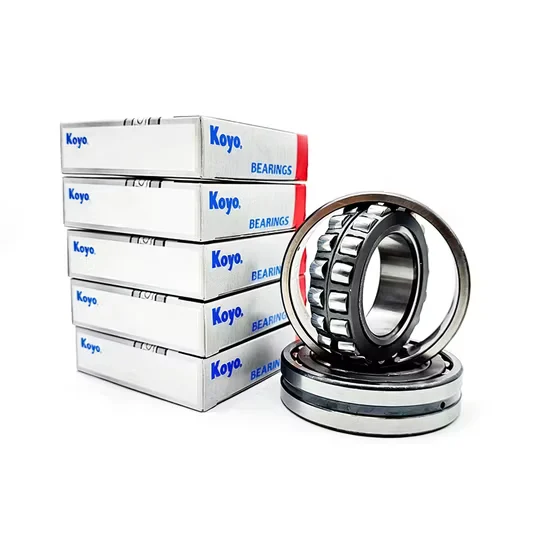
Marine Bearings
KOYO 22314 Spherical Roller Bearing 70x150x51mm for Marine Transmissions
View Product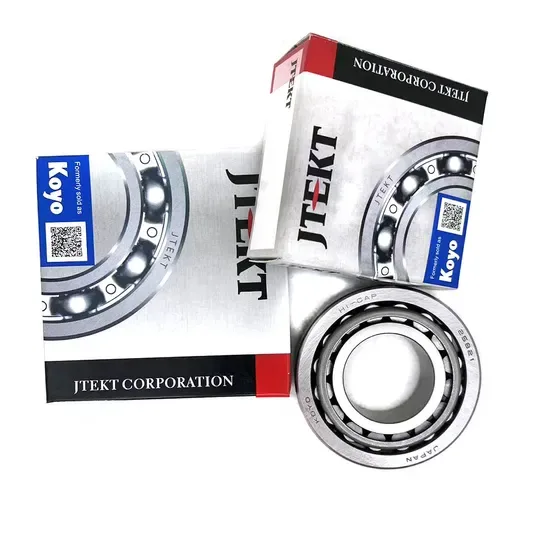
Tapered Roller Bearings
X&S 33209 Tapered Roller Bearing for Industrial Mining Gearbox
View Product
Gearbox and Reducer Bearings
Koyo 32008X 32009 32010X 32011 Tapered Roller Bearing for Industrial Gearbox
View Product
Cylindrical Roller Bearings
Koyo NSK N408e Cylindrical Roller Bearing Genuine Wholesale Supplier
View ProductKeep reading
More bearing selection guides for repair shops
Practical guides from KOYO Bearing Supplier on identifying Koyo / JTEKT bearings for farm machinery, construction equipment and power transmission repairs.
 Technical Resources
· 7 min read
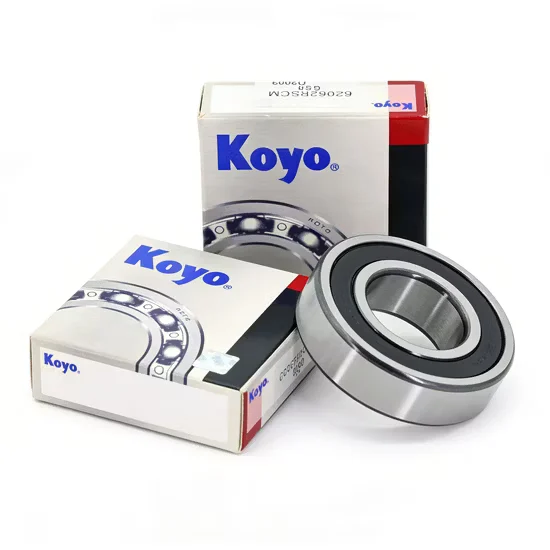
Auto Bearing Glossary: Wholesale Supplier for Bulk & MRO Parts
Master the auto bearing glossary to decode suffix codes and prevent costly MRO replacement failures. Identical dimensions do not guarantee interchangeability, as internal clearance…
Read the Guide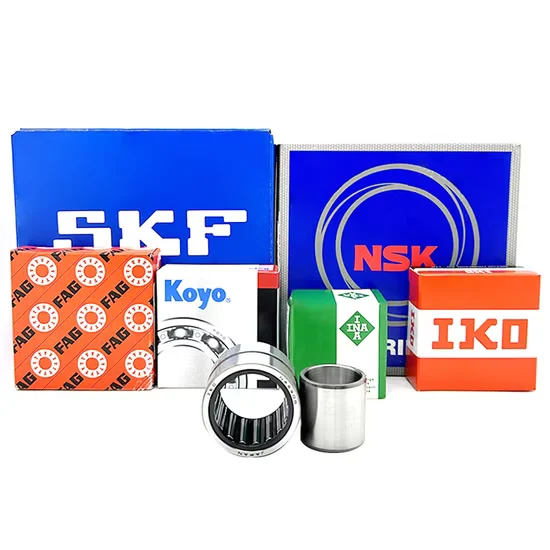 Technical Resources
· 8 min read
Needle Bearing Fit & Tolerance Table: Wholesale Supplier for Bulk Orders
Master the needle bearing fit and tolerance table to prevent seizure caused by overly tight fits. Match ISO shaft and housing classes while verifying…
Read the Guide Technical Resources
· 6 min read
Auto Bearing Torque Reference Table Wholesale Supplier
Prevent premature bearing failures by strictly following the Auto Bearing Torque Reference Table instead of relying on subjective manual tightening. Learn to distinguish initial…
Read the Guide
Bearing enquiry
Send your machine details. Get a written Koyo / JTEKT quote.
KOYO Bearing Supplier quotes a single bearing position or every bearing in an assembly on one enquiry, matched to your machine model and application, with model, quantity, price, lead time and quote validity in writing.
- WhatsApp+1 (702) 981-5880
- Emailinfo@koyoome.com
- Address8 Research Drive, Greenville, SC 20627, USA
"When a Koyo bearing failed on a harvest machine during the season, we needed a replacement urgently. The supplier identified the correct Koyo reference, shipped same-day, and the machine was back in the field within the day."

Request a Bearing Quote
Tell us the machine and the bearing position. Photos of the markings can follow on WhatsApp.