
Suzuki Carry Bearings Wholesale Supplier & Bulk OEM
Standard clearance is not always the best choice for heavy-duty micro-trucks.
Selecting the right Suzuki Carry bearings requires matching internal clearance and sealing structures to specific load and road conditions, rather than relying solely on standard dimensions. For fleets operating in harsh environments, C3 or C4 clearance and robust triple-lip seals are mandatory to prevent thermal seizure and contamination failure.
The dust in Apapa port has a way of finding its way into everything, including the paperwork that keeps global trade moving. Years ago, I stood there watching a container of wheel hubs destined for a West African fleet, realizing too late that a single missing suffix on the commercial invoice would cost my client dearly. The order was for standard deep-groove ball bearings, but the trucks were Suzuki Carry models tasked with hauling construction materials over unpaved, high-temperature dirt roads. Without the specified C3 internal clearance, the bearings had no room for thermal expansion. Within tens of thousands of kilometers, the entire fleet suffered catastrophic seizures. The keepers came back blackened and fused, a silent testament to the fact that dimension alone does not guarantee performance.
This incident reshaped how I approach technical selection for emerging markets. It is not enough to match the inner and outer diameters. The real engineering challenge lies in anticipating the operational stressors that standard OEM specifications may not fully address in aftermarket replacements. When sourcing Suzuki Carry bearings for bulk distribution, understanding the interplay between clearance, sealing, and load capacity is critical for minimizing downtime and protecting your reputation with end-users.
Why Do Standard Bearings Fail Prematurely in Suzuki Carry Fleets?
Premature failure in commercial micro-trucks is rarely due to manufacturing defects, but rather a mismatch between bearing clearance and operational heat generation.
In many developing regions, Suzuki Carry vehicles are pushed far beyond their original design parameters. They carry overloaded payloads, navigate rough terrain, and operate in ambient temperatures that exceed typical European or North American standards. Standard clearance bearings, often designated as CN or normal clearance, are designed for moderate loads and stable temperatures. When these bearings are subjected to heavy radial loads and high-speed rotation on uneven surfaces, friction generates significant heat.
As the bearing temperature rises, the inner ring expands more than the outer ring due to direct contact with the heated shaft. In a standard clearance setup, this thermal expansion quickly eliminates the internal play. Once the clearance reaches zero, the rolling elements begin to skid rather than roll, generating exponential heat until the grease carbonizes and the metal fuses. This phenomenon, known as thermal seizure, is the primary cause of sudden breakdowns in fleets using incorrect Suzuki Carry bearings.
A case from a Southeast Asian logistics operator illustrates this clearly. They switched from premium C3-clearance bearings to cheaper standard-clearance alternatives to cut costs. Within months, their maintenance logs showed a spike in wheel-end failures. The savings on parts were negligible compared to the cost of towing stranded vehicles and losing cargo delivery contracts. The root cause was not the brand, but the clearance class. For heavy-duty applications, the slight increase in initial play provided by C3 or C4 clearance allows for thermal expansion without compromising the rolling motion, significantly extending service life.
How to Choose the Right Clearance and Sealing for Harsh Roads?
C3 or C4 internal clearance and triple-lip contact seals are non-negotiable for Suzuki Carry bearings operating in dusty, muddy, or high-load conditions.
Choosing the correct specification involves two key parameters: internal clearance and sealing effectiveness. Internal clearance refers to the amount of play between the rolling elements and the raceways. For commercial micro-trucks like the Suzuki Carry, which often face variable loads and poor road surfaces, standard clearance is insufficient. C3 clearance provides a larger internal gap, accommodating both thermal expansion and slight misalignments caused by worn suspension components or uneven loading. In extreme cases, such as mining sites or heavily overloaded transport, C4 clearance may be required.
Sealing is equally critical. Standard rubber seals may offer basic protection, but they often fail in muddy or dusty environments. Water and fine dust particles can ingress through inadequate seals, mixing with the grease and forming an abrasive paste. This paste accelerates wear on the raceways and rolling elements, leading to premature noise and failure. Triple-lip contact seals provide a much higher level of protection, creating multiple barriers against contaminants while retaining lubricant effectively. However, it is important to note that overly tight seals can increase friction and heat. The balance lies in selecting seals designed for high-speed and heavy-load scenarios, ensuring they do not compromise the thermal benefits of the chosen clearance.
| Feature | Standard Specification | Heavy-Duty Recommendation | Impact on Performance |
|---|---|---|---|
| Internal Clearance | CN (Normal) | C3 or C4 | Prevents thermal seizure under heavy loads |
| Sealing Type | Single-lip or Open | Triple-lip Contact | Blocks dust and water ingress effectively |
| Grease Type | General Purpose | High-Temperature EP | Maintains viscosity in hot conditions |
| Load Rating | Standard Dynamic | Enhanced Static/Dynamic | Handles overload shocks better |
When verifying these specifications, always check the suffix codes on the bearing packaging. A genuine Suzuki Carry bearings supplier will provide documentation that explicitly states the clearance class. Missing or vague suffixes are a red flag for counterfeit or mismatched stock.
What Are the Hidden Costs of Wrong Bearing Selection?
Downtime and secondary damage from failed bearings far exceed the initial savings from choosing cheaper, incorrect parts.
The true cost of a bearing is not its purchase price, but its total cost of ownership. A failed wheel bearing on a Suzuki Carry does not just require a replacement part. It often leads to secondary damage to the hub, axle, and brake components. In a commercial fleet, every hour a vehicle is off the road represents lost revenue. For regional distributors, frequent warranty claims erode trust and increase administrative burdens.
Consider a fleet operator in Latin America who opted for low-cost, non-specified bearings. The initial savings were marginal. However, within six months, they faced a series of breakdowns on remote routes. The cost of towing, emergency repairs, and delayed deliveries amounted to several times the price difference of the bearings. Moreover, the repeated failures damaged their reputation with clients who relied on timely deliveries. This is a common pattern in emerging markets where price sensitivity often overrides technical suitability.
Another hidden cost is the labor involved in frequent replacements. In regions where skilled mechanics are scarce, diagnosing and replacing wheel bearings is time-consuming. Using high-quality, correctly specified Suzuki Carry bearings reduces the frequency of these interventions, allowing maintenance teams to focus on preventive care rather than emergency repairs. This shift from reactive to proactive maintenance improves overall fleet reliability and extends the lifespan of other critical components.
How to Verify Bearing Quality Before Bulk Procurement?
Traceability documentation and physical dimension checks are essential to prevent counterfeit risks and ensure specification accuracy.
Procuring Suzuki Carry bearings in bulk requires rigorous quality verification. Counterfeit bearings are prevalent in global markets, often mimicking reputable brands but lacking the material quality and precision engineering of genuine products. To mitigate this risk, buyers must demand complete traceability documentation. This includes mill certificates for steel quality, heat treatment records, and proof of origin from the manufacturer. A reliable supplier will provide these documents without hesitation, ensuring that each batch can be traced back to its production source.
Physical inspection is also crucial. Before accepting a large shipment, random samples should be checked for dimensional accuracy, surface finish, and marking clarity. Genuine bearings have precise, laser-etched markings that are difficult to replicate. The rolling elements should move smoothly without any roughness or noise. Additionally, verifying the clearance class with feeler gauges or specialized tools can confirm that the bearings meet the specified C3 or C4 requirements. This step is vital for ensuring that the parts received match the technical needs of the application.
Working with a professional global full-range bearing supplier simplifies this process. By sourcing from a partner who stocks genuine products from mainstream international brands and maintains strict quality control, distributors can ensure consistency across batches. Such suppliers offer mixed-brand and mixed-size packages, allowing for flexible procurement that meets diverse market demands. They also provide technical support for model selection, helping buyers navigate the complexities of clearance and sealing choices. This partnership approach reduces the risk of error and ensures that every Suzuki Carry bearings order delivers reliable performance.
Conclusion
Matching clearance and sealing to operational conditions is the key to reliable Suzuki Carry bearing performance.
Selecting the right bearings for commercial micro-trucks goes beyond matching dimensions. It requires a deep understanding of how thermal expansion, load, and contamination affect bearing life. By prioritizing C3 or C4 clearance and robust sealing solutions, fleets can avoid premature failures and reduce total ownership costs. For distributors, ensuring traceability and verifying specifications before procurement protects both their business and their customers. In the demanding environments where Suzuki Carry vehicles operate, the right technical choice is the only sustainable path forward.
Mentioned in this article
Koyo / JTEKT bearings from this guide
These are the Koyo / JTEKT bearing types discussed above. Open any product to check its details, or quote it together with the rest of your repair.

Tapered Roller Bearings
OEM 30204 30205 30206 30207 30208 32008X 32010X Tapered Roller Bearing
View Product
Tapered Roller Bearings
X&S Tapered Roller Bearing 30205 30303 30206 for Car Accessories
View Product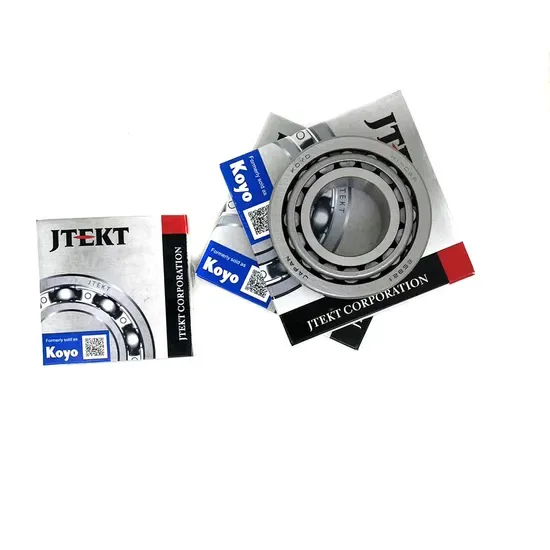
Tapered Roller Bearings
Koyo 30210-30216 Tapered Roller Bearings for Auto Parts Wholesale Supply
View Product
Tapered Roller Bearings
KOYO 30211 30220 30221 Taper Roller Bearing for Automotive Axle Vehicle Spare Parts
View ProductKeep reading
More bearing selection guides for repair shops
Practical guides from KOYO Bearing Supplier on identifying Koyo / JTEKT bearings for farm machinery, construction equipment and power transmission repairs.
 Applications & Industries
· 7 min read
Small Engine Crankshaft Bearings Wholesale Supplier
Selecting the correct Bearings in Small Engine Crankshafts requires strict clearance matching and material verification rather than simple part number lookup. Standard units often…
Read the Guide Applications & Industries · 7 min read
Forklift Mast Bearings Wholesale Supplier | Genuine SKF FAG NSK Bulk
Selecting forklift mast bearings requires matching groove profiles and clearances to harsh environments to prevent premature seizure. Sourcing only genuine SKF, FAG, and NSK…
Read the Guide Applications & Industries · 6 min read
Outboard Lower Unit Bearings Wholesale Supplier
Prevent catastrophic gearcase failures by selecting Bearings in Outboard Lower Units that balance high-speed load capacity with strict corrosion resistance. Learn why standard tapered…
Read the Guide
Bearing enquiry
Send your machine details. Get a written Koyo / JTEKT quote.
KOYO Bearing Supplier quotes a single bearing position or every bearing in an assembly on one enquiry, matched to your machine model and application, with model, quantity, price, lead time and quote validity in writing.
- WhatsApp+1 (702) 981-5880
- Emailinfo@koyoome.com
- Address8 Research Drive, Greenville, SC 20627, USA
"When a Koyo bearing failed on a harvest machine during the season, we needed a replacement urgently. The supplier identified the correct Koyo reference, shipped same-day, and the machine was back in the field within the day."

Request a Bearing Quote
Tell us the machine and the bearing position. Photos of the markings can follow on WhatsApp.