
Seasonal Motorcycle Parts Bearings: Wholesale Supplier for Bulk & MRO
Peak season ordering is not about securing OEM part numbers; it is about verifying cross-brand equivalents and container moisture levels.
To survive seasonal spikes in motorcycle parts demand, wholesalers must prioritize proactive cross-brand substitution for bearings and enforce strict moisture-proof consolidation protocols to prevent transit rust and stockouts during rainy or harvest periods.
I still remember the humidity hitting my face as I walked into a repair shop in Dongguan years ago. It was peak season, and the owner was frantic. A batch of wheel bearings had arrived with visible surface corrosion, not because they were low quality, but because they had been shipped in a container that acted like a sauna during a long sea transit. He needed replacements immediately, but the exact OEM codes were backordered for weeks. That panic is familiar to anyone managing MRO spare parts procurement in tropical climates. The lesson was clear: waiting for the perfect brand match while ignoring environmental risks leads to downtime.
Understanding this dynamic changes how we approach sourcing. It is not just about finding a supplier; it is about finding a partner who understands that a bearing sitting in a humid port is already degrading before it reaches your warehouse.
How Does the Rainy Season Impact Motorcycle MRO Demand?
Humidity and deteriorating road conditions during rainy seasons cause a sharp spike in suspension and wheel bearing replacements, necessitating early stockpiling.
In regions like Southeast Asia and Latin America, the rainy season does more than just wet the roads. It accelerates wear on motorcycle components, particularly those exposed to water and mud. Wheel bearings and suspension linkages take the brunt of this abuse. For distributors, this means demand does not just increase; it becomes urgent. Repair workshops cannot wait for standard lead times when their customers are stranded with broken bikes.
The risk here is twofold. First, the physical demand surges. Second, the storage environment becomes hostile. Bearings are precision components. Even minor exposure to moisture can initiate corrosion on the raceways or rolling elements. If you are holding stock without proper climate control or if your inbound shipments are not protected, you are essentially storing damaged goods.
I have seen wholesalers who order heavily right at the start of the rainy season, only to find that a significant portion of their inventory is compromised upon arrival. The issue is rarely the manufacturing quality. It is the transit. A container traveling from a factory in China to a port in Jakarta or Manila can experience massive temperature fluctuations. When the temperature drops at night, condensation forms inside the container. This “container rain” drips onto the cargo. Without adequate desiccants and vapor barriers, even sealed boxes can absorb moisture.
To mitigate this, smart buyers shift their procurement calendar. They order before the rains start, ensuring stock is already in local warehouses. More importantly, they demand proof of moisture protection from their suppliers. This is not a luxury; it is a necessity for maintaining the integrity of motorcycle parts bearings in bulk MRO orders.
What Are the Risks of Mixed-Brand Container Consolidation?
Without rigorous moisture-proofing and model verification, LCL shipments of mixed-brand bearings face high rejection rates due to rust and mismatched specifications.
Consolidating different brands and sizes into one container is a cost-effective strategy for regional distributors. It allows you to fill a container with high-turnover items like deep-groove ball bearings alongside specialized tapered roller bearings. However, this complexity introduces significant risks if not managed correctly.
The primary risk is contamination and confusion. When you mix brands like SKF, NSK, and domestic premium lines, the packaging differences can be subtle. In a rush, workers might mislabel boxes. Worse, if the consolidation is done in a non-climate-controlled warehouse, the varying packaging materials may react differently to humidity. Cardboard boxes from one brand might absorb moisture faster than another, leading to uneven protection.
I recall a shipment destined for a fleet maintenance hub in Africa. The client wanted a mix of wheel bearings and engine bearings from three different manufacturers. The supplier consolidated them quickly but skipped the final moisture check. The result was a container where the outer layers of pallets showed signs of water damage. While the inner boxes were fine, the uncertainty forced the client to inspect every single unit. This delayed their distribution by weeks and eroded trust.
| Risk Factor | Uncontrolled Consolidation | Verified Consolidation |
|---|---|---|
| Moisture Protection | Standard packaging only | Desiccant-packed with vapor barrier |
| Model Verification | Visual check only | Cross-reference lookup matrix applied |
| Rust Incidence | Vulnerable | Resistant |
| Documentation | Basic packing list | Full traceability and origin certificates |
To avoid these pitfalls, the consolidation process must include a technical review. Every part number should be cross-referenced against the order to ensure no substitutions were made without approval. Furthermore, the container itself must be treated. Using desiccants is not enough; the lining of the container should be inspected for leaks, and the cargo should be wrapped in plastic stretch film to create a secondary barrier. This level of detail transforms a risky LCL shipment into a reliable supply chain asset.
How to Source Cross-Brand Equivalents During Peak Shortages?
Utilizing verified domestic premium lines alongside global brands ensures continuous supply when top-tier brands face lead-time delays during peak seasons.
During peak seasons, even major brands like FAG or NTN can face production bottlenecks. Waiting for an exact OEM match can mean weeks of downtime for your customers. The solution is not to wait, but to substitute wisely. Cross-brand equivalent substitution is a standard practice in the MRO industry, but it requires technical confidence.
Not all bearings are created equal, but many meet the same ISO dimensional and tolerance standards. A P0 precision deep-groove ball bearing from a reputable Chinese manufacturer like ZWZ or HRB can often serve as a direct replacement for a global brand in non-critical applications. The key is verification. You need a supplier who can provide the technical datasheets to prove that the load ratings, internal clearance, and material specifications match the original.
I worked with a repair workshop network in Latin America during the harvest season. Their usual supplier of Japanese bearings ran out of stock for a specific motorcycle wheel bearing. Instead of halting operations, we sourced a verified equivalent from a domestic premium line. We provided the cross-reference data and material certification. The workshop installed them, and the performance was indistinguishable from the original. This flexibility kept their business running and strengthened their reputation for reliability.
Sourcing these equivalents requires a supplier who stocks both global and domestic brands. They must have the engineering capability to validate the substitution. Do not rely on guesswork. Ask for the load rating charts and material composition reports. When you have this data, you can confidently offer alternatives to your customers, turning a potential stockout into a demonstration of your expertise.
What Documentation is Needed for Customs and Traceability?
Complete ISO and origin certificates prevent seasonal customs bottlenecks at destination ports and ensure product authenticity.
As demand spikes, customs authorities in many regions increase inspections. Missing or incomplete documentation can delay your shipment for days or even weeks. For motorcycle parts bearings, traceability is crucial. You must prove that the goods are genuine and comply with international standards.
Essential documents include the Certificate of Origin, which verifies where the bearings were manufactured. This is critical for tariff calculations and trade compliance. Additionally, ISO quality certificates from the manufacturer confirm that the production processes meet global standards. For branded items, authorization letters or proof of purchase from authorized distributors may be required to prove authenticity.
A distributor in the Middle East once faced a customs hold because the batch numbers on the bearings did not match the packing list. The discrepancy was minor, but it triggered a full inspection. The delay cost them valuable sales during the peak season. Since then, they have insisted on double-checking all documentation against the physical cargo before shipment.
Ensure your supplier provides a comprehensive documentation package. This should include detailed packing lists with batch numbers, material test reports if available, and all necessary customs forms. Having these documents ready and accurate streamlines the clearance process, ensuring your stock reaches your warehouse when you need it most.
Conclusion
Seasonal success in motorcycle parts distribution relies on proactive planning, not reactive ordering.
By understanding the impact of humidity on MRO demand, enforcing strict moisture controls in mixed-brand consolidations, and leveraging verified cross-brand equivalents, you can maintain supply continuity. Ensure your documentation is complete to avoid customs delays. These steps transform seasonal challenges into opportunities for building trust and reliability with your customers.
Mentioned in this article
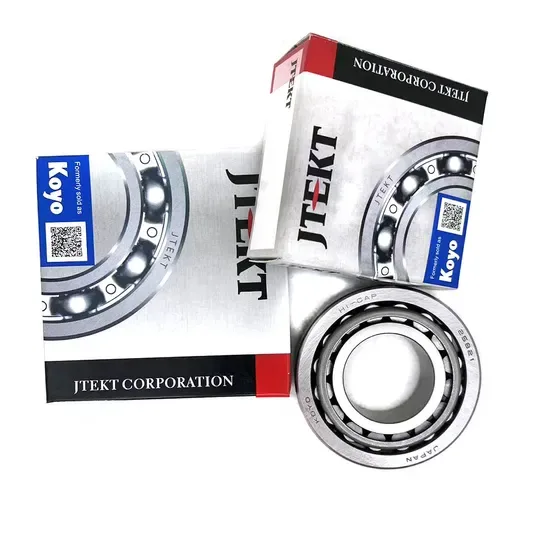
Koyo / JTEKT bearings from this guide
These are the Koyo / JTEKT bearing types discussed above. Open any product to check its details, or quote it together with the rest of your repair.
Tapered Roller Bearings
Koyo 30213 30221 30228 Tapered Roller Bearing Single Row for Machinery Part
View Product
Tapered Roller Bearings
Genuine Koyo Tapered Roller Bearing 32212 32213 32214 32215 32216 for Fan Spare Parts
View Product
Tapered Roller Bearings
Jtekt Koyo Tapered Roller Bearing 32010 30302 30303 30304 30305 30306 for Auto Parts
View Product
Railway Bearings
X&S 30304 30306 30307 Tapered Roller Bearings for Railway Axle Auto Parts
View ProductKeep reading
More bearing selection guides for repair shops
Practical guides from KOYO Bearing Supplier on identifying Koyo / JTEKT bearings for farm machinery, construction equipment and power transmission repairs.
 Procurement & Trade FAQs
· 7 min read
Rebuild Kit Supply for Transmission Shops: Wholesale Bearing Supplier
Transmission rebuild kit supply depends on accurate HS codes and detailed BOMs to prevent customs delays. Learn how mixed bearing consolidation and robust packaging…
Read the Guide Procurement & Trade FAQs · 7 min read
Genuine Bearing Stock Programs for Motorcycle Dealers: Wholesale Supplier
Optimize Motorcycle Dealer Stock Programs by balancing cross-brand bearing equivalency, genuine traceability, and flexible MOQs to prevent costly warranty claims. Verify dimensional tolerance and…
Read the Guide Procurement & Trade FAQs · 7 min read
Express Shipping for Urgent Bearing Repairs: Global Wholesale Supplier
Master express shipping for urgent bearing replacements by prioritizing customs clearance over flight speed to eliminate port bottlenecks. Optimize volumetric weight, consolidate mixed-brand orders,…
Read the Guide
Bearing enquiry
Send your machine details. Get a written Koyo / JTEKT quote.
KOYO Bearing Supplier quotes a single bearing position or every bearing in an assembly on one enquiry, matched to your machine model and application, with model, quantity, price, lead time and quote validity in writing.
- WhatsApp+1 (702) 981-5880
- Emailinfo@koyoome.com
- Address8 Research Drive, Greenville, SC 20627, USA
"When a Koyo bearing failed on a harvest machine during the season, we needed a replacement urgently. The supplier identified the correct Koyo reference, shipped same-day, and the machine was back in the field within the day."

Request a Bearing Quote
Tell us the machine and the bearing position. Photos of the markings can follow on WhatsApp.