Old Vehicle Bearings Wholesale Supplier: Genuine SKF, FAG, NSK & TIMKEN Stock
Most “New Old Stock” bearings for discontinued vehicle models are refurbished fakes with compromised metallurgy.
Sourcing old vehicle bearings requires strict traceability verification and flexible consolidation to avoid costly refurbished parts and minimize fleet downtime. The market is flooded with repackaged used units disguised as genuine inventory, making documentation and supplier credibility the primary filters for procurement success.
I still remember the smell of burnt oil and metal dust in a Riyadh workshop years ago. A fleet manager had just installed what he believed were genuine TIMKEN tapered roller bearings on a heavy-duty truck axle. The parts looked perfect, the packaging was intact, and the price was competitive. Three months later, the bearing cage disintegrated under load, scattering iron filings across the garage floor. The failure was not due to poor installation or overloading, but because the internal raceways had been ground down and repolished to hide wear, destroying the original heat treatment profile. That incident shifted my entire approach to Sourcing Old Vehicle Bearings. It is not enough to find a part number; one must verify the lineage of the steel itself.
The challenge for aftermarket suppliers and MRO operators is not just availability, but authenticity. When official brand channels reject small minimum order quantities for discontinued items, buyers are often forced into the gray market. This is where the risk escalates. To navigate this landscape, procurement professionals must prioritize verifiable provenance over convenience.
Why is sourcing old vehicle bearings so risky?
The primary risk is the prevalence of refurbished bearings sold as New Old Stock (NOS), which lack the original metallurgical integrity required for heavy loads.
Many buyers assume that if a bearing is out of production, it is simply rare. In reality, the scarcity has created a lucrative niche for counterfeiters who refurbish worn components. These units may pass visual inspection but fail prematurely under stress because the surface hardness and microstructure have been altered by previous use and improper reconditioning.
In the context of Sourcing Old Vehicle Bearings, the danger lies in the invisible damage. A refurbished bearing might have its outer diameter polished to look new, but the subsurface fatigue cracks initiated during its first life cycle remain. When these parts are installed in critical applications like mining crushers or heavy truck axles, the residual stress leads to catastrophic spalling far earlier than expected.
Consider a scenario involving a regional distributor in East Africa who sourced a batch of obsolete spherical roller bearings for local resale. The parts arrived in clean boxes with printed labels. However, upon closer inspection by a technical team, the lubricant residue inside the seals showed signs of oxidation and contamination inconsistent with factory-fresh stock. The distributor avoided a major loss by rejecting the shipment, but many others do not have the technical expertise to spot these subtle signs.
The risk is compounded by the fact that official manufacturers often discontinue support for older models, leaving a vacuum filled by unauthorized traders. Without a reliable supply chain, buyers are left guessing. This is why Sourcing Old Vehicle Bearings demands a supplier who can provide more than just the part number—they must provide the history of the part.
How to verify the authenticity of discontinued bearings?
Always demand full traceability documents and inspect original packaging anti-counterfeit features before payment.
Verification is not a optional step; it is the core of the procurement process for obsolete parts. Authenticity checks should begin with the paperwork. A genuine product from brands like SKF, FAG, or TIMKEN will have a clear chain of custody. This includes Certificates of Origin (COO), material test reports, and batch numbers that can be cross-referenced with the manufacturer’s archives where possible.
When engaging in Sourcing Old Vehicle Bearings, ask for high-resolution images of the packaging before shipment. Look for holographic seals, specific font types on the labels, and the quality of the cardboard box. Counterfeiters often reuse old boxes or print low-quality replicas that lack the sharpness of original branding. Additionally, check the bearing itself for laser-etched markings. Genuine bearings typically have precise, deep etching that is difficult to replicate without specialized equipment.
A US-based automotive repair group once faced a dilemma when trying to replace discontinued needle bearings for a classic commercial vehicle line. They requested a sample unit along with the full documentation package from their supplier. The supplier provided a COO and a batch inspection report from the original manufacturing date. The repair group’s quality team verified the batch number against industry databases and confirmed the part’s legitimacy. This due diligence prevented them from installing potentially fake parts that could have led to warranty claims and reputational damage.
Another critical aspect is the supplier’s willingness to allow third-party inspections. Reputable sources of Sourcing Old Vehicle Bearings will not hesitate to facilitate independent quality checks. If a supplier refuses to provide detailed photos or documentation, it is a red flag. The cost of verification is negligible compared to the cost of a field failure.
What if the exact old model is completely unavailable?
Use professional cross-brand equivalent consultation to match dimensional and load specifications safely.
Sometimes, even with the best sourcing efforts, the exact original part number is extinct. In these cases, substitution is necessary, but it must be done with engineering precision. Simply matching the outer and inner diameters is insufficient. One must also consider the load rating, speed limit, and clearance class.
For professionals involved in Sourcing Old Vehicle Bearings, having access to cross-reference data is essential. A tapered roller bearing from one brand may have slightly different contact angles or cage designs than another, affecting its performance in specific applications. A qualified supplier can help identify equivalents from current production lines that meet or exceed the original specifications.
For instance, a cement plant operator in South America needed to replace an obsolete cylindrical roller bearing in a kiln drive system. The original model was no longer produced by the initial manufacturer. Through technical consultation, an equivalent model from a different premium brand was identified. The key was verifying that the dynamic load rating and thermal stability matched the harsh operating conditions of the kiln. The substitution was successful, and the equipment ran substantially longer than the previous failed units.
This approach requires a deep understanding of bearing mechanics. It is not just about finding a part that fits; it is about finding a part that functions correctly under load. When Sourcing Old Vehicle Bearings, always involve a technical expert to validate any proposed substitutions. This ensures that the replacement does not introduce new failure modes.
How to manage costs and shipping for small obsolete orders?
Utilize mixed-brand consolidation services to meet flexible MOQs without paying premium express freight.
One of the biggest hurdles in Sourcing Old Vehicle Bearings is the minimum order quantity (MOQ). Official distributors often require large bulk orders, which is impractical for maintenance teams needing only a few units for emergency repairs. Paying for air freight for small packages is also prohibitively expensive.
The solution lies in consolidation. By working with a supplier who offers mixed-container services, buyers can combine orders for various obsolete models and brands into a single shipment. This allows for purchasing single units or small batches while still benefiting from sea freight rates. This flexibility is crucial for MRO operators who need to maintain a diverse inventory of spare parts without tying up capital in excess stock.
A regional industrial distributor in Southeast Asia utilized this strategy to stock up on various discontinued bearings for their local clients. Instead of placing separate orders for each brand, they consolidated their requirements into one container. This approach reduced their logistics costs significantly and allowed them to offer competitive pricing to their customers. The supplier handled the complexity of sourcing from different lines, providing a single point of contact and unified documentation.
This method also reduces the risk of obsolescence in your own inventory. By ordering smaller quantities more frequently through consolidation, you can adapt to changing demand patterns. When Sourcing Old Vehicle Bearings, look for partners who understand the nuances of mixed-load logistics. They should be able to handle the administrative burden of customs and documentation for diverse products, ensuring a smooth delivery process.
Conclusion
Authenticity and traceability are non-negotiable when procuring discontinued vehicle bearings.
Sourcing Old Vehicle Bearings is a complex task that requires vigilance against refurbished fakes and a strategic approach to logistics. By prioritizing verified documentation, leveraging technical cross-referencing, and utilizing consolidation services, buyers can secure genuine parts efficiently. The goal is to keep fleets and machinery running with reliability, avoiding the hidden costs of inferior replacements.
Mentioned in this article
Koyo / JTEKT bearings from this guide
These are the Koyo / JTEKT bearing types discussed above. Open any product to check its details, or quote it together with the rest of your repair.
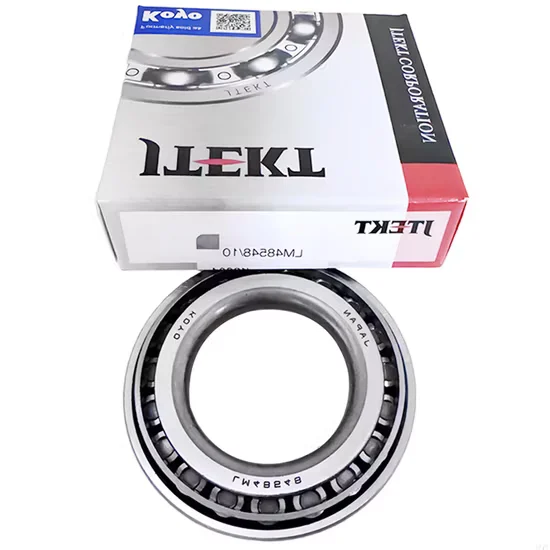
Tapered Roller Bearings
Genuine KOYO 32007 Tapered Roller Bearing Wholesale Supplier
View Product
Tapered Roller Bearings
Genuine KOYO 32006 Taper Roller Bearing Wholesale Supplier
View Product
Cylindrical Roller Bearings
Koyo NSK N408e Cylindrical Roller Bearing Genuine Wholesale Supplier
View Product
Cylindrical Roller Bearings
Koyo N2305e Cylindrical Roller Bearing Genuine Wholesale Supplier
View ProductKeep reading
More bearing selection guides for repair shops
Practical guides from KOYO Bearing Supplier on identifying Koyo / JTEKT bearings for farm machinery, construction equipment and power transmission repairs.
Procurement & Trade FAQs · 7 min read
Rebuild Kit Supply for Transmission Shops: Wholesale Bearing Supplier
Transmission rebuild kit supply depends on accurate HS codes and detailed BOMs to prevent customs delays. Learn how mixed bearing consolidation and robust packaging…
Read the Guide Procurement & Trade FAQs
· 7 min read
Genuine Bearing Stock Programs for Motorcycle Dealers: Wholesale Supplier
Optimize Motorcycle Dealer Stock Programs by balancing cross-brand bearing equivalency, genuine traceability, and flexible MOQs to prevent costly warranty claims. Verify dimensional tolerance and…
Read the Guide Procurement & Trade FAQs · 7 min read
Express Shipping for Urgent Bearing Repairs: Global Wholesale Supplier
Master express shipping for urgent bearing replacements by prioritizing customs clearance over flight speed to eliminate port bottlenecks. Optimize volumetric weight, consolidate mixed-brand orders,…
Read the Guide
Bearing enquiry
Send your machine details. Get a written Koyo / JTEKT quote.
KOYO Bearing Supplier quotes a single bearing position or every bearing in an assembly on one enquiry, matched to your machine model and application, with model, quantity, price, lead time and quote validity in writing.
- WhatsApp+1 (702) 981-5880
- Emailinfo@koyoome.com
- Address8 Research Drive, Greenville, SC 20627, USA
"When a Koyo bearing failed on a harvest machine during the season, we needed a replacement urgently. The supplier identified the correct Koyo reference, shipped same-day, and the machine was back in the field within the day."

Request a Bearing Quote
Tell us the machine and the bearing position. Photos of the markings can follow on WhatsApp.