
OE to Koyo Bearing Cross-Reference: Wholesale Supplier for Bulk Orders
Matching dimensions is not enough to guarantee a successful bearing replacement.
Accurate cross-referencing of original equipment manufacturer numbers to Koyo equivalents requires verifying internal clearance, cage material specifications, and heat treatment standards beyond simple dimensional matching. Relying solely on outer diameter and bore size often leads to premature failure, especially in high-load or high-speed applications where microscopic tolerances dictate performance.
I still remember the silence in my office when the tracking update showed a shipment held at Dubai Customs. It was a bulk order for a Middle East distributor who had sent over hundreds of OE numbers requesting direct Koyo replacements. Confident in the dimensional data, I had authorized the packing of domestic alternatives that matched the physical measurements perfectly. The cargo arrived, but the client rejected the entire batch. The issue was not the size; it was the cage material and internal clearance. The OE specs called for a specific polyamide cage with C3 clearance for high-temperature operation, while the substitutes used standard steel cages with normal clearance. The mismatch caused immediate overheating during testing. That mid-six-figure loss taught me that an OE to Koyo cross reference is never just about millimeters. It is about understanding the operational environment encoded in the suffixes of the part number.
This realization shifted how I approach every inquiry. Now, before any quote is issued, I verify the technical drawings against the Koyo interchange chart. This diligence ensures that when you source from a reliable OE to Koyo cross reference provider, you receive components that survive the rigors of your specific application.
Why Do Dimension-Matched OE Replacements Fail?
Internal clearance and cage design are the silent determinants of bearing lifespan, often overlooked in basic dimension checks.
Many procurement teams assume that if a bearing fits the shaft and housing, it will perform like the original. This is a dangerous misconception. The external dimensions are merely the entry ticket; the internal geometry determines reliability. When converting an OE number to a Koyo equivalent, one must look at the suffix codes that define radial internal clearance and cage type.
Consider the case of a heavy equipment MRO provider in Southeast Asia. They were replacing tapered roller bearings in mining crushers using a basic dimension-based lookup. The replacements fit snugly, but within weeks, the bearings began to spall. Upon inspection, we found that the original OE parts specified a pre-loaded setting for rigid axial support, while the generic replacements had standard clearance. The lack of precise preload led to micro-movement under load, causing rapid fatigue.
| Parameter | Basic Dimension Match | Verified Technical Match |
|---|---|---|
| External Dimensions | Exact Match | Exact Match |
| Internal Clearance | Assumed Normal (CN) | Verified per OE Suffix (e.g., C3, C4) |
| Cage Material | Standard Steel | Specified Polymer or Brass if required |
| Heat Treatment | General Purpose | Validated for High-Temp or Heavy Load |
| Risk Level | High | Low |
A proper OE to Koyo cross reference process involves checking these internal parameters. For instance, Koyo bearings often use specific suffixes to denote cage materials such as polyamide or pressed steel. If the OE part uses a machined brass cage for high-speed stability, substituting it with a stamped steel cage can lead to vibration and early failure.
Failure to verify these details results in costly downtime. A warehouse delay of several days due to rejected goods is minor compared to the production halt caused by a failed bearing in a critical machine. Therefore, dimensional accuracy is only the first step in a comprehensive verification protocol.
How to Accurately Cross-Reference OE Numbers to Koyo?
Use comprehensive interchange charts combined with technical drawing verification to ensure exact functional equivalence.
The process of finding the right Koyo equivalent for an OE number is systematic. It begins with identifying the base number and then decoding the suffixes. OE numbers often hide critical information in their alphanumeric codes. A direct swap without decoding these suffixes is akin to guessing.
Step one is to extract the base bearing type from the OE number. Is it a deep groove ball bearing, a spherical roller bearing, or a tapered roller bearing? Once the type is identified, consult the official Koyo interchange chart. However, do not stop at the base number. Step two involves mapping the OE suffixes to Koyo’s naming convention. For example, an OE suffix indicating “high temperature” might correspond to a specific heat treatment code in the Koyo system.
Step three is the most critical: verify the technical drawing. I once handled an order for an automotive aftermarket supplier in Europe. They needed wheel hub bearings for a specific truck model. The OE number pointed to a unit with a specific sensor ring integration. A basic cross-reference gave a standard bearing, but the technical drawing revealed the need for an integrated ABS sensor target. By catching this discrepancy early, we avoided shipping unusable parts.
When you engage with a knowledgeable OE to Koyo cross reference service, they will ask for the application context. Is it for a high-speed spindle or a slow-moving conveyor? This context helps in selecting the correct precision grade. While P0 is standard for general industrial use, some applications require P6 or higher precision.
Mistakes in this phase are common when buyers rely on automated online tools that lack engineering oversight. These tools often miss subtle differences in seal types or lubrication fills. A manual review by an experienced technician ensures that every parameter, from the grease type to the seal material, aligns with the original specification.
What Are the Risks of Unverified Substitutes?
Unchecked substitutions cause customs delays, on-site equipment downtime, and safety hazards in critical operations.
Using unverified substitutes carries risks that extend beyond mechanical failure. Regulatory compliance and customs clearance are significant hurdles in international trade. Customs authorities often require detailed documentation proving that imported goods match the declared specifications. If the technical parameters of the substituted bearing differ significantly from the OE description, it can raise red flags during inspection.
A Latin American industrial buyer once faced a month-long customs hold because the declared HS code did not match the actual technical specifications of the substituted bearings. The documents listed standard industrial bearings, but the shipment contained specialized units with unique coatings for corrosion resistance. The discrepancy led to a thorough audit, delaying the entire project.
Moreover, on-site downtime is a severe financial risk. In a cement plant in Africa, a batch of unverified substitute bearings failed in the kiln drive system. The failure was not immediate; it occurred after a few hundred hours of operation. The resulting unplanned shutdown cost the facility far more than the savings gained from using cheaper substitutes. The root cause was traced to inferior steel quality that could not withstand the thermal cycling of the kiln environment.
Safety is another paramount concern. In heavy machinery, bearing failure can lead to catastrophic accidents. A failed bearing in a crane hoist or a mining excavator can cause structural collapse or loss of control. Therefore, verifying the load rating and fatigue life of the substitute is non-negotiable.
An accurate OE to Koyo cross reference mitigates these risks by ensuring that the substitute meets or exceeds the original performance criteria. It provides peace of mind that the parts will perform as expected under real-world conditions.
How to Optimize Mixed-Brand Sourcing for Bulk Orders?
Combine genuine Koyo units with verified domestic lines for cost-effective consolidation without compromising critical performance.
For large-scale projects, sourcing exclusively from premium brands can be prohibitively expensive. A strategic approach involves mixed-brand consolidation. This method allows buyers to allocate budget efficiently by using genuine Koyo bearings for critical, high-stress applications and verified domestic alternatives for less demanding roles.
I worked with a wind farm operator in Central Asia who needed to replace bearings across dozens of turbines. For the main shaft and gearbox, we supplied genuine Koyo and other premium brand bearings to ensure maximum reliability. For auxiliary systems like cooling fans and conveyors, we used high-quality domestic brands that met the same dimensional and load requirements. This strategy reduced the overall procurement cost noticeably while maintaining operational integrity.
| Application Criticality | Recommended Brand Strategy | Verification Focus |
|---|---|---|
| High (Main Drive, Gearbox) | Genuine Premium Brands (Koyo, SKF, etc.) | Full Traceability, Precision Grade |
| Medium (Pumps, Motors) | Verified Domestic Lines | Load Rating, Clearance Match |
| Low (Conveyors, Fans) | Cost-Effective Alternatives | Dimensional Accuracy, Basic Quality |
This approach requires a supplier who can manage complex logistics and provide complete traceability documentation for all brands involved. Mixing brands in a single container load optimizes shipping volume and reduces freight costs per unit.
Furthermore, having a single point of contact for mixed-brand sourcing simplifies the procurement process. Instead of managing multiple vendors, buyers can consolidate orders through one trusted partner. This partner ensures that all parts, regardless of brand, meet the required technical standards. An effective OE to Koyo cross reference service facilitates this by identifying which applications can safely use alternatives and which require genuine OEM parts.
By leveraging technical expertise to validate domestic alternatives, buyers can achieve significant cost savings without exposing their operations to unnecessary risk. The key is rigorous verification and transparent documentation.
Conclusion
Precision in cross-referencing protects your investment and ensures operational continuity.
Successful bearing replacement relies on more than just matching outer dimensions. It demands a deep understanding of internal clearance, cage materials, and application-specific requirements. By verifying technical parameters and using a reliable OE to Koyo cross reference, buyers can avoid costly failures and delays. Strategic mixed-brand sourcing further optimizes costs while maintaining quality where it matters most. Always prioritize technical validation over simple part number matching to secure long-term reliability.
Mentioned in this article
Koyo / JTEKT bearings from this guide
These are the Koyo / JTEKT bearing types discussed above. Open any product to check its details, or quote it together with the rest of your repair.

Tapered Roller Bearings
OEM 30204 30205 30206 30207 30208 32008X 32010X Tapered Roller Bearing
View Product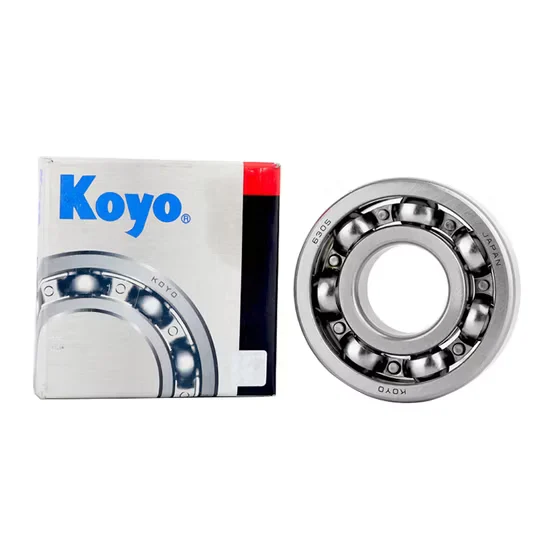
Deep Groove Ball Bearings
KOYO Bearing 6005 6006 6300-6309 Motorcycle Deep Groove Ball Bearings Japan
View Product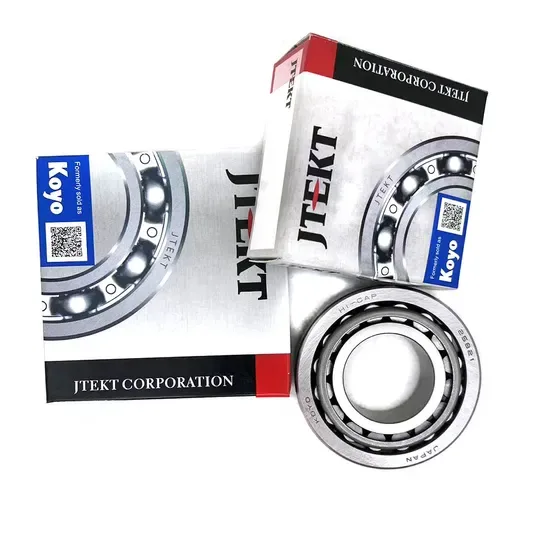
Tapered Roller Bearings
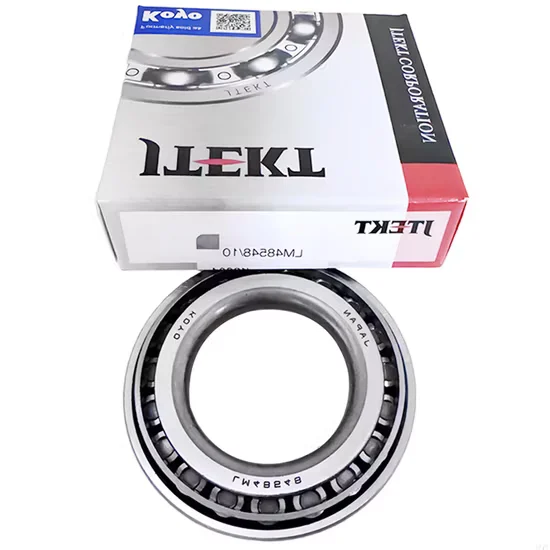
Koyo 30213 30221 30228 Tapered Roller Bearing Single Row for Machinery Part
View Product
Marine Bearings
Koyo 32212 Tapered Roller Bearing for Marine Engines
View ProductKeep reading
More bearing selection guides for repair shops
Practical guides from KOYO Bearing Supplier on identifying Koyo / JTEKT bearings for farm machinery, construction equipment and power transmission repairs.
 Procurement & Trade FAQs
· 7 min read
Rebuild Kit Supply for Transmission Shops: Wholesale Bearing Supplier
Transmission rebuild kit supply depends on accurate HS codes and detailed BOMs to prevent customs delays. Learn how mixed bearing consolidation and robust packaging…
Read the Guide Procurement & Trade FAQs
· 7 min read
Genuine Bearing Stock Programs for Motorcycle Dealers: Wholesale Supplier
Optimize Motorcycle Dealer Stock Programs by balancing cross-brand bearing equivalency, genuine traceability, and flexible MOQs to prevent costly warranty claims. Verify dimensional tolerance and…
Read the Guide Procurement & Trade FAQs · 7 min read
Express Shipping for Urgent Bearing Repairs: Global Wholesale Supplier
Master express shipping for urgent bearing replacements by prioritizing customs clearance over flight speed to eliminate port bottlenecks. Optimize volumetric weight, consolidate mixed-brand orders,…
Read the Guide
Bearing enquiry
Send your machine details. Get a written Koyo / JTEKT quote.
KOYO Bearing Supplier quotes a single bearing position or every bearing in an assembly on one enquiry, matched to your machine model and application, with model, quantity, price, lead time and quote validity in writing.
- WhatsApp+1 (702) 981-5880
- Emailinfo@koyoome.com
- Address8 Research Drive, Greenville, SC 20627, USA
"When a Koyo bearing failed on a harvest machine during the season, we needed a replacement urgently. The supplier identified the correct Koyo reference, shipped same-day, and the machine was back in the field within the day."

Request a Bearing Quote
Tell us the machine and the bearing position. Photos of the markings can follow on WhatsApp.