
Mitsubishi Lancer Bearings Wholesale Supplier & Bulk for Sale
Most bearing failures in the Mitsubishi Lancer aftermarket are not caused by poor manufacturing quality, but by humidity-induced corrosion during storage and mismatched packaging expectations at the port of entry.
Sourcing reliable Mitsubishi Lancer bearings requires a dual focus: verifying dimensional tolerances against original equipment specifications and ensuring supplier authenticity to mitigate counterfeit risks. For global distributors, the critical path involves matching specific application scenarios—such as high-mileage fleet repairs or harsh-environment driving—with correct hub bearing specs, while navigating the complexities of multi-brand consolidation. This approach ensures that wheel bearing replacement cycles align with actual operational demands rather than theoretical lifespans.
The transition from technical inspection to international trade often reveals gaps between laboratory standards and field realities. In regions like the Middle East, local mechanics exhibit strong preferences for specific brand packaging nuances, such as those found in NSK or NTN products. Ignoring these details can lead to entire batches being rejected as refurbished goods due to minor labeling discrepancies or batch number misalignments. Understanding these terminal market sensitivities is as vital as knowing the load ratings themselves.
What Are the Key Bearing Applications in Mitsubishi Lancer?
The Mitsubishi Lancer utilizes distinct bearing types across its wheel hubs, transmission systems, and engine accessories, each subjected to unique load profiles and environmental stresses.
Wheel bearings in the Lancer platform typically integrate the hub unit, combining the bearing races with the mounting flange. This design simplifies installation but increases the cost of failure, as the entire assembly must often be replaced rather than just the inner race. The primary load comes from radial forces during cornering and axial forces during braking.
Transmission bearings, including those in the manual gearbox and automatic transaxle, operate under high-speed rotational stress with less radial load but significant thermal cycling. These components require precise clearance control to prevent whining noises and premature wear. Engine accessory bearings, such as those in alternators and tensioners, face constant vibration and heat exposure, demanding robust sealing solutions to retain lubrication.
| Application Location | Bearing Type | Primary Load Factor | Failure Symptom |
|---|---|---|---|
| Front Wheel Hub | Integrated Hub Unit | Radial & Axial | Grinding noise, steering vibration |
| Rear Wheel Hub | Tapered or Ball | Radial | Humming sound, wheel play |
| Transmission Input/Output | Deep Groove Ball | High Speed Rotational | Whining, gear engagement issues |
| Alternator/Tensioner | Sealed Ball Bearing | Vibration & Heat | Squealing, belt misalignment |
For distributors sourcing Mitsubishi Lancer bearings, recognizing these distinctions is crucial. A supplier offering generic ball bearings may suffice for alternators but will fail to meet the structural requirements of hub units. The integration of sensors for ABS systems in modern Lancer models further complicates substitution, requiring exact electronic compatibility alongside mechanical fitment.
Why Do Lancer Bearings Fail Prematurely?
Premature bearing failure is frequently misdiagnosed as a material defect, when in reality, improper installation techniques and environmental contamination are the dominant culprits.
In high-mileage fleet operations, especially in regions with unpaved roads or heavy loads, hub bearings experience accelerated wear. However, data suggests that a significant portion of early failures stems from installation errors. Using impact tools to press bearings into hubs can damage the raceways, creating microscopic indentations that initiate fatigue cracks long before the vehicle leaves the workshop.
Another overlooked factor is storage humidity. Bearings are precision-ground steel components susceptible to rust. If stored in non-climate-controlled warehouses near coastal ports, moisture can penetrate packaging, causing surface corrosion on the rolling elements. This “storage rust” is often mistaken for manufacturing defects upon inspection. Additionally, counterfeit parts entering the supply chain may use inferior steel grades that lack the necessary hardness and toughness, leading to rapid spalling under normal driving conditions.
Identifying counterfeit Mitsubishi Lancer bearings requires vigilance. Genuine products feature consistent laser etching, high-quality packaging with specific security features, and smooth rotational feel without grit. Counterfeits often exhibit rough machining marks, inconsistent font usage on labels, and excessive play in the races. Distributors must verify batch traceability to ensure that the parts they sell have not been compromised during transit or storage.
How to Source Genuine Aftermarket Bearings Reliably?
Reliable sourcing hinges on rigorous packaging verification, batch traceability, and the ability to consolidate mixed-brand containers without compromising authenticity.
When importing Mitsubishi Lancer bearings, the first line of defense is the packaging. Premium brands like SKF, FAG, and NSK have distinct box designs, holographic seals, and batch coding systems. A reliable supplier will provide clear images of these details before shipment and ensure that batch numbers on the box match those on the product itself. Discrepancies here are immediate red flags. In one instance, a shipment was nearly rejected because the batch codes on the inner bags did not align with the outer carton, raising suspicions of repackaged goods.
Traceability documentation is equally important. Authentic bearings come with certificates of conformity that link the product to its manufacturing origin. For distributors serving repair groups, this documentation serves as proof of quality in case of warranty claims. Without it, even genuine parts can be disputed by end-users who suspect counterfeits.
Consolidating mixed-brand containers offers cost advantages but increases complexity. A professional supplier manages this by maintaining strict inventory segregation and performing pre-shipment inspections for each brand. This ensures that a container holding both TIMKEN tapered rollers and KOYO deep groove balls arrives with all items in their original, undamaged packaging. Such flexibility allows distributors to optimize shipping costs while meeting diverse customer demands for different bearing types.
Which Bearing Brands Offer the Best Value for Resale?
Value in the aftermarket is not solely defined by the lowest price, but by the balance between brand recognition, technical reliability, and margin potential for the distributor.
Premium global brands such as SKF, FAG, INA, NSK, NTN, and TIMKEN command higher resale values due to their established reputation for quality. These brands are preferred by repair shops dealing with high-end vehicles or customers who prioritize longevity. However, their higher acquisition costs can squeeze margins for distributors competing on price.
Reliable domestic Chinese lines, including ZWZ, HRB, and LYC, offer a compelling alternative for cost-sensitive segments. These manufacturers have significantly improved their quality control processes, producing bearings that meet international standards for many applications. For standard replacements in older Lancer models or for fleet operators focused on total cost of ownership, these brands provide adequate performance at a fraction of the cost.
The choice depends on the target market. In regions where brand loyalty is strong, premium brands drive sales volume despite lower margins. In price-driven markets, reputable domestic brands allow for higher markup percentages while still delivering acceptable service life. A savvy distributor stocks both tiers, using premium brands to build trust and domestic lines to capture volume. Cross-referencing part numbers accurately ensures that the correct equivalent is supplied, preventing returns due to fitment issues.
Conclusion
Successful distribution of Mitsubishi Lancer bearings demands a blend of technical knowledge and supply chain diligence.
By understanding the specific application requirements and failure modes, distributors can select the right products for their market. Verifying authenticity through packaging and traceability protects reputation, while strategic brand selection optimizes profitability. Partnering with a supplier who offers genuine traceability and flexible consolidation services enables distributors to navigate the complexities of the global aftermarket effectively.
Mentioned in this article
Koyo / JTEKT bearings from this guide
These are the Koyo / JTEKT bearing types discussed above. Open any product to check its details, or quote it together with the rest of your repair.

Tapered Roller Bearings
Koyo Tapered Roller Bearing 30218 30219 30220 30222 30303 Wholesale Bulk Supply
View Product
Tapered Roller Bearings
X&S Tapered Roller Bearing 30205 30303 30206 for Car Accessories
View Product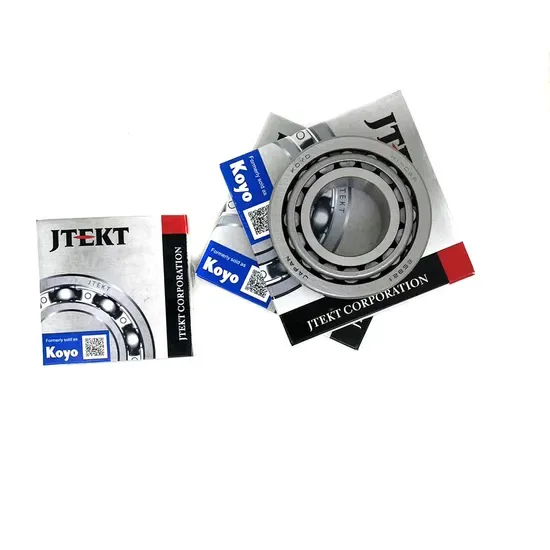
Tapered Roller Bearings
Koyo 30210-30216 Tapered Roller Bearings for Auto Parts Wholesale Supply
View Product
Tapered Roller Bearings
KOYO 30211 30220 30221 Taper Roller Bearing for Automotive Axle Vehicle Spare Parts
View ProductKeep reading
More bearing selection guides for repair shops
Practical guides from KOYO Bearing Supplier on identifying Koyo / JTEKT bearings for farm machinery, construction equipment and power transmission repairs.
 Applications & Industries
· 7 min read
Small Engine Crankshaft Bearings Wholesale Supplier
Selecting the correct Bearings in Small Engine Crankshafts requires strict clearance matching and material verification rather than simple part number lookup. Standard units often…
Read the Guide Applications & Industries · 7 min read
Forklift Mast Bearings Wholesale Supplier | Genuine SKF FAG NSK Bulk
Selecting forklift mast bearings requires matching groove profiles and clearances to harsh environments to prevent premature seizure. Sourcing only genuine SKF, FAG, and NSK…
Read the Guide Applications & Industries · 6 min read
Outboard Lower Unit Bearings Wholesale Supplier
Prevent catastrophic gearcase failures by selecting Bearings in Outboard Lower Units that balance high-speed load capacity with strict corrosion resistance. Learn why standard tapered…
Read the Guide
Bearing enquiry
Send your machine details. Get a written Koyo / JTEKT quote.
KOYO Bearing Supplier quotes a single bearing position or every bearing in an assembly on one enquiry, matched to your machine model and application, with model, quantity, price, lead time and quote validity in writing.
- WhatsApp+1 (702) 981-5880
- Emailinfo@koyoome.com
- Address8 Research Drive, Greenville, SC 20627, USA
"When a Koyo bearing failed on a harvest machine during the season, we needed a replacement urgently. The supplier identified the correct Koyo reference, shipped same-day, and the machine was back in the field within the day."

Request a Bearing Quote
Tell us the machine and the bearing position. Photos of the markings can follow on WhatsApp.