
Koyo vs Chinese Aftermarket Bearings: Genuine Wholesale Supplier
Premium brands are not always the correct engineering choice for every application.
The decision between genuine Koyo bearings and Chinese aftermarket alternatives is not a binary choice of quality versus cost, but a strategic calculation of total cost of ownership based on specific operating conditions. For critical high-load or high-temperature applications, genuine Koyo units provide necessary reliability, while reputable Chinese brands offer viable, cost-effective solutions for non-critical machinery when sourced from verified suppliers.
My perspective on this dilemma was forged in the humid heat of Jakarta. Years ago, I managed procurement for a local palm oil processing facility. Under pressure to reduce operational expenditures, I authorized a switch from specified Japanese bearings to a batch of unverified “high-quality replicas” for the main crusher rollers. The environment was brutal: constant high humidity, elevated temperatures, and continuous heavy loads. Within months, the bearings failed catastrophically. The resulting downtime cost the company far more than the initial savings, and the incident nearly ended my career. This failure taught me that industrial components cannot be evaluated by unit price alone. Today, when clients ask me to compare options, I do not simply push the most expensive item. Instead, I examine material certifications and match the bearing specification to the actual工况 (operating condition). This approach ensures that buyers understand the real trade-offs involved in sourcing Koyo vs Chinese Aftermarket Bearings.
What Are the Core Material & Tolerance Differences?
Steel purity and machining precision define the baseline lifespan of any rolling element.
The primary distinction between premium Japanese brands like Koyo and generic aftermarket options lies in the metallurgical quality of the steel and the strictness of dimensional tolerances. Genuine Koyo bearings utilize high-purity vacuum-degassed steel, which significantly reduces the presence of non-metallic inclusions. These inclusions act as stress concentrators that initiate fatigue cracks under cyclic loading.
In contrast, the Chinese bearing market is highly stratified. Top-tier domestic manufacturers produce bearings that meet international ISO tolerance classes, while lower-tier workshops may cut corners on heat treatment and grinding precision. When evaluating Koyo vs Chinese Aftermarket Bearings, it is crucial to distinguish between reputable Chinese brands and unknown generic entities.
| Feature | Genuine Koyo (Japanese) | Reputable Chinese Brands (e.g., ZWZ, HRB) | Generic Aftermarket |
|---|---|---|---|
| Steel Purity | High-purity vacuum degassed | Standard high-carbon chromium steel | Variable, often higher inclusion density |
| Tolerance Class | Consistently meets P0/P6 standards | Meets ISO standard classes for designated grades | Inconsistent, often wider deviations |
| Heat Treatment | Controlled atmosphere hardening | Standard industrial hardening processes | Often uncontrolled or surface-only |
| Traceability | Full batch-level traceability | Batch-level certification available | Typically none or self-reported only |
A European machine tool builder once shared their testing data with me. They found that while top-tier Chinese bearings performed adequately in standard spindle applications, the consistency of radial runout was noticeably better in the Japanese units. For high-speed applications where vibration must be minimized, this difference is critical. However, for slower, heavier loads where precision is less paramount, the performance gap narrows significantly. Understanding these material realities helps buyers make informed decisions when navigating Koyo vs Chinese Aftermarket Bearings.
How Do They Perform in Extreme vs. Standard Conditions?
Operating environment dictates the risk profile of bearing selection.
Performance divergence becomes most apparent under extreme conditions. High temperatures, heavy shock loads, and contaminated environments accelerate failure modes that might remain dormant in standard settings. In my early days in Southeast Asia, I witnessed how tropical humidity combined with high operational temperatures created a perfect storm for premature bearing failure. The lubricant broke down faster, and microscopic corrosion initiated at inclusion sites in lower-quality steel.
For applications such as mining crushers, steel mill rollers, or marine propulsion systems, the robustness of genuine Koyo bearings is often justified. Their design incorporates optimized internal geometries and superior cage materials that withstand higher thermal expansion and stress.
Conversely, in controlled environments like indoor conveyor systems, packaging lines, or agricultural equipment operating in moderate climates, the advanced features of premium bearings may be over-specified. A general manufacturing plant in Central Asia reported using reliable Chinese brands for their auxiliary conveyors. They achieved significant cost reductions without experiencing unacceptable downtime. The key was recognizing that these were non-critical paths; a brief stoppage for replacement did not halt the entire production line.
When analyzing Koyo vs Chinese Aftermarket Bearings, buyers must map the application severity. If a failure results in catastrophic safety risks or massive production losses, the premium option is the prudent choice. If the component is easily accessible and the load is moderate, a verified Chinese alternative offers a balanced solution. This nuanced view prevents both overspending on unnecessary precision and under-specifying critical components.
When Should You Choose Chinese Alternatives Over Koyo?
Cost efficiency is valid when reliability requirements are aligned with application criticality.
The misconception that “aftermarket means fake” ignores the reality of modern Chinese manufacturing. Reputable domestic brands have invested heavily in automation and quality control, producing bearings that serve global OEMs effectively. The decision to choose Chinese alternatives should be driven by a clear understanding of the machine’s role in the production process.
Consider a heavy equipment OEM looking to optimize their bill of materials. They might specify Koyo bearings for the main transmission shafts where precision and longevity are paramount. However, for auxiliary components such as idler pulleys, fan supports, or non-driven wheels, they might select high-quality Chinese bearings. This mixed-sourcing strategy balances the overall cost without compromising the core reliability of the machine.
For MRO managers, the logic is similar. Emergency spare parts for critical assets should always be genuine premium brands to ensure immediate compatibility and performance. However, for routine maintenance of non-critical assets, stocking verified Chinese alternatives can reduce inventory carrying costs significantly. The key is verification. Buyers must ensure that the Chinese bearings come from manufacturers with established export records and quality certifications, not from trading companies offering unbranded goods.
Navigating Koyo vs Chinese Aftermarket Bearings requires this segment-specific approach. It is not about choosing one side universally, but about deploying the right resource for the right task. This strategy allows distributors and end-users to maintain competitive pricing while safeguarding operational integrity.
How to Verify Authenticity and Traceability?
Documentation is the only reliable defense against counterfeit and substandard products.
The global bearing market is plagued by counterfeits and mislabeled goods. A box labeled with a premium brand name does not guarantee the contents are genuine. Similarly, a Chinese bearing claimed to be “premium grade” may lack the necessary metallurgical backing. Verification must go beyond visual inspection.
Authenticity checks for genuine Koyo bearings involve examining the packaging quality, laser-etched markings on the rings, and requesting material certificates that trace back to the manufacturer’s production facilities. Reputable suppliers provide full batch-level traceability, allowing buyers to verify the origin of the steel and the heat treatment lot.
For Chinese aftermarket options, the focus shifts to supplier qualification and technical documentation. Buyers should request ISO compliance certificates, dimensional inspection reports, and material test records. Established Chinese brands like ZWZ and HRB provide these documents routinely. Avoid suppliers who cannot produce verifiable data or who offer prices significantly below market averages without explanation.
In my current practice, I emphasize the importance of sourcing from partners who offer transparent supply chains. Whether supplying genuine Koyo units or premium Chinese lines, the ability to provide traceability docs is non-negotiable. This transparency builds trust and ensures that the Koyo vs Chinese Aftermarket Bearings comparison is based on actual product quality, not just marketing claims. Buyers should treat documentation as a critical part of the product, not an administrative afterthought.
Conclusion
Smart sourcing matches bearing quality to operational criticality, not just brand prestige.
Choosing between genuine Koyo and Chinese aftermarket bearings requires a detailed assessment of operating conditions, failure consequences, and total cost of ownership. Premium brands deliver essential reliability for extreme and critical applications, while verified Chinese alternatives offer substantial cost savings for standard duties. By prioritizing traceability and technical verification, buyers can optimize their maintenance budgets without compromising machinery uptime.
Mentioned in this article
Koyo / JTEKT bearings from this guide
These are the Koyo / JTEKT bearing types discussed above. Open any product to check its details, or quote it together with the rest of your repair.
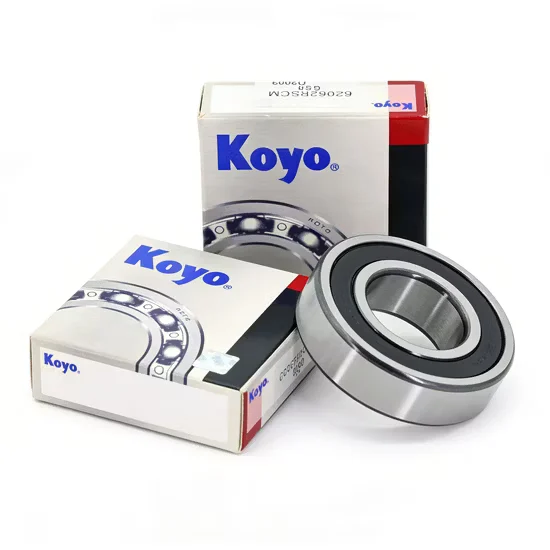
Deep Groove Ball Bearings
Koyo 6003 6205 6301 6004 Sealed Deep Groove Ball Bearing for Automotive Aftermarket
View Product
Cylindrical Roller Bearings
Koyo NSK N408e Cylindrical Roller Bearing Genuine Wholesale Supplier
View Product
Cylindrical Roller Bearings
Koyo N2305e Cylindrical Roller Bearing Genuine Wholesale Supplier
View Product
Tapered Roller Bearings
BDL 30204 Tapered Roller Bearing Genuine Wholesale Supplier
View ProductKeep reading
More bearing selection guides for repair shops
Practical guides from KOYO Bearing Supplier on identifying Koyo / JTEKT bearings for farm machinery, construction equipment and power transmission repairs.
 Brands & Alternatives
· 7 min read
Koyo Automotive Bearings Wholesale Supplier for Global Bulk Orders
Master global sourcing of Koyo automotive bearings by solving mixed-brand customs risks and verifying authenticity beyond packaging. Learn to validate technical specs, select reliable…
Read the Guide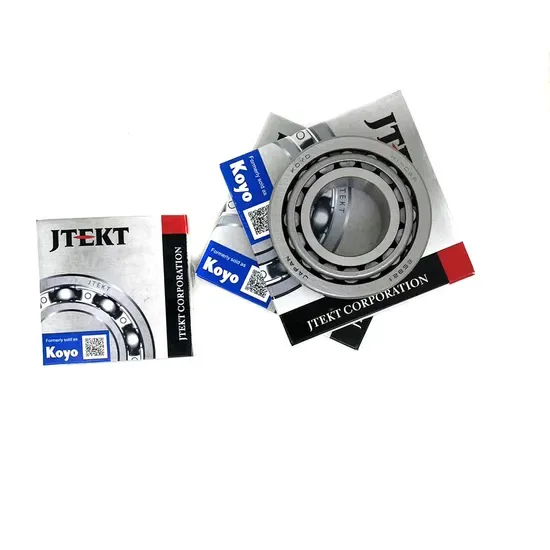 Brands & Alternatives
· 6 min read
Premium vs Economy Motorcycle Bearings: Wholesale Supplier for Bulk Orders
Choosing between premium vs economy motorcycle bearings requires analyzing total cost of ownership rather than just upfront price. Economy options often fail under heavy…
Read the Guide Brands & Alternatives
· 8 min read
OE Koyo vs Aftermarket Box: Differences for Wholesale Buyers
Understand the critical OE Koyo vs Aftermarket Box differences to avoid severe customs delays and terminal rejections in strict markets. Original packaging features holographic…
Read the Guide
Bearing enquiry
Send your machine details. Get a written Koyo / JTEKT quote.
KOYO Bearing Supplier quotes a single bearing position or every bearing in an assembly on one enquiry, matched to your machine model and application, with model, quantity, price, lead time and quote validity in writing.
- WhatsApp+1 (702) 981-5880
- Emailinfo@koyoome.com
- Address8 Research Drive, Greenville, SC 20627, USA
"When a Koyo bearing failed on a harvest machine during the season, we needed a replacement urgently. The supplier identified the correct Koyo reference, shipped same-day, and the machine was back in the field within the day."

Request a Bearing Quote
Tell us the machine and the bearing position. Photos of the markings can follow on WhatsApp.