
Koyo Truck Wheel Bearings Wholesale Supplier Bulk OEM
The cheapest unit price is often the most expensive line item on your invoice.
Sourcing Koyo truck wheel bearings requires precise specification matching, authentic OEM packaging verification, and flawless customs documentation to prevent costly port delays. Most buyers focus solely on the part number, ignoring suffix variations that dictate seal types and load capacities, or overlooking minor discrepancies in commercial invoices that trigger weeks of detention at international ports.
I still remember the sweat dripping down my back in a Shenzhen warehouse, staring at a container destined for Manzanillo. The cargo was a mixed batch of heavy-duty components, including a significant volume of Koyo truck wheel bearings. On paper, everything looked perfect. In reality, the commercial invoice listed a model code that differed by two letters from the actual physical stock, and the wooden pallets lacked the mandatory fumigation certificates. That minor clerical error and missing paperwork didn’t just cause a delay; it resulted in a fifteen-day detention at the port. The demurrage charges alone swallowed the profit margin of the entire shipment, and the client nearly rejected the cargo due to perceived compliance risks. That experience reshaped how I approach every single export order. It is not just about moving metal; it is about moving data and compliance as accurately as the hardware itself.
This guide breaks down the critical technical and logistical nuances of sourcing these components. We will move beyond basic part numbers to explore how suffix decoding prevents mechanical failure, why packaging verification is your first line of defense against counterfeits, and how meticulous document preparation saves you from financial bleeding at customs.
What Are the Key Specifications for KOYO Truck Wheel Bearings?
Accurate suffix matching ensures correct seal and load capacity for heavy-duty applications.
Many distributors assume that matching the base part number is sufficient for ordering replacement bearings. This is a dangerous oversimplification. In the world of tapered roller bearings, the suffix letters are not arbitrary; they define critical engineering parameters such as internal clearance, seal material, and cage design. A bearing with the wrong clearance class can overheat under heavy loads, leading to premature seizure.
Consider the difference between a standard clearance and a C3 clearance bearing. In high-temperature environments typical of long-haul trucking, the wrong choice can mean the difference between a service life of months versus years. When evaluating Koyo truck wheel bearings, you must decode the full part number. The suffixes indicate whether the bearing is designed for high-speed stability or heavy shock loads. Ignoring these details often leads to returns, warranty claims, and damaged reputations with end-users.
| Specification Factor | Standard Suffix | Heavy-Duty/High-Temp Suffix | Impact on Performance |
|---|---|---|---|
| Internal Clearance | Normal (No suffix) | C3 / C4 | Prevents thermal expansion binding |
| Seal Type | Rubber Contact | Labyrinth / Non-contact | Balances contamination protection vs friction |
| Cage Material | Steel | Brass / Polymer | Affects high-speed stability and weight |
| Precision Class | P0 / Normal | P6 / P5 | Reduces vibration and noise levels |
A case in point involves a fleet operator in Southeast Asia who ordered bulk replacements based only on the base number. The supplied bearings had standard clearance, but their trucks operated in extreme ambient heat. The bearings expanded during operation, eliminating the necessary internal gap, which caused rapid overheating and failure. Had the suffix been verified, the correct C3 clearance units would have been shipped, avoiding a costly roadside breakdown scenario.
When you source Koyo truck wheel bearings, always request the full technical datasheet for the specific suffix variant. Do not accept generic cross-references without verifying the dimensional tolerances and internal geometry. This level of scrutiny ensures that the bearings you distribute meet the rigorous demands of modern heavy-duty transport.
How to Verify Genuine KOYO Packaging and Traceability?
Authentic OEM packaging and batch traceability are critical to avoid counterfeit failures.
The aftermarket is flooded with high-quality fakes that look identical to the genuine article at a glance. However, under load, these counterfeits fail catastrophically. The first line of defense is not the bearing itself, but its packaging. Genuine KOYO products come with specific security features, including holographic labels, unique batch traceability codes, and high-quality printing that is difficult to replicate.
During a recent consolidation of a mixed-container order for a distributor in the Middle East, we implemented a strict pre-shipment verification protocol. Each box of Koyo truck wheel bearings was scanned for its unique traceability code. This code links the physical product to the manufacturer’s production records, confirming its origin and quality control status. Without this link, you are essentially buying blind.
We also check for subtle signs of repackaging. Counterfeiters often reuse genuine boxes or create near-perfect replicas. Look for inconsistencies in font weight, color saturation, and the quality of the cardboard. Genuine OEM packaging is robust, designed to withstand international shipping stresses. If the box feels flimsy or the printing smudges easily, it is a red flag.
Another critical aspect is the condition of the bearing inside. Genuine units are coated with a specific anti-corrosion preservative and wrapped in high-grade VCI (Vapor Corrosion Inhibitor) paper. Counterfeits often use cheap oil or inadequate wrapping, leading to surface rust before the bearing even reaches the customer. By verifying the packaging and internal preservation, you protect your brand’s reputation and ensure your clients receive products that perform as expected.
Sourcing from a supplier who prioritizes this level of verification means you do not have to gamble on authenticity. It transforms the procurement process from a risk management exercise into a reliable supply chain operation.
Why Do Documentation Errors Cause Massive Port Delays?
Minor discrepancies in commercial invoices or missing fumigation certificates lead to weeks of demurrage.
In international trade, the product is only half the equation. The other half is the paperwork. Customs authorities are increasingly stringent, and even minor errors can trigger intensive inspections or outright detention. I have seen shipments held for weeks because the model number on the invoice did not exactly match the packing list, or because the wood packaging material lacked the required ISPM 15 mark.
For Koyo truck wheel bearings, which are often shipped in large volumes on wooden pallets, fumigation certification is non-negotiable for many countries. Missing this single document can result in the entire container being quarantined. The cost of storage, inspection, and potential re-exportation far exceeds the value of the bearings themselves.
Furthermore, the description of goods must be precise. Using vague terms like “auto parts” instead of specifying “tapered roller bearings” can raise suspicions and lead to manual checks. Accurate HS codes are essential to ensure correct duty assessment and smooth clearance. A mismatch here can result in fines or delays while authorities verify the classification.
To mitigate these risks, we implement a multi-layer document verification process before any shipment leaves our facility. Every invoice, packing list, and certificate is cross-checked against the physical cargo. This proactive approach ensures that when your goods arrive at the port, they clear customs without unnecessary hurdles. It is a small investment in time that saves significant money and stress downstream.
Remember, customs officers deal with thousands of shipments daily. They look for reasons to pause. Giving them a perfectly aligned set of documents removes those reasons and keeps your supply chain moving.
How to Optimize Mixed-Batch Sourcing and Shipping?
Consolidating urgent MRO parts with bulk orders reduces freight costs and simplifies customs clearance.
Many distributors face a dilemma: they need to replenish slow-moving stock in bulk while simultaneously fulfilling urgent requests for specific Koyo truck wheel bearings. Shipping these separately is inefficient and expensive. Consolidation offers a strategic solution.
By combining urgent MRO spare parts with larger project orders, you optimize container space and reduce per-unit freight costs. This approach also simplifies customs clearance, as you deal with a single entry rather than multiple small shipments. However, successful consolidation requires careful planning. Weight distribution must be calculated to ensure safe transport, and incompatible items must be segregated to prevent damage.
For example, heavy bearings should not be stacked on top of lightweight, sensitive components. Proper bracing and padding are essential. Additionally, the packing list must clearly itemize each SKU within the consolidated container to facilitate easy unpacking and inventory management at the destination.
This method also allows for better cash flow management. Instead of tying up capital in multiple small shipments with high handling fees, you can consolidate orders and benefit from economies of scale. It is a practice that requires a supplier with robust inventory management and logistics expertise, capable of handling complex mixed-brand and mixed-size packages efficiently.
By adopting this strategy, you transform your logistics from a cost center into a competitive advantage, offering faster delivery times and lower prices to your end customers.
Conclusion
Precision in specifications and paperwork is the true driver of profitability in bearing distribution.
Sourcing Koyo truck wheel bearings is not merely about finding the lowest price. It is about ensuring technical accuracy through suffix verification, guaranteeing authenticity via packaging checks, and securing smooth logistics through meticulous documentation. These steps protect your margins and your reputation. By focusing on these critical areas, you build a resilient supply chain that delivers value consistently, avoiding the hidden costs of errors and delays.
Mentioned in this article
Koyo / JTEKT bearings from this guide
These are the Koyo / JTEKT bearing types discussed above. Open any product to check its details, or quote it together with the rest of your repair.

Tapered Roller Bearings
General Koyo 31309-31317 Tapered Roller Bearings for Car Truck
View Product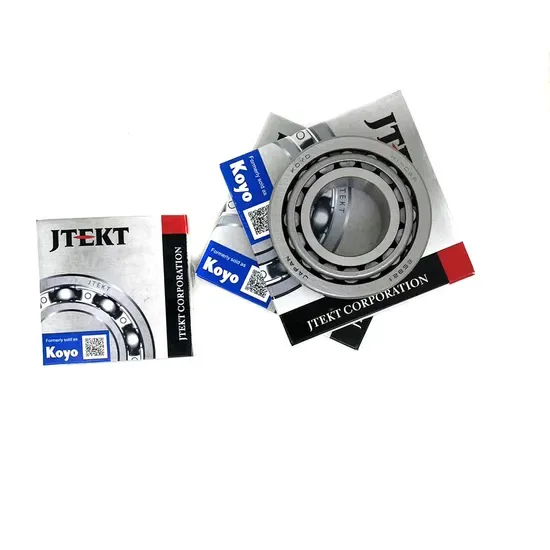
Tapered Roller Bearings
Wholesale Koyo 32210 32211 32212 32213 32214 Tapered Roller Bearing for Truck
View Product
Inch Size Bearings
Koyo HM518445/518410 Tapered Roller Bearing for Truck Axle
View Product
Tapered Roller Bearings
Genuine KOYO 32217/32218/33021JR Tapered Roller Bearings for Mining Trucks
View ProductKeep reading
More bearing selection guides for repair shops
Practical guides from KOYO Bearing Supplier on identifying Koyo / JTEKT bearings for farm machinery, construction equipment and power transmission repairs.
 Buying Guide
· 7 min read
Koyo Auto Bearings Wholesale Supplier & Bulk Quote
Request a Quote for Koyo Auto Bearings that accounts for total landed cost, not just FOB price. Optimize margins through mixed-container consolidation and ensure…
Read the Guide Buying Guide · 7 min read
Koyo Auto Bearings Wholesale Supplier for Parts Stores
Stocking Koyo auto bearings requires strict verification of suffix codes and traceability to prevent costly assembly failures. Learn essential packaging checks and cross-brand alternatives…
Read the Guide Buying Guide
· 7 min read
Fake Auto Bearings: Neutral Buyer Checks Wholesale Supplier
Master Fake Auto Bearings Neutral Buyer Checks by shifting focus from packaging to internal physical inspections and traceability. Detect counterfeits through acidic rust oil…
Read the Guide
Bearing enquiry
Send your machine details. Get a written Koyo / JTEKT quote.
KOYO Bearing Supplier quotes a single bearing position or every bearing in an assembly on one enquiry, matched to your machine model and application, with model, quantity, price, lead time and quote validity in writing.
- WhatsApp+1 (702) 981-5880
- Emailinfo@koyoome.com
- Address8 Research Drive, Greenville, SC 20627, USA
"When a Koyo bearing failed on a harvest machine during the season, we needed a replacement urgently. The supplier identified the correct Koyo reference, shipped same-day, and the machine was back in the field within the day."

Request a Bearing Quote
Tell us the machine and the bearing position. Photos of the markings can follow on WhatsApp.