
Koyo Transmission Bearing Equivalents Wholesale Supplier
Identical outer dimensions do not guarantee interchangeability.
Finding reliable Koyo transmission bearing equivalents requires verifying internal clearance, roller contact angles, and cage materials rather than just matching boundary dimensions. A direct dimensional swap without checking these geometric parameters often leads to premature failure under heavy radial loads.
I still remember the silence in the workshop after a heavy-duty conveyor line stopped. It was late at night, and the maintenance team had replaced a failed KOYO tapered roller bearing with a generic alternative that matched the bore and outer diameter perfectly. The part number looked similar, and the price was right. Within a week, the keeping cage shattered, sending metal fragments through the gearbox housing. The resulting shaft burnout caused days of downtime and a repair bill that dwarfed the initial savings. That incident shifted my focus from simple part swapping to deep technical verification. Now, when clients ask for Koyo transmission bearing equivalents, I start by asking about the load conditions and operating environment, not just the size.
This guide breaks down how to safely cross-reference KOYO bearings with other premium brands, ensuring that cost optimization does not come at the expense of equipment reliability.
Why Dimensional Match Isn’t Enough for KOYO Equivalents?
Most buyers assume that if two bearings share the same bore, outside diameter, and width, they are interchangeable. This is a dangerous misconception in transmission applications. The internal geometry dictates how the bearing handles stress, heat, and misalignment.
The primary issue lies in the roller contact angle and internal clearance. KOYO designs its tapered roller bearings with specific contact angles optimized for certain load ratios. If an equivalent bearing has a slightly different angle, the load distribution across the rollers becomes uneven. Under high radial loads, this causes edge loading, leading to rapid fatigue and spalling.
Another critical factor is the cage material. In heavy-duty transmissions, steel cages are common for their strength, but brass cages offer better damping and heat dissipation in high-speed applications. Swapping a steel-caged KOYO bearing for a brass-caged equivalent without verifying the application’s thermal limits can result in cage deformation or fracture. I have seen cases where a cheaper alternative with a stamped steel cage failed in a high-vibration mining crusher because it lacked the necessary rigidity compared to the original machined brass cage.
Internal clearance is equally vital. Standard clearance (C0) might work for general industrial use, but transmissions often require C3 or C4 clearance to accommodate thermal expansion and shaft deflection. Installing a bearing with insufficient clearance causes overheating and seizure. Verifying these internal specifications is non-negotiable when sourcing Koyo transmission bearing equivalents.
How to Cross-Reference KOYO Transmission Bearings Safely?
Safe cross-referencing is a systematic process that goes beyond looking up part numbers in a catalog. It involves verifying three key technical parameters: dynamic load rating, internal clearance, and cage design.
First, check the dynamic and static load ratings. The equivalent bearing must meet or exceed the original KOYO specification. A lower load rating means the bearing will fail sooner under the same operating conditions. Always compare the basic dynamic load rating (Cr) and static load rating (Cor) from the manufacturer’s technical datasheets.
Second, confirm the internal clearance code. KOYO bearings often use standard codes, but some transmission applications specify C3 or C4 clearance. Ensure the alternative brand offers the same clearance class. If the original bearing was pre-loaded or had specific fitment requirements, the equivalent must match these tolerances. Misalignment in clearance can lead to excessive heat generation and reduced lubricant life.
Third, inspect the cage material and design. Identify whether the original KOYO bearing uses a steel, brass, or polymer cage. Match this material in the equivalent to ensure compatible performance in terms of weight, strength, and thermal properties. For high-speed gearboxes, a mismatched cage can cause imbalance and vibration.
A practical step is to request a dimensionally detailed drawing from the supplier. Compare the rib heights, roller lengths, and cup angles. Even minor deviations in these internal features can affect the bearing’s ability to handle axial and radial loads simultaneously. When evaluating Koyo transmission bearing equivalents, this level of scrutiny prevents costly mismatches.
KOYO vs. SKF/TIMKEN/FAG: Specification Comparison Matrix
When considering alternatives, it helps to see how major brands compare in key transmission series. The following table provides a qualitative comparison of popular tapered and cylindrical roller bearings used in heavy-duty transmissions. Note that exact values vary by specific part number, so this matrix serves as a general guide for selection strategy.
| Feature | KOYO Original | SKF Equivalent | TIMKEN Equivalent | FAG Equivalent |
|---|---|---|---|---|
| Roller Profile | Optimized for load distribution | Logarithmic profile for edge stress reduction | Tapered design for high axial loads | Precision ground for low friction |
| Cage Options | Steel, Brass, Polymer | Steel, Brass, Polyamide | Steel, Brass | Steel, Brass, Polyamide |
| Clearance Classes | Standard, C3, C4 | Standard, C3, C4, C5 | Standard, C3, C4 | Standard, C3, C4 |
| Material Quality | High-carbon chromium steel | Clean steel with controlled inclusion | Case-hardened steel options | Vacuum-degassed steel |
| Load Rating Consistency | High | Very High | High | Very High |
| Availability | Global stock | Global stock | Strong in Americas/Europe | Strong in Europe/Asia |
This comparison shows that while all four brands offer high-quality products, their design philosophies differ. SKF focuses on logarithmic profiling to reduce edge stresses, while TIMKEN is renowned for its tapered roller expertise. FAG emphasizes precision grinding for low-friction applications. When choosing Koyo transmission bearing equivalents, align the brand’s strength with your application’s primary challenge. For instance, if edge loading is a concern due to misalignment, an SKF equivalent might offer benefits. If axial load capacity is critical, a TIMKEN alternative could be preferable.
It is crucial to note that “equivalent” does not mean “identical.” Each brand has its own manufacturing tolerances and material treatments. Therefore, always verify the specific part number’s datasheet against the original KOYO specifications. Do not rely solely on brand reputation; validate the technical data for each application.
What to Ask Your Supplier Before Ordering Alternatives?
Sourcing bearings from a global supplier requires more than just placing an order. To ensure you receive genuine and suitable Koyo transmission bearing equivalents, you must ask the right questions. This due diligence protects your operation from counterfeit parts and technical mismatches.
First, demand traceability documentation. Ask for the original manufacturer’s certificate of conformity or material test reports. Genuine bearings come with batch numbers that can be traced back to the production facility. If a supplier cannot provide this documentation, consider it a red flag. Counterfeit bearings often lack proper marking or have inconsistent font styles on the rings.
Second, inquire about the storage conditions. Bearings are sensitive to humidity and temperature. Improper storage can lead to corrosion before installation. Ask if the supplier uses climate-controlled warehousing and how they package bearings for long-term storage. Proper packaging includes vapor-corrosion inhibitors and sealed wrappers to protect against moisture.
Third, seek technical support for model selection. A reliable supplier should have engineers who can review your application details and recommend the most suitable equivalent. They should be able to explain why a specific alternative is chosen over another, based on load ratings, speed limits, and environmental factors. Avoid suppliers who only offer part number lookups without technical context.
Finally, clarify the return policy and warranty terms. Even with careful selection, issues can arise. A confident supplier will offer a clear warranty process for defective goods. This assurance indicates their confidence in the quality of the products they supply. When evaluating Koyo transmission bearing equivalents, these questions help distinguish professional distributors from mere traders.
Conclusion
Dimensional matching is only the starting point for safe bearing replacement.
True equivalence in transmission applications depends on internal geometry, material quality, and precise clearance settings. By verifying load ratings, cage materials, and traceability documentation, you can confidently select Koyo transmission bearing equivalents that maintain equipment reliability and optimize costs. Always prioritize technical validation over simple part number substitution to avoid catastrophic failures.
Mentioned in this article
Koyo / JTEKT bearings from this guide
These are the Koyo / JTEKT bearing types discussed above. Open any product to check its details, or quote it together with the rest of your repair.
Marine Bearings
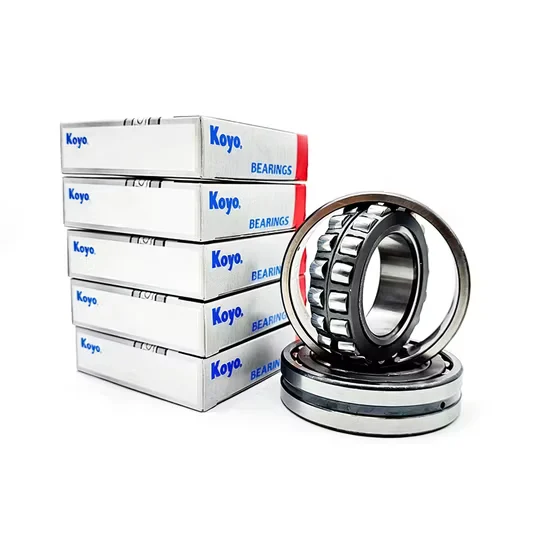
KOYO 22314 Spherical Roller Bearing 70x150x51mm for Marine Transmissions
View Product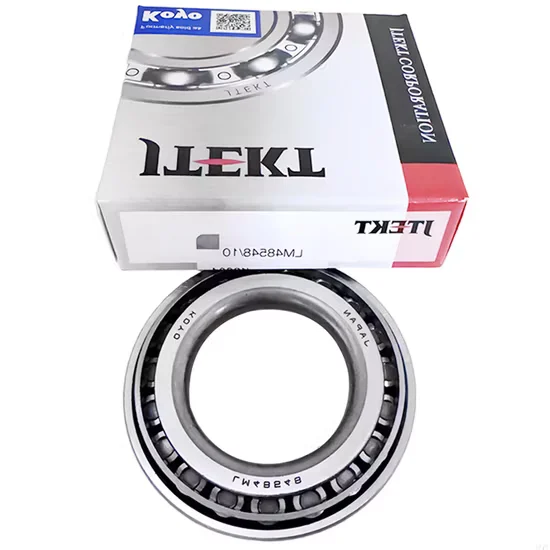
Tapered Roller Bearings
Genuine KOYO 32007 Tapered Roller Bearing Wholesale Supplier
View Product
Tapered Roller Bearings
Genuine KOYO 32006 Taper Roller Bearing Wholesale Supplier
View Product
Cylindrical Roller Bearings
Koyo NSK N408e Cylindrical Roller Bearing Genuine Wholesale Supplier
View ProductKeep reading
More bearing selection guides for repair shops
Practical guides from KOYO Bearing Supplier on identifying Koyo / JTEKT bearings for farm machinery, construction equipment and power transmission repairs.
 Brands & Alternatives
· 7 min read
Koyo Automotive Bearings Wholesale Supplier for Global Bulk Orders
Master global sourcing of Koyo automotive bearings by solving mixed-brand customs risks and verifying authenticity beyond packaging. Learn to validate technical specs, select reliable…
Read the Guide Brands & Alternatives
· 6 min read
Premium vs Economy Motorcycle Bearings: Wholesale Supplier for Bulk Orders
Choosing between premium vs economy motorcycle bearings requires analyzing total cost of ownership rather than just upfront price. Economy options often fail under heavy…
Read the Guide Brands & Alternatives
· 8 min read
OE Koyo vs Aftermarket Box: Differences for Wholesale Buyers
Understand the critical OE Koyo vs Aftermarket Box differences to avoid severe customs delays and terminal rejections in strict markets. Original packaging features holographic…
Read the Guide
Bearing enquiry
Send your machine details. Get a written Koyo / JTEKT quote.
KOYO Bearing Supplier quotes a single bearing position or every bearing in an assembly on one enquiry, matched to your machine model and application, with model, quantity, price, lead time and quote validity in writing.
- WhatsApp+1 (702) 981-5880
- Emailinfo@koyoome.com
- Address8 Research Drive, Greenville, SC 20627, USA
"When a Koyo bearing failed on a harvest machine during the season, we needed a replacement urgently. The supplier identified the correct Koyo reference, shipped same-day, and the machine was back in the field within the day."

Request a Bearing Quote
Tell us the machine and the bearing position. Photos of the markings can follow on WhatsApp.