
Koyo ST3062 Steering Bearing Supplier: Genuine Stock & Bulk Wholesale
Most steering bearing failures are not caused by poor lubrication, but by substandard inner ring hardness leading to micro-spalling.
The Koyo ST3062 steering bearing specs define the precise dimensional tolerances and load ratings required for heavy-duty agricultural and construction equipment. Verifying these specifications against original manufacturer documentation is the only reliable method to prevent premature system lock-up and ensure operational stability in high-stress environments.
I still remember the metallic crunch that signaled the end of a profitable season for a client in the Midwest. He had sourced what he believed to be premium components for a fleet of harvesters, only to find the steering mechanisms seizing after just a few months of operation. When we cut open the failed units, the inner rings showed signs of softening and deformation that no amount of grease could fix. The hardness simply did not meet the rigorous standards expected from genuine production lines. That incident shifted my entire approach to sourcing. It was no longer about finding the lowest price per unit, but about establishing an unbreakable chain of custody for every single part. Today, when I handle inquiries for critical components like the ST3062, my first question is never about volume, but about traceability.
Understanding the technical baseline is essential before discussing procurement. Without a clear grasp of what defines a genuine unit, buyers are left vulnerable to sophisticated counterfeits that look identical on the outside but fail catastrophically under load.
What Are the Core Specs of Koyo ST3062?
Accurate dimensional data and load capacity ratings form the non-negotiable foundation for any steering system design involving the ST3062 model.
When engineers specify a bearing, they are not just picking a shape; they are defining the mechanical limits of the entire assembly. The Koyo ST3062 dimensions are engineered to withstand the complex combination of radial and axial loads typical in steering knuckles and pivot points. Deviating from these exact parameters, even by microns, can lead to misalignment, increased friction, and accelerated wear.
For procurement specialists and maintenance managers, having the correct datasheet is crucial for verifying incoming stock. The following table outlines the qualitative verification points that distinguish a compliant unit from a suspect one. Note that specific numerical tolerances should always be cross-referenced with the latest official technical manuals, as standards may evolve.
| Specification Category | Genuine Koyo Standard | Common Counterfeit Trait | Verification Method |
|---|---|---|---|
| Dimensional Tolerance | ISO Class Normal/P6 (as specified) | Inconsistent outer diameter fit | Precision micrometer measurement |
| Internal Clearance | Controlled C3/C4 range for thermal expansion | Random or excessive play | Feeler gauge or dial indicator check |
| Surface Finish | Mirror-like raceway polish | Visible grinding marks or roughness | Visual inspection under magnification |
| Cage Material | High-strength stamped steel or polymer | Brittle or poorly formed metal | Flexibility and weight comparison |
A distributor in Southeast Asia once shared how a batch of bearings with seemingly correct outer dimensions caused havoc because the internal clearance was too tight. As the machinery heated up during operation, the lack of thermal expansion room led to immediate seizure. This highlights why checking the Koyo ST3062 steering bearing specs goes beyond measuring the outside; it requires understanding the internal engineering intent.
Reliability starts with precision. When you know exactly what the genuine article should feel and measure like, you eliminate the guesswork from your quality control process.
Why Do Steering Bearings Fail Prematurely in Heavy Equipment?
Premature failure is often a result of material defects rather than operational abuse, specifically involving insufficient case hardening depth.
It is a common misconception that if a bearing fails, the operator must have neglected maintenance. While lubrication is vital, many catastrophic failures in heavy equipment stem from the material itself not meeting the required hardness profile. In steering applications, the inner ring rotates under significant stress. If the surface hardness is too low, microscopic cracks begin to form beneath the raceway, eventually leading to spalling and complete lock-up.
I recall a case involving a mining operation in South America where multiple loaders experienced steering failure within weeks of a major overhaul. The maintenance team blamed the harsh environment, but our analysis revealed that the replacement bearings lacked the necessary core toughness. They were made from inferior steel that could not handle the shock loads inherent in mining terrain.
| Failure Mode | Root Cause Indicator | Impact on Operation |
|---|---|---|
| Micro-spalling | Subsurface cracks due to low hardness | Gradual increase in vibration and noise |
| Raceway Deformation | Soft material yielding under load | Sudden loss of steering precision |
| Cage Fracture | Brittle material or poor heat treatment | Immediate bearing seizure |
This is why sourcing from a verified Koyo ST3062 steering bearing supplier is critical. Reputable suppliers do not just ship boxes; they ensure that the metallurgical properties match the application demands. When you deal with trusted partners, you gain access to batch-specific data that confirms the material integrity of your stock.
Understanding the mechanics of failure transforms how you evaluate suppliers. It shifts the focus from price to performance assurance, ensuring that every component installed can withstand the rigors of real-world use.
How to Verify Genuine Koyo ST3062 Bearings?
Authenticity verification relies on a three-step process involving packaging security, physical marking inspection, and documentation cross-referencing.
Counterfeiters have become increasingly sophisticated, producing packaging that mimics the original almost perfectly. However, they often overlook the finer details that require access to proprietary manufacturing processes. Verifying a genuine unit requires a keen eye and a systematic approach.
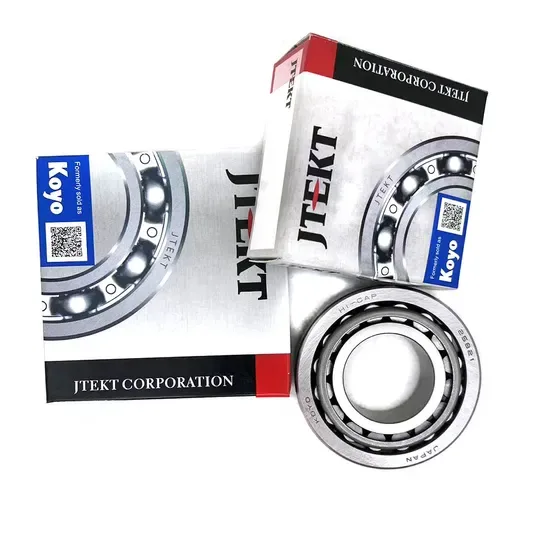
First, examine the packaging. Genuine Koyo products feature specific holographic seals and high-quality printing that is difficult to replicate. The box should be sturdy, with clear, sharp text and barcodes that scan correctly. Second, inspect the bearing itself. The laser etching on the outer ring should be crisp, deep, and evenly spaced. Blurry or shallow markings are a red flag. Finally, and most importantly, request the certificate of origin and the factory inspection report. These documents should match the batch number on the packaging.
| Verification Step | What to Look For | Red Flag Warning |
|---|---|---|
| Packaging | Holographic seal, sharp print | Flimsy cardboard, smudged ink |
| Physical Marking | Crisp laser etching, consistent font | Hand-stamped look, uneven depth |
| Documentation | Batch-matched inspection report | Missing or generic certificates |
A buyer in the Middle East recently avoided a significant loss by insisting on seeing the inspection reports before releasing payment. The supplier initially hesitated, claiming the documents were “internal,” which was enough to halt the transaction. Later, it was revealed that the stock was indeed mixed with non-genuine parts. This experience underscores the value of working with a transparent genuine Koyo steering bearing supplier who welcomes such scrutiny.
Trust is built on transparency. By demanding proper documentation, you protect your business from the hidden costs of counterfeit components, including downtime, reputational damage, and safety liabilities.
What to Consider When Sourcing ST3062 for Mixed Containers?
Successful mixed-container sourcing requires strict batch consistency management and comprehensive customs documentation to avoid clearance delays.
For distributors and large-scale MRO providers, consolidating various bearing types into a single container is a cost-effective strategy. However, mixing brands and models introduces complexity. When including high-turnover items like the ST3062, it is essential to ensure that all units in the shipment come from verified batches with consistent quality levels. Inconsistencies can lead to varied performance across different machines, complicating maintenance schedules.
Furthermore, customs authorities in many regions are increasingly strict about intellectual property rights. Having a complete set of traceability documents, including invoices, packing lists, and certificates of origin, is mandatory for smooth clearance. A missing document can hold up an entire container, leading to demurrage charges and delayed projects.
| Sourcing Factor | Best Practice | Risk of Neglect |
|---|---|---|
| Batch Consistency | Source from single verified lot | Variable performance and lifespan |
| Documentation | Full set of traceability papers | Customs detention and fines |
| Inventory Mix | Balance high-turnover with slow-moving | Excess stock or frequent shortages |
We have supported numerous clients in optimizing their mixed containers, ensuring that critical items like the ST3062 bearing cross reference models are properly documented and stored. This holistic approach allows buyers to benefit from economies of scale without compromising on quality or compliance.
Efficient sourcing is about more than just filling a box. It is about creating a seamless supply chain that delivers value, reliability, and peace of mind to your end customers.
Conclusion
Precision specifications and rigorous authenticity checks are the dual pillars of reliable steering system maintenance.
Mastering the Koyo ST3062 steering bearing specs ensures that your equipment operates within its designed safety margins. By prioritizing verified sources and demanding full traceability, you safeguard your operations against the hidden dangers of counterfeit components. This disciplined approach not only extends machinery life but also builds lasting trust with your own clients.
Mentioned in this article
Koyo / JTEKT bearings from this guide
These are the Koyo / JTEKT bearing types discussed above. Open any product to check its details, or quote it together with the rest of your repair.
Tapered Roller Bearings
Koyo 32207 30208 30307 Tapered Roller Bearing Genuine Supplier
View Product
Tapered Roller Bearings
Genuine KOYO 30316 Tapered Roller Bearing Low Noise Original Supplier
View Product
Tapered Roller Bearings
Genuine KOYO 32007 Tapered Roller Bearing Wholesale Supplier
View Product
Tapered Roller Bearings
Genuine KOYO 32006 Taper Roller Bearing Wholesale Supplier
View ProductKeep reading
More bearing selection guides for repair shops
Practical guides from KOYO Bearing Supplier on identifying Koyo / JTEKT bearings for farm machinery, construction equipment and power transmission repairs.
 Product & Series Guides
· 8 min read
Koyo 6005-2RS Moto Bearing Specs: Wholesale Supplier for Sale
Verify Koyo 6005-2RS specs beyond basic 25x47x12mm dimensions to prevent motor failures caused by seal friction and humidity. Learn how rubber 2RS limits compare…
Read the Guide Product & Series Guides · 10 min read
Koyo NUP307 Cylindrical Roller Bearing Wholesale Supplier for Sale
Master Koyo NUP307 specs by prioritizing internal clearance and axial positioning over cosmetic perfection. This guide details 35x80x21mm dimensions, C3 clearance for thermal expansion,…
Read the Guide Product & Series Guides · 6 min read
Koyo 40TM18 Transmission Bearing Wholesale Supplier
Accurate Koyo 40TM18 transmission specs prevent costly gearbox failures caused by generic substitutes with incorrect tolerances. Verify exact dimensions, load ratings, and batch traceability…
Read the Guide
Bearing enquiry
Send your machine details. Get a written Koyo / JTEKT quote.
KOYO Bearing Supplier quotes a single bearing position or every bearing in an assembly on one enquiry, matched to your machine model and application, with model, quantity, price, lead time and quote validity in writing.
- WhatsApp+1 (702) 981-5880
- Emailinfo@koyoome.com
- Address8 Research Drive, Greenville, SC 20627, USA
"When a Koyo bearing failed on a harvest machine during the season, we needed a replacement urgently. The supplier identified the correct Koyo reference, shipped same-day, and the machine was back in the field within the day."

Request a Bearing Quote
Tell us the machine and the bearing position. Photos of the markings can follow on WhatsApp.