
Koyo Pinion Bearings Wholesale Supplier | Genuine Stock & Bulk Orders
The cheapest bearing is the most expensive part you will ever buy.
Securing genuine Koyo pinion bearings with precise internal clearance and fully traceable origin certificates is the absolute baseline to prevent catastrophic differential failures in heavy mining operations. Visual inspection alone is insufficient; verification requires matching laser-etched batch codes with manufacturer documentation and validating dynamic load ratings against ISO standards.
I still remember the heat radiating from a crusher differential in a Riyadh quarry, the smell of burnt gear oil thick in the air. A site manager had opted for a batch of refurbished units that looked pristine on the outside. Within five hundred hours, the pinion seized, taking the entire crushing line down with it. The cost of that single failure dwarfed the initial savings by a massive margin. That incident reshaped how I approach sourcing. It is not just about finding a Koyo pinion bearings supplier; it is about ensuring every unit carries the pedigree to survive the shock loads of heavy equipment.
When distributors or MRO operators search for reliable stock, they are not just buying steel rings. They are buying uptime. The market is flooded with refinished shells that hide micro-fractures beneath a fresh polish. Understanding the difference between a genuine component and a risky replica requires looking beyond the price tag and into the technical specifications that define performance under stress.
Why Refurbished Koyo Pinion Bearings Destroy Differentials?
Fatigue life drops drastically when recycled steel faces heavy mining loads.
Refurbished bearings often undergo cleaning and repackaging, but the internal metallurgical damage from previous service remains invisible to the naked eye. In high-torque applications like mining crushers or excavator differentials, the subsurface cracks propagate rapidly under cyclic stress. This leads to premature spalling and eventual seizure.
A European wind farm operator once reported a series of gearbox failures traced back to a batch of visually perfect but internally compromised tapered rollers. The issue was not immediate breakage but a significant reduction in rated life. The gears fragmented because the bearing could no longer maintain the precise alignment required for smooth power transmission.
| Feature | Genuine New Stock | Refurbished/Counterfeit |
|---|---|---|
| Material Integrity | Verified virgin steel with controlled inclusion density | Unknown history, potential micro-cracks |
| Surface Finish | Precision-ground to micron-level tolerances | Polished, potentially masking subsurface defects |
| Fatigue Life | Full rated life per ISO standards | Noticeably reduced, unpredictable failure point |
| Traceability | Full batch code and origin certificate | None or forged documentation |
The risk is not just mechanical. When a pinion fails, it often damages the crown wheel and housing, turning a simple bearing replacement into a major overhaul. Sourcing from a verified Koyo pinion bearings supplier ensures that the steel has never been subjected to prior stress cycles. This consistency is vital for maintaining the structural integrity of heavy-duty drivetrains.
How to Verify Genuine Koyo Bearings via Stamps & Clearance?
The real tell lies in internal clearance data and traceable steel batch codes.
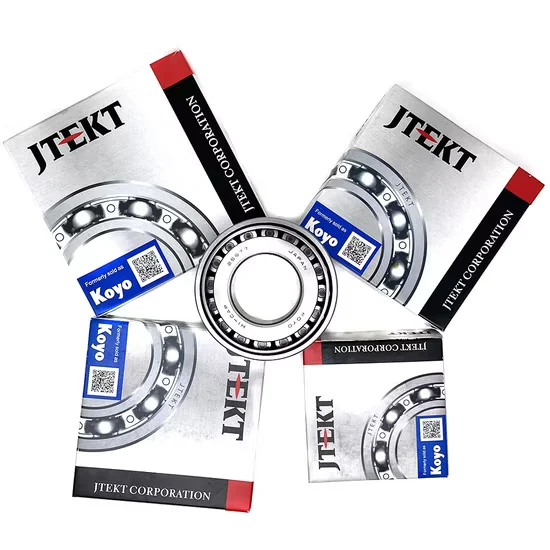
Many buyers rely on visual checks of the logo, but modern counterfeits have mastered the art of superficial branding. The definitive proof of authenticity is found in the precision of the internal clearance and the clarity of the laser etching. Genuine Koyo products feature sharp, deeply etched codes that correspond to specific production batches.
Internal clearance, such as C3 or C4, must match the application requirements exactly. A mismatch here leads to either excessive heat generation from tight fits or vibration from loose ones. Measuring this requires proper tools and knowledge of the standard ranges.
| Verification Point | Authentic Indicator | Counterfeit Warning Sign |
|---|---|---|
| Logo Etching | Sharp, deep, laser-etched with consistent font | Shallow, stamped, or uneven lettering |
| Batch Code | Traceable to manufacturer records | Missing, illegible, or non-format compliant |
| Internal Clearance | Matches specified ISO class (e.g., C3) | Inconsistent, often out of tolerance |
| Packaging | High-quality box with holographic seals | Flimsy cardboard, poor print quality |
In a recent audit for a Middle East construction firm, we identified a batch of fakes because the batch codes did not align with the manufacturer’s database. The bearings had the right look but lacked the dimensional stability required for their loaders. By cross-referencing the codes, we prevented a potential fleet-wide issue. This level of scrutiny is what separates a reliable Koyo pinion bearings supplier from a generic trader.
What Traceability Documents Must Suppliers Provide?
Mandatory origin certificates and batch tracking are non-negotiable for MRO audits.
For industrial clients, especially in regulated sectors like mining and energy, paperwork is as critical as the hardware. Without proper documentation, you cannot prove the origin of the parts in case of failure or customs inspection. A legitimate supplier must provide certificates of origin and material test reports that link directly to the batch numbers on the bearings.
A South American mining company faced delays at customs because their supplier could not produce valid export certificates for a container of bearings. The lack of paper trail raised suspicions of gray-market goods, leading to weeks of detention fees and project delays. This highlights the importance of working with partners who maintain rigorous administrative controls alongside their inventory.
Essential documents include:
- Certificate of Origin (CO)
- Mill Test Certificates (MTC) for steel batches
- Packing lists with detailed batch references
- Quality inspection reports from the manufacturing facility
These documents serve as an insurance policy. They prove that the Koyo pinion bearings you are installing are genuine products from authorized production lines. When auditing suppliers, request sample documentation before placing bulk orders. If they hesitate or provide vague templates, it is a red flag. Reliable partners understand that transparency builds long-term trust and facilitates smoother logistics for global shipments.
How to Balance Spot Availability with Bulk Project Needs?
Flexible MOQ and mixed-brand consolidation prevent extended halts.
Maintenance schedules rarely go as planned. An emergency breakdown requires immediate spot stock, while annual overhauls need bulk quantities at competitive rates. The challenge is finding a source that can handle both without compromising on authenticity or price. A versatile Koyo pinion bearings supplier offers flexible minimum order quantities and the ability to consolidate mixed brands in a single container.
Consider a scenario where a cement plant needed urgent replacements for three different crusher models. Instead of waiting weeks for separate shipments from multiple official channels, they sourced a consolidated container that included Koyo, SKF, and FAG units. This approach reduced lead time from weeks to days and simplified customs clearance.
Key strategies for balancing supply needs:
- Maintain a core stock of high-failure-rate items via spot purchases.
- Negotiate bulk rates for predictable annual maintenance components.
- Use mixed-container consolidation to optimize shipping costs for diverse part numbers.
- Leverage cross-brand equivalent consultations to find available alternatives during shortages.
This flexibility is crucial for keeping operations running. It allows MRO managers to react quickly to unexpected failures while still benefiting from economies of scale on planned purchases. By partnering with a supplier who understands the dynamics of global logistics and inventory management, you ensure that your production line never stops due to a missing part.
Conclusion
Authenticity and traceability are the foundations of reliable heavy equipment maintenance.
Avoiding the hidden costs of counterfeit or refurbished parts requires diligent verification of batch codes, internal clearance, and documentation. Partnering with a knowledgeable Koyo pinion bearings supplier who offers genuine stock and flexible logistics ensures that your operations remain resilient against unexpected failures. Prioritize provenance over price to secure the longevity of your machinery.
Mentioned in this article
Koyo / JTEKT bearings from this guide
These are the Koyo / JTEKT bearing types discussed above. Open any product to check its details, or quote it together with the rest of your repair.

Tapered Roller Bearings
Genuine KOYO 32007 Tapered Roller Bearing Wholesale Supplier
View Product
Tapered Roller Bearings
Genuine KOYO 32006 Taper Roller Bearing Wholesale Supplier
View Product
Cylindrical Roller Bearings
Koyo NSK N408e Cylindrical Roller Bearing Genuine Wholesale Supplier
View Product
Cylindrical Roller Bearings
Koyo N2305e Cylindrical Roller Bearing Genuine Wholesale Supplier
View ProductKeep reading
More bearing selection guides for repair shops
Practical guides from KOYO Bearing Supplier on identifying Koyo / JTEKT bearings for farm machinery, construction equipment and power transmission repairs.
 Buying Guide
· 7 min read
Koyo Auto Bearings Wholesale Supplier & Bulk Quote
Request a Quote for Koyo Auto Bearings that accounts for total landed cost, not just FOB price. Optimize margins through mixed-container consolidation and ensure…
Read the Guide Buying Guide · 7 min read
Koyo Auto Bearings Wholesale Supplier for Parts Stores
Stocking Koyo auto bearings requires strict verification of suffix codes and traceability to prevent costly assembly failures. Learn essential packaging checks and cross-brand alternatives…
Read the Guide Buying Guide
· 7 min read
Fake Auto Bearings: Neutral Buyer Checks Wholesale Supplier
Master Fake Auto Bearings Neutral Buyer Checks by shifting focus from packaging to internal physical inspections and traceability. Detect counterfeits through acidic rust oil…
Read the Guide
Bearing enquiry
Send your machine details. Get a written Koyo / JTEKT quote.
KOYO Bearing Supplier quotes a single bearing position or every bearing in an assembly on one enquiry, matched to your machine model and application, with model, quantity, price, lead time and quote validity in writing.
- WhatsApp+1 (702) 981-5880
- Emailinfo@koyoome.com
- Address8 Research Drive, Greenville, SC 20627, USA
"When a Koyo bearing failed on a harvest machine during the season, we needed a replacement urgently. The supplier identified the correct Koyo reference, shipped same-day, and the machine was back in the field within the day."

Request a Bearing Quote
Tell us the machine and the bearing position. Photos of the markings can follow on WhatsApp.