
Koyo Needle Bearing for Gearboxes: Genuine Wholesale Supplier
Most gearbox failures blamed on bearing quality are actually caused by improper installation or lubrication starvation.
Gearbox needle bearing damage rarely stems from product defects alone. It is driven by improper installation, lubrication starvation, or counterfeits. Authentic sourcing and strict maintenance protocols are critical to preventing premature failure in high-load applications.
I still remember the heat radiating from a reducer housing on a construction site in Qingdao. The gearbox had seized within months of commissioning. When we cracked it open, the oil was thick with metallic sludge, and the cage of the needle bearing had fractured into shards. That single incident cost a mid-six-figure loss in compensation and replacement parts. The root cause was not the brand name stamped on the box, but a batch of non-genuine components installed without proper clearance checks. Since then, my approach to sourcing has shifted from price-driven to verification-driven. In tight spaces with heavy loads, needle bearings are unforgiving. Edge stress and inadequate lubrication will destroy even authentic units if ignored.
Understanding these mechanical realities is the first step toward reliability. For distributors and OEMs managing global supply chains, the challenge is not just finding a part, but ensuring its integrity from factory to installation. This guide details how to identify genuine KOYO needle bearing for gearboxes, implement correct installation practices, and maintain lubrication systems to extend service life meaningfully.
What Causes KOYO Needle Bearing Damage in Gearboxes?
Edge stress, poor lubrication, and counterfeits are the primary killers of needle bearings in confined gearbox spaces.
The geometry of needle bearings makes them highly efficient for radial load capacity in compact designs, but this same geometry creates vulnerability. Unlike ball bearings, needles have a high length-to-diameter ratio. If the shaft or housing bore is misaligned, even slightly, the load concentrates at the ends of the rollers. This phenomenon, known as edge stress, leads to rapid spalling and surface fatigue.
In one case involving a high-speed industrial reducer, operators reported excessive noise and vibration after only a few hundred hours. Inspection revealed premature spalling on the roller surfaces near the edges. The bearing itself was dimensionally correct, but the housing bore had worn out of round during previous repairs. The misalignment caused the needles to tilt, creating point loads that exceeded the material’s fatigue limit. This is a classic example where the component is blamed, but the system environment is at fault.
Lubrication starvation is another silent destroyer. Needle bearings rely on a thin film of oil or grease to separate the rolling elements from the raceways. In high-speed applications, if the oil viscosity is too low or the supply is interrupted, operating temperatures spike. I have seen cages deform and rollers weld to the raceway due to thermal expansion caused by friction heat. This is not a material defect; it is a maintenance oversight.
Counterfeit products exacerbate these issues. Non-genuine bearings often use inferior steel with higher inclusion density, reducing fatigue life substantially. They may also lack the precise surface finish required to maintain the lubricant film. When a fake bearing is installed in a critical gearbox, it fails under conditions where a genuine unit would survive. Distinguishing between these failure modes requires careful analysis of the damaged components and the operating history.
How to Verify Authentic KOYO Bearings Before Installation?
Traceability documents and packaging details are your first defense against counterfeit components.
Sourcing genuine KOYO needle bearing for gearboxes requires more than trusting a supplier’s word. The market is flooded with repackaged or outright fake products that look convincing at a glance. Verification must happen before the bearing ever touches the shaft. Start with the packaging. Genuine KOYO boxes feature specific printing quality, holographic labels, and batch codes that can be cross-referenced with the manufacturer’s database. Any smudging, misspelling, or low-resolution graphics is an immediate red flag.
Documentation is equally critical. A legitimate supply chain provides full traceability, including material certificates and inspection reports. These documents link the specific bearing batch to its production run, ensuring it meets the specified standards. Without this paper trail, you are gambling with equipment reliability. I once received a shipment where the box looked perfect, but the internal wrapping lacked the standard anti-corrosion treatment used by the manufacturer. The bearings had already begun to oxidize, compromising their surface integrity before installation.
| Verification Aspect | Genuine Product Characteristics | Counterfeit/Risk Indicators |
|---|---|---|
| Packaging Quality | Sharp printing, holographic seals, consistent font | Blurry text, missing seals, spelling errors |
| Traceability | Full batch codes, material certs, inspection reports | Missing docs, generic certificates, no batch link |
| Surface Finish | Uniform, smooth, free of machining marks | Visible tool marks, uneven polish, rust spots |
| Dimensions | Within strict ISO tolerance limits | Out-of-spec measurements, inconsistent sizing |
For buyers in regions like the Middle East or Southeast Asia, where supply chains can be complex, working with a verified partner is essential. A reliable source does not just sell boxes; they provide the technical backing to ensure what is inside is real. This includes access to installation manuals and maintenance guides that help prevent the very failures discussed earlier. By prioritizing traceability, you eliminate the risk of introducing weak links into your machinery.
What Are the Step-by-Step Installation Best Practices?
Strict clearance control and alignment prevent premature edge stress and ensure optimal load distribution.
Installation is where many potential failures are sealed. Even the highest quality KOYO needle bearing for gearboxes will fail quickly if installed incorrectly. The process begins with cleanliness. Any dirt or debris introduced during assembly acts as an abrasive, damaging the raceways and rollers immediately. Work in a clean environment and use lint-free cloths to wipe all components.
Next, verify the shaft and housing dimensions. Use precision micrometers to check for roundness and taper. The fit must be within the recommended tolerances to ensure proper interference or clearance. For needle bearings, the housing bore should be smooth and free of scratches. If the bore is damaged, it must be repaired or replaced before proceeding. Attempting to install a bearing into a compromised housing guarantees early failure due to misalignment.
Use the correct tools for pressing. Never hammer a bearing directly. Use a press or a sleeve that distributes force evenly across the ring. Applying force to the rollers or cage will cause immediate deformation. Ensure the bearing is seated squarely against the shoulder. Misalignment during pressing introduces internal stresses that reduce load capacity significantly.
After installation, check the rotational torque. It should be smooth and consistent. Any binding or roughness indicates misalignment or contamination. Finally, apply the initial lubrication according to the manufacturer’s specifications. Do not overfill, as this can cause churning and heat generation. Proper installation sets the foundation for long service life, turning a potential liability into a reliable asset.
How to Maintain Lubrication to Extend Bearing Life?
Regular oil analysis and correct grease volume prevent thermal failure and wear particle accumulation.
Lubrication is the lifeblood of any gearbox. For KOYO needle bearing for gearboxes, maintaining the right lubricant condition is non-negotiable. Start by selecting the correct viscosity. Too thin, and the film breaks down under load; too thick, and churning generates excess heat. Refer to the OEM manual for specific recommendations based on operating temperature and speed.
Implement a regular oil analysis program. This involves taking samples at scheduled intervals and testing for viscosity, contamination, and wear metals. An increase in iron or chromium particles often signals early bearing wear, allowing for intervention before catastrophic failure. I have seen cases where simple oil changes prevented major downtime by catching degradation early. This proactive approach is far cheaper than reactive repairs.
Monitor the operating temperature. A sudden rise in temperature usually indicates lubrication failure or overload. Install sensors if possible, or use infrared thermometers for routine checks. Keep temperatures within the safe limits specified by the bearing manufacturer. Excessive heat degrad*d deterioration.
Ensure the lubrication system is functioning correctly. Check for clogged filters, leaking seals, or pump failures. In grease-lubricated applications, follow the recommended regreasing intervals. Over-greasing can be as harmful as under-greasing, causing seal blowout and increased friction. By treating lubrication as a critical maintenance task, you protect your investment and ensure continuous operation.
Conclusion
Preventing gearbox failure requires a holistic approach combining genuine parts, precise installation, and disciplined maintenance.
Damage to KOYO needle bearing for gearboxes is rarely a random event. It is the result of identifiable factors such as edge stress, lubrication starvation, or counterfeit components. By understanding these causes and implementing strict verification and installation protocols, operators can significantly extend bearing life. Sourcing from a trusted partner who provides traceability and technical support further reduces risk. Ultimately, reliability is built on attention to detail at every stage, from procurement to daily operation.
Mentioned in this article
Koyo / JTEKT bearings from this guide
These are the Koyo / JTEKT bearing types discussed above. Open any product to check its details, or quote it together with the rest of your repair.
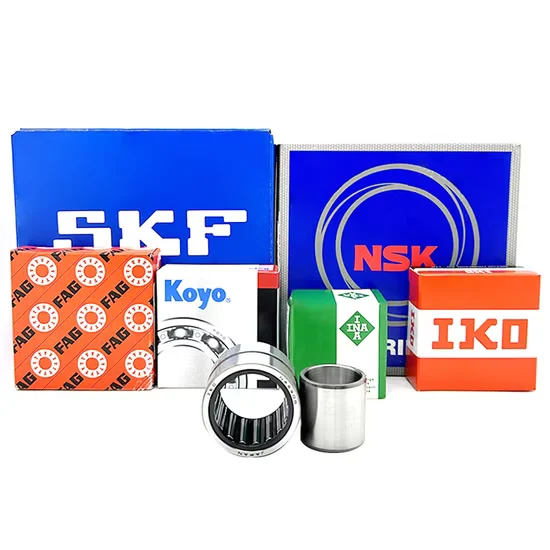
Needle Roller Bearings
Koyo RNAV4903 RNAV4904 RNAV4905 RNAV4906 RNAV4907 Needle Roller Bearings
View Product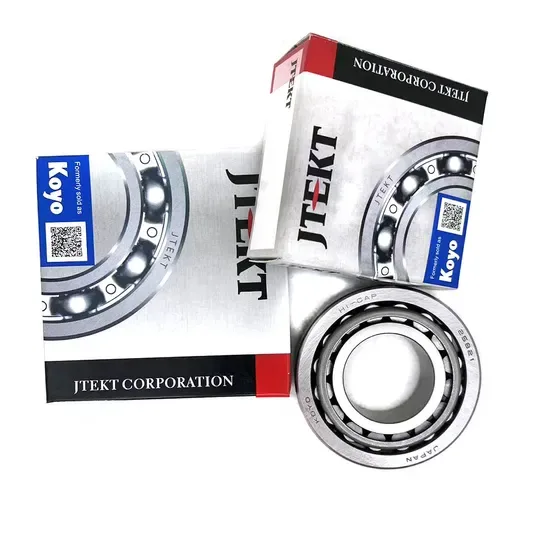
Tapered Roller Bearings
X&S 33209 Tapered Roller Bearing for Industrial Mining Gearbox
View Product
Gearbox and Reducer Bearings
Koyo 32008X 32009 32010X 32011 Tapered Roller Bearing for Industrial Gearbox
View Product
Cylindrical Roller Bearings
Koyo NSK N408e Cylindrical Roller Bearing Genuine Wholesale Supplier
View ProductKeep reading
More bearing selection guides for repair shops
Practical guides from KOYO Bearing Supplier on identifying Koyo / JTEKT bearings for farm machinery, construction equipment and power transmission repairs.
 Installation & Maintenance
· 6 min read
Auto Bearing Jobs Workshop Checklist: Wholesale Supplier
Prevent premature auto bearing failure with a standardized auto bearing installation checklist that addresses critical storage, inspection, and mounting protocols. Verify rotational smoothness, maintain…
Read the Guide Installation & Maintenance · 6 min read
Genuine Bearing Supplier for Garage Tools: Wholesale Bulk & MRO
Prevent premature failures with the right garage tools for bearing jobs by addressing installation errors rather than manufacturing defects. Learn systematic removal and pressing…
Read the Guide Installation & Maintenance
· 8 min read
Transmission Bearing Noise Diagnosis: Genuine Wholesale Supplier
Master transmission bearing noise diagnosis to distinguish installation errors from clearance defects in harsh environments. Use ultrasonic detection and spectral analysis to identify root…
Read the Guide
Bearing enquiry
Send your machine details. Get a written Koyo / JTEKT quote.
KOYO Bearing Supplier quotes a single bearing position or every bearing in an assembly on one enquiry, matched to your machine model and application, with model, quantity, price, lead time and quote validity in writing.
- WhatsApp+1 (702) 981-5880
- Emailinfo@koyoome.com
- Address8 Research Drive, Greenville, SC 20627, USA
"When a Koyo bearing failed on a harvest machine during the season, we needed a replacement urgently. The supplier identified the correct Koyo reference, shipped same-day, and the machine was back in the field within the day."

Request a Bearing Quote
Tell us the machine and the bearing position. Photos of the markings can follow on WhatsApp.