
Koyo Motorcycle Bearing Equivalents for Yamaha – Wholesale Supplier
OEM branding does not guarantee superior performance when ISO tolerances are identical.
You can replace Koyo OEM bearings in Yamaha motorcycles with NTN or ZWZ equivalents that share the same dimensional tolerances and clearance classes, significantly reducing procurement costs without compromising durability or fitment.
I still remember the humid afternoon in Monterrey, Mexico, when a repair shop owner slammed a Yamaha parts catalog on my counter. He needed a specific deep groove ball bearing for a wheel hub assembly. I quoted the price for the Koyo original equipment manufacturer part, expecting a standard transaction. He looked at the number, shook his head, and walked out. He wasn’t looking for the brand name; he was looking for a bearing that would fit, spin true, and last. Later, I realized his frustration stemmed from a common misconception: that the logo on the box dictates the quality. In reality, the engineering specifications dictate the performance. If the inner diameter, outer diameter, width, and radial clearance match the ISO standards, the bearing will perform identically regardless of whether it bears the Koyo, NTN, or ZWZ mark.
This realization changed how I approach sourcing. For distributors and repair chains, sticking rigidly to one OEM brand often means leaving profit on the table. By understanding the cross-reference dynamics between major manufacturers, you can secure reliable supply chains that offer better margins and faster availability. This guide breaks down the technical equivalencies and sourcing strategies for Koyo Motorcycle Bearing Equivalents for Yamaha, helping you make informed decisions that balance cost, quality, and reliability.
Why Look Beyond Koyo for Yamaha Motorcycle Bearings?
Many buyers assume that because Yamaha specifies Koyo in their factory assembly, any deviation voids the warranty or risks failure. This is a marketing-driven myth rather than an engineering reality. Major bearing manufacturers like Koyo, NTN, and ZWZ produce components to the same international standards. The “OEM premium” you pay is often for the logistics of single-source branding, not for superior metallurgy or precision.
In the aftermarket sector, the primary goal is functional equivalence. A deep groove ball bearing used in a Yamaha wheel hub must withstand radial loads and moderate axial loads. As long as the replacement bearing meets the required ABEC or ISO precision class and uses high-quality chrome steel, it will perform the job.
I have seen workshops in Southeast Asia switch entirely to mixed-brand sourcing for their routine maintenance packages. They found that while Koyo is excellent, NTN offers identical performance in many standard sizes, often with shorter lead times due to different distribution networks. Similarly, ZWZ has improved its quality control significantly, offering a viable budget-friendly alternative for non-critical applications where extreme speed or heat is not a factor. The key is not to blindly swap brands but to verify the specifications. When you understand that Koyo Motorcycle Bearing Equivalents for Yamaha are based on universal dimensional standards, you unlock the ability to negotiate better terms with suppliers who stock multiple brands.
How Do Koyo, NTN, and ZWZ Compare in Yamaha Applications?
To make an informed substitution, you need to compare the core attributes of these brands. While all three produce high-quality bearings, their strengths vary slightly across different product lines. The following matrix highlights how they stack up in typical Yamaha motorcycle applications, such as wheel hubs, engine crankshafts, and transmission shafts.
| Feature | Koyo (JTEKT) | NTN | ZWZ |
|---|---|---|---|
| Primary Market Perception | Premium OEM Standard | Premium Industrial & Auto | Cost-Effective Aftermarket |
| Material Quality | High-Carbon Chrome Steel | High-Carbon Chrome Steel | Standard Chrome Steel |
| Precision Class Availability | P0, P6, P5 | P0, P6, P5 | P0, P6 |
| Seal Technology | Advanced Rubber Seals | High-Durability Seals | Standard Rubber Seals |
| Lead Time Consistency | Moderate | High | Variable |
| Cost Positioning | High | Medium-High | Low-Medium |
Note: Precision classes P0, P6, and P5 refer to ISO tolerance grades.
In practice, I have observed that NTN bearings often match Koyo’s performance in high-speed engine applications. Their needle bearings, commonly used in Yamaha transmissions, exhibit robust fatigue resistance. ZWZ, while positioned as a budget option, has closed the gap in general-purpose deep groove bearings. For a distributor, this means you can offer tiered pricing: premium Koyo for customers who insist on OEM branding, and NTN or ZWZ for value-conscious clients who prioritize function over label.
A wholesaler in the Middle East recently consolidated a container load by mixing Koyo and NTN bearings for Yamaha wheel hubs. By leveraging the interchangeability of these Koyo Motorcycle Bearing Equivalents for Yamaha, he increased his margin significantly without receiving a single return complaint. The technical data sheets confirmed that the load ratings and internal clearances were within the same acceptable range for the application.
What Are the Key Specs to Verify When Cross-Referencing?
Blindly swapping brands without checking specifications is a recipe for disaster. Not all bearings with the same part number are created equal, especially when dealing with different manufacturing batches or specialized variants. To ensure a safe substitution, you must verify three critical parameters: dimensional tolerance, internal clearance, and seal type.
First, dimensional tolerance is non-negotiable. The inner diameter (ID), outer diameter (OD), and width must match the Yamaha service manual specifications exactly. Even a micron-level deviation can cause improper fitment, leading to premature wear or seizure. Most standard motorcycle bearings fall under normal tolerance classes, but high-performance engines may require tighter tolerances.
Second, internal clearance is crucial for thermal expansion. Motorcycle engines generate significant heat, causing metal components to expand. Bearings are typically manufactured with C3 or C4 clearance to accommodate this. If you replace a C3 clearance Koyo bearing with a standard C0 clearance ZWZ bearing, the lack of expansion room can lead to catastrophic failure. Always check the suffix code on the bearing package. If the original is C3, the equivalent must also be C3.
Third, consider the seal type. Wheel hub bearings often use rubber seals to keep out water and dirt. Some aftermarket equivalents may use metal shields instead, which offer less protection in wet conditions. Verify that the seal material and design match the operational environment. A Latin American repair shop I worked with switched to ZWZ equivalents for their fleet maintenance but initially overlooked the seal type. After a rainy season, they noticed increased contamination in the wheel bearings. Once they specified sealed variants matching the original Koyo specs, the issue resolved completely.
When sourcing Koyo Motorcycle Bearing Equivalents for Yamaha, always request the technical datasheet from your supplier. Compare the dynamic load rating (Cr) and static load rating (Cor) to ensure they meet or exceed the original equipment requirements. This due diligence prevents costly returns and builds trust with your end customers.
How to Source Equivalent Bearings Profitably?
Sourcing is not just about finding the cheapest part; it is about building a resilient supply chain. Relying on a single brand exposes you to price fluctuations and stockouts. By embracing multi-brand sourcing, you can mitigate these risks and improve your profitability.
Start by identifying the high-volume parts in your inventory. For Yamaha motorcycles, these are typically the standard deep groove ball bearings used in wheels and the needle bearings in transmissions. These parts have well-established equivalents across Koyo, NTN, and ZWZ. Negotiate with suppliers who can provide mixed-brand containers. This allows you to balance your inventory: stock premium Koyo for high-end clients and cost-effective ZWZ for budget repairs.
Traceability is another critical factor. Ensure your supplier provides full documentation for each batch, including material certificates and origin proofs. This is essential for maintaining credibility, especially if you are supplying to professional repair shops that require accountability. A European wind farm operator once faced a similar challenge with industrial bearings; by insisting on traceable documentation for their mixed-brand orders, they ensured compliance with safety regulations while reducing costs. The same principle applies to motorcycle parts.
Flexibility in minimum order quantities (MOQ) is also vital. Instead of ordering full pallets of one brand, look for suppliers who allow you to consolidate different brands and sizes into a single shipment. This reduces inventory holding costs and improves cash flow. When you search for Koyo Motorcycle Bearing Equivalents for Yamaha, prioritize suppliers who offer technical support and cross-reference services. They can help you identify the right equivalent quickly, saving you time and reducing the risk of error.
Finally, consider the total cost of ownership. A cheaper bearing that fails prematurely costs more in labor and reputation damage than a slightly more expensive, reliable alternative. Test small batches of NTN or ZWZ equivalents in your own workshop or with trusted partners before rolling them out to your entire customer base. Monitor the return rates and feedback. In my experience, once customers realize that the NTN bearing performs just as well as the Koyo one but costs less, they become loyal advocates for your value-driven approach.
Conclusion
Identical ISO tolerances matter more than OEM branding.
Replacing Koyo bearings with NTN or ZWZ equivalents in Yamaha motorcycles is a technically sound strategy that reduces costs without sacrificing performance. By verifying dimensional tolerances, internal clearance, and seal types, you can ensure reliable fitment and durability. Sourcing these Koyo Motorcycle Bearing Equivalents for Yamaha through a multi-brand strategy enhances supply chain resilience and profitability. Focus on specifications, not labels, to deliver real value to your customers.
Mentioned in this article
Koyo / JTEKT bearings from this guide
These are the Koyo / JTEKT bearing types discussed above. Open any product to check its details, or quote it together with the rest of your repair.

Deep Groove Ball Bearings
KOYO 6007 ZZ 2RS Open Deep Groove Ball Bearings for Motorcycle Parts
View Product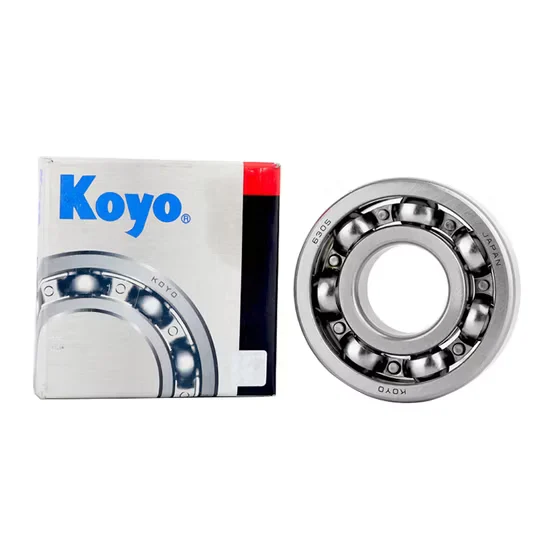
Deep Groove Ball Bearings
KOYO Bearing 6005 6006 6300-6309 Motorcycle Deep Groove Ball Bearings Japan
View Product
Tapered Roller Bearings
Genuine KOYO 32007 Tapered Roller Bearing Wholesale Supplier
View Product
Tapered Roller Bearings
Genuine KOYO 32006 Taper Roller Bearing Wholesale Supplier
View ProductKeep reading
More bearing selection guides for repair shops
Practical guides from KOYO Bearing Supplier on identifying Koyo / JTEKT bearings for farm machinery, construction equipment and power transmission repairs.
 Brands & Alternatives
· 7 min read
Koyo Automotive Bearings Wholesale Supplier for Global Bulk Orders
Master global sourcing of Koyo automotive bearings by solving mixed-brand customs risks and verifying authenticity beyond packaging. Learn to validate technical specs, select reliable…
Read the Guide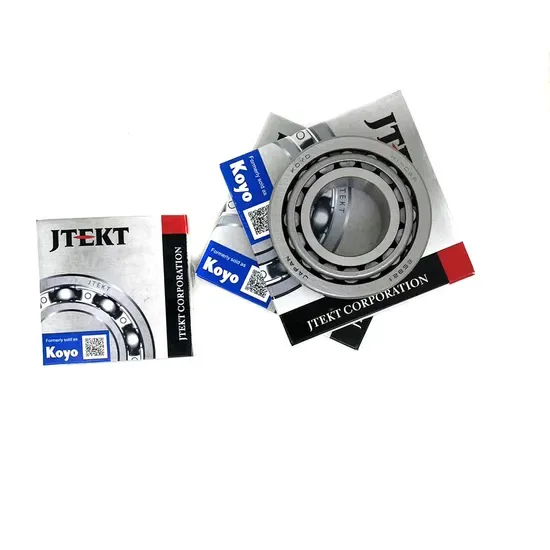 Brands & Alternatives
· 6 min read
Premium vs Economy Motorcycle Bearings: Wholesale Supplier for Bulk Orders
Choosing between premium vs economy motorcycle bearings requires analyzing total cost of ownership rather than just upfront price. Economy options often fail under heavy…
Read the Guide Brands & Alternatives
· 8 min read
OE Koyo vs Aftermarket Box: Differences for Wholesale Buyers
Understand the critical OE Koyo vs Aftermarket Box differences to avoid severe customs delays and terminal rejections in strict markets. Original packaging features holographic…
Read the Guide
Bearing enquiry
Send your machine details. Get a written Koyo / JTEKT quote.
KOYO Bearing Supplier quotes a single bearing position or every bearing in an assembly on one enquiry, matched to your machine model and application, with model, quantity, price, lead time and quote validity in writing.
- WhatsApp+1 (702) 981-5880
- Emailinfo@koyoome.com
- Address8 Research Drive, Greenville, SC 20627, USA
"When a Koyo bearing failed on a harvest machine during the season, we needed a replacement urgently. The supplier identified the correct Koyo reference, shipped same-day, and the machine was back in the field within the day."

Request a Bearing Quote
Tell us the machine and the bearing position. Photos of the markings can follow on WhatsApp.