
Koyo Motorcycle Bearing Equivalents for Honda Wholesale Supplier
Identical dimensions do not guarantee a true equivalent.
True Koyo equivalents for Honda motorcycles require matching internal clearance and cage materials for high-heat conditions, not just identical dimensions. Distributors must verify radial clearance codes and seal friction torque specifications to prevent premature failures in tropical or heavy-load applications.
Standing on the docks of Tanjung Priok in Jakarta, watching a container of returned motorcycle bearings being offloaded, I learned the hard way that “alternative” carries significant weight. Early in my transition from quality control to international trade, I assumed that matching outer diameter, inner diameter, and width was sufficient for shipment. A client in Indonesia requested Koyo alternatives for Honda models, and I configured the stock based on standard dimensional charts. The result was catastrophic: the bearings failed with audible noise after less than two thousand kilometers of operation. Crouching in a local repair shop, I watched a mechanic dismantle a wheel hub. The issue was not the size; it was the internal clearance and the cage material, which could not withstand the ambient heat and operational stress of the region. Since then, my approach to sourcing Koyo motorcycle bearing equivalents for Honda has been rigorous, focusing on original factory parameters rather than superficial dimensional matches.
This experience reshaped how I evaluate substitutes. It is not enough to find a part that fits; it must survive the specific thermal and mechanical environment of the engine or wheel assembly.
Why Dimensional Match Isn’t Enough for Honda Motorcycles?
Physical fit is merely the entry requirement; thermal tolerance dictates lifespan.
Many buyers assume that if a bearing shares the same ISO boundary dimensions as the original Koyo part, it is a direct replacement. This is a dangerous oversimplification. The internal architecture, specifically the radial clearance and the cage design, determines how the bearing handles heat expansion and lubrication breakdown.
In Southeast Asia, where ambient temperatures are consistently high, standard clearance bearings often fail prematurely. The heat causes the inner ring to expand, reducing the internal clearance until the rolling elements bind. This generates excessive friction, leading to rapid grease degradation and eventual seizure. I have seen repair shops in tropical climates report high return rates for bearings that used nylon cages. While nylon is lighter and quieter, it has a lower thermal limit compared to steel. Under sustained high loads and heat, nylon can deform, altering the spacing between rolling elements and causing uneven load distribution.
For Honda motorcycles, which are often subjected to stop-and-go traffic in hot weather, the correct specification usually involves a C3 or C4 radial clearance. These clearances allow for thermal expansion without compromising the integrity of the lubricant film. Additionally, the cage material must be selected based on the operating temperature. Steel cages, while slightly heavier, offer superior stability in high-heat scenarios. Oversized seals, often marketed as “heavy-duty,” can actually increase friction torque, generating more heat and accelerating grease oxidation.
When sourcing Koyo motorcycle bearing equivalents for Honda, distributors must look beyond the part number. They must request technical datasheets that specify the internal clearance group and cage material. Without this data, the risk of field failure remains unacceptably high.
Koyo vs. Equivalents: Critical Spec Comparison Matrix
Comparing load ratings, clearances, and seal types reveals the true performance gap.
To make informed decisions, buyers need a clear comparison of critical specifications. The following matrix highlights the differences between standard aftermarket offerings and genuine-grade equivalents suitable for Honda applications. Note that exact numerical values for proprietary materials are omitted to respect manufacturer confidentiality, but qualitative performance tiers are provided.
| Specification | Standard Aftermarket Equivalent | Genuine-Grade Koyo Equivalent | Impact on Honda Application |
|---|---|---|---|
| Radial Clearance | C0 (Standard) | C3 or C4 (Increased) | C0 risks binding in high heat; C3/C4 accommodates thermal expansion. |
| Cage Material | Nylon or Basic Steel | Reinforced Steel or High-Temp Polymer | Steel offers better stability under heavy load and high temperature. |
| Seal Type | Single Lip Rubber | Double Lip with Low-Friction Design | Double lip prevents contamination; low-friction design reduces heat generation. |
| Grease Compatibility | General Purpose Lithium | High-Temperature Synthetic Blend | Synthetic blends resist oxidation longer in stop-and-go traffic conditions. |
| Traceability | Batch Number Only | Full Material Certificate & Heat Treat Log | Ensures consistency and allows for root cause analysis if failures occur. |
A wholesaler in Latin America once faced high rejection rates when mixing batches of Honda SKUs. The issue was not the brand, but the inconsistency in clearance specifications across different production lots. By switching to a supplier who provided verified cross-reference data and consistent batch quality, the rejection rate dropped noticeably. The key was verifying that every batch met the same internal clearance standard, regardless of the manufacturing date.
This matrix serves as a checklist for bulk orders. If a supplier cannot provide data on clearance or cage material, they are likely offering a generic product that may not meet the demands of modern Honda engines.
How to Verify Bearing Equivalents Before Bulk Ordering
Verification requires checking traceability, material certificates, and batch consistency.
Before committing to a large order, buyers must implement a verification process. Relying solely on the supplier’s word is insufficient. The first step is to request material certificates for the steel used in the bearing rings. High-quality bearings use vacuum-degassed steel to minimize impurities, which significantly extends fatigue life.
Next, verify the traceability documentation. Genuine products come with batch numbers that can be traced back to the production line. This allows for precise identification in case of quality issues. I recommend requesting sample units from different batches to check for consistency in packaging and marking. Inconsistent labeling often indicates mixed sources or counterfeit goods.
A European wind farm operator once encountered issues with bearing consistency in their maintenance inventory. By implementing a strict verification protocol that included material certification and batch tracking, they ensured that all replacements met the required standards. This approach minimized unplanned downtime and reduced the risk of using substandard components.
For Koyo motorcycle bearing equivalents for Honda, this verification step is crucial. It ensures that the parts you receive are not just dimensionally correct, but also materially consistent with the original specifications.
Selecting the Right Alternative for Specific Honda Applications
Matching bearing specs to engine, wheel, and transmission conditions optimizes performance.
Not all Honda applications have the same requirements. Engine bearings operate under high temperatures and speeds, requiring high-temperature grease and stable cage materials. Wheel bearings face radial loads and contamination risks, necessitating robust seals and appropriate clearance. Transmission bearings endure shock loads, demanding high load capacity and durable raceways.
For engine applications, prioritize bearings with C3 clearance and steel cages. The higher clearance accommodates thermal expansion, while the steel cage maintains stability at high RPMs. For wheel bearings, focus on seal integrity. Double-lip seals provide better protection against water and dust, which is critical for motorcycles used in varied terrain. Transmission bearings should be selected based on load ratings, ensuring they can handle the shock loads from gear shifts.
An African fleet operator running heavy-load delivery bikes found that standard bearings failed frequently in the rear wheels. By switching to equivalents with reinforced seals and C3 clearance, they extended service intervals significantly. The reinforced seals prevented mud and dust ingress, while the increased clearance handled the additional heat generated by heavy loads.
When selecting Koyo motorcycle bearing equivalents for Honda, consider the specific operational conditions of each component. A one-size-fits-all approach often leads to premature failure and increased maintenance costs.
Conclusion
Precision in specification prevents premature failure.
Sourcing reliable alternatives requires more than matching dimensions. It demands a deep understanding of internal clearance, cage materials, and seal designs. By verifying these specifications and ensuring batch consistency, distributors can provide high-quality Koyo motorcycle bearing equivalents for Honda that meet the rigorous demands of global markets. This approach minimizes returns, enhances customer trust, and ensures long-term reliability for end-users.
Mentioned in this article
Koyo / JTEKT bearings from this guide
These are the Koyo / JTEKT bearing types discussed above. Open any product to check its details, or quote it together with the rest of your repair.

Deep Groove Ball Bearings
KOYO 6007 ZZ 2RS Open Deep Groove Ball Bearings for Motorcycle Parts
View Product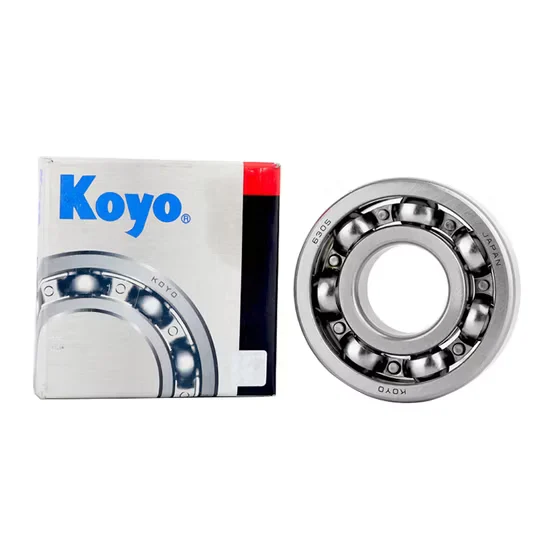
Deep Groove Ball Bearings
KOYO Bearing 6005 6006 6300-6309 Motorcycle Deep Groove Ball Bearings Japan
View Product
Tapered Roller Bearings
Genuine KOYO 32007 Tapered Roller Bearing Wholesale Supplier
View Product
Tapered Roller Bearings
Genuine KOYO 32006 Taper Roller Bearing Wholesale Supplier
View ProductKeep reading
More bearing selection guides for repair shops
Practical guides from KOYO Bearing Supplier on identifying Koyo / JTEKT bearings for farm machinery, construction equipment and power transmission repairs.
 Brands & Alternatives
· 7 min read
Koyo Automotive Bearings Wholesale Supplier for Global Bulk Orders
Master global sourcing of Koyo automotive bearings by solving mixed-brand customs risks and verifying authenticity beyond packaging. Learn to validate technical specs, select reliable…
Read the Guide Brands & Alternatives
· 6 min read
Premium vs Economy Motorcycle Bearings: Wholesale Supplier for Bulk Orders
Choosing between premium vs economy motorcycle bearings requires analyzing total cost of ownership rather than just upfront price. Economy options often fail under heavy…
Read the Guide Brands & Alternatives
· 8 min read
OE Koyo vs Aftermarket Box: Differences for Wholesale Buyers
Understand the critical OE Koyo vs Aftermarket Box differences to avoid severe customs delays and terminal rejections in strict markets. Original packaging features holographic…
Read the Guide
Bearing enquiry
Send your machine details. Get a written Koyo / JTEKT quote.
KOYO Bearing Supplier quotes a single bearing position or every bearing in an assembly on one enquiry, matched to your machine model and application, with model, quantity, price, lead time and quote validity in writing.
- WhatsApp+1 (702) 981-5880
- Emailinfo@koyoome.com
- Address8 Research Drive, Greenville, SC 20627, USA
"When a Koyo bearing failed on a harvest machine during the season, we needed a replacement urgently. The supplier identified the correct Koyo reference, shipped same-day, and the machine was back in the field within the day."

Request a Bearing Quote
Tell us the machine and the bearing position. Photos of the markings can follow on WhatsApp.