
Koyo Hub Units for Korean & US Vehicles Wholesale Supplier
Korean and US vehicle hub units are not interchangeable.
Despite sharing the same third-generation design architecture, Koyo hub units engineered for Korean platforms differ fundamentally from those built for US domestic vehicles in flange geometry and ABS sensor air-gap tolerances. Attempting to cross-fit these components based solely on visual similarity or generic part descriptions leads to immediate ABS signal failure and premature mechanical disintegration. Selecting the correct Koyo hub units requires strict adherence to OEM-specific bolt circle diameters and magnetic encoder specifications rather than broad regional assumptions.
The misconception that third-generation hub assemblies are universal stems from their integrated appearance. However, the engineering logic behind a Hyundai Sonata’s front axle differs drastically from that of a Ford F-150. In my early days repairing fleets in Lagos, I watched a batch of US-spec pickups suffer catastrophic wheel-end failures after installing what appeared to be identical replacement units. The culprit was a sub-millimeter variance in flange thickness that disrupted the ABS tone ring alignment. This experience underscores why distributors must treat Koyo hub units for Korean and US vehicles as distinct product lines with zero cross-compatibility.
Why Are Koyo Hub Units for Korean and US Vehicles Not Interchangeable?
Distinct engineering philosophies dictate incompatible physical geometries.
While both markets utilize third-generation hub units that integrate the bearing, housing, and ABS sensor into a single non-serviceable assembly, the manufacturing standards diverge significantly. Korean automotive manufacturers typically adhere to metric-based flange designs with specific offset requirements optimized for lighter unibody chassis dynamics. In contrast, US domestic vehicles often employ imperial-based bolt patterns and heavier-duty flange offsets designed to withstand higher payload stresses and different suspension kinematics.
The primary incompatibility lies in the flange interface. A Koyo hub unit designed for a Korean sedan may feature a four-lug or five-lug pattern with a specific pitch circle diameter that physically prevents mounting on a US truck’s knuckle, even if the inner bearing diameter matches. More insidiously, some bolt patterns may appear similar at a glance but differ by fractions of a millimeter in hole spacing or counterbore depth. Forcing such a unit onto a mismatched knuckle creates uneven clamping force, leading to fretting corrosion and eventual bolt shear.
Furthermore, the integration of the ABS sensor is not merely an electrical add-on but a critical mechanical component of the hub assembly. The position of the magnetic encoder ring relative to the sensor tip is calibrated during manufacturing to meet precise air-gap tolerances. US vehicles often use a different pulse count per revolution compared to Korean models, requiring a unique encoder tooth configuration. Installing a unit with the wrong encoder profile results in the vehicle’s ECU receiving erratic speed data, triggering false traction control interventions or complete ABS system shutdowns.
Distributors stocking Koyo hub units must recognize that these are not generic commodities. The supply chain for Korean vehicle parts often flows through different OEM channels than those serving the North American aftermarket. Mixing these inventories without rigorous part number verification invites high return rates and reputational damage. The physical robustness of the seal design also varies, with US-spec units often featuring enhanced lip configurations to handle road debris conditions common in larger continental markets, whereas Korean-spec units prioritize compactness for tight wheel well architectures.
How to Compare Flange Dimensions and Bolt Patterns?
Use a specification matrix to verify bolt circle diameters and offset measurements before ordering.
Visual inspection is insufficient for distinguishing between closely related part numbers. A reliable procurement strategy involves comparing key dimensional parameters against OEM service manuals or verified technical databases. The most critical metrics are the bolt circle diameter (BCD), the number of lug holes, the center bore diameter, and the flange offset.
| Parameter | Korean Platform Typical Spec | US Domestic Platform Typical Spec | Compatibility Risk |
|---|---|---|---|
| Bolt Pattern | Metric BCD (e.g., 114.3mm) | Imperial/Metric Hybrid (e.g., 139.7mm) | High: Physical mount failure |
| Lug Count | 4 or 5 lugs common | 5, 6, or 8 lugs common | High: Physical mount failure |
| Flange Offset | Optimized for unibody track width | Optimized for body-on-frame track width | Medium: Suspension geometry error |
| Center Bore | Precise metric fitment | Often larger with spacer rings | Low: Vibration if mismatched |
A case from a Southeast Asian distributor illustrates the danger of ignoring these details. They attempted to substitute a Koyo hub unit from a Korean SUV inventory for a US-branded SUV assembled locally, assuming the shared brand lineage implied compatibility. The bolt holes aligned, but the flange thickness was slightly greater than the OEM specification. This minor deviation pushed the wheel outward, altering the scrub radius and causing rapid tire wear and steering shimmy. The issue was only resolved after replacing the unit with the correct US-spec part number.
When evaluating Koyo hub units for Korean and US vehicles, always cross-reference the OEM part number stamped on the original unit or found in the vehicle’s service manual. Do not rely on aftermarket cross-reference lists that lack dimensional verification. If the part number is illegible, measure the existing unit’s BCD and flange thickness with calipers. Compare these measurements against the supplier’s technical datasheet. Any discrepancy, no matter how small, indicates a mismatch.
Additionally, check the stud thread pitch. Korean vehicles predominantly use fine metric threads, while US trucks may use coarse imperial threads or different metric pitches depending on the manufacturer. Mismatched threads will strip during torque application, compromising wheel safety. Ensuring that the Koyo hub units match the vehicle’s specific thread requirement is as vital as the bolt pattern itself.
What Causes ABS Signal Failures in Mismatched Units?
Sensor gap deviations disrupt the magnetic encoder reading, triggering dashboard warnings and braking issues.
The ABS system relies on a precise air gap between the magnetic encoder ring integrated into the hub unit and the stationary sensor mounted on the knuckle. This gap is typically measured in tenths of a millimeter. If a Koyo hub unit designed for a Korean vehicle is installed on a US vehicle, the encoder ring’s position relative to the sensor tip may be incorrect due to differences in bearing width or housing design.
An incorrect air gap causes two primary failures. First, if the gap is too large, the sensor cannot detect the magnetic pulses from the encoder ring, resulting in a “no signal” fault. The ABS light illuminates, and the system disables itself, leaving the vehicle without anti-lock braking capability. Second, if the gap is too small, the sensor may physically contact the rotating encoder ring, causing damage to both components and generating erratic signals that confuse the ECU. This can lead to unexpected brake activation or traction control errors.
In a workshop scenario, a technician reported intermittent ABS warnings on a US pickup after replacing the front hub units. Diagnosis revealed that the installed Koyo hub units had an encoder ring with a different pole count than the original equipment. The ECU expected a specific frequency range corresponding to vehicle speed. The mismatched encoder produced a signal frequency that fell outside the expected parameters, causing the ECU to flag a sensor malfunction. This issue is not detectable through static resistance checks; it requires dynamic testing or precise part number matching.
To prevent such failures, verify the encoder type. Some Koyo hub units use active sensors, while others use passive magnetic encoders. Ensure the replacement unit matches the original system’s technology. Additionally, inspect the connector shape and pin configuration. While less common than mechanical mismatches, electrical connector differences between Korean and US specs can prevent proper sensor connection, leading to open-circuit faults.
How to Verify Genuine Koyo Hub Units for Your Inventory?
Check traceability documentation, packaging details, and precise dimensional tolerances to avoid counterfeit parts.
The market for wheel end components is rife with counterfeit products that mimic the packaging of reputable brands like Koyo. These inferior units often use low-grade steel and improper heat treatment, leading to rapid spalling and noise. For distributors supplying Koyo hub units for Korean and US vehicles, verifying authenticity is crucial to maintaining customer trust and minimizing warranty claims.
Genuine Koyo products feature specific marking conventions on the housing and packaging. The part number should be laser-etched or stamped clearly, matching the format used in official JTEKT catalogs. Counterfeit units often have poorly printed labels, misspelled words, or inconsistent font sizes. Inspect the bearing seals for uniformity and material quality. Genuine units use high-nitrile rubber compounds that resist heat and ozone degradation, whereas fakes often use cheaper materials that crack prematurely.
Traceability is another key indicator. Reputable suppliers provide batch certificates or origin documentation that links the product to the manufacturer’s production facilities. Ask for proof of authorization or direct sourcing channels. If a supplier cannot provide clear information about the product’s origin, it is likely a gray-market or counterfeit item. As a global bearing supplier, we ensure that all Koyo hub units come with complete traceability documentation, allowing distributors to verify authenticity before stocking.
Dimensional verification is the final step. Use precision gauges to check the inner diameter, outer diameter, and width of a sample unit against the official specifications. Counterfeit units often fall outside the tight tolerances required for proper fitment. Even a slight deviation can cause installation difficulties or premature failure. By implementing these verification steps, distributors can protect their inventory from substandard products and ensure they are supplying genuine Koyo hub units for Korean and US vehicles that meet OEM performance standards.
Conclusion
Precision matters more than perception in wheel-end replacements.
Koyo hub units for Korean and US vehicles are engineered for distinct platforms with incompatible flange geometries and ABS sensor configurations. Successful distribution requires rigorous part number verification, dimensional comparison, and authenticity checks to prevent costly fitment errors and safety hazards.
Mentioned in this article
Koyo / JTEKT bearings from this guide
These are the Koyo / JTEKT bearing types discussed above. Open any product to check its details, or quote it together with the rest of your repair.
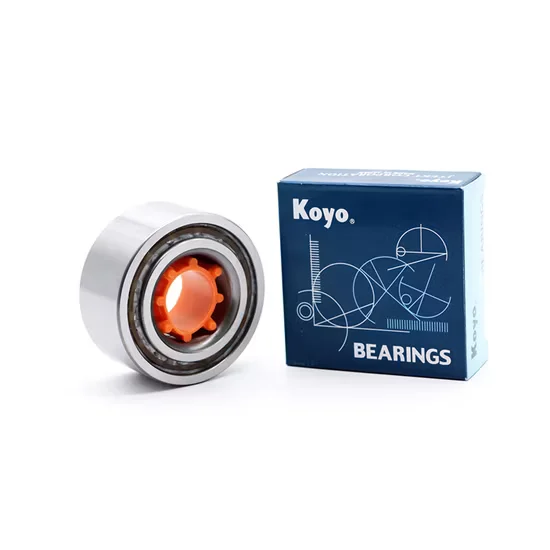
Cylindrical Roller Bearings
Koyo Bahb311316b Auto Wheel Bearing Drive Axle Hub Unit
View Product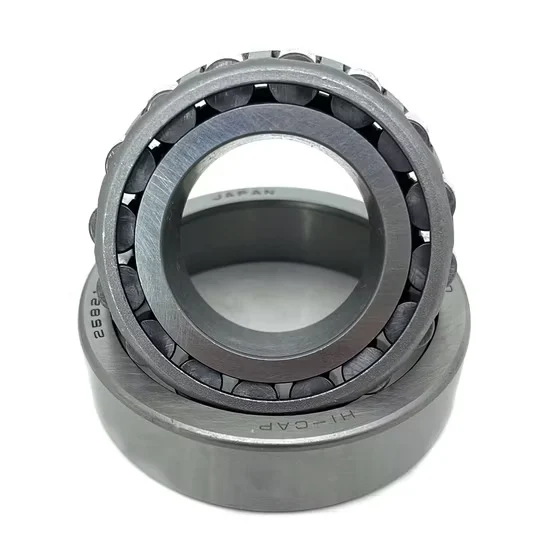
Tapered Roller Bearings
Genuine Koyo Tapered Roller Bearing 30123 30214 30215 30216 30217 for Car Wheel Hub
View Product
Wheel Bearings
Koyo Dac34640037 Wheel Hub Bearing Genuine Auto Spare Parts
View Product
Tapered Roller Bearings
Genuine KOYO 32007 Tapered Roller Bearing Wholesale Supplier
View ProductKeep reading
More bearing selection guides for repair shops
Practical guides from KOYO Bearing Supplier on identifying Koyo / JTEKT bearings for farm machinery, construction equipment and power transmission repairs.
 Buying Guide
· 7 min read
Koyo Auto Bearings Wholesale Supplier & Bulk Quote
Request a Quote for Koyo Auto Bearings that accounts for total landed cost, not just FOB price. Optimize margins through mixed-container consolidation and ensure…
Read the Guide Buying Guide · 7 min read
Koyo Auto Bearings Wholesale Supplier for Parts Stores
Stocking Koyo auto bearings requires strict verification of suffix codes and traceability to prevent costly assembly failures. Learn essential packaging checks and cross-brand alternatives…
Read the Guide Buying Guide
· 7 min read
Fake Auto Bearings: Neutral Buyer Checks Wholesale Supplier
Master Fake Auto Bearings Neutral Buyer Checks by shifting focus from packaging to internal physical inspections and traceability. Detect counterfeits through acidic rust oil…
Read the Guide
Bearing enquiry
Send your machine details. Get a written Koyo / JTEKT quote.
KOYO Bearing Supplier quotes a single bearing position or every bearing in an assembly on one enquiry, matched to your machine model and application, with model, quantity, price, lead time and quote validity in writing.
- WhatsApp+1 (702) 981-5880
- Emailinfo@koyoome.com
- Address8 Research Drive, Greenville, SC 20627, USA
"When a Koyo bearing failed on a harvest machine during the season, we needed a replacement urgently. The supplier identified the correct Koyo reference, shipped same-day, and the machine was back in the field within the day."

Request a Bearing Quote
Tell us the machine and the bearing position. Photos of the markings can follow on WhatsApp.