
Koyo Hub Units for Japanese Vehicles Wholesale Supplier
Price does not guarantee survival in the desert.
Sourcing authentic Koyo hub units for Japanese vehicles requires strict traceability verification and precise dimensional matching, not just competitive pricing. Without verified batch documentation and correct load rating calculations, even premium-branded components will suffer catastrophic thermal degradation in extreme climates. The core of reliable procurement lies in cross-referencing customs declarations with physical packaging codes to ensure material integrity before shipment.
The heat in Riyadh does not forgive compromises. I learned this the hard way when a batch of mixed-origin wheel bearings failed prematurely under sustained high-temperature operation. The initial cost savings vanished when clients returned with disintegrated bearing cages after merely a few thousand kilometers. That failure shifted my focus from price negotiation to forensic verification. Now, every shipment of Koyo hub units for Japanese vehicles undergoes a rigorous document-to-product audit. This approach ensures that the steel quality matches the manufacturer’s specifications, preventing the rapid fatigue cracks that plague counterfeit or improperly stored inventory.
Why Do Counterfeit Koyo Hub Units Fail in Extreme Climates?
Lack of genuine material traceability leads to rapid thermal degradation.
In regions with severe ambient temperatures, the internal lubrication and steel structure of a wheel hub unit face immense stress. Counterfeit parts often use lower-grade steel with inconsistent hardness levels, which cannot withstand the thermal expansion cycles typical of desert driving. When the temperature rises, the microscopic imperfections in inferior steel expand, leading to premature spalling and eventual seizure.
I once supplied a repair group in Jeddah with what appeared to be standard replacement units. Within weeks, multiple vehicles returned with noisy, loose wheels. Upon cutting open the failed units, the raceways showed signs of overheating that genuine JTEKT-produced components would not exhibit under normal loads. The counterfeit units lacked the controlled nitrogen infusion and precise heat treatment that define authentic Koyo hub units for Japanese vehicles. Without these proprietary manufacturing standards, the bearings could not maintain their structural integrity under heavy radial and axial loads.
| Failure Mode | Genuine Unit Performance | Counterfeit Unit Performance |
|---|---|---|
| Material Traceability | Full batch-level verification | None or self-reported |
| Thermal Stability | Robust under sustained high heat | Vulnerable to rapid degradation |
| Lubricant Retention | Controlled and consistent | Uncontrolled and prone to leakage |
| Fatigue Resistance | Substantially extended service life | Noticeably reduced lifespan |
Authentic units from established manufacturers like Koyo undergo rigorous quality control to ensure uniform hardness and smooth raceway finishes. This precision minimizes friction and heat generation, which is critical for longevity in harsh environments. Sourcing Koyo hub units for Japanese vehicles from suppliers who can provide mill certificates and original packaging ensures that the components meet these exacting standards.
How to Verify Authentic Koyo Hub Units Before Shipment?
Cross-check packaging, batch numbers, and customs declarations.
Verification begins long before the goods reach the workshop. It starts with the paperwork. Authentic Koyo hub units for Japanese vehicles come with specific packaging features that are difficult to replicate accurately. These include high-quality printing, precise barcode placement, and holographic security labels where applicable. However, packaging alone is not enough. The batch number on the box must match the number etched on the unit itself and the corresponding commercial invoice.
A common pitfall for distributors is accepting goods based solely on the brand name printed on the box. I now require a three-way match for every order: the physical product code, the packing list, and the customs declaration form. Any discrepancy, no matter how minor, triggers a full inspection. For instance, a mismatch in the country of origin or a vague description like “auto parts” instead of the specific part number raises immediate red flags.
When consolidating mixed batches for clients in Dubai, I verify each SKU individually. This process involves checking the laser-etched codes on the hub flange against the manufacturer’s database. Genuine units will have clear, deeply etched characters that resist wear. Counterfeits often use shallow stamping that fades quickly. By maintaining a strict protocol for document verification, we ensure that every Koyo hub units for Japanese vehicles shipped is traceable back to the production line. This level of diligence protects both the supplier’s reputation and the end-user’s safety.
What Are the Key Specs for Japanese Vehicle Hub Units?
Precise dimensional tolerances and load ratings ensure perfect fit.
Japanese vehicles, particularly those from Toyota, Nissan, and Honda, have specific engineering requirements for their wheel end assemblies. Using a hub unit with incorrect dimensions can lead to ABS sensor misalignment, premature wear, and even wheel detachment. The key specifications to monitor include the bolt circle diameter, pilot hole size, and the number of mounting studs. Even a millimeter difference can cause installation issues or vibration at highway speeds.
Load ratings are equally critical. Each vehicle model has a designated gross axle weight rating that the hub unit must support. Selecting a unit with insufficient dynamic or static load capacity will result in early failure, especially in vehicles used for heavy loading or off-road applications. Technical datasheets from JTEKT provide the exact load ratings for each part number, allowing for accurate cross-referencing.
| Specification Parameter | Importance | Verification Method |
|---|---|---|
| Bolt Circle Diameter | Critical for wheel mounting | Caliper measurement vs OEM spec |
| Pilot Hole Size | Ensures centering | Gauge check |
| Load Rating (Dynamic/Static) | Determines durability | Cross-reference with technical datasheet |
| ABS Sensor Type | Safety system compatibility | Visual and electrical test |
When sourcing Koyo hub units for Japanese vehicles, it is essential to consult cross-brand equivalent lists rather than relying solely on OEM part numbers. Sometimes, a direct OEM replacement may not be the most suitable option for aftermarket repairs due to availability or cost. A knowledgeable supplier can recommend equivalent Koyo part numbers that meet or exceed the original specifications. This technical consultation prevents wrong fits and ensures that the replacement unit performs reliably under real-world conditions.
How to Source Mixed-Batch Koyo Units Efficiently?
One-stop consolidation reduces lead time and shipping costs.
For distributors serving diverse markets, ordering full containers of a single SKU is often impractical. The demand for Koyo hub units for Japanese vehicles varies by region and season. Some months see high demand for Toyota Hilux units, while others favor Nissan Patrol components. Managing these fluctuations requires a flexible supply chain that can handle mixed-batch consolidation.
Consolidating multiple SKUs into a single shipment offers significant logistical advantages. It reduces the per-unit shipping cost and simplifies customs clearance. Instead of dealing with dozens of small parcels, buyers receive one consolidated container with a unified set of documents. This efficiency is crucial for maintaining healthy cash flow and inventory turnover.
From my experience working with repair groups across the Middle East, the ability to source a wide variety of Japanese car models in one shipment is a major competitive advantage. It allows workshops to keep a broad range of spares in stock without tying up capital in slow-moving inventory. By partnering with a supplier who offers massive spot inventory and technical support, buyers can respond quickly to market demands. This approach ensures that the right Koyo hub units for Japanese vehicles are available when needed, minimizing downtime for end-users.
Conclusion
Traceability and precision define reliability.
Sourcing genuine Koyo hub units for Japanese vehicles is not merely a transaction but a technical commitment to safety and performance. By prioritizing document verification, understanding key specifications, and leveraging efficient consolidation services, buyers can avoid the pitfalls of counterfeit products. In extreme climates, the difference between a genuine unit and a fake is measured in survival, not just savings.
Mentioned in this article
Koyo / JTEKT bearings from this guide
These are the Koyo / JTEKT bearing types discussed above. Open any product to check its details, or quote it together with the rest of your repair.
Cylindrical Roller Bearings
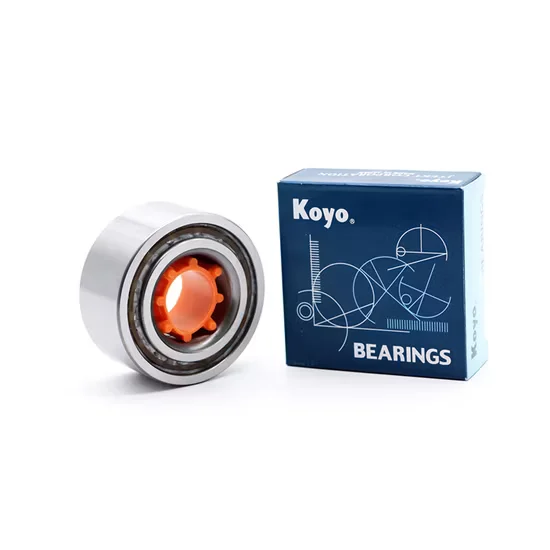
Koyo Bahb311316b Auto Wheel Bearing Drive Axle Hub Unit
View Product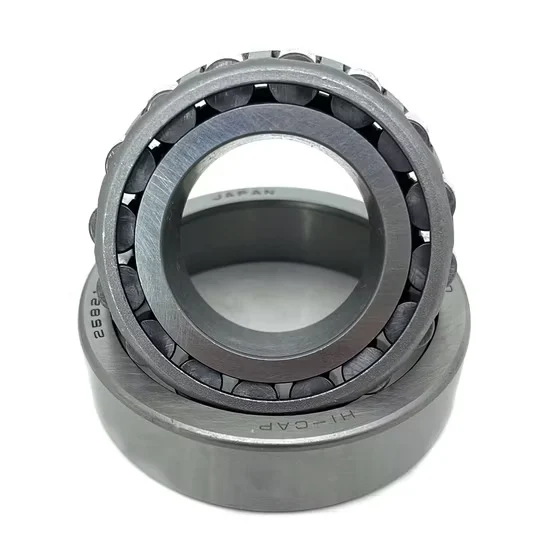
Tapered Roller Bearings
Genuine Koyo Tapered Roller Bearing 30123 30214 30215 30216 30217 for Car Wheel Hub
View Product
Wheel Bearings
Koyo Dac34640037 Wheel Hub Bearing Genuine Auto Spare Parts
View Product
Tapered Roller Bearings
Genuine KOYO 32007 Tapered Roller Bearing Wholesale Supplier
View ProductKeep reading
More bearing selection guides for repair shops
Practical guides from KOYO Bearing Supplier on identifying Koyo / JTEKT bearings for farm machinery, construction equipment and power transmission repairs.
 Buying Guide
· 7 min read
Koyo Auto Bearings Wholesale Supplier & Bulk Quote
Request a Quote for Koyo Auto Bearings that accounts for total landed cost, not just FOB price. Optimize margins through mixed-container consolidation and ensure…
Read the Guide Buying Guide · 7 min read
Koyo Auto Bearings Wholesale Supplier for Parts Stores
Stocking Koyo auto bearings requires strict verification of suffix codes and traceability to prevent costly assembly failures. Learn essential packaging checks and cross-brand alternatives…
Read the Guide Buying Guide
· 7 min read
Fake Auto Bearings: Neutral Buyer Checks Wholesale Supplier
Master Fake Auto Bearings Neutral Buyer Checks by shifting focus from packaging to internal physical inspections and traceability. Detect counterfeits through acidic rust oil…
Read the Guide
Bearing enquiry
Send your machine details. Get a written Koyo / JTEKT quote.
KOYO Bearing Supplier quotes a single bearing position or every bearing in an assembly on one enquiry, matched to your machine model and application, with model, quantity, price, lead time and quote validity in writing.
- WhatsApp+1 (702) 981-5880
- Emailinfo@koyoome.com
- Address8 Research Drive, Greenville, SC 20627, USA
"When a Koyo bearing failed on a harvest machine during the season, we needed a replacement urgently. The supplier identified the correct Koyo reference, shipped same-day, and the machine was back in the field within the day."

Request a Bearing Quote
Tell us the machine and the bearing position. Photos of the markings can follow on WhatsApp.