
Koyo Clutch Bearing Size Table – Wholesale Supplier
Same model number does not guarantee identical dimensions.
The core answer for any procurement decision regarding a Koyo clutch bearing size table is that the inner diameter (d), outer diameter (D), and width (B) must match the original equipment manufacturer specifications exactly, regardless of brand suffixes or cross-reference claims. A mismatch in these three critical dimensions, even by sub-millimeter margins, results in immediate assembly failure, pressure plate damage, and costly logistical reversals. Verification against ISO dimensional standards and official JTEKT catalogs is the only reliable method to prevent such errors before ordering.
I still remember the humidity in Manzanillo port when I realized my mistake. Years ago, I shipped a container of clutch release bearings to a distributor in Mexico. The part numbers looked correct on paper. The packaging was pristine. But when the local workshops tried to install them, the pressure plates simply would not seat. The inner diameter was off by a fraction of a millimeter because I had confused an inch-based series with a metric equivalent in the Koyo clutch bearing size table. That error did not just cause a return; it triggered a full cargo rejection. The cost of air-freighting replacement units wiped out the profit from the entire quarter. Since then, I do not trust part numbers alone. I verify d, D, and B against the physical drawings every single time.
This experience reshaped how I approach technical verification. It is not about memorizing codes; it is about understanding the mechanical reality behind the numbers. When you source these components, especially in mixed-brand environments, the Koyo clutch bearing size table becomes your primary defense against operational downtime.
Why Exact Dimensions Matter in Clutch Systems?
Clutch systems operate under high thermal and mechanical stress. The release bearing, often called the throw-out bearing, sits between the stationary transmission housing and the rotating pressure plate. Its job is transient but critical. If the dimensions are incorrect, the bearing cannot align properly with the release fork or the pressure plate fingers.
A common misconception is that a slightly tighter fit is better for stability. In reality, an incorrect inner diameter (d) prevents the bearing from sliding smoothly along the transmission input shaft sleeve. This causes binding. When the driver presses the clutch pedal, the force transfers unevenly. The result is not just premature wear; it is catastrophic failure of the pressure plate diaphragm springs.
Consider the case of a fleet maintenance operator in Southeast Asia. They attempted to use a generic equivalent for a heavy-duty truck application. The outer diameter (D) was marginally larger than the specification in the Koyo clutch bearing size table. This small deviation meant the bearing housing interfered with the clutch cover during installation. The mechanics forced it into place, cracking the housing. The vehicle returned to the workshop within days with complete clutch disengagement failure. The cost of the tow, the new pressure plate, and the labor far exceeded the savings from the cheaper bearing.
| Dimension | Function | Consequence of Mismatch |
|---|---|---|
| Inner Diameter (d) | Fits over input shaft sleeve | Binding, uneven wear, shaft scoring |
| Outer Diameter (D) | Interfaces with release fork/cover | Installation interference, housing crack |
| Width (B) | Determines axial travel | Incorrect pedal feel, incomplete disengagement |
This table illustrates why vague cross-references are dangerous. Each parameter serves a distinct mechanical function. Ignoring one compromises the entire assembly. When reviewing a Koyo clutch bearing size table, treat each value as a hard constraint, not a suggestion.
The physical evidence of dimension mismatch is always clear. Look for uneven wear patterns on the bearing face or scoring on the input shaft sleeve. These are signs that the d or B dimensions were incorrect from the start. Preventing this requires strict adherence to verified data, not assumptions.
How to Read the Koyo Clutch Bearing Size Table?
Understanding the Koyo clutch bearing size table requires more than reading numbers; it requires interpreting the context of those numbers. Koyo, now part of JTEKT, uses specific naming conventions that indicate design variations. Two bearings with similar base numbers may have different suffixes indicating seal types, grease formulations, or cage materials. These suffixes can sometimes correlate with subtle dimensional changes or tolerance classes.
The primary parameters are d (bore), D (outside diameter), and B (width). However, you must also check for chamfer dimensions and snap ring grooves if applicable. A bearing might have the correct d, D, and B but lack a necessary snap ring groove, making it incompatible with the retention mechanism.
Step-by-step verification process:
- Identify the original part number from the vehicle or machinery service manual. Do not rely on the old bearing’s stamp if it is worn or illegible.
- Locate the corresponding entry in the Koyo clutch bearing size table. Ensure you are using the latest revision, as superseded parts may have updated dimensions.
- Verify the d dimension. This is the most critical fit. Check if it is a standard metric bore or an inch-based size. Confusing these is the most frequent cause of the “Manzanillo error” I experienced.
- Check the D dimension. Ensure it matches the clearance in the clutch housing. Note if the bearing has a flange or a specific outer ring profile.
- Confirm the B dimension. This determines how far the bearing travels when the clutch is depressed. An incorrect width alters the pedal ratio and engagement point.
- Review suffixes. Check if the original bearing required a specific seal (e.g., rubber contact seal vs. metal shield) for dust or water resistance.
In a recent consultation for a European repair group, we found that their technicians were ignoring the width (B) parameter. They focused only on the bore. This led to inconsistent clutch pedal feel across their fleet. By strictly applying the Koyo clutch bearing size table values for B, they standardized the pedal travel and reduced driver complaints significantly. The fix was not a new part design; it was precise adherence to the existing specification.
How to Verify Cross-Brand Equivalents?
Sourcing often involves mixing brands due to availability or cost considerations. You might have SKF, FAG, NSK, or NTN in stock, but the original spec calls for Koyo. Can you substitute? The answer is yes, but only after rigorous dimensional verification. A Koyo clutch bearing size table serves as the baseline for comparison.
Cross-brand equivalence is not automatic. Different manufacturers may use different tolerance classes or internal clearances (C2, C3, C4). While the external dimensions (d, D, B) might match, the internal geometry could differ. For clutch applications, internal clearance affects thermal expansion handling. A bearing with too tight internal clearance may seize under high heat.
To verify equivalents:
- Pull the d, D, and B values from the Koyo clutch bearing size table for the target part.
- Compare these exact values with the candidate brand’s catalog. Do not rely on third-party cross-reference websites without secondary verification.
- Check the load rating. Ensure the dynamic and static load capacities meet or exceed the original specification.
- Confirm the seal type. If the Koyo unit has a rubber seal, the substitute must also have a compatible seal to prevent contamination.
A Middle East mining operator once faced a shortage of specific Koyo bearings for their haul trucks. They considered using a locally available alternative. By comparing the Koyo clutch bearing size table data with the alternative’s specs, we identified a minor discrepancy in the outer ring width. Although small, this difference would have caused misalignment in the heavy-duty clutch assembly. We sourced the correct Koyo units through our mixed-brand consolidation network instead. The trucks remained operational, avoiding unplanned downtime that would have cost far more than the bearing itself.
This approach ensures that cost savings do not come at the expense of reliability. When you treat the Koyo clutch bearing size table as the gold standard for verification, you eliminate the guesswork from cross-brand sourcing.
What Documents to Request for Traceability?
In global trade, especially for automotive and industrial aftermarket parts, traceability is non-negotiable. Counterfeit bearings are a persistent risk. A bearing that looks like a Koyo product but lacks proper material certification can fail prematurely, causing severe damage. Requesting the right documents protects your inventory and your reputation.
When sourcing from a Koyo clutch bearing size table supplier, ask for:
- Certificate of Origin: Verifies the manufacturing country and helps with customs compliance.
- Material Test Reports: Confirms the steel grade and hardness meet industry standards.
- Batch Inspection Records: Shows that the specific lot was tested for dimensions and noise levels.
- Authorized Distribution Proof: Ensures the supplier is part of the official supply chain, reducing counterfeit risk.
A Latin American distributor recently received a shipment of bearings that appeared genuine. However, the packaging lacked the specific holographic security features used by JTEKT. Upon requesting batch inspection records, the supplier could not provide them. The bearings were rejected before they entered the warehouse. This diligence saved the distributor from potential liability claims from their end-users.
Traceability is not just paperwork; it is insurance. By demanding these documents, you ensure that every bearing matching the Koyo clutch bearing size table in your inventory is genuine and reliable. This level of scrutiny builds trust with your customers and minimizes the risk of field failures.
Conclusion
Precision prevents failure.
Adhering to the exact d, D, and B dimensions in the Koyo clutch bearing size table is the single most effective way to ensure clutch system reliability. Cross-brand substitutions require careful verification, and traceability documents protect against counterfeits. Treat every dimension as a critical constraint, not a variable. This disciplined approach saves time, money, and reputation in the global aftermarket.
Mentioned in this article
Koyo / JTEKT bearings from this guide
These are the Koyo / JTEKT bearing types discussed above. Open any product to check its details, or quote it together with the rest of your repair.
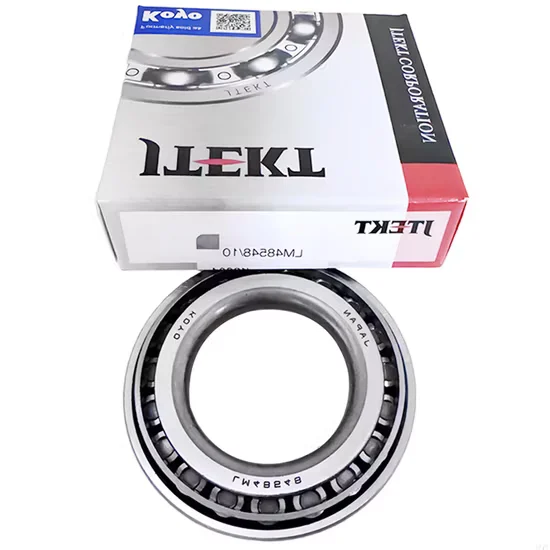
Tapered Roller Bearings
Genuine KOYO 32007 Tapered Roller Bearing Wholesale Supplier
View Product
Tapered Roller Bearings
Genuine KOYO 32006 Taper Roller Bearing Wholesale Supplier
View Product
Cylindrical Roller Bearings
Koyo NSK N408e Cylindrical Roller Bearing Genuine Wholesale Supplier
View Product
Cylindrical Roller Bearings
Koyo N2305e Cylindrical Roller Bearing Genuine Wholesale Supplier
View ProductKeep reading
More bearing selection guides for repair shops
Practical guides from KOYO Bearing Supplier on identifying Koyo / JTEKT bearings for farm machinery, construction equipment and power transmission repairs.
 Technical Resources
· 7 min read
Auto Bearing Glossary: Wholesale Supplier for Bulk & MRO Parts
Master the auto bearing glossary to decode suffix codes and prevent costly MRO replacement failures. Identical dimensions do not guarantee interchangeability, as internal clearance…
Read the Guide Technical Resources
· 8 min read
Needle Bearing Fit & Tolerance Table: Wholesale Supplier for Bulk Orders
Master the needle bearing fit and tolerance table to prevent seizure caused by overly tight fits. Match ISO shaft and housing classes while verifying…
Read the Guide Technical Resources
· 6 min read
Auto Bearing Torque Reference Table Wholesale Supplier
Prevent premature bearing failures by strictly following the Auto Bearing Torque Reference Table instead of relying on subjective manual tightening. Learn to distinguish initial…
Read the Guide
Bearing enquiry
Send your machine details. Get a written Koyo / JTEKT quote.
KOYO Bearing Supplier quotes a single bearing position or every bearing in an assembly on one enquiry, matched to your machine model and application, with model, quantity, price, lead time and quote validity in writing.
- WhatsApp+1 (702) 981-5880
- Emailinfo@koyoome.com
- Address8 Research Drive, Greenville, SC 20627, USA
"When a Koyo bearing failed on a harvest machine during the season, we needed a replacement urgently. The supplier identified the correct Koyo reference, shipped same-day, and the machine was back in the field within the day."

Request a Bearing Quote
Tell us the machine and the bearing position. Photos of the markings can follow on WhatsApp.