Koyo Bus Wheel Bearings Wholesale Supplier | Genuine OEM Bulk
Cheap bearings do not save money; they destroy axles.
Sourcing authentic Koyo bus wheel bearings requires strict traceability verification and precise spec matching to prevent catastrophic hub failures caused by counterfeit or refurbished parts. The only way to guarantee fleet safety is to demand full batch code transparency, verify original customs declarations, and select internal clearances specifically designed for high-temperature commercial operations.
The smell of the grease told me everything before I even touched the metal. It was not the clean, neutral scent of fresh lithium complex soap I expected from a premium Japanese brand. Instead, it carried a sharp, acidic tang that reminded me of old rags left in the sun. I was standing in a dusty warehouse in Dubai, overseeing a shipment intended for a major regional transport fleet. The price had been irresistible, significantly lower than the official channel quotes. My client, eager to cut maintenance costs, had pushed for this bulk order. We installed them on coaches running the brutal Riyadh highway routes. Within months, the calls started coming in. Hub seizures. Overheating. Near-miss accidents on high-speed stretches. When we pulled the failed units apart, the truth was ugly. These were not new Koyo bus wheel bearings. They were refurbished shells with substandard internal metallurgy, repackaged to look genuine. That failure cost far more than the savings ever promised. It taught me that in the heavy-duty aftermarket, visual inspection is useless against sophisticated fakes. The real defects hide inside, waiting for heat and load to expose them.
This experience shifted my entire approach to sourcing. Now, every container that leaves our facility undergoes a rigorous verification process that goes far beyond a simple box check. For fleet operators and distributors, understanding how to distinguish real value from dangerous counterfeits is not just about procurement; it is about operational survival.
Why Do Counterfeit Koyo Bus Bearings Fail Prematurely?
Substandard metallurgy causes rapid heat buildup and hub seizures, not just wear.
Many buyers assume that a fake bearing will simply wear out faster. This is a dangerous misconception. The primary failure mode of counterfeit Koyo bus wheel bearings is not gradual degradation but sudden thermal runaway. Genuine bearings use high-purity steel with controlled inclusion levels, ensuring consistent hardness and fatigue resistance. Counterfeit units often use recycled steel with unpredictable carbon content and impurities. Under the heavy loads of a fully loaded coach, these microscopic flaws become stress concentrators.
When these inferior materials are subjected to continuous high-speed rotation, they generate excessive friction heat. The internal clearance, which should remain stable, collapses as the metal expands unevenly. This leads to immediate seizure. I have seen hubs weld themselves to the spindle, requiring expensive axle replacements rather than simple bearing swaps. The downtime for a single bus can cost thousands in lost revenue, let alone the safety liability.
| Failure Characteristic | Genuine OEM Spec | Counterfeit/Refurbished Risk |
|---|---|---|
| Steel Purity | Controlled inclusion density | Uncontrolled impurities |
| Heat Resistance | Stable under sustained load | Rapid thermal runaway |
| Lifespan Consistency | Predictable service intervals | Random early failure |
| Internal Clearance | Precise C3/C4 tolerance | Inconsistent, often too tight |
A European transport operator once shared data showing that their fleet maintenance costs doubled after switching to a non-verified supplier. The bearings looked identical on the outside. The difference was only visible under a microscope or after a catastrophic failure. This is why relying on visual checks alone is insufficient. The internal integrity of Koyo bus wheel bearings is what keeps your wheels turning safely.
How to Verify Genuine Koyo Bearings Before Bulk Purchase?
Check batch codes, anti-rust oil quality, and original customs declarations.
Verification must happen before the goods leave the supplier’s warehouse. Waiting until arrival at your local port is too late. The first step is demanding the original customs declaration documents from the country of origin. Genuine Koyo bus wheel bearings exported from Japan or authorized manufacturing hubs will have a clear paper trail. If a supplier cannot provide these documents or offers vague “certificates of conformity” without batch specifics, walk away.
Next, inspect the anti-rust oil. As I learned in Dubai, the smell and viscosity of the protective coating are immediate indicators. Genuine Koyo products use a specific, high-quality preservative that does not evaporate quickly or smell acidic. Counterfeiters often use cheap industrial oils that degrade the packaging and offer poor protection during long sea freight journeys.
Batch code verification is critical. Each genuine bearing has a unique laser-etched or stamped code that corresponds to its production date and factory line. You must cross-reference these codes with the supplier’s inventory records. A mismatch here is a red flag. I once rejected an entire container because the batch codes on the boxes did not match the codes on the individual bearing rings. The supplier claimed it was a “packaging error.” In reality, they were mixing old stock with new to inflate volume.
For distributors, this level of scrutiny builds trust with your end clients. When you can prove the lineage of every Koyo bus wheel bearings unit you sell, you differentiate yourself from the gray market traders who prioritize price over provenance.
Which Koyo Bus Wheel Bearing Specs Suit Your Fleet?
Matrix comparing load ratings, clearances, and seal types for different bus routes.
Not all bus routes are created equal. A city bus stopping every few minutes faces different stresses than a long-haul coach cruising on highways. Selecting the right specification of Koyo bus wheel bearings is essential for maximizing lifespan. The key parameters are internal clearance and seal type.
Internal clearance determines how much room the rolling elements have to expand as they heat up. For standard urban routes, a C3 clearance is often sufficient. However, for high-speed highway operations or regions with extreme ambient temperatures, such as the Middle East or North Africa, a C4 clearance is necessary. This extra space prevents the bearing from binding as the metal expands under heat.
Seal type is equally important. Dusty, unpaved roads require robust contact seals to keep contaminants out. Wet environments need seals that resist water ingress. Using the wrong seal can lead to premature contamination and lubrication breakdown.
| Operating Condition | Recommended Clearance | Seal Type Recommendation | Load Rating Focus |
|---|---|---|---|
| Urban Stop-Start | C3 | Standard Rubber | High Dynamic Load |
| Highway Long-Haul | C4 | Enhanced Lip Seal | High Speed Stability |
| Harsh/Dusty Terrain | C3 or C4 | Heavy-Duty Contact Seal | Contamination Resistance |
| Extreme Heat Zones | C4 | High-Temp Material Seal | Thermal Stability |
A fleet manager in Southeast Asia reported significant improvements in bearing life after switching from C3 to C4 clearance Koyo bus wheel bearings for their inter-city coaches. The reduction in heat-related failures was noticeable within the first quarter. This demonstrates that spec matching is not just a technical detail; it is a cost-saving strategy.
How to Source Authentic Koyo Bearings at Wholesale Prices?
Partner with global suppliers offering mixed-container consolidation and full traceability.
Finding a reliable source for genuine Koyo bus wheel bearings at competitive wholesale prices does not mean compromising on authenticity. The key is to work with suppliers who specialize in mixed-brand consolidation. These partners aggregate demand from multiple buyers, allowing them to purchase full container loads directly from authorized channels. This volume leverage translates into better pricing without the risk of gray market goods.
I have structured our sourcing model to support this exact need. We do not just sell boxes; we provide a complete traceability package. Every shipment includes the original manufacturer’s documentation, verified batch codes, and independent inspection reports. This allows regional distributors to offer their clients the same level of confidence as buying direct from the brand, but with the flexibility of smaller MOQs and mixed SKUs.
One of our clients, a distributor in Latin America, struggled with inconsistent supply from local agents. By switching to a consolidated sourcing model, they were able to stock a wide range of Koyo bus wheel bearings alongside other premium brands. This one-stop approach reduced their administrative overhead and ensured that they never faced stockouts of critical items. The ability to mix sizes and types in a single container also optimized their shipping costs, making the total landed price competitive with unofficial channels.
The goal is to build a supply chain that is resilient, transparent, and cost-effective. By focusing on traceability and technical accuracy, you protect your business from the hidden costs of counterfeit parts.
Conclusion
Authenticity is the only metric that matters for safety-critical components.
Sourcing genuine Koyo bus wheel bearings is not just about finding the lowest price; it is about securing the reliability of your fleet. Counterfeit parts offer false savings that quickly turn into expensive disasters. By prioritizing traceability, verifying specifications like internal clearance, and partnering with suppliers who provide full documentation, you ensure that every bearing performs as engineered. Protect your assets, your reputation, and your passengers by insisting on the real thing.
Mentioned in this article
Koyo / JTEKT bearings from this guide
These are the Koyo / JTEKT bearing types discussed above. Open any product to check its details, or quote it together with the rest of your repair.
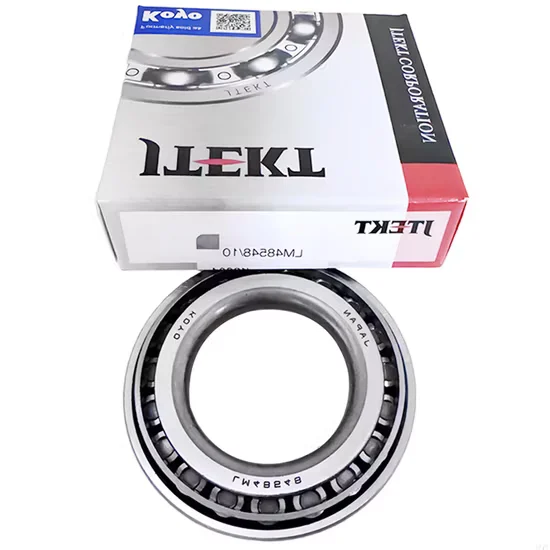
Tapered Roller Bearings
Genuine KOYO 32007 Tapered Roller Bearing Wholesale Supplier
View Product
Tapered Roller Bearings
Genuine KOYO 32006 Taper Roller Bearing Wholesale Supplier
View Product
Cylindrical Roller Bearings
Koyo NSK N408e Cylindrical Roller Bearing Genuine Wholesale Supplier
View Product
Cylindrical Roller Bearings
Koyo N2305e Cylindrical Roller Bearing Genuine Wholesale Supplier
View ProductKeep reading
More bearing selection guides for repair shops
Practical guides from KOYO Bearing Supplier on identifying Koyo / JTEKT bearings for farm machinery, construction equipment and power transmission repairs.
 Buying Guide
· 7 min read
Koyo Auto Bearings Wholesale Supplier & Bulk Quote
Request a Quote for Koyo Auto Bearings that accounts for total landed cost, not just FOB price. Optimize margins through mixed-container consolidation and ensure…
Read the Guide Buying Guide · 7 min read
Koyo Auto Bearings Wholesale Supplier for Parts Stores
Stocking Koyo auto bearings requires strict verification of suffix codes and traceability to prevent costly assembly failures. Learn essential packaging checks and cross-brand alternatives…
Read the Guide Buying Guide
· 7 min read
Fake Auto Bearings: Neutral Buyer Checks Wholesale Supplier
Master Fake Auto Bearings Neutral Buyer Checks by shifting focus from packaging to internal physical inspections and traceability. Detect counterfeits through acidic rust oil…
Read the Guide
Bearing enquiry
Send your machine details. Get a written Koyo / JTEKT quote.
KOYO Bearing Supplier quotes a single bearing position or every bearing in an assembly on one enquiry, matched to your machine model and application, with model, quantity, price, lead time and quote validity in writing.
- WhatsApp+1 (702) 981-5880
- Emailinfo@koyoome.com
- Address8 Research Drive, Greenville, SC 20627, USA
"When a Koyo bearing failed on a harvest machine during the season, we needed a replacement urgently. The supplier identified the correct Koyo reference, shipped same-day, and the machine was back in the field within the day."

Request a Bearing Quote
Tell us the machine and the bearing position. Photos of the markings can follow on WhatsApp.