
Koyo Bearings for Classic Car Restoration: Wholesale Supplier
Most cheap Koyo bearings on the market are not overstock; they are repackaged counterfeits.
Sourcing genuine Koyo bearings for classic car restoration requires strict traceability verification and precise spec matching to prevent catastrophic failures. Authentic units demand full documentation chains, micro-text packaging validation, and dimensional tolerance checks against original OEM specifications rather than relying solely on part numbers.
Walking the floor at the SEMA show in Las Vegas, I noticed a disturbing trend among restorers of vintage Japanese performance cars. The focus had shifted from mechanical fidelity to aesthetic perfection, often at the expense of critical rotating components. A buyer from Chicago once shared a harrowing story with me. He had sourced what he believed to be new old stock hub bearings for a rare JDM coupe. During the initial road test, the bearing disintegrated under load, nearly destroying the suspension geometry and the vehicle itself. The failure was not due to age or wear but because the internal steel lacked the purity required for high-load applications. This incident underscored a vital truth: the risk in classic car restoration is not just finding parts, but verifying their integrity.
The market is flooded with components that look correct on the outside but fail internally. For distributors and serious restorers, understanding how to distinguish authentic inventory from sophisticated fakes is the first step in ensuring project success.
Why Do Counterfeit Koyo Bearings Fail in Classic Restorations?
Counterfeit bearings lack the material purity necessary to withstand the specific load profiles of classic vehicles.
Modern manufacturing standards have evolved, but the fundamental metallurgy of high-performance bearings remains rooted in strict quality controls. Fake bearings often use inferior steel with higher inclusion densities. Under the dynamic loads of a restored classic car, these impurities become initiation points for fatigue cracks.
In a recent case involving a vintage Japanese sedan restoration, the restorer sourced mixed-batch bearings from an unverified supplier. The parts arrived in correct packaging, but the internal clearance was inconsistent. Some units were too tight, causing excessive heat buildup, while others were too loose, leading to vibration and premature spalling. The issue was not just the brand name but the lack of batch-to-batch consistency that genuine manufacturers maintain.
| Quality Attribute | Genuine Koyo Specifications | Counterfeit/Replica Characteristics |
|---|---|---|
| Steel Purity | Controlled inclusion density | High inclusion density, visible impurities |
| Heat Treatment | Uniform hardness across raceways | Inconsistent hardness, soft spots |
| Surface Finish | Micron-level precision grinding | Visible tool marks, rougher finish |
| Cage Material | High-strength polyamide or steel | Brittle plastic or weak steel alloys |
| Traceability | Full batch documentation available | No documentation or forged papers |
The table above highlights the qualitative differences that lead to failure. Genuine products undergo rigorous heat treatment to ensure uniform hardness, whereas counterfeits often exhibit soft spots that deform under pressure.
For classic car enthusiasts, the consequence of using inferior parts is not just a breakdown but potential safety hazards. The load capacity mismatch in fake bearings means they cannot handle the stresses of modern driving conditions, even in vintage chassis. This is why verifying the source is more critical than the price paid.
How to Verify Genuine Koyo Bearings Before Purchase?
Demand full traceability documents and check packaging micro-text before committing to a purchase.
Verification starts long before the part is installed. It begins with the supplier. Reputable distributors provide complete traceability documentation that links the bearing to its manufacturing batch. This is not just a certificate of conformity but a detailed record that can be cross-referenced with the manufacturer’s database.
Packaging inspection is another crucial step. Genuine Koyo bearings feature specific security elements, including micro-text printing and laser-etched part numbers on the bearing itself. These features are difficult and costly for counterfeiters to replicate accurately. A simple magnifying glass can reveal discrepancies in font style or alignment that indicate a fake.
A European auto aftermarket distributor once shared their verification protocol. They require suppliers to provide ISO compliance certificates and sample units for independent testing. This process filters out suppliers who cannot prove the authenticity of their stock. For classic car restorers, this level of diligence ensures that the parts they install will perform as expected.
Risk mitigation also involves checking the supplier’s reputation and history. Established suppliers with long-term relationships with manufacturers are less likely to deal in counterfeits. They have a vested interest in maintaining their credibility and avoiding the legal and financial repercussions of selling fake goods.
Which Koyo Bearing Specs Match Your Classic Car Application?
Match dynamic load ratings and clearance to original OEM specs, considering modern driving conditions.
Selecting the right bearing involves more than just matching the part number. Original equipment manufacturer (OEM) specifications were designed for the driving conditions of the past. Today’s roads and driving styles impose different stresses on vehicle components. Therefore, it is essential to consider modern equivalents that offer improved performance while maintaining fitment.
Dynamic load ratings and internal clearance are key parameters. A bearing with too much clearance will cause noise and vibration, while one with too little clearance will overheat and fail. For classic cars, which may have worn housings or shafts, selecting the correct clearance is even more critical.
In a cross-brand equivalent replacement scenario, a restorer substituted an obsolete Koyo model with a modern specification. By comparing dimensional tolerances and load ratings, they found a suitable alternative that offered better durability. This approach requires careful analysis and often consultation with technical experts to ensure compatibility.
| Selection Parameter | Consideration for Classic Cars | Modern Driving Adjustment |
|---|---|---|
| Internal Clearance | Match original OEM specification | May need tighter clearance for stability |
| Load Rating | Sufficient for original vehicle weight | Higher rating for safety margin |
| Seal Type | Original rubber or metal shields | Enhanced seals for dust and water resistance |
| Lubrication | Standard grease | High-temperature synthetic grease |
The table illustrates how selection criteria must adapt to contemporary use. While the physical dimensions must match, the performance characteristics can be upgraded to enhance reliability.
Technical support plays a vital role in this process. Suppliers who offer cross-reference lookup services can help identify suitable alternatives when original parts are no longer available. This ensures that the restoration maintains its authenticity while benefiting from modern engineering advancements.
How to Source Rare Koyo Models for Vintage Projects?
Use mixed-brand consolidation and cross-reference lookup to find exact or upgraded equivalents.
Finding rare bearing models for vintage projects can be challenging. Official channels may no longer stock these items, forcing restorers to seek alternative sources. Mixed-brand consolidation allows buyers to source multiple types of bearings from a single supplier, simplifying logistics and reducing costs.
Cross-reference lookup is a powerful tool in this context. By identifying the dimensional and performance specifications of the obsolete part, restorers can find modern equivalents from various brands. This approach expands the pool of available options and increases the likelihood of finding a suitable replacement.
A Middle East industrial buyer once faced a similar challenge with obsolete machinery bearings. By working with a supplier who offered cross-brand technical support, they identified equivalent models from multiple manufacturers. This solution not only resolved the immediate shortage but also provided a long-term strategy for future maintenance needs.
Flexibility in minimum order quantities (MOQ) is another advantage of working with specialized suppliers. For classic car restorers, who often need only a few units, the ability to purchase small batches without prohibitive costs is essential. This flexibility ensures that projects can proceed without unnecessary delays or financial burdens.
Conclusion
Authenticity and precision are non-negotiable in classic car restoration.
Sourcing genuine Koyo bearings for classic car restoration demands rigorous verification and technical expertise. By prioritizing traceability, understanding specification nuances, and leveraging professional sourcing networks, restorers can ensure the longevity and safety of their projects. The effort invested in selecting the right parts pays dividends in performance and peace of mind.
Mentioned in this article
Koyo / JTEKT bearings from this guide
These are the Koyo / JTEKT bearing types discussed above. Open any product to check its details, or quote it together with the rest of your repair.
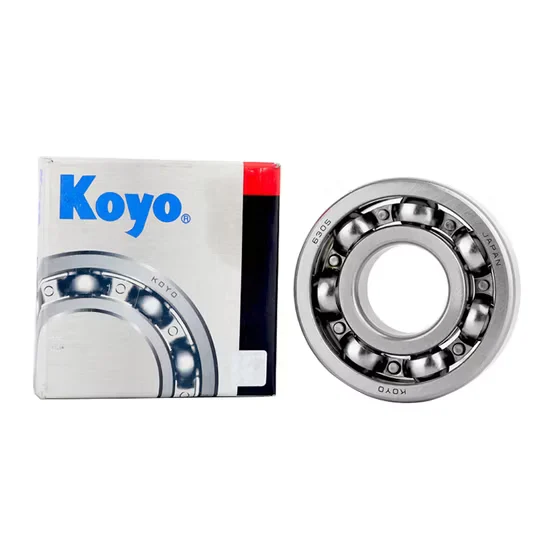
Deep Groove Ball Bearings
KOYO Bearing 6005 6006 6300-6309 Motorcycle Deep Groove Ball Bearings Japan
View Product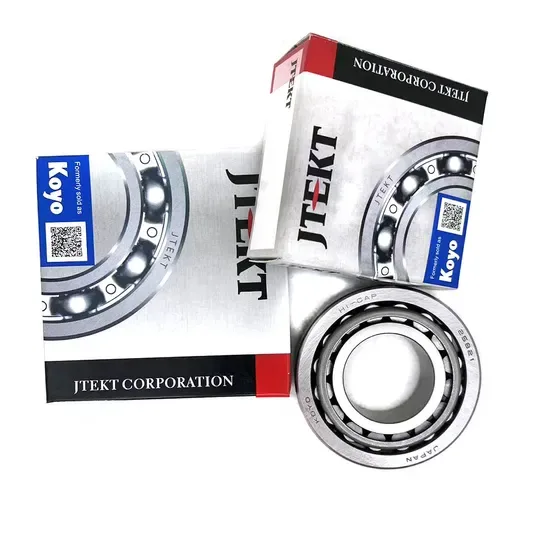
Tapered Roller Bearings
Koyo 30213 30221 30228 Tapered Roller Bearing Single Row for Machinery Part
View Product
Marine Bearings
Koyo 32212 Tapered Roller Bearing for Marine Engines
View Product
Tapered Roller Bearings
Koyo Tapered Roller Bearing 31313 33215 33017 33214 30313 32919 30217 33016
View ProductKeep reading
More bearing selection guides for repair shops
Practical guides from KOYO Bearing Supplier on identifying Koyo / JTEKT bearings for farm machinery, construction equipment and power transmission repairs.
 Buying Guide
· 8 min read
Koyo Auto Bearings Wholesale Supplier & Bulk Quote
Request a Quote for Koyo Auto Bearings that accounts for total landed cost, not just FOB price. Optimize margins through mixed-container consolidation and ensure…
Read the Guide Buying Guide · 7 min read
Koyo Auto Bearings Wholesale Supplier for Parts Stores
Stocking Koyo auto bearings requires strict verification of suffix codes and traceability to prevent costly assembly failures. Learn essential packaging checks and cross-brand alternatives…
Read the Guide Buying Guide
· 7 min read
Fake Auto Bearings: Neutral Buyer Checks Wholesale Supplier
Master Fake Auto Bearings Neutral Buyer Checks by shifting focus from packaging to internal physical inspections and traceability. Detect counterfeits through acidic rust oil…
Read the Guide
Bearing enquiry
Send your machine details. Get a written Koyo / JTEKT quote.
KOYO Bearing Supplier quotes a single bearing position or every bearing in an assembly on one enquiry, matched to your machine model and application, with model, quantity, price, lead time and quote validity in writing.
- WhatsApp+1 (702) 981-5880
- Emailinfo@koyoome.com
- Address8 Research Drive, Greenville, SC 20627, USA
"When a Koyo bearing failed on a harvest machine during the season, we needed a replacement urgently. The supplier identified the correct Koyo reference, shipped same-day, and the machine was back in the field within the day."

Request a Bearing Quote
Tell us the machine and the bearing position. Photos of the markings can follow on WhatsApp.