
Koyo Bearing Numbers for Japanese Cars: Wholesale Supplier
The base part number is a trap. Relying solely on the numeric sequence without verifying suffix codes and clearance specifications is the primary cause of premature failure in Japanese vehicle applications.
To successfully stock KOYO bearing numbers for Japanese cars, distributors must prioritize suffix verification and internal clearance codes over base numbers alone. Accurate procurement requires cross-referencing chassis-specific requirements with JIS standards to prevent high-temperature seizure and customs delays caused by incomplete invoice descriptions.
I learned this lesson the hard way at the Apapa port in Lagos. A shipment of KOYO wheel bearings destined for a mining fleet in Nigeria was held by customs for several days. The issue was not the product quality but the documentation. The commercial invoice listed only “Bearing” and the base number, omitting the critical clearance code. While the goods were eventually released, the real damage occurred later. The installed units failed prematurely due to incorrect internal clearance for the heavy-load application, leading to high-temperature hub seizure. This experience shifted my focus from simple part number matching to a rigorous analysis of suffix codes and operational context.
Understanding these nuances is essential for any wholesaler aiming to reduce returns and maintain credibility in the aftermarket. Let us explore how to navigate these complexities effectively.
What are the most fast-moving KOYO numbers for Japanese cars?
High-turnover SKUs for Toyota, Honda, and Nissan platforms require precise identification beyond generic categories. The aftermarket demand for Japanese vehicles is dominated by specific hub and wheel bearing assemblies that differ significantly from industrial deep-groove ball bearings.
When stocking KOYO bearing numbers for Japanese cars, it is crucial to recognize that a single base number can represent multiple variations depending on the vehicle generation and market. For instance, a common wheel bearing for a Toyota Hilux may share a base dimension with a unit designed for a lighter passenger car, but the load rating and sealing technology will differ. Distributors often mistake these for interchangeable items, leading to fitment issues.
| Application | Vehicle Platform | Key Consideration | Suffix Importance |
|---|---|---|---|
| Wheel Hub | Toyota Hilux/Land Cruiser | Heavy-load capacity | Critical for seal type |
| Transmission | Honda Civic/Accord | High-speed precision | Vital for cage material |
| Differential | Nissan Patrol | Thrust load handling | Essential for lubricant |
A European repair group once reported a noticeable drop in return rates after they stopped stocking generic “Toyota-compatible” bearings and started specifying exact KOYO part numbers with verified suffixes. This shift required more detailed catalog cross-referencing but eliminated the ambiguity that causes installation errors.
Focusing on these high-volume applications allows distributors to optimize inventory without overstocking slow-moving variants. The key is to identify the core models that drive regional demand and ensure their specific bearing requirements are met with precision.
Why do suffix letters and clearance codes matter so much?
Missing suffixes dictate field survival, not just fitment. The alphanumeric characters following the base number in KOYO bearing designations are not arbitrary; they define internal geometry, seal material, and lubrication type.
Ignoring these suffixes is a frequent error among new importers. A bearing with the correct outer diameter but the wrong internal clearance will either run too hot or exhibit excessive play. In Japanese cars, which often operate in tight thermal envelopes, the difference between standard clearance and C3 clearance can determine whether a bearing lasts for years or fails within months.
Consider a case where a distributor supplied bearings for a high-performance Nissan model. The base number matched, but the suffix indicated a standard rubber seal instead of the required high-temperature fluorocarbon seal. The result was rapid degradation of the seal lip under braking heat, leading to contamination and eventual seizure. This type of failure is often misdiagnosed as a manufacturing defect, when it is actually a specification mismatch.
For wholesalers, this means that technical datasheets are not optional extras but essential tools for sales accuracy. Providing customers with the full designation, including suffixes, helps them select the right component for their specific repair scenario. This level of detail builds trust and reduces the likelihood of costly warranty claims.
How to avoid customs delays when importing these bearings?
Incomplete invoice descriptions trigger port holds. Customs authorities in many regions require detailed product descriptions that go beyond generic terms. Listing “Bearing” is insufficient for clearing shipments of specialized automotive components.
When importing KOYO bearing numbers for Japanese cars, the commercial invoice must reflect the full part number, including suffixes and clearance codes. This level of detail helps customs officers verify the nature of the goods and ensures compliance with import regulations. A lack of specificity can lead to inspections, delays, and additional storage fees.
A Middle East importer faced a significant delay when their shipment was flagged for vague documentation. The resolution involved providing supplementary technical documents that clarified the exact specifications of each item. This incident highlighted the importance of aligning shipping paperwork with the technical reality of the products.
To mitigate this risk, distributors should work with suppliers who provide comprehensive traceability documentation. This includes certificates of origin and detailed packing lists that match the invoice descriptions. Such preparedness streamlines the clearance process and ensures that goods reach the warehouse without unnecessary interruptions.
What is the best strategy for mixed-batch container consolidation?
Precise suffix matching reduces dead stock better than sheer volume. Consolidating shipments allows distributors to optimize logistics costs, but it requires careful selection of SKUs to avoid overstocking slow-moving items.
The most effective approach is to focus on high-turnover models while maintaining flexibility for emergency spare parts. By combining various KOYO bearing numbers for Japanese cars in a single container, distributors can achieve economies of scale without committing to large quantities of any single item. This strategy is particularly useful for regions with diverse vehicle fleets.
Technical support plays a vital role in this process. Suppliers who offer cross-brand model consultation can help distributors identify equivalent parts and optimize their inventory mix. This service ensures that the selected SKUs meet the specific needs of the local market, reducing the risk of obsolescence.
Additionally, flexible minimum order quantities enable smaller distributors to participate in consolidated shipments. This accessibility allows them to compete with larger players by offering a wide range of genuine products without the burden of excessive inventory holding costs. The goal is to create a balanced stock that responds quickly to market demands.
Conclusion
Suffixes define performance, not just identity. Successful distribution of KOYO bearing numbers for Japanese cars hinges on meticulous attention to detail, from accurate part number verification to comprehensive documentation.
By prioritizing technical accuracy over volume, distributors can minimize failures and streamline operations. This approach not only protects profitability but also enhances reputation in a competitive aftermarket.
Mentioned in this article
Koyo / JTEKT bearings from this guide
These are the Koyo / JTEKT bearing types discussed above. Open any product to check its details, or quote it together with the rest of your repair.
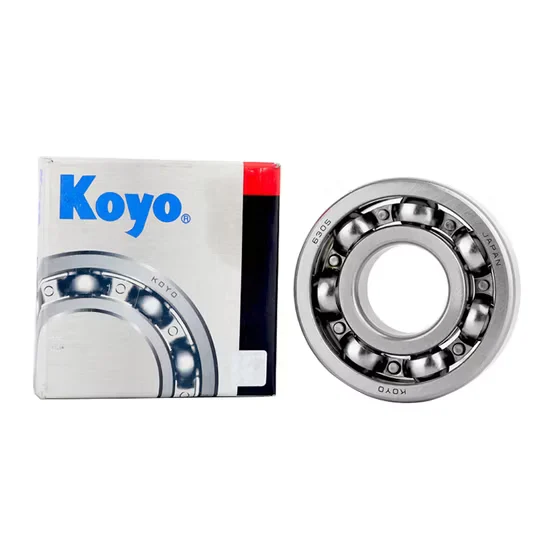
Deep Groove Ball Bearings
KOYO Bearing 6005 6006 6300-6309 Motorcycle Deep Groove Ball Bearings Japan
View Product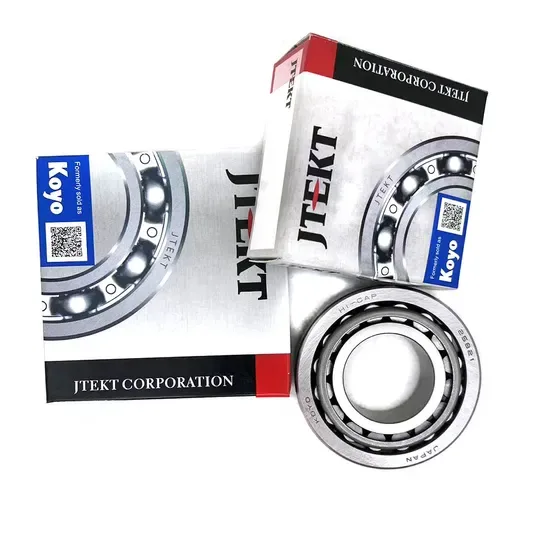
Tapered Roller Bearings
Koyo 30213 30221 30228 Tapered Roller Bearing Single Row for Machinery Part
View Product
Marine Bearings
Koyo 32212 Tapered Roller Bearing for Marine Engines
View Product
Tapered Roller Bearings
Koyo Tapered Roller Bearing 31313 33215 33017 33214 30313 32919 30217 33016
View ProductKeep reading
More bearing selection guides for repair shops
Practical guides from KOYO Bearing Supplier on identifying Koyo / JTEKT bearings for farm machinery, construction equipment and power transmission repairs.
 Procurement & Trade FAQs
· 7 min read
Rebuild Kit Supply for Transmission Shops: Wholesale Bearing Supplier
Transmission rebuild kit supply depends on accurate HS codes and detailed BOMs to prevent customs delays. Learn how mixed bearing consolidation and robust packaging…
Read the Guide Procurement & Trade FAQs · 7 min read
Genuine Bearing Stock Programs for Motorcycle Dealers: Wholesale Supplier
Optimize Motorcycle Dealer Stock Programs by balancing cross-brand bearing equivalency, genuine traceability, and flexible MOQs to prevent costly warranty claims. Verify dimensional tolerance and…
Read the Guide Procurement & Trade FAQs · 7 min read
Express Shipping for Urgent Bearing Repairs: Global Wholesale Supplier
Master express shipping for urgent bearing replacements by prioritizing customs clearance over flight speed to eliminate port bottlenecks. Optimize volumetric weight, consolidate mixed-brand orders,…
Read the Guide
Bearing enquiry
Send your machine details. Get a written Koyo / JTEKT quote.
KOYO Bearing Supplier quotes a single bearing position or every bearing in an assembly on one enquiry, matched to your machine model and application, with model, quantity, price, lead time and quote validity in writing.
- WhatsApp+1 (702) 981-5880
- Emailinfo@koyoome.com
- Address8 Research Drive, Greenville, SC 20627, USA
"When a Koyo bearing failed on a harvest machine during the season, we needed a replacement urgently. The supplier identified the correct Koyo reference, shipped same-day, and the machine was back in the field within the day."

Request a Bearing Quote
Tell us the machine and the bearing position. Photos of the markings can follow on WhatsApp.