
Koyo Bearing Kit Wholesale Pricing for Bulk Buyers
The lowest unit price is often the most expensive way to buy.
Wholesale KOYO bearing kit pricing is not defined by the catalog discount alone. The final landed cost is determined by mixed-brand consolidation fees, fumigation compliance, and traceability documentation. Ignoring these backend variables turns a seemingly profitable quote into a loss-making shipment.
I still remember the chill of the Chicago winter during a power transmission exhibition years ago. A procurement manager from a North American mining MRO distributor was excited about a quote he had received for several hundred sets of KOYO tapered roller bearings. The unit price was aggressive, significantly below what he usually paid through official channels. He calculated his margin based on that single line item, ignoring the complexity of the rest of his order. He needed those KOYO units consolidated with spherical roller bearings from other brands and various seal kits into a single container. When the cargo arrived in Los Angeles, the reality hit hard. The wooden pallets required ISPM 15 compliant fumigation, which had not been clearly quoted. The original factory certificates for the KOYO bearings required notarization for customs clearance, adding unexpected administrative fees. The volumetric weight of the mixed packaging exceeded the initial estimate, leading to higher inland freight charges. Those hidden costs consumed his entire projected profit. That incident reshaped how I approach Koyo Kit Pricing Wholesale negotiations. It is not just about the bearing; it is about the ecosystem of logistics and compliance that surrounds it.
Understanding the true structure of Koyo Kit Pricing Wholesale requires looking beyond the invoice line for the bearing itself. Buyers must account for the entire supply chain journey.
How do mixed-brand consolidations affect final pricing?
Mixed-brand consolidation introduces variable costs that scale non-linearly with volume.
When sourcing Koyo Kit Pricing Wholesale, buyers rarely purchase only one brand. Industrial maintenance requires SKF, FAG, NSK, and TIMKEN products alongside KOYO. Consolidating these into a single shipment saves on ocean freight but introduces complex handling costs. The primary driver here is packaging efficiency and regulatory compliance.
Different brands have different original packaging standards. KOYO bearings often come in high-quality individual boxes that are sturdy but bulky. When mixed with other brands, the empty space in a container can increase if not packed strategically. This leads to higher volumetric weight charges. Furthermore, if any part of the consolidation involves wooden pallets or crates, international shipping regulations mandate strict fumigation standards. Failure to comply results in the rejection of the entire container at the port of entry, leading to demurrage charges that far exceed the savings from the initial bearing discount.
A European distributor once faced this issue when rushing an order for a wind farm maintenance project. They opted for the cheapest Koyo Kit Pricing Wholesale option without verifying the packaging method. The supplier used untreated wooden crates for the heavier KOYO spherical roller bearings to save cost. Upon arrival in Rotterdam, the shipment was held for inspection. The lack of proper heat-treatment stamps on the wood meant the entire consignment had to be re-packaged at the port. The cost of labor and new materials, plus the delay penalties from the end client, wiped out the margin from the bulk purchase.
| Consolidation Factor | Impact on Landed Cost | Risk Level |
|---|---|---|
| Wooden Packaging | Requires ISPM 15 Fumigation Certificate | High |
| Mixed Brand Boxes | Inefficient Volume Utilization | Medium |
| Documentation Mismatch | Customs Clearance Delays | High |
| Single Brand Shipment | Simplified Handling | Low |
To mitigate this, buyers should request a detailed packing list that specifies the material of all outer packaging. Ensuring that all wooden components are certified or replaced with plywood or plastic alternatives can prevent costly delays. When evaluating Koyo Kit Pricing Wholesale, always ask if the quote includes compliant packaging for mixed loads.
Why do traceability documents add hidden expenses?
Authenticity verification is not free, and its cost is often excluded from base quotes.
In the global bearing market, counterfeits are a persistent threat. Major industrial buyers, especially in mining and heavy equipment, require proof of origin. For KOYO bearings, this means obtaining original mill certificates or authorized distributor invoices that trace the batch back to the manufacturer. These documents are not automatically included in every Koyo Kit Pricing Wholesale transaction. Some suppliers charge a premium for providing full traceability packages, while others include it only for full-container loads.
The cost becomes apparent when dealing with partial container loads or mixed-brand orders. Each brand has its own documentation format. KOYO’s certificates may require specific notarization or legalization depending on the destination country’s customs requirements. For instance, some Latin American countries require apostilled documents for industrial imports. Obtaining these involves administrative fees and time. If a supplier offers a significantly lower Koyo Kit Pricing Wholesale rate, it is crucial to verify if traceability documents are included. A low price without papers is a liability, not a bargain.
A case in point involved an automotive aftermarket supplier in Southeast Asia. They purchased a large batch of KOYO wheel bearings at a very competitive rate. However, the supplier provided only a commercial invoice, not the original quality certificates. When the local customs authority requested proof of authenticity for a random inspection, the buyer could not provide it. The goods were seized pending verification, which took weeks. The storage fees and legal costs incurred were substantial. This experience highlights that the value of Koyo Kit Pricing Wholesale is intrinsically linked to the completeness of its documentation.
Buyers should explicitly state their documentation requirements in the request for quotation. Ask for a sample of the certificate format before placing the order. Verify if the cost of notarization or legalization is included in the Koyo Kit Pricing Wholesale quote. This transparency prevents surprises at the destination port.
How to negotiate a transparent wholesale quote?
Clarity in terms prevents profit erosion from hidden fees.
Negotiating Koyo Kit Pricing Wholesale is not just about haggling over the unit price. It is about structuring the deal to reveal all potential costs. A transparent quote should break down the components: product cost, packaging, documentation, and inland logistics. Many buyers focus solely on the FOB price, ignoring the implications of CIF or DDP terms.
Under FOB terms, the buyer assumes responsibility once the goods are on the vessel. However, if the supplier’s handling of the cargo at the port of loading is inefficient, it can lead to delays. Under CIF terms, the supplier arranges freight, but the insurance coverage might be minimal. Understanding these incoterms is vital. When discussing Koyo Kit Pricing Wholesale, ask for a comparison of FOB and CIF prices. This allows you to evaluate the supplier’s freight forwarding capabilities and insurance options.
Additionally, inquire about the MOQ flexibility. Some suppliers offer better Koyo Kit Pricing Wholesale rates for full container loads but charge a premium for LCL (Less than Container Load) shipments due to handling complexities. If your demand is sporadic, consider consolidating with other buyers or adjusting order frequency to achieve full container status. This can significantly reduce the per-unit logistics cost.
A Middle East steel plant operator successfully reduced their total procurement cost by shifting from frequent small orders to quarterly consolidated shipments. They negotiated a tiered Koyo Kit Pricing Wholesale structure where the unit price decreased as the volume increased, but more importantly, the packaging and documentation fees were waived for orders above a certain threshold. This strategic approach lowered their overall landed cost despite a slightly higher initial unit price.
| Quote Component | Question to Ask Supplier | Purpose |
|---|---|---|
| Unit Price | Is this for genuine KOYO with full traceability? | Ensure authenticity |
| Packaging | Is ISPM 15 compliance included? | Avoid customs issues |
| Documentation | Are notarized certificates included? | Prevent clearance delays |
| Freight | Is insurance comprehensive? | Protect against loss |
By dissecting the quote, buyers can identify where costs are being hidden. A supplier willing to provide this level of detail is often more reliable in the long run.
Conclusion
True savings lie in the total landed cost, not the sticker price.
Wholesale purchasing of industrial components like KOYO bearings requires a holistic view. The initial Koyo Kit Pricing Wholesale figure is merely the starting point. Factors such as mixed-brand consolidation, fumigation compliance, and traceability documentation significantly impact the final expense. Buyers who ignore these elements risk eroding their margins through unexpected fees and delays. By demanding transparency in quotes and understanding the regulatory landscape, procurement professionals can secure genuine value. Focus on the complete supply chain solution rather than just the unit cost to ensure sustainable profitability and operational reliability.
Mentioned in this article
Koyo / JTEKT bearings from this guide
These are the Koyo / JTEKT bearing types discussed above. Open any product to check its details, or quote it together with the rest of your repair.
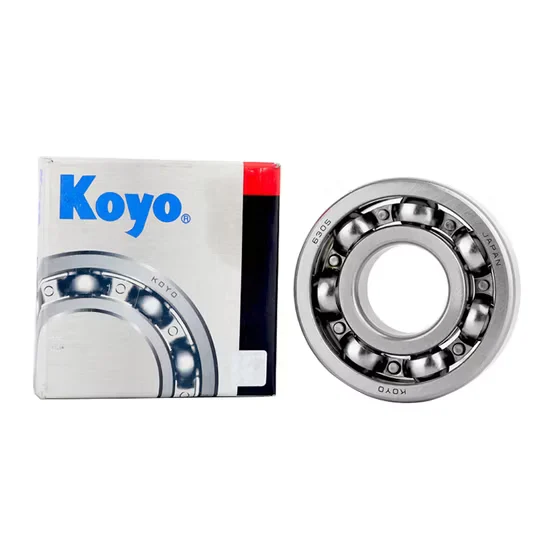
Deep Groove Ball Bearings
KOYO Bearing 6005 6006 6300-6309 Motorcycle Deep Groove Ball Bearings Japan
View Product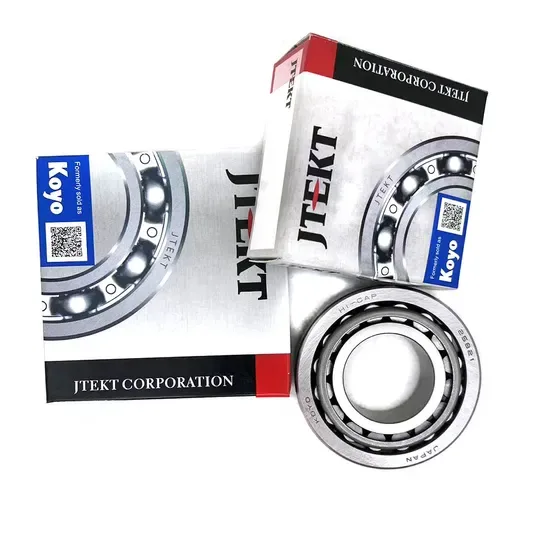
Tapered Roller Bearings
Koyo 30213 30221 30228 Tapered Roller Bearing Single Row for Machinery Part
View Product
Marine Bearings
Koyo 32212 Tapered Roller Bearing for Marine Engines
View Product
Tapered Roller Bearings
Koyo Tapered Roller Bearing 31313 33215 33017 33214 30313 32919 30217 33016
View ProductKeep reading
More bearing selection guides for repair shops
Practical guides from KOYO Bearing Supplier on identifying Koyo / JTEKT bearings for farm machinery, construction equipment and power transmission repairs.
 Procurement & Trade FAQs
· 7 min read
Rebuild Kit Supply for Transmission Shops: Wholesale Bearing Supplier
Transmission rebuild kit supply depends on accurate HS codes and detailed BOMs to prevent customs delays. Learn how mixed bearing consolidation and robust packaging…
Read the Guide Procurement & Trade FAQs · 7 min read
Genuine Bearing Stock Programs for Motorcycle Dealers: Wholesale Supplier
Optimize Motorcycle Dealer Stock Programs by balancing cross-brand bearing equivalency, genuine traceability, and flexible MOQs to prevent costly warranty claims. Verify dimensional tolerance and…
Read the Guide Procurement & Trade FAQs · 7 min read
Express Shipping for Urgent Bearing Repairs: Global Wholesale Supplier
Master express shipping for urgent bearing replacements by prioritizing customs clearance over flight speed to eliminate port bottlenecks. Optimize volumetric weight, consolidate mixed-brand orders,…
Read the Guide
Bearing enquiry
Send your machine details. Get a written Koyo / JTEKT quote.
KOYO Bearing Supplier quotes a single bearing position or every bearing in an assembly on one enquiry, matched to your machine model and application, with model, quantity, price, lead time and quote validity in writing.
- WhatsApp+1 (702) 981-5880
- Emailinfo@koyoome.com
- Address8 Research Drive, Greenville, SC 20627, USA
"When a Koyo bearing failed on a harvest machine during the season, we needed a replacement urgently. The supplier identified the correct Koyo reference, shipped same-day, and the machine was back in the field within the day."

Request a Bearing Quote
Tell us the machine and the bearing position. Photos of the markings can follow on WhatsApp.