
Koyo Bearing Equivalents for Suzuki & Kawasaki: Wholesale Supplier
Price is not the primary driver of bearing failure in Japanese motorcycles; unverified cage material is.
Sourcing reliable Koyo motorcycle bearing equivalents for Suzuki and Kawasaki models requires strict adherence to internal clearance specifications and cage material thermal stability, rather than focusing solely on dimensional fit or unit cost. True alternatives must match the original equipment manufacturer’s tolerance classes and heat-treatment protocols to prevent premature shattering under high-load engine conditions.
I still remember the humidity of that Chicago exhibition hall years ago. A distributor from Southeast Asia slammed a box of seized bearings on my counter. He had switched from original Koyo units to a cheaper, unverified generic brand for his Suzuki repair network. The savings were immediate, but the returns were catastrophic. The cages had not just worn down; they had shattered. The metal fragments had scored the races, turning simple maintenance jobs into full engine rebuilds. That incident shifted my entire approach to cross-referencing. I stopped looking at price lists first and started asking for material certificates. Now, when clients request Koyo bearing cross reference for Suzuki Kawasaki, I prioritize traceability and thermal resilience over marginal cost reductions.
Understanding why these failures happen is critical for any aftermarket distributor. It is not about the brand name on the box; it is about the physics inside the housing.
Why Do Koyo Equivalents Fail in Suzuki and Kawasaki Engines?
Generic replacements often fail because they lack the thermal stability required for high-RPM Japanese motorcycle engines.
The primary point of failure in many aftermarket alternative bearings for Japanese motorcycles is not the rolling elements themselves, but the cage. In high-performance applications like Suzuki sportbikes or Kawasaki cruisers, the operating temperature inside the wheel hub or transmission can rise significantly. Original Koyo bearings use cages made from specific high-strength polymers or treated steel alloys designed to withstand these thermal cycles without deforming.
Many low-cost equivalents use standard nylon or lower-grade steel cages. Under sustained heat, these materials lose tensile strength. When the cage softens, it can no longer maintain the precise spacing between the balls. This leads to increased friction, further heat generation, and eventual structural collapse.
I once inspected a batch of returned bearings from a Latin American repair group. The outer dimensions were perfect. The inner diameter matched the shaft. But the cages were brittle and cracked. The supplier had saved a few cents per unit, but the repair shops lost hours of labor and customer trust. This is why verifying cage composition is non-negotiable when sourcing Koyo deep groove ball bearing replacement options.
Another frequent issue is internal clearance. Japanese motorcycles often specify C3 or C4 clearance to account for thermal expansion. Generic suppliers frequently ship standard C0 clearance bearings, assuming they are universal. They are not. A tight clearance bearing will seize as it heats up, causing immediate failure.
Specification Matrix: Original Koyo vs. Verified Equivalents
True alternatives match internal clearance and cage material, not just outer dimensions.
To avoid the pitfalls of generic substitutions, buyers must compare technical specifications beyond the basic part number. The following matrix highlights the critical differences between original Koyo specifications and verified equivalents that meet performance standards.
| Feature | Original Koyo Spec | Verified Equivalent Requirement | Low-Cost Generic Risk |
|---|---|---|---|
| Internal Clearance | C3 / C4 (Application Specific) | Must Match OEM Spec Exactly | Often Standard C0, leading to seizure |
| Cage Material | High-Strength Polyamide or Treated Steel | Thermally Stable Polymer or Reinforced Steel | Standard Nylon, prone to heat deformation |
| Steel Purity | Vacuum Degassed High-Carbon Chromium Steel | Comparable Cleanliness Level | Higher Inclusion Density, reducing fatigue life |
| Tolerance Class | ABEC 1 / P0 (Standard) | Strict Adherence to Dimensional Tolerances | Wider Deviation, causing vibration |
| Lubricant | High-Temp Synthetic Grease | Thermally Stable Equivalent | Basic Lithium Grease, breaking down under heat |
A European workshop manager once shared his data with me. He tested three batches of Koyo motorcycle bearing equivalents on identical Kawasaki models. The batch that matched the C3 clearance and used a reinforced cage lasted nearly as long as the original. The batch that only matched the dimensions failed within months. The cost difference was negligible compared to the labor cost of a second repair.
When evaluating suppliers, ask for the technical datasheet. If they cannot provide details on clearance class or cage material, they are likely selling generic stock. For distributors, this transparency is vital. It allows you to market your products based on reliability, not just price. Our inventory includes verified alternatives that come with full traceability documentation, ensuring that every Koyo bearing cross reference for Suzuki Kawasaki part meets these rigorous standards.
How to Verify Quality When Sourcing Alternatives
Request traceability documents and inspect cage materials to ensure genuine performance without brand premiums.
Verifying the quality of alternative bearings for Japanese motorcycles requires a proactive approach. You cannot rely on packaging alone. Here is a practical method for assessing potential suppliers.
First, demand proof of origin. Genuine manufacturers provide batch numbers that can be traced back to production records. This documentation should include material certificates for the steel and the cage. If a supplier hesitates to provide this, consider it a red flag.
Second, perform a visual inspection of the cage. In a high-quality bearing, the cage should have a smooth, consistent finish. Look for signs of molding defects in polymer cages or rough machining in steel cages. These imperfections can become stress points under load.
Third, check the lubricant. High-quality motorcycle bearings use grease formulated for high speeds and temperatures. Rub a small amount between your fingers. It should feel smooth and consistent. Gritty or separated grease indicates poor quality control.
I recall a client from the Middle East who implemented this verification process. He stopped accepting bulk shipments without prior sample approval. By testing the cage material and checking the clearance with feeler gauges, he filtered out substandard suppliers. His return rate dropped noticeably, and his reputation among local mechanics improved.
For wholesalers, this level of diligence builds long-term value. It transforms your offering from a commodity into a trusted solution. We support this process by providing complete traceability docs for our Koyo deep groove ball bearing replacement stock, allowing distributors to verify quality before committing to large orders.
Cost vs. Risk: The Real Price of Cheap Substitutes
Marginal unit savings vanish when faced with massive batch recall costs.
The temptation to choose the lowest-priced Koyo motorcycle bearing equivalents is strong, especially in competitive markets. However, the true cost of a bearing includes more than the purchase price. It includes the cost of installation, the risk of failure, and the potential damage to your business reputation.
Consider the scenario of a fleet operator. If a cheap bearing fails, it is not just the cost of the part. It is the downtime of the vehicle, the labor for emergency repair, and the potential for secondary damage to the hub or axle. In a worst-case scenario, a catastrophic failure could lead to safety incidents.
A US buyer once told me about a recall he had to manage. He had sourced a large batch of unverified bearings to save on costs. When several units failed prematurely, he had to replace them all at his own expense. The cost of the recall was several times the initial savings. He learned that reliability is cheaper than regret.
For distributors, offering verified equivalents protects your bottom line. It reduces warranty claims and builds customer loyalty. Mechanics prefer parts that install easily and last. They are willing to pay a slight premium for certainty. By sourcing Koyo bearing cross reference for Suzuki Kawasaki parts from suppliers who prioritize quality control, you align your business with this preference.
Our approach focuses on providing genuine performance without the brand premium. We maintain a massive spot inventory of verified alternatives, ensuring that you can meet urgent demands without compromising on quality. This balance of availability and reliability is what separates successful distributors from those struggling with returns.
Conclusion
Reliability in motorcycle bearings is defined by material science, not just price tags.
Sourcing Koyo motorcycle bearing equivalents for Suzuki and Kawasaki requires a focus on internal clearance, cage material, and traceability. By prioritizing these technical factors, distributors can offer cost-effective solutions that do not compromise on performance. Avoid the hidden costs of generic substitutes by verifying specifications and demanding transparency from suppliers.
Mentioned in this article
Koyo / JTEKT bearings from this guide
These are the Koyo / JTEKT bearing types discussed above. Open any product to check its details, or quote it together with the rest of your repair.
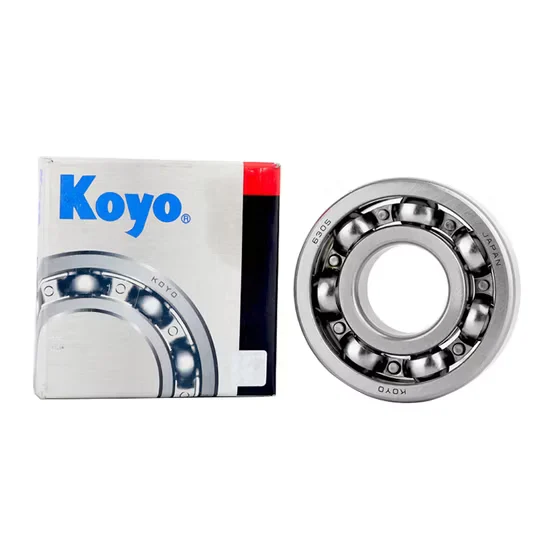
Deep Groove Ball Bearings
KOYO Bearing 6005 6006 6300-6309 Motorcycle Deep Groove Ball Bearings Japan
View Product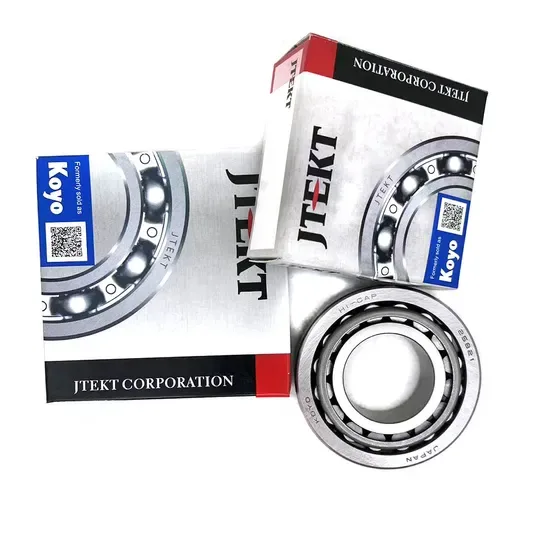
Tapered Roller Bearings
Koyo 30213 30221 30228 Tapered Roller Bearing Single Row for Machinery Part
View Product
Marine Bearings
Koyo 32212 Tapered Roller Bearing for Marine Engines
View Product
Tapered Roller Bearings
Koyo Tapered Roller Bearing 31313 33215 33017 33214 30313 32919 30217 33016
View ProductKeep reading
More bearing selection guides for repair shops
Practical guides from KOYO Bearing Supplier on identifying Koyo / JTEKT bearings for farm machinery, construction equipment and power transmission repairs.
 Brands & Alternatives
· 7 min read
Koyo Automotive Bearings Wholesale Supplier for Global Bulk Orders
Master global sourcing of Koyo automotive bearings by solving mixed-brand customs risks and verifying authenticity beyond packaging. Learn to validate technical specs, select reliable…
Read the Guide Brands & Alternatives
· 6 min read
Premium vs Economy Motorcycle Bearings: Wholesale Supplier for Bulk Orders
Choosing between premium vs economy motorcycle bearings requires analyzing total cost of ownership rather than just upfront price. Economy options often fail under heavy…
Read the Guide Brands & Alternatives
· 8 min read
OE Koyo vs Aftermarket Box: Differences for Wholesale Buyers
Understand the critical OE Koyo vs Aftermarket Box differences to avoid severe customs delays and terminal rejections in strict markets. Original packaging features holographic…
Read the Guide
Bearing enquiry
Send your machine details. Get a written Koyo / JTEKT quote.
KOYO Bearing Supplier quotes a single bearing position or every bearing in an assembly on one enquiry, matched to your machine model and application, with model, quantity, price, lead time and quote validity in writing.
- WhatsApp+1 (702) 981-5880
- Emailinfo@koyoome.com
- Address8 Research Drive, Greenville, SC 20627, USA
"When a Koyo bearing failed on a harvest machine during the season, we needed a replacement urgently. The supplier identified the correct Koyo reference, shipped same-day, and the machine was back in the field within the day."

Request a Bearing Quote
Tell us the machine and the bearing position. Photos of the markings can follow on WhatsApp.