
Koyo Auto Bearings Wholesale Supplier for Global Bulk Orders
Matching the catalog part number is not enough. The real bottleneck in sourcing Koyo auto bearings is ensuring origin traceability matches the packing list exactly.
To source Koyo auto bearings successfully, buyers must align catalog part numbers with verifiable traceability documents and strict mixed-container compliance to avoid customs delays. Relying solely on dimensional specs or basic cross-references leads to port holds and aftermarket returns. A robust procurement strategy requires validating original certificates, consistent brand declarations, and accurate suffix interpretation before shipment consolidation.
Having spent early years in a Yantai workshop checking bearing clearance with micrometers, I learned that precision is not just about measurements but about documentation integrity. Later, moving into foreign trade, I faced a critical lesson when shipping a bulk mixed container of hub bearings to Jeddah Port. The shipment included both Koyo and NTN brands. We matched every model number perfectly, but we overlooked the subtle discrepancies in the origin certificates versus the physical packaging labels. The cargo was held at the port for an extended period because the customs declaration did not align with the traceability docs. This incident shifted my focus from mere model matching to rigorous document consistency. For regional distributors and aftermarket suppliers, understanding this nuance is vital when working with a Koyo auto bearings wholesale supplier for global bulk orders.
How to Read Koyo Auto Bearing Catalog Data Accurately?
Mastering part number suffixes and dimensional specs prevents costly aftermarket mismatches. Many procurement errors stem from ignoring the specific suffixes that denote seal types, internal clearance, and cage materials.
The Koyo automotive bearing catalog contains thousands of part numbers, but the devil is in the details. A basic deep-groove ball bearing might look identical to a high-precision angular contact bearing in terms of outer dimensions, but their load ratings and operational limits differ significantly.. When cross-referencing for automotive applications, it is crucial to look beyond the basic bore and outer diameter.
Consider the suffixes. A standard open bearing versus one with a rubber seal or metal shield changes the application suitability entirely. In the aftermarket, substituting a sealed unit with an open one due to a catalog misread leads to premature failure from contamination. Conversely, using a sealed bearing where an open one is required can cause overheating due to friction.
| Feature | Basic Dimension Check | Full Catalog Analysis |
|---|---|---|
| Dimensional Specs | Verified | Verified |
| Internal Clearance | Ignored | Checked (C2/C3/C4) |
| Seal Type | Assumed | Confirmed via Suffix |
| Load Rating | Estimated | Verified against Application |
| Risk Level | High | Low |
A European automotive parts distributor once ordered a large batch of wheel bearings based only on the primary numeric code. They missed the suffix indicating a specific grease type suitable for high-speed highway driving. The bearings arrived with standard industrial grease, leading to noise complaints and returns from repair workshops. This error could have been avoided by deeper engagement with the catalog data.
When you partner with a knowledgeable Koyo auto bearings wholesale supplier for global bulk orders, they should provide technical consultation to verify these suffixes against your specific vehicle models. This ensures that the parts you stock meet the exact engineering requirements of the end-users, reducing return rates and enhancing your reputation in the local market.
What Traceability Documents Are Mandatory for Koyo Bearings?
Original certificates and consistent packing lists are non-negotiable for smooth customs clearance. Without proper documentation, even genuine products can be seized or delayed at international borders.
Traceability is the backbone of legitimate bearing trade. For Koyo bearings, this means having a clear chain of custody from the manufacturer to the final destination. The essential documents include the Certificate of Origin (COO), mill certificates, and detailed packing lists.. These documents must match the physical goods in every detail, including brand names, part numbers, and country of origin.
A common mistake is assuming that a commercial invoice is sufficient. Customs authorities in many regions, particularly in the Middle East and Latin America, require original COOs to verify that the goods are not subject to anti-dumping duties or sanctions. If the COO states “Japan” but the packaging has ambiguous markings, inspectors will flag the shipment.
In one case, a South American importer received a container of mixed-brand bearings. The packing list listed “Koyo” for all items, but some boxes had generic labeling due to a consolidation error at the warehouse. The lack of matching origin certificates for the specific Koyo batches caused a significant delay. The importer had to provide additional proof of authenticity, which took weeks to gather from the supply chain.
To avoid this, ensure that your supplier provides a complete set of traceability documents for each batch. This includes verifying that the batch numbers on the certificates correspond to the actual products shipped. A reliable Koyo auto bearings wholesale supplier for global bulk orders will have systems in place to generate these documents accurately, ensuring that every box in the container is accounted for and documented.
How to Avoid Customs Delays in Mixed-Brand Shipments?
Strict alignment of brand declarations, invoices, and physical packaging avoids port seizures. Mixing brands in one container saves freight, but it increases the complexity of customs clearance if not managed correctly.
Consolidating different brands like SKF, NSK, and Koyo into a single container is a common practice for distributors looking to optimize shipping costs. However, this approach requires meticulous attention to detail. Customs officials scrutinize mixed shipments more closely to prevent misdeclaration of values or origins..
The key is consistency. The brand name declared on the bill of lading, commercial invoice, and packing list must match the branding on the physical packaging. If a box is labeled “NTN” but the invoice lists it under a generic description, it raises red flags. Similarly, if Koyo bearings are packed in unbranded boxes without proper documentation, they may be suspected as counterfeits.
A Middle East steel plant operator once faced a situation where a mixed container of industrial and automotive bearings was held up because the Koyo items were not clearly separated in the documentation. The customs broker could not quickly verify the origin of the Koyo units amidst the other brands. This led to storage fees and production delays.
To mitigate this risk, use clear labeling and segregation within the container. Each brand should have its own distinct section in the packing list, with corresponding part numbers and quantities. Additionally, ensure that the physical packaging reflects the brand identity clearly. Working with a Koyo auto bearings wholesale supplier for global bulk orders who understands these consolidation standards can streamline the process. They can provide pre-inspection services to ensure that all branding and documentation are aligned before the container is sealed.
Why Do Aftermarket Orders Fail During Cross-Referencing?
Relying solely on basic dimensions without checking load ratings and seal types causes premature failures. Aftermarket success depends on accurate technical substitution, not just physical fit.
Cross-referencing is a critical skill for aftermarket suppliers. Vehicles often use bearings from various OEMs, and replacements must meet or exceed the original specifications. However, many failures occur because buyers focus only on the bore and outer diameter, ignoring critical performance parameters..
For example, a truck wheel bearing might have the same dimensions as a passenger car bearing, but the load capacity and speed rating are vastly different. Using a passenger car bearing in a heavy-duty truck application will lead to rapid wear and potential safety hazards. Similarly, ignoring the seal type can result in contamination ingress, especially in harsh environments like mining or agriculture.
A fleet maintenance manager in Southeast Asia reported high failure rates in their truck repairs. Upon investigation, it was found that the replacement bearings were sourced based on dimensional similarity alone, without considering the higher load requirements of commercial vehicles. The bearings failed under heavy loads, causing unplanned downtime and increased maintenance costs.
To prevent such issues, use comprehensive cross-reference tools that consider application-specific data. Verify the load ratings, speed limits, and environmental protections of the replacement bearing. A competent Koyo auto bearings wholesale supplier for global bulk orders will offer cross-brand technical consultation to help you select the right equivalents. This ensures that the parts you supply not only fit but also perform reliably in the field, building trust with your customers.
Conclusion
Accurate sourcing goes beyond part numbers. It demands rigorous traceability, precise catalog interpretation, and compliant documentation. By prioritizing these elements, distributors can ensure smooth logistics and reliable product performance. Partnering with a knowledgeable Koyo auto bearings wholesale supplier for global bulk orders provides the technical and logistical support needed to navigate these complexities effectively.
Mentioned in this article
Koyo / JTEKT bearings from this guide
These are the Koyo / JTEKT bearing types discussed above. Open any product to check its details, or quote it together with the rest of your repair.
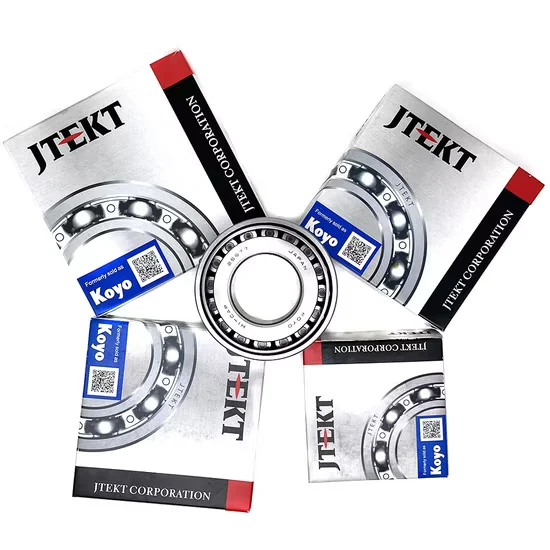
Tapered Roller Bearings
Koyo Tapered Roller Bearing 30203 30204 30205 30206 30207 for Auto Parts Wholesale
View Product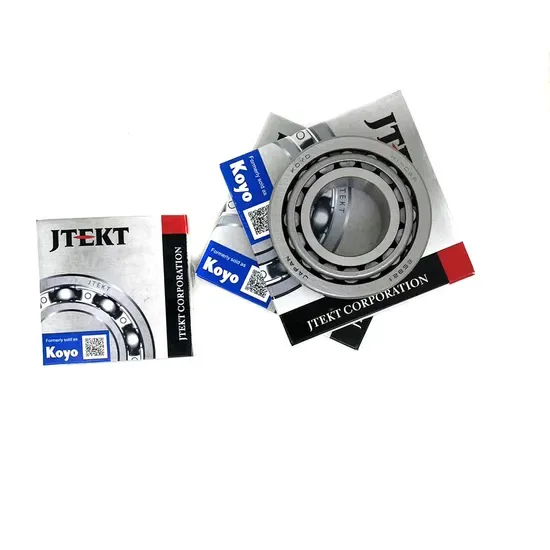
Tapered Roller Bearings
Koyo 30210-30216 Tapered Roller Bearings for Auto Parts Wholesale Supply
View Product
Tapered Roller Bearings
P5 Koyo 33010 30211 33110 32307 33208 Tapered Roller Bearing for Motor Auto Pump
View Product
Tapered Roller Bearings
Jtekt Koyo Tapered Roller Bearing 32010 30302 30303 30304 30305 30306 for Auto Parts
View ProductKeep reading
More bearing selection guides for repair shops
Practical guides from KOYO Bearing Supplier on identifying Koyo / JTEKT bearings for farm machinery, construction equipment and power transmission repairs.
 Procurement & Trade FAQs
· 7 min read
Rebuild Kit Supply for Transmission Shops: Wholesale Bearing Supplier
Transmission rebuild kit supply depends on accurate HS codes and detailed BOMs to prevent customs delays. Learn how mixed bearing consolidation and robust packaging…
Read the Guide Procurement & Trade FAQs
· 7 min read
Genuine Bearing Stock Programs for Motorcycle Dealers: Wholesale Supplier
Optimize Motorcycle Dealer Stock Programs by balancing cross-brand bearing equivalency, genuine traceability, and flexible MOQs to prevent costly warranty claims. Verify dimensional tolerance and…
Read the Guide Procurement & Trade FAQs · 7 min read
Express Shipping for Urgent Bearing Repairs: Global Wholesale Supplier
Master express shipping for urgent bearing replacements by prioritizing customs clearance over flight speed to eliminate port bottlenecks. Optimize volumetric weight, consolidate mixed-brand orders,…
Read the Guide
Bearing enquiry
Send your machine details. Get a written Koyo / JTEKT quote.
KOYO Bearing Supplier quotes a single bearing position or every bearing in an assembly on one enquiry, matched to your machine model and application, with model, quantity, price, lead time and quote validity in writing.
- WhatsApp+1 (702) 981-5880
- Emailinfo@koyoome.com
- Address8 Research Drive, Greenville, SC 20627, USA
"When a Koyo bearing failed on a harvest machine during the season, we needed a replacement urgently. The supplier identified the correct Koyo reference, shipped same-day, and the machine was back in the field within the day."

Request a Bearing Quote
Tell us the machine and the bearing position. Photos of the markings can follow on WhatsApp.