
Koyo Auto Bearing Numbers by Region: Wholesale Supplier for Bulk Orders
Standard clearance is not universal.
Koyo auto bearing numbers change by region because suffixes encode specific internal clearances, seal types, and lubrication variants tailored to local climate and operational loads. Ignoring these regional coding differences leads to premature thermal seizure in tropical zones or dust ingress in arid environments. A professional Koyo auto bearing numbers by region strategy requires decoding these suffixes to match the bearing specification with the actual field conditions rather than relying solely on the basic dimension code.
I learned this the hard way during a rainy season in Ho Chi Minh City. I had secured a contract to supply bearings for a motorcycle assembly line, focusing entirely on the basic part number to ensure dimensional fit. The units arrived, the production line ran, and within weeks, the service centers were flooded with engines that had seized due to excessive heat. The bearings were genuine, but they were standard clearance units designed for temperate climates. In the humid, high-temperature environment of Southeast Asia, the internal expansion left no room for the grease to circulate, causing the balls to lock up. That failure cost me more than just money; it cost me credibility. Since then, I have made it my practice to dissect the suffix codes before any bulk order is finalized.
Understanding these nuances is critical for distributors who stock inventory for diverse geographic markets. The same basic bearing model can have vastly different performance characteristics depending on the letters appended to its end. This guide breaks down how to interpret these codes and why matching them to your region is non-negotiable for avoiding field failures.
Why Do Koyo Auto Numbers Change by Region?
Suffixes are not arbitrary; they are climate adapters.
The basic number of a bearing tells you its size and type, but the suffix tells you how it survives. Manufacturers like Koyo adjust internal specifications based on the expected environmental stressors of different global markets. A bearing destined for Northern Europe faces different challenges than one shipped to the Middle East or Latin America. The primary variables are internal radial clearance and sealing efficiency.
In tropical regions such as Southeast Asia, ambient temperatures are consistently high, and machinery often operates under heavy loads. Standard internal clearance (C0 or CN) may become insufficient as the bearing components expand thermally. If the clearance is too tight, the rolling elements bind, generating friction heat that accelerates grease degradation and leads to catastrophic failure. Conversely, in colder climates, excessive clearance can cause vibration and noise, reducing the precision required for automotive applications.
Another critical factor is contamination. Arid regions like the Middle East present high levels of fine dust and sand, while coastal or agricultural areas in Latin America face high humidity and moisture. The suffix codes indicate whether the bearing is equipped with metal shields (ZZ), rubber seals (RS), or open designs, each offering different levels of protection against these specific contaminants.
For a wholesale supplier, stocking only the basic number is a risk. A distributor in Dubai needs bearings with robust sealing to prevent abrasive dust ingress, while a distributor in Brazil might prioritize corrosion-resistant lubrication and higher clearance to handle thermal expansion. Failing to differentiate these requirements results in high return rates and dissatisfied end-users.
How to Decode Koyo Clearance and Seal Suffixes?
The suffix matrix maps directly to environmental survival.
To avoid ordering errors, buyers must understand the common suffixes used by Koyo for automotive and industrial applications. These codes are standardized but often overlooked in quick procurement processes. The two most critical categories are internal clearance and sealing type.
Internal clearance is denoted by C-level codes. Standard clearance is often unmarked or marked as CN. For high-temperature environments, C3 clearance provides more internal space to accommodate thermal expansion without binding. In extreme cases, such as heavy-duty mining equipment in hot climates, C4 clearance may be required. Using a C3 bearing in a cold climate application might result in excessive play and premature wear, while using a standard clearance bearing in a hot climate risks seizure.
Sealing types are equally vital. ZZ suffixes indicate metal shields on both sides. These offer good protection against larger particles but are not hermetically sealed against fine dust or moisture. RS or 2RS suffixes indicate rubber contact seals, which provide superior protection against contaminants and retain lubrication better but generate slightly more friction and heat. In high-RPM automotive applications, the heat generated by rubber seals can be a concern, making ZZ shields preferable if the environment is relatively clean. However, in dusty agricultural settings, 2RS seals are often necessary despite the slight friction penalty.
| Feature | Standard Code | Tropical/High-Heat Code | Arid/Dusty Code | Humid/Wet Code |
|---|---|---|---|---|
| Internal Clearance | CN / Unmarked | C3 | C3 | C3 |
| Seal Type | ZZ (Metal Shield) | ZZ (Low Friction) | 2RS (Rubber Seal) | 2RS (Rubber Seal) |
| Lubrication | Standard Grease | High-Temp Grease | Dust-Resistant Grease | Corrosion-Inhibiting Grease |
| Risk if Mismatched | N/A | Thermal Seizure | Dust Ingress | Corrosion & Washout |
A case from a Latin American agricultural distributor illustrates this. They initially stocked standard ZZ bearings for harvesters. During the wet harvest season, moisture penetrated the metal shields, washing out the grease and causing rust on the raceways. Switching to 2RS sealed units with moisture-resistant lubrication extended the replacement interval significantly. The key was not changing the bearing size, but changing the suffix to match the humidity.
What Happens When You Ignore Regional Codes?
Field failures are expensive and predictable.
Ignoring regional suffix codes does not just lead to minor inefficiencies; it causes distinct, repeatable failure modes. These failures are often misdiagnosed as product quality issues when they are actually specification mismatches. Understanding these patterns helps buyers troubleshoot and prevent future losses.
In Southeast Asia, the most common failure is thermal seizure. As seen in my early experience, standard clearance bearings in high-ambient-temperature environments expand until the rolling elements have no room to move. The resulting friction generates exponential heat, melting the grease and welding the components together. This is not a manufacturing defect; it is a physics problem. The solution is specifying C3 or C4 clearance bearings that account for this thermal growth.
In the Middle East, dust ingress is the primary enemy. Fine silica sand can penetrate metal shields (ZZ) over time, acting as an abrasive paste inside the bearing. This grinds down the raceways and balls, leading to noisy operation and eventual spalling. Distributors who stock only ZZ bearings for commercial fleets in arid zones see frequent premature replacements. Switching to 2RS sealed bearings creates a barrier that keeps the abrasive dust out, significantly extending maintenance cycles.
In Latin America and other high-humidity regions, moisture contamination leads to corrosion and lubricant washout. Standard greases may emulsify or wash away when exposed to heavy rain or washing processes. Bearings without proper rubber seals allow water to enter, causing rust on the precision surfaces. Once rust forms, the smooth rolling action is destroyed, leading to vibration and rapid wear. Using bearings with corrosion-inhibiting grease and robust 2RS seals mitigates this risk.
These failures are not random. They follow the climate. By aligning the Koyo auto bearing numbers by region with the local environmental stressors, distributors can drastically reduce warranty claims and build trust with their customers.
How to Verify Authentic Regional Koyo Bearings?
Traceability documents confirm the suffix specification.
When sourcing bulk orders, ensuring that the physical product matches the ordered suffix is critical. Counterfeit or mislabeled bearings often lack the precise internal specifications indicated by the suffix. For example, a fake bearing might be stamped with a C3 code but actually have standard clearance, leading to the same failures described above.
Verification starts with packaging. Genuine Koyo bearings come in boxes with clear labeling that includes the full part number, including all suffixes. The batch number and manufacturing date should be traceable. Reputable suppliers provide documentation that links the batch to the manufacturer’s production records. This traceability is essential for confirming that the bearings were produced to the correct regional specification.
Physical inspection can also reveal clues. Rubber seals (2RS) should be flexible and properly seated, while metal shields (ZZ) should be secure without gaps. However, internal clearance cannot be visually verified without specialized measurement tools. Therefore, relying on the supplier’s reputation and documentation is paramount. A professional Koyo auto bearing numbers by region supplier will have the technical capability to verify these specs and provide the necessary certification.
Additionally, cross-referencing with official catalogs ensures that the suffix codes align with the intended application. If a supplier cannot explain the difference between a C3 and a standard clearance bearing, or why a 2RS seal is recommended for a dusty environment, it is a red flag. Technical competence is a key indicator of authenticity and reliability.
Conclusion
Match the suffix to the soil and sky.
Koyo auto bearing numbers by region are not just administrative details; they are engineering safeguards against climate-induced failure. By decoding clearance and seal suffixes, buyers can ensure that their inventory meets the specific thermal and contaminant challenges of their local markets. This precision prevents costly seizures, dust damage, and corrosion, turning potential warranty nightmares into reliable performance. For distributors, mastering these codes is the difference between selling a commodity and providing a engineered solution.
Mentioned in this article
Koyo / JTEKT bearings from this guide
These are the Koyo / JTEKT bearing types discussed above. Open any product to check its details, or quote it together with the rest of your repair.

Tapered Roller Bearings
P5 Koyo 33010 30211 33110 32307 33208 Tapered Roller Bearing for Motor Auto Pump
View Product
Tapered Roller Bearings
Jtekt Koyo Tapered Roller Bearing 32010 30302 30303 30304 30305 30306 for Auto Parts
View Product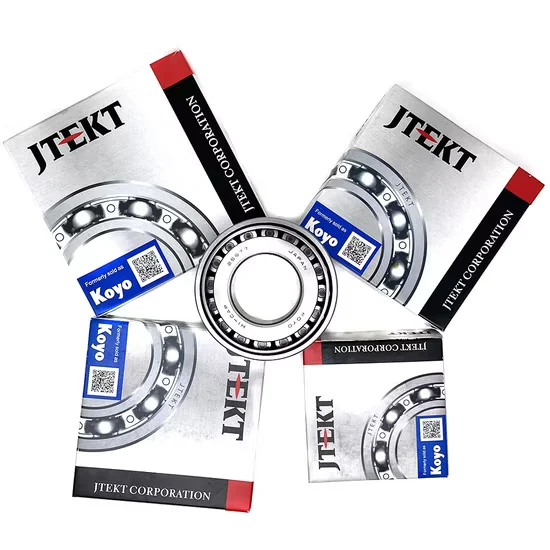
Tapered Roller Bearings
Koyo Tapered Roller Bearing 30203 30204 30205 30206 30207 for Auto Parts Wholesale
View Product
Inch Size Bearings
Koyo L420449/L420410 TRA181504 Tapered Roller Bearing for Auto Parts
View ProductKeep reading
More bearing selection guides for repair shops
Practical guides from KOYO Bearing Supplier on identifying Koyo / JTEKT bearings for farm machinery, construction equipment and power transmission repairs.
 Procurement & Trade FAQs
· 7 min read
Rebuild Kit Supply for Transmission Shops: Wholesale Bearing Supplier
Transmission rebuild kit supply depends on accurate HS codes and detailed BOMs to prevent customs delays. Learn how mixed bearing consolidation and robust packaging…
Read the Guide Procurement & Trade FAQs
· 7 min read
Genuine Bearing Stock Programs for Motorcycle Dealers: Wholesale Supplier
Optimize Motorcycle Dealer Stock Programs by balancing cross-brand bearing equivalency, genuine traceability, and flexible MOQs to prevent costly warranty claims. Verify dimensional tolerance and…
Read the Guide Procurement & Trade FAQs · 7 min read
Express Shipping for Urgent Bearing Repairs: Global Wholesale Supplier
Master express shipping for urgent bearing replacements by prioritizing customs clearance over flight speed to eliminate port bottlenecks. Optimize volumetric weight, consolidate mixed-brand orders,…
Read the Guide
Bearing enquiry
Send your machine details. Get a written Koyo / JTEKT quote.
KOYO Bearing Supplier quotes a single bearing position or every bearing in an assembly on one enquiry, matched to your machine model and application, with model, quantity, price, lead time and quote validity in writing.
- WhatsApp+1 (702) 981-5880
- Emailinfo@koyoome.com
- Address8 Research Drive, Greenville, SC 20627, USA
"When a Koyo bearing failed on a harvest machine during the season, we needed a replacement urgently. The supplier identified the correct Koyo reference, shipped same-day, and the machine was back in the field within the day."

Request a Bearing Quote
Tell us the machine and the bearing position. Photos of the markings can follow on WhatsApp.