
Koyo Auto Bearing Equivalents for Suzuki Wholesale Supplier
OEM packaging is not a performance guarantee.
Cross-brand bearing equivalence for Suzuki vehicles relies on matching dimensional and load parameters, not just brand names. Sourcing reliable Koyo auto bearing equivalents for Suzuki requires verifying radial internal clearance and dynamic load ratings against ISO standards. This approach allows distributors to replace premium-priced units with verified alternatives like NTN or high-precision domestic lines, optimizing sourcing costs without compromising vehicle safety or lifespan.
I still remember the humidity of Jebel Ali Port in Dubai, standing next to a container of Suzuki Swift wheel bearings. A client refused to accept a shipment because the boxes were not the specific blue-and-white Koyo packaging he had ordered. He insisted that only the original box guaranteed the quality inside. I spent weeks scrambling to source exact packaging from secondary suppliers, delaying his order by half a month. The client eventually canceled the deal, losing a significant contract with a local repair chain. That failure forced me to look beyond the label. I pulled technical datasheets for NTN and compared them side-by-side with the Koyo specs. The inner diameter, outer diameter, width, and load ratings were identical. The steel grade and heat treatment processes met the same international standards. I realized then that the “brand” was often a proxy for trust, not a unique engineering secret.
This insight changed how I approach supply chains. For aftermarket distributors and MRO buyers, sticking rigidly to one brand creates unnecessary vulnerability. When you understand the physics behind the part, you unlock a wider pool of suppliers. This guide breaks down how to identify true Koyo auto bearing equivalents for Suzuki, ensuring you get the right part for the right price.
Why Look for Koyo Equivalents for Suzuki?
Supply chain volatility makes single-brand sourcing a risk.
The automotive aftermarket is sensitive to disruptions. Relying solely on one manufacturer for high-turnover parts like Suzuki wheel bearings can lead to stockouts during peak demand or logistical bottlenecks. Diversifying your supplier base with verified equivalents ensures business continuity.
In the Middle East, where temperatures soar and road conditions vary, Suzuki models are ubiquitous. Distributors here face constant pressure to keep shelves stocked. I once worked with a large distributor in Riyadh who was facing a three-month lead time for specific Koyo hub units due to factory retooling. His competitors were filling the gap with other brands. By switching to a pre-vetted alternative that matched the exact C3 radial clearance required for hot climates, he maintained his service level agreements.
The cost benefit is also significant. Premium brands carry a price premium for marketing and distribution networks. However, the core product—a precision-ground steel assembly—is governed by universal physics. Sourcing Koyo auto bearing equivalents for Suzuki from reputable manufacturers like NTN or top-tier Chinese producers (such as ZWZ or HRB) can reduce unit costs noticeably. This margin improvement is crucial for wholesalers competing on price while maintaining quality.
It is not about buying cheap; it is about buying smart. The key is verification. You must ensure that the alternative brand adheres to the same tolerance classes. For Suzuki applications, which often involve compact, high-speed wheel hubs, precision is non-negotiable. A mismatch in fit can lead to noise, vibration, and premature failure, damaging your reputation. Therefore, the search for equivalents is not a compromise but a strategic optimization of your inventory mix.
How to Cross-Reference Koyo and NTN for Suzuki?
Matching physical dimensions is the first step, but not the last.
To find a true equivalent, you must go beyond the part number. While cross-reference charts are useful, they are not infallible. The most reliable method is to compare the fundamental geometric and load-bearing specifications. This ensures a direct drop-in replacement that fits the Suzuki hub assembly perfectly.
Consider the following parameter matrix when evaluating alternatives. Note that exact values depend on the specific Suzuki model and year, so always consult the OEM service manual.
| Parameter | Koyo Specification | NTN Equivalent | Verification Method |
|---|---|---|---|
| Inner Diameter (ID) | Matches OEM | Matches OEM | Caliper measurement |
| Outer Diameter (OD) | Matches OEM | Matches OEM | Caliper measurement |
| Width | Matches OEM | Matches OEM | Micrometer check |
| Dynamic Load Rating | Specified Value | Matching Value | Datasheet comparison |
| Static Load Rating | Specified Value | Matching Value | Datasheet comparison |
| Seal Type | Rubber/Metal | Rubber/Metal | Visual inspection |
A common mistake is assuming that if the ID and OD match, the bearing is interchangeable. This is false. The width and the shoulder heights are critical for proper seating in the hub. I recall a workshop in Sharjah that installed an “equivalent” bearing that was slightly wider than the spec. It prevented the axle nut from tightening correctly, leading to wheel wobble within days. The technician blamed the brand, but the issue was poor cross-referencing.
When sourcing Koyo auto bearing equivalents for Suzuki, request detailed dimension sheets from your supplier. Compare these against the Koyo catalog data. Reputable suppliers will provide this documentation willingly. If a supplier cannot provide precise dimensional data, consider it a red flag. The goal is to achieve a fit that feels identical to the original. This level of scrutiny protects your end-users and builds trust in your brand as a knowledgeable partner.
What Parameters Matter Beyond Dimensions?
Radial clearance and seal types dictate real-world performance.
Dimensions ensure the bearing fits; internal parameters ensure it lasts. For Suzuki vehicles, which are often used in varied conditions from city commuting to rough rural roads, the radial internal clearance is vital. Most modern automotive applications use C3 clearance, which allows for thermal expansion and minor misalignment.
In hotter regions like the Gulf or Southeast Asia, using a bearing with insufficient clearance (like C2) can cause the rollers to bind as the metal expands. This generates excessive heat, degrades the grease, and leads to catastrophic failure. Conversely, too much clearance (C4) can cause noise and vibration at high speeds. When selecting Koyo auto bearing equivalents for Suzuki, verify that the alternative brand offers the correct clearance class for the target market.
Seal integrity is another critical factor. Suzuki wheel bearings are exposed to water, dust, and road salt. The seal design must prevent contaminant ingress while retaining lubricant. Some cheaper alternatives use inferior rubber compounds that harden or crack over time. High-quality equivalents use nitrile rubber or similar materials that resist heat and chemicals.
I once analyzed a batch of failed bearings from a fleet operator in Latin America. The dimensions were perfect, but the seals had degraded after six months. The grease had washed out, leaving the races dry. The root cause was not the steel, but the seal material. By switching to a supplier that provided material certification for the seals, we eliminated this failure mode. This experience highlights that equivalence is holistic. It covers every component of the bearing assembly, not just the rings and rollers.
How to Verify Equivalent Bearing Quality?
Traceability documents prevent counterfeit failures.
The market is flooded with counterfeit parts that mimic popular brands. These fakes often look convincing but use substandard steel and poor heat treatment. To protect your business, you must implement a rigorous verification process. Do not rely on packaging alone. Counterfeiters are adept at replicating boxes and labels.
Start by requesting traceability documentation. Genuine bearings from brands like Koyo, NTN, SKF, or reputable domestic lines come with batch numbers that can be traced back to the production facility. Ask your supplier for material certificates and quality control reports. These documents should confirm compliance with international standards such as ISO 9001.
Visual inspection is also useful. Check for smooth rotation, consistent finish, and clear, laser-etched markings. Blurry logos or rough edges are signs of low-quality production. However, visual checks are not enough. For large orders, consider third-party inspection services. They can perform hardness tests and dimensional audits before shipment.
I work with a network of suppliers who provide full transparency. For example, when sourcing Koyo auto bearing equivalents for Suzuki, I can access batch-level data for both international and domestic brands. This allows me to verify that the steel purity and heat treatment meet the required specifications. This level of diligence is what separates a trader from a trusted partner. It ensures that every bearing you sell performs as expected, reducing warranty claims and building long-term customer loyalty.
Conclusion
Equivalence is about engineering, not branding.
Finding reliable Koyo auto bearing equivalents for Suzuki empowers distributors to optimize costs and secure supply chains. By focusing on dimensional accuracy, radial clearance, and seal quality, you can confidently source alternatives from brands like NTN or certified domestic manufacturers. This approach reduces dependency on single sources and improves profit margins without sacrificing performance. Trust in data, verify through documentation, and prioritize technical compatibility over packaging aesthetics.
Mentioned in this article
Koyo / JTEKT bearings from this guide
These are the Koyo / JTEKT bearing types discussed above. Open any product to check its details, or quote it together with the rest of your repair.

Tapered Roller Bearings
P5 Koyo 33010 30211 33110 32307 33208 Tapered Roller Bearing for Motor Auto Pump
View Product
Tapered Roller Bearings
Jtekt Koyo Tapered Roller Bearing 32010 30302 30303 30304 30305 30306 for Auto Parts
View Product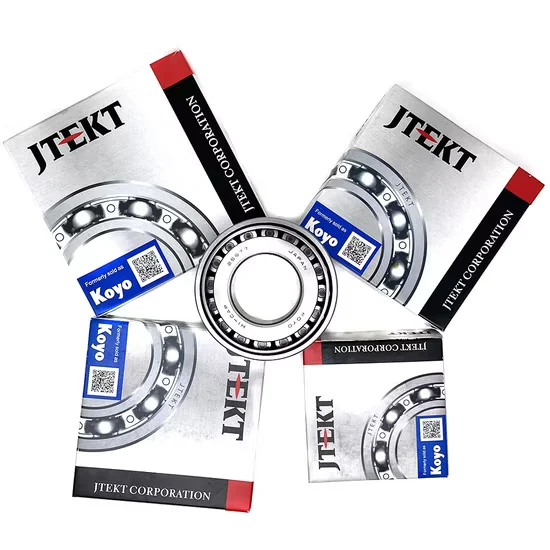
Tapered Roller Bearings
Koyo Tapered Roller Bearing 30203 30204 30205 30206 30207 for Auto Parts Wholesale
View Product
Inch Size Bearings
Koyo L420449/L420410 TRA181504 Tapered Roller Bearing for Auto Parts
View ProductKeep reading
More bearing selection guides for repair shops
Practical guides from KOYO Bearing Supplier on identifying Koyo / JTEKT bearings for farm machinery, construction equipment and power transmission repairs.
 Brands & Alternatives
· 7 min read
Koyo Automotive Bearings Wholesale Supplier for Global Bulk Orders
Master global sourcing of Koyo automotive bearings by solving mixed-brand customs risks and verifying authenticity beyond packaging. Learn to validate technical specs, select reliable…
Read the Guide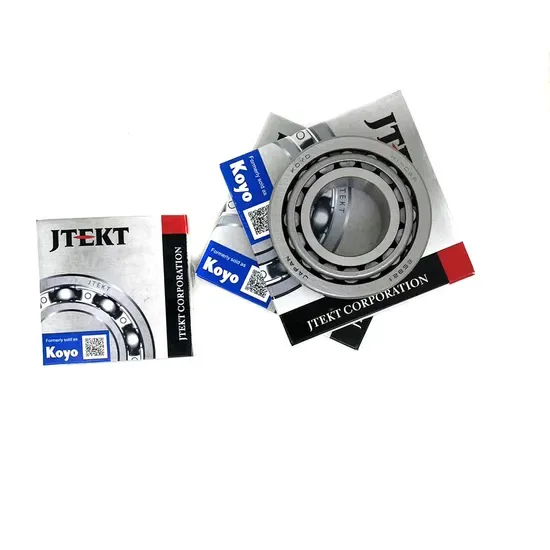 Brands & Alternatives
· 6 min read
Premium vs Economy Motorcycle Bearings: Wholesale Supplier for Bulk Orders
Choosing between premium vs economy motorcycle bearings requires analyzing total cost of ownership rather than just upfront price. Economy options often fail under heavy…
Read the Guide Brands & Alternatives
· 8 min read
OE Koyo vs Aftermarket Box: Differences for Wholesale Buyers
Understand the critical OE Koyo vs Aftermarket Box differences to avoid severe customs delays and terminal rejections in strict markets. Original packaging features holographic…
Read the Guide
Bearing enquiry
Send your machine details. Get a written Koyo / JTEKT quote.
KOYO Bearing Supplier quotes a single bearing position or every bearing in an assembly on one enquiry, matched to your machine model and application, with model, quantity, price, lead time and quote validity in writing.
- WhatsApp+1 (702) 981-5880
- Emailinfo@koyoome.com
- Address8 Research Drive, Greenville, SC 20627, USA
"When a Koyo bearing failed on a harvest machine during the season, we needed a replacement urgently. The supplier identified the correct Koyo reference, shipped same-day, and the machine was back in the field within the day."

Request a Bearing Quote
Tell us the machine and the bearing position. Photos of the markings can follow on WhatsApp.