
Koyo Auto Bearing Equivalents for Mitsubishi Wholesale Supplier
Matching dimensions is only half the battle; mismatched customs documentation is what actually traps your cargo at the port.
Finding reliable Koyo auto bearing equivalents for Mitsubishi requires more than just swapping part numbers. It demands exact dimensional matching synchronized with precise customs declarations to prevent clearance failures. When replacing Koyo units with equivalents like NTN or NSK, you must verify inner and outer diameter tolerances, width specifications, and dynamic load ratings while ensuring that commercial invoices and packing lists reflect the actual shipped brand to avoid demurrage charges.
I still remember the silence on the phone line when a client in Dubai realized their shipment was stuck. They had ordered a batch of wheel bearings for Mitsubishi aftermarket distribution. To save costs, they swapped the specified Koyo brand for an equivalent NTN model, assuming the technical specs were identical. The physical parts were perfect drop-in replacements. However, the customs broker received documents declaring Koyo, while the physical inspection revealed NTN boxes. The discrepancy triggered a full hold for verification. Days turned into weeks. The demurrage fees alone exceeded the margin saved by switching brands. That incident reshaped how I approach Koyo auto bearing equivalents for Mitsubishi. It is not just about engineering fitment; it is about supply chain integrity.
The market is flooded with options, but the trap lies in the details. Most buyers focus solely on the mechanical interface. They check if the bearing fits the hub. They rarely check if the paperwork fits the local regulations. This guide breaks down the technical cross-references and the often-overlooked documentation protocols required for smooth international trade.
What Are the Direct Equivalents for Koyo Mitsubishi Bearings?
Direct equivalents exist primarily among major Japanese manufacturers, but part number structures differ significantly across brands.
When sourcing Koyo auto bearing equivalents for Mitsubishi, you are typically looking at cross-references within the Japanese bearing triad: Koyo (JTEKT), NTN, and NSK. These manufacturers often supply original equipment to Mitsubishi Motors, meaning their aftermarket lines share similar engineering DNA. However, a direct part number swap is rarely possible without a cross-reference matrix.
| Feature | Koyo (Original Spec) | NTN Equivalent | NSK Equivalent | Verification Status |
|---|---|---|---|---|
| Part Number Format | Alphanumeric Series | Different Alphanumeric Series | Distinct Numeric/Alpha Series | Requires Cross-Ref Table |
| Inner Diameter | Standard Metric | Standard Metric | Standard Metric | Match Required |
| Outer Diameter | Standard Metric | Standard Metric | Standard Metric | Match Required |
| Width | Standard Metric | Standard Metric | Standard Metric | Match Required |
| Seal Type | Rubber/Metal Variants | Comparable Variants | Comparable Variants | Visual Check Needed |
| Cage Material | Steel/Polyamide | Steel/Polyamide | Steel/Polyamide | Confirm Application |
The table above illustrates that while the physical dimensions adhere to global ISO standards, the identification codes do not align. A buyer cannot simply order an NTN part using a Koyo SKU. You must use a verified cross-reference tool. For instance, a common Koyo deep groove ball bearing used in Mitsubishi transmissions will have a specific NTN counterpart with a different prefix and suffix structure.
A European distributor once attempted to consolidate a mixed container of Koyo auto bearing equivalents for Mitsubishi without verifying these suffixes. They assumed that a standard 6205 bearing was universal. While the basic dimensions were correct, the internal clearance class (C3 vs. Normal) differed between the quoted Koyo spec and the supplied NSK alternative. This led to premature noise issues in high-speed applications. The lesson is clear: equivalence is not just about size. It is about internal geometry and tolerance classes.
To mitigate this risk, always request the manufacturer’s official cross-reference sheet. Do not rely on third-party databases that may contain outdated mappings. Verify the dynamic load rating and limiting speed for each equivalent. If the application involves high temperatures or heavy loads, such as in commercial Mitsubishi trucks, the material grade of the steel becomes critical. Ensure the equivalent brand meets the same hardness and purity standards as the original Koyo specification.
How to Verify Dimensional and Load Equivalence?
Drop-in fitment depends on micron-level precision in ID, OD, and width, not just nominal millimeter sizes.
Verifying Koyo auto bearing equivalents for Mitsubishi goes beyond reading a catalog. You must confirm that the replacement bearing meets the specific operational demands of the vehicle. Mitsubishi vehicles, particularly those used in rugged terrains or commercial fleets, place unique stress on wheel hubs and transmission systems.
Start with the fundamental dimensions: Inner Diameter (ID), Outer Diameter (OD), and Width. These must match exactly. Even a deviation of a few microns can cause improper seating or excessive preload. Use calibrated micrometers to spot-check samples from any new batch. Do not assume consistency across different production lots or brands.
Next, evaluate the load ratings. Dynamic load rating determines the bearing’s life under rotating conditions, while static load rating applies to stationary heavy loads. For Mitsubishi SUVs or light trucks, the dynamic load capacity of the equivalent must meet or exceed the original Koyo spec. If the equivalent has a lower rating, the service life will drop noticeably, leading to early warranty claims.
Seal type is another critical factor. Mitsubishi models often operate in dusty or wet environments. The original Koyo bearing might use a specific rubber seal compound resistant to heat and ozone. An equivalent with a inferior seal material may harden and crack, allowing contaminants to enter. Always compare the seal material specification. If the datasheet does not specify the compound, request a sample for physical inspection.
A case from Southeast Asia highlights this issue. A repair chain switched to a cheaper equivalent for Mitsubishi Pajero wheel bearings. The dimensions were perfect, but the grease compatibility was overlooked. The new grease reacted with the existing seal, causing leakage within months. The cost of rework far outweighed the initial savings. When evaluating Koyo auto bearing equivalents for Mitsubishi, always check the lubrication type and seal compatibility.
For high-performance or heavy-duty applications, consider the cage material. Polyamide cages offer weight savings and better lubrication retention, while steel cages provide higher strength. Ensure the equivalent matches the original design intent. Mismatched cage materials can lead to failure under high centrifugal forces.
Why Do Equivalent Bearings Get Stuck in Customs?
HS code mismatches and inconsistent brand declarations are the primary causes of port detention, not the product quality itself.
The most surprising hurdle in trading Koyo auto bearing equivalents for Mitsubishi is not technical but administrative. Customs authorities in many regions, particularly in the Middle East and Africa, scrutinize auto parts heavily. They look for discrepancies between the declared goods and the physical cargo.
When you substitute Koyo with an equivalent brand, the Harmonized System (HS) code usually remains the same, as it classifies the product type rather than the brand. However, the description field on the invoice must accurately reflect the actual brand shipped. If the invoice says “Koyo” but the boxes say “NTN,” customs officers may suspect counterfeit goods or misdeclaration. This triggers a detailed inspection, delaying clearance.
Another issue arises with origin certificates. Some countries have trade agreements or specific import duties based on the country of manufacture. Koyo bearings are often made in Japan, Thailand, or China. NTN and NSK also have multiple manufacturing bases. If the certificate of origin states Japan, but the goods are marked with a Chinese factory code, discrepancies arise. This is not necessarily fraud, but it raises red flags.
A buyer in Latin America faced this issue when importing a mixed container. The documentation listed all items as Japanese origin. However, some equivalent bearings were sourced from a Thai facility. The mismatch led to a reassessment of duties and penalties. The delay caused stockouts for their retail network.
To avoid this, ensure that every document aligns with the physical product. The commercial invoice, packing list, and bill of lading must list the correct brand name for each line item. Do not use generic terms like “auto bearings” without specifying the brand. Transparency is key. If you are shipping Koyo auto bearing equivalents for Mitsubishi, declare them as such. Do not hide the substitution.
How to Prepare Bulletproof Customs Documents for Substitutes?
Aligning invoices, packing lists, and origin certificates with the actual shipped brands prevents costly clearance delays.
Preparing documentation for Koyo auto bearing equivalents for Mitsubishi requires a meticulous approach. The goal is to create a paper trail that matches the physical reality of the shipment. Any deviation invites scrutiny.
First, update the commercial invoice. Each line item must specify the exact brand and part number shipped. If you are replacing Koyo with NTN, the invoice must read “NTN Bearing [Part Number]” instead of “Koyo Bearing [Part Number].” Do not use ambiguous language. Clarity reduces the chance of misinterpretation by customs brokers.
Second, ensure the packing list matches the invoice exactly. The quantity, weight, and dimensions on the packing list must correspond to the physical packages. If the boxes are labeled with the equivalent brand, the packing list must reflect this. Inconsistencies here are common triggers for inspections.
Third, verify the certificate of origin. This document must state the true country of manufacture for each brand. If you are mixing brands from different countries, ensure the certificate accurately reflects this mix. Some customs authorities require separate certificates for different origins. Check local regulations beforehand.
A proactive step is to include a technical datasheet or cross-reference letter with the shipment. This document explains why the equivalent was used and confirms its technical parity with the original Koyo spec. While not always required, it can help resolve queries during inspection. It shows due diligence and transparency.
Finally, communicate with your freight forwarder. Ensure they are aware of the brand substitution. Provide them with updated documents before the vessel departs. Last-minute changes are difficult to process and often lead to errors. By aligning all documents with the actual Koyo auto bearing equivalents for Mitsubishi shipped, you minimize the risk of detention.
Conclusion
Successful substitution of Koyo bearings for Mitsubishi applications relies on technical precision and administrative accuracy.
Sourcing Koyo auto bearing equivalents for Mitsubishi is a viable strategy for cost optimization and supply chain flexibility. However, it requires rigorous verification of dimensional and load specifications to ensure performance parity. More importantly, it demands strict alignment of customs documentation with the physical goods to avoid port delays. By treating technical cross-references and trade compliance as interconnected elements, buyers can secure reliable alternatives without compromising operational efficiency.
Mentioned in this article
Koyo / JTEKT bearings from this guide
These are the Koyo / JTEKT bearing types discussed above. Open any product to check its details, or quote it together with the rest of your repair.
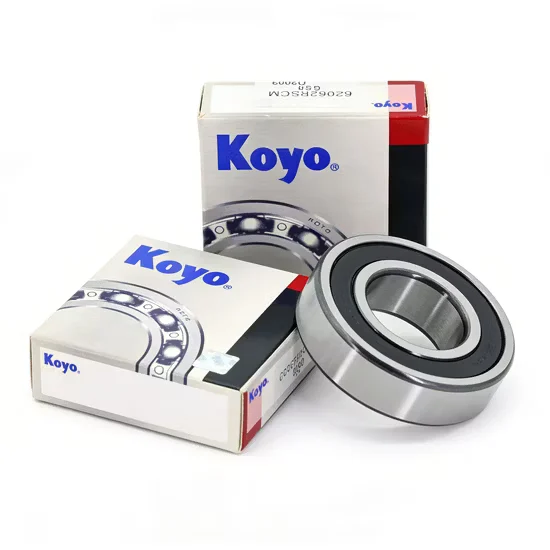
Deep Groove Ball Bearings
Koyo 6003 6205 6301 6004 Sealed Deep Groove Ball Bearing for Automotive Aftermarket
View Product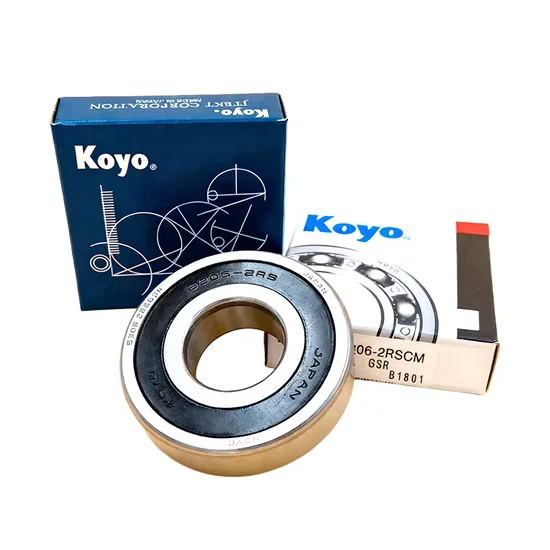
Deep Groove Ball Bearings
6203/6204/6205 Deep Groove Ball Bearing for Generator Equipment
View Product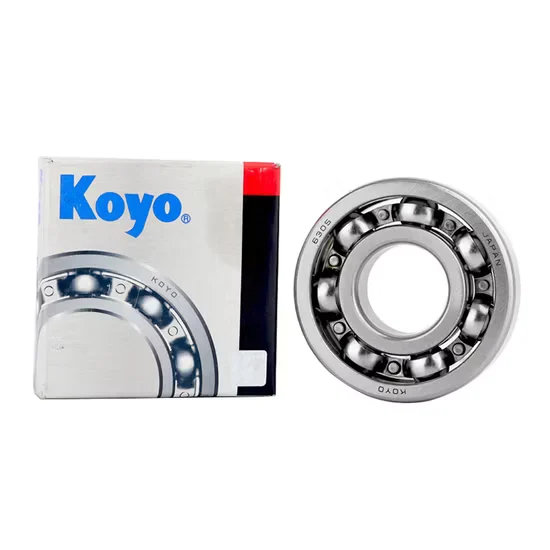
Deep Groove Ball Bearings
KOYO Deep Groove Ball Bearings 6201 6202 6203 6204 6205 Zz 2RS C3
View Product
Tapered Roller Bearings
P5 Koyo 33010 30211 33110 32307 33208 Tapered Roller Bearing for Motor Auto Pump
View ProductKeep reading
More bearing selection guides for repair shops
Practical guides from KOYO Bearing Supplier on identifying Koyo / JTEKT bearings for farm machinery, construction equipment and power transmission repairs.
 Brands & Alternatives
· 7 min read
Koyo Automotive Bearings Wholesale Supplier for Global Bulk Orders
Master global sourcing of Koyo automotive bearings by solving mixed-brand customs risks and verifying authenticity beyond packaging. Learn to validate technical specs, select reliable…
Read the Guide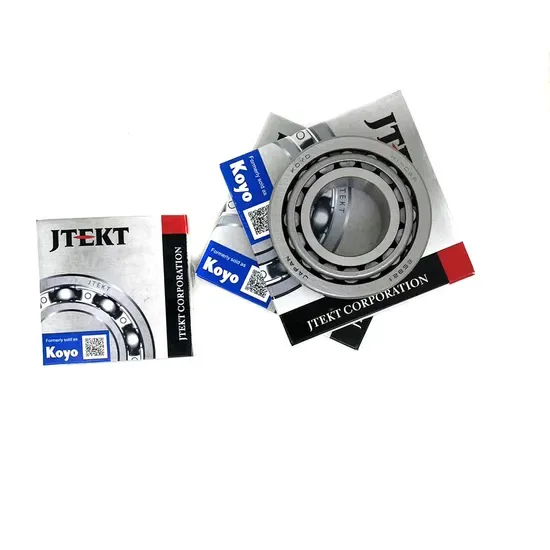 Brands & Alternatives
· 6 min read
Premium vs Economy Motorcycle Bearings: Wholesale Supplier for Bulk Orders
Choosing between premium vs economy motorcycle bearings requires analyzing total cost of ownership rather than just upfront price. Economy options often fail under heavy…
Read the Guide Brands & Alternatives
· 8 min read
OE Koyo vs Aftermarket Box: Differences for Wholesale Buyers
Understand the critical OE Koyo vs Aftermarket Box differences to avoid severe customs delays and terminal rejections in strict markets. Original packaging features holographic…
Read the Guide
Bearing enquiry
Send your machine details. Get a written Koyo / JTEKT quote.
KOYO Bearing Supplier quotes a single bearing position or every bearing in an assembly on one enquiry, matched to your machine model and application, with model, quantity, price, lead time and quote validity in writing.
- WhatsApp+1 (702) 981-5880
- Emailinfo@koyoome.com
- Address8 Research Drive, Greenville, SC 20627, USA
"When a Koyo bearing failed on a harvest machine during the season, we needed a replacement urgently. The supplier identified the correct Koyo reference, shipped same-day, and the machine was back in the field within the day."

Request a Bearing Quote
Tell us the machine and the bearing position. Photos of the markings can follow on WhatsApp.