
Koyo Alternator Bearings Wholesale Supplier Bulk OEM
Standard deep-groove ball bearings are not universally optimal for alternators.
Selecting genuine Koyo alternator bearings requires matching specific bearing types and seal designs to exact operating temperatures and dust levels, rather than defaulting to standard configurations. Premature failure in high-temperature and dusty conditions is often a result of mismatched grease thermal limits and internal clearance, not manufacturing defects.
I still remember the humidity in Lagos hitting me like a physical wall. The air was thick with red dust from the nearby construction sites. I had just delivered a bulk order of what I thought were perfect standard Koyo generator bearings for a backup power project. The client, a regional distributor supplying critical infrastructure, needed reliable units fast. I followed the usual playbook: match the part number, check the brand authenticity, and ship. It seemed straightforward. But within months, the phones started ringing. Not with praise, but with angry reports of seized rotors and burned stators. The bearings hadn’t just failed; they had disintegrated. The high ambient heat had dried out the standard grease, and the fine abrasive dust had bypassed the inadequate seals. That batch didn’t just cost me the tail payment; it cost me the trust of a key partner in West Africa. I learned the hard way that a part number is not a specification.
This experience shifted my entire approach to sourcing. Now, when clients ask for a quote, I don’t just look at the code. I ask about the environment. Is it a dusty mine in Chile? A humid coastal plant in Southeast Asia? Or a high-speed industrial setup in Europe? The answer dictates whether you need a C3 clearance, a high-temperature grease fill, or a robust 2RS seal. As a Koyo alternator bearings wholesale supplier bulk OEM partner, we see too many distributors treat these components as commodities. They are not. They are precision-engineered solutions to specific physical stresses.
Why Standard Koyo Bearings Fail in Generators?
Thermal seizure is rarely a material defect; it is almost always a specification mismatch.
Most field failures stem from using standard open or lightly sealed bearings in environments that demand specialized thermal management. When an alternator runs, it generates internal heat. If the ambient temperature is already high, the bearing housing becomes a pressure cooker. Standard grease, designed for moderate conditions, breaks down. It loses its viscosity, separates from the thickener, and eventually turns into a dry, gummy residue. Without lubrication, metal grinds against metal. The friction spikes, the temperature rises further, and the bearing seizes. In severe cases, this locks the rotor, causing catastrophic electrical failure.
Another silent killer is dust. In open or semi-open installations, airborne particles find their way into the bearing raceway. Even microscopic sand or silica acts like lapping compound. It wears down the polished surfaces of the balls and races, creating roughness that increases vibration and heat. This abrasive wear significantly reduces lifespan compared to properly sealed types. I have seen bearings that looked new on the outside but were completely scored on the inside after just a few hundred hours in a sandy environment.
The third factor is internal clearance. Bearings expand when they heat up. If you use a standard C2 clearance in a high-heat application, the inner ring expands more than the outer ring because it is mounted on the hot shaft. This eliminates the running clearance, preloading the bearing. The result is immediate overheating and rapid failure. Selecting the right clearance, such as C3 or C4, allows for this thermal expansion without inducing destructive preload.
Understanding these failure modes is crucial for any buyer. It explains why a cheaper initial bearing cost often leads to massive generator replacement expenses. The savings on the component are negligible compared to the downtime and repair costs of a failed alternator. This is why technical selection support is vital. We do not just ship boxes; we help verify that the spec matches the site.
Koyo Alternator Bearing Specification Matrix
Choosing the right variant requires comparing seal integrity and grease stability, not just dimensions.
To avoid the pitfalls mentioned above, buyers must move beyond the basic part number. The following matrix highlights the critical differences between standard variants and those suited for harsh environments. Note that “standard” refers to typical open or ZZ-shielded units with general-purpose grease, while “high-performance” variants utilize specialized seals and high-temperature lubricants.
| Feature | Standard Variant | High-Temp / Harsh Environment Variant |
|---|---|---|
| Seal Type | Open or Metal Shield (ZZ) | Rubber Contact Seal (2RS) or Hybrid |
| Grease Type | General Purpose Lithium | High-Temperature Synthetic or Polyurea |
| Internal Clearance | C2 or Normal (CN) | C3 or C4 for Thermal Expansion |
| Dust Protection | Low (Vulnerable to ingress) | High (Resistant to fine particulates) |
| Operating Temp Range | Moderate | Extended High-Temperature Capability |
| Application Suitability | Clean, Controlled Environments | Dusty, Hot, or Uncontrolled Sites |
A recent case involved a mining operator in Central Asia. They were experiencing frequent alternator failures in their heavy-duty trucks. The initial supply chain provided standard ZZ-shielded bearings. The dust in the mine was fine and pervasive. The shields offered little protection, and the dust contaminated the grease. After switching to 2RS-sealed Koyo alternator bearings with a higher grade of synthetic grease, the failure rate dropped noticeably. The rubber seals provided a physical barrier that the metal shields could not.
However, seals are not a universal fix. In very high-speed applications, contact seals can generate additional heat due to friction. In such cases, a non-contact seal design or a specialized shield with enhanced labyrinth protection might be required. This is where technical consultation becomes invaluable. Blindly upgrading to 2RS seals without considering speed limits can cause new problems. We analyze the operating RPM and load profile to ensure the seal type does not compromise performance.
When sourcing in bulk, it is tempting to standardize on one type to simplify inventory. But this strategy fails in diverse operational environments. A mixed-batch consolidation approach allows distributors to stock the right variant for each customer segment. We facilitate this by holding massive spot inventory covering thousands of standard and special part numbers, enabling flexible MOQs from single-unit emergency spares to full container loads.
How to Verify Genuine Koyo Bearings?
Counterfeit bearings often look identical to the naked eye but fail under load due to substandard steel and poor heat treatment.
The market is flooded with fake bearings that carry the Koyo logo. These counterfeits use lower-grade steel, have inconsistent hardness, and lack the precise geometry of genuine products. They may pass a visual inspection but will fail prematurely under stress. For distributors and OEMs, accepting counterfeit goods risks reputation damage and costly warranty claims. Verifying authenticity is not optional; it is a core part of risk management.
First, check the packaging. Genuine Koyo bearings come in high-quality boxes with clear, sharp printing. The font should be consistent, and the holographic labels, if present, should show distinct color shifts. Counterfeit boxes often have blurry text, misspelled words, or flimsy cardboard. However, packaging alone is not proof, as fakes can reuse genuine boxes.
Second, inspect the bearing itself. Look for the laser-etched or stamped markings on the side face. They should be clean, deep, and evenly spaced. Rough or shallow markings are a red flag. Check the surface finish of the races and balls. Genuine bearings have a mirror-like polish. Counterfeits may have visible tool marks or a dull finish.
Third, and most importantly, require traceability documentation. Genuine products come with certificates of origin and quality assurance documents that link the batch to the manufacturer’s production facilities. We provide complete traceability documentation for every shipment. This paper trail is your insurance policy. If a problem arises, you can trace it back to the source. Self-reported authenticity from unknown suppliers is not enough. You need verifiable proof.
A European wind farm operator once received a shipment of bearings that looked perfect. The price was too good to be true. When they installed them, several units failed within weeks. Laboratory analysis revealed the steel had high inclusion density, leading to early fatigue cracking. They had no traceability docs from the supplier. Switching to a verified channel with full documentation eliminated this risk. We ensure that all our Koyo alternator bearings are sourced through authorized channels, guaranteeing batch-to-batch consistency and material certification.
Sourcing Strategy for Bulk Orders
Balancing MOQ, lead time, and mixed-batch consolidation is key to maintaining inventory efficiency.
For regional distributors and OEMs, managing inventory is a constant juggling act. Ordering too much ties up capital; ordering too little risks stockouts during critical maintenance windows. The traditional model of buying large quantities of a single SKU is inefficient for markets with diverse needs. A more agile approach involves mixed-batch consolidation.
This strategy allows buyers to combine different bearing types, sizes, and brands into a single shipment. Instead of waiting to fill a container with one part number, you can mix Koyo alternator bearings with other industrial components. This reduces lead times and improves cash flow. It also enables smaller MOQs for specialized items, making it feasible to stock high-performance variants for niche applications without overcommitting.
We support this model with our massive spot inventory and global shipping consolidation services. Whether you need a few hundred units for a urgent MRO job or a full container for seasonal stocking, we can tailor the shipment to your needs. Our competitive sourcing cost compared to direct official brand channels makes this model financially viable for distributors who need to maintain healthy margins.
Technical selection support is another critical component of a smart sourcing strategy. Many buyers lack the in-house expertise to match bearings to harsh environments. We provide engineering technical support for model selection, helping you choose the right clearance, seal, and grease for your specific application. This reduces the risk of returns and builds trust with your end customers. When you sell a solution that works, you secure repeat business.
Consider a distributor in Southeast Asia serving both automotive repair shops and industrial factories. Their needs vary wildly. By using a mixed-batch approach, they can stock standard automotive bearings alongside high-temp industrial Koyo alternator bearings. This flexibility allows them to respond quickly to diverse market demands without maintaining excessive inventory levels. It is a strategic advantage in competitive emerging markets.
Conclusion
Genuine Koyo alternator bearings require precise specification matching, not just part number fulfillment.
Selecting the right bearing involves understanding the interplay of temperature, dust, and speed. Standard options often fail in harsh conditions due to inadequate grease and clearance. Verification of authenticity through traceability docs is essential to avoid counterfeit risks. Strategic sourcing via mixed-batch consolidation offers flexibility and cost efficiency for global distributors.
Mentioned in this article
Koyo / JTEKT bearings from this guide
These are the Koyo / JTEKT bearing types discussed above. Open any product to check its details, or quote it together with the rest of your repair.

Tapered Roller Bearings
OEM 30204 30205 30206 30207 30208 32008X 32010X Tapered Roller Bearing
View Product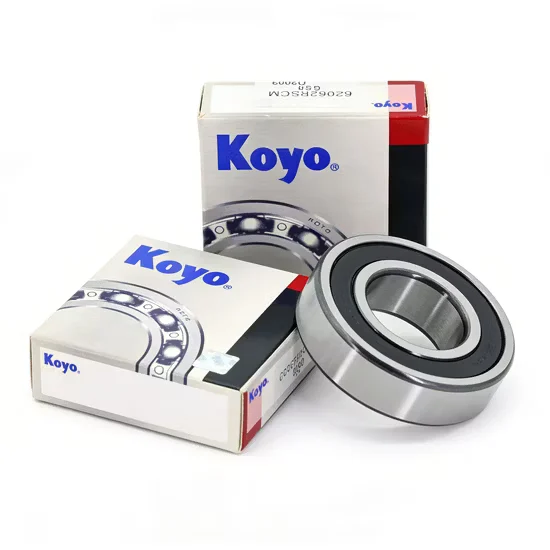
Deep Groove Ball Bearings
Koyo 6003 6205 6301 6004 Sealed Deep Groove Ball Bearing for Automotive Aftermarket
View Product
Deep Groove Ball Bearings
Koyo 6206 Deep Groove Ball Bearing for Pump and Fan System
View Product
Deep Groove Ball Bearings
Koyo 6013 Deep Groove Ball Bearing 65x100x18mm Oil-Resistant for Hydraulic Tools
View ProductKeep reading
More bearing selection guides for repair shops
Practical guides from KOYO Bearing Supplier on identifying Koyo / JTEKT bearings for farm machinery, construction equipment and power transmission repairs.
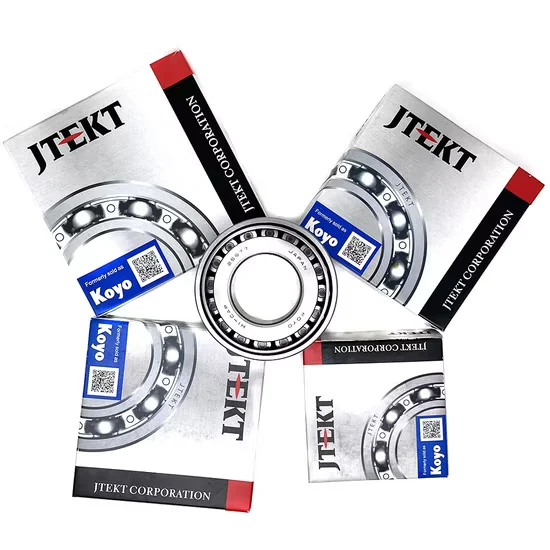 Buying Guide
· 7 min read
Koyo Auto Bearings Wholesale Supplier & Bulk Quote
Request a Quote for Koyo Auto Bearings that accounts for total landed cost, not just FOB price. Optimize margins through mixed-container consolidation and ensure…
Read the Guide Buying Guide · 7 min read
Koyo Auto Bearings Wholesale Supplier for Parts Stores
Stocking Koyo auto bearings requires strict verification of suffix codes and traceability to prevent costly assembly failures. Learn essential packaging checks and cross-brand alternatives…
Read the Guide Buying Guide
· 7 min read
Fake Auto Bearings: Neutral Buyer Checks Wholesale Supplier
Master Fake Auto Bearings Neutral Buyer Checks by shifting focus from packaging to internal physical inspections and traceability. Detect counterfeits through acidic rust oil…
Read the Guide
Bearing enquiry
Send your machine details. Get a written Koyo / JTEKT quote.
KOYO Bearing Supplier quotes a single bearing position or every bearing in an assembly on one enquiry, matched to your machine model and application, with model, quantity, price, lead time and quote validity in writing.
- WhatsApp+1 (702) 981-5880
- Emailinfo@koyoome.com
- Address8 Research Drive, Greenville, SC 20627, USA
"When a Koyo bearing failed on a harvest machine during the season, we needed a replacement urgently. The supplier identified the correct Koyo reference, shipped same-day, and the machine was back in the field within the day."

Request a Bearing Quote
Tell us the machine and the bearing position. Photos of the markings can follow on WhatsApp.