
Kit vs Loose Bearing Margins: Wholesale Supplier for Bulk Orders
High gross margins on bearing kits are often an illusion created by hidden accessory and packaging costs.
The real profit difference between purchasing a complete bearing kit versus loose bearings lies not in the unit price of the rolling element itself, but in the total landed cost structure. While kits offer convenience and perceived value through bundled seals and grease, they frequently carry invisible overheads in wooden crate packaging, non-standard accessory sourcing, and inefficient freight volume utilization. For regional distributors and wholesalers, loose bearings typically deliver superior net profitability when ordered in bulk, as they allow for economies of scale in logistics and eliminate the margin erosion caused by low-value, high-volume kit components. True financial optimization requires calculating the total landed cost rather than relying on ex-works price comparisons.
I still remember the sting of a specific order destined for a distributor in the Middle East. On paper, the hub bearing kits looked like a goldmine. The markup on the assembled unit was substantial compared to the raw component cost. However, once the shipment arrived at the port, the reality hit hard. The wooden crates required for ocean freight protection added a significant line item that had been underestimated. Worse, the pre-installed seals and grease, which seemed like value-adds, actually introduced quality control risks and storage complexities that led to spoilage before resale. The accessories alone consumed a double-digit percentage of the projected net margin. That experience shifted my focus entirely from simple unit pricing to a rigorous analysis of every gram and cubic meter in the supply chain.
Understanding this distinction is critical for any serious Wholesale Supplier for Bulk Orders. The market is flooded with buyers who see a higher sticker price on a kit and assume higher profit, only to find their warehouse space clogged with packaging waste and their cash flow tied up in slow-moving accessory inventory.
What is the real margin difference between bearing kits and loose bearings?
The fundamental difference is structural. Kits sell convenience; loose bearings sell volume. When you buy a loose bearing, you are paying primarily for the precision-engineered steel ring and rolling elements. When you buy a kit, you are paying for the bearing, plus the labor to assemble it, plus the seal, plus the grease, plus the box, plus the risk management for those additional parts.
For a Wholesale Supplier for Bulk Orders, the margin on loose bearings is thinner per unit but scales efficiently. You can stack thousands of loose bearings on a single pallet, optimizing container space. Kits, however, often come in individual boxes or smaller multi-packs that create air gaps and irregular shapes, leading to poor container utilization. This inefficiency translates directly into higher freight costs per unit.
Consider the procurement perspective. A buyer sourcing for an automotive aftermarket network needs speed and compatibility. A kit promises a “one-box” solution. But if that box contains a seal that degrades over time or grease that separates in high heat, the entire kit becomes unsellable. With loose bearings, the distributor can source high-quality seals and grease locally or from specialized partners, maintaining control over the final assembly quality and cost. This flexibility allows for better margin protection.
In many cases, the accessory cost in a kit can represent a significant portion of the total bill of materials, yet these accessories often have lower resale value and higher failure rates than the bearing itself. By decoupling them, a Wholesale Supplier for Bulk Orders can optimize each component of the supply chain independently.
What hidden costs destroy kit profitability?
The most dangerous costs are the ones you do not see on the initial invoice. These are the silent killers of kit profitability: packaging, accessory loss, and handling complexity.
First, packaging. Bearings are heavy and dense. Kits are bulky and fragile. To protect the seals and prevent the grease from leaking during transit, kits often require more robust packaging, such as wooden crates or reinforced cardboard with internal dividers. This adds weight and volume without adding value to the end-user. In international shipping, where freight is calculated by volumetric weight or actual weight (whichever is higher), this extra bulk is a direct cost penalty.
Second, accessory loss. Seals and grease are consumables. They have shelf lives. If a kit sits in a warehouse for months, the grease may dry out or the rubber seals may harden. A loose bearing, properly stored, has a much longer shelf life. When a kit fails due to a degraded seal, the entire unit is often discarded or returned, resulting in a total loss of the bearing’s value as well. This risk is borne by the distributor.
Third, handling complexity. Picking and packing kits takes more time than picking loose bearings. Warehouse staff must handle larger, irregularly shaped boxes. This increases labor costs per order. For a high-volume operation, these small inefficiencies add up to a significant operational burden.
A Latin American auto aftermarket client once shared their data. They switched from importing fully assembled wheel bearing kits to sourcing loose tapered roller bearings and sourcing seals locally. The result was a noticeable reduction in per-unit freight costs and customs duties, as the declared value of the loose bearings was lower and the shipping density was higher. The local sourcing of seals also allowed them to adjust to specific climate conditions, reducing warranty claims.
For a Wholesale Supplier for Bulk Orders, understanding these hidden costs is essential to advising clients correctly. It is not just about selling the product; it is about protecting the client’s bottom line.
How do loose bearings achieve scale advantages?
Loose bearings thrive on volume. The economics of bulk ordering are straightforward: the more you buy, the lower the per-unit cost, not just in manufacturing but in logistics.
When you order loose bearings in bulk, you can consolidate them into standard pallets or crates. This maximizes the use of container space. A twenty-foot container can hold significantly more loose bearings by weight and volume than it can bear ing kits. This efficiency lowers the freight cost per unit dramatically.
Furthermore, customs clearance for loose bearings is often simpler. They are classified under specific harmonic system codes that are well-understood by customs brokers. Kits, which contain multiple items (bearing, seal, grease, bolts), can sometimes face classification ambiguities or higher duty rates depending on the country of import. This regulatory friction adds time and cost to the supply chain.
Another advantage is inventory flexibility. With loose bearings, a distributor can mix and match brands and sizes to meet specific customer demands. They are not locked into a specific kit configuration that may not fit all applications. This flexibility reduces the risk of dead stock.
An African MRO buyer recently highlighted this benefit. By consolidating mixed containers of loose bearings from various brands, they were able to avoid the high surcharges associated with less-than-container-load (LCL) shipping that often plague kit imports. The ability to fill a full container with high-density loose bearings meant they paid a flat freight rate, spreading the cost over thousands of units.
For a Wholesale Supplier for Bulk Orders, this scale advantage is a key selling point. It allows clients to compete more effectively in their local markets by offering lower prices or higher margins.
How to calculate the true landed cost for your market?
Calculating the true landed cost requires a holistic approach. It is not enough to look at the ex-works price. You must account for every cost incurred from the factory floor to your warehouse door.
Start with the unit price. Then, add the cost of accessories if you are building your own kits. Include the cost of packaging materials. Next, calculate the freight cost based on the actual weight and volumetric weight of the shipment. Do not forget insurance, customs duties, and taxes. Finally, add the cost of handling and storage.
Use a Total Landed Cost (TLC) model. This model combines all these elements into a single figure per unit. Compare the TLC of a kit versus the TLC of a loose bearing plus locally sourced accessories. In many cases, the loose bearing option will emerge as the more profitable choice, especially for high-volume items.
Consider the accessory-to-bearing cost ratio. If the accessories represent a large portion of the kit’s cost, but contribute little to its performance or longevity, it may be more economical to source them separately. Also, analyze the freight volume weight versus actual weight. Kits often have a higher volumetric weight due to packaging, leading to higher freight costs.
A practical step is to request detailed packing lists from your supplier. Check the dimensions and weight of both loose bearings and kits. Calculate the number of units that fit in a standard container. Divide the total freight cost by the number of units to get the freight cost per unit. This simple calculation can reveal significant savings.
For a Wholesale Supplier for Bulk Orders, providing this level of analytical support builds trust and long-term partnerships. It shows that you are invested in your client’s success, not just your own sales.
Conclusion
Profitability is determined by total landed cost, not just unit price.
While bearing kits offer convenience, their hidden costs in packaging, accessories, and logistics often erode margins. Loose bearings, when sourced in bulk, provide superior scalability and cost efficiency. By focusing on the true landed cost and leveraging the scale advantages of loose components, distributors can maximize their resale margins and build a more resilient supply chain. Choosing the right Wholesale Supplier for Bulk Orders means partnering with one who understands these nuances and can help you navigate the complex economics of global bearing trade.
Mentioned in this article
Koyo / JTEKT bearings from this guide
These are the Koyo / JTEKT bearing types discussed above. Open any product to check its details, or quote it together with the rest of your repair.
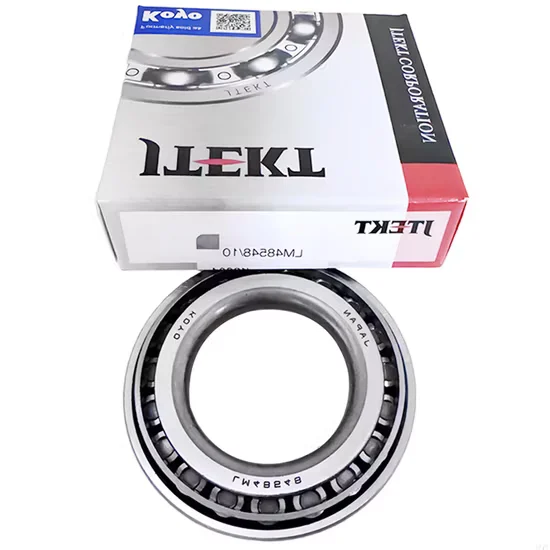
Tapered Roller Bearings
Genuine KOYO 32007 Tapered Roller Bearing Wholesale Supplier
View Product
Tapered Roller Bearings
Genuine KOYO 32006 Taper Roller Bearing Wholesale Supplier
View Product
Cylindrical Roller Bearings
Koyo NSK N408e Cylindrical Roller Bearing Genuine Wholesale Supplier
View Product
Cylindrical Roller Bearings
Koyo N2305e Cylindrical Roller Bearing Genuine Wholesale Supplier
View ProductKeep reading
More bearing selection guides for repair shops
Practical guides from KOYO Bearing Supplier on identifying Koyo / JTEKT bearings for farm machinery, construction equipment and power transmission repairs.
Procurement & Trade FAQs · 7 min read
Rebuild Kit Supply for Transmission Shops: Wholesale Bearing Supplier
Transmission rebuild kit supply depends on accurate HS codes and detailed BOMs to prevent customs delays. Learn how mixed bearing consolidation and robust packaging…
Read the Guide Procurement & Trade FAQs
· 7 min read
Genuine Bearing Stock Programs for Motorcycle Dealers: Wholesale Supplier
Optimize Motorcycle Dealer Stock Programs by balancing cross-brand bearing equivalency, genuine traceability, and flexible MOQs to prevent costly warranty claims. Verify dimensional tolerance and…
Read the Guide Procurement & Trade FAQs · 7 min read
Express Shipping for Urgent Bearing Repairs: Global Wholesale Supplier
Master express shipping for urgent bearing replacements by prioritizing customs clearance over flight speed to eliminate port bottlenecks. Optimize volumetric weight, consolidate mixed-brand orders,…
Read the Guide
Bearing enquiry
Send your machine details. Get a written Koyo / JTEKT quote.
KOYO Bearing Supplier quotes a single bearing position or every bearing in an assembly on one enquiry, matched to your machine model and application, with model, quantity, price, lead time and quote validity in writing.
- WhatsApp+1 (702) 981-5880
- Emailinfo@koyoome.com
- Address8 Research Drive, Greenville, SC 20627, USA
"When a Koyo bearing failed on a harvest machine during the season, we needed a replacement urgently. The supplier identified the correct Koyo reference, shipped same-day, and the machine was back in the field within the day."

Request a Bearing Quote
Tell us the machine and the bearing position. Photos of the markings can follow on WhatsApp.