
Honda Fit & Jazz Bearings: Genuine Wholesale Supplier
Cheap bearings do not save money; they destroy workshop reputations.
Sourcing genuine, traceable wheel bearings for Honda Fit and Jazz prevents premature failures caused by incorrect clearance and counterfeit materials, ensuring aftermarket supply chains remain profitable and reliable.
The first time a client from Dubai sent me photos of a shattered cage from a Honda Fit wheel bearing, I knew exactly what had happened. The vehicle had barely covered twenty thousand kilometers, yet the noise was unbearable. When we dissected the failed unit, the internal clearance was completely off-spec. It was a high-quality fake, stamped with a premium brand logo but lacking the metallurgical integrity of the original. In the automotive aftermarket, especially for high-volume models like the Honda Fit and Jazz, the temptation to cut costs on chassis components is strong. However, the hidden cost of warranty claims and lost customer trust far outweighs the initial savings. As a supplier based in Qingdao, I have seen countless repair groups struggle with this exact dilemma. The solution lies not in finding the cheapest option, but in securing a Honda Fit and Jazz wheel bearings supplier that prioritizes traceability and OEM-equivalent performance.
Transitioning from reactive damage control to proactive quality assurance requires a deep understanding of why these components fail and how to identify authentic parts in a market flooded with imitations.
Why Do Honda Fit/Jazz Wheel Bearings Fail Prematurely?
Incorrect internal clearance and substandard materials are the primary drivers of early bearing failure in Honda Fit and Jazz applications.
Wheel bearings are precision components designed to operate within specific tolerance bands. For the Honda Fit and Jazz, which share similar platform architectures, the bearing units must handle radial and axial loads while maintaining minimal friction. Counterfeit or low-quality aftermarket bearings often fail because manufacturers ignore the critical importance of internal clearance.
In my experience, the most common failure mode in these vehicles is cage fragmentation. This occurs when the bearing is subjected to thermal expansion during normal driving, but the initial cold clearance is too tight. The rolling elements bind, generating excessive heat, which further expands the metal until the cage, often made from inferior steel or plastic in fake parts, shatters. A genuine bearing uses controlled nitrogen infusion in its steel production to enhance durability and maintains precise micron-level precision in its grinding processes.
Consider a case where a regional distributor in Southeast Asia reported a spike in returns for Honda Jazz hub bearing genuine replacements. Upon investigation, we found that the batch in question had inconsistent hardness levels across the raceways. While they looked identical to the naked eye, the lack of uniform heat treatment meant that some bearings wore out within months. This is not a manufacturing defect in the design, but a failure in quality control typical of non-traceable sources. By switching to a verified Honda Fit and Jazz wheel bearings supplier that provides material certification, such issues can be eliminated.
Understanding the technical reasons behind failure allows buyers to ask the right questions when sourcing. It is not enough to check the part number; one must verify the engineering integrity behind the component.
How to Identify Genuine vs. Counterfeit Bearings?
Visual inspection alone is insufficient; traceability documentation is mandatory for verifying authenticity.
The sophistication of counterfeit auto parts has reached a point where packaging and even laser-etched logos can be replicated with high accuracy. Relying solely on visual cues is a risky strategy for any serious aftermarket supplier. To truly distinguish genuine products from fakes, one must implement a multi-layered verification process.
First, examine the packaging and labeling. Genuine bearings from brands like SKF, NSK, or Koyo come with specific security features, including holographic seals and unique batch numbers that can be cross-referenced with the manufacturer’s database. However, the most reliable method is to request traceability documents. These documents should link the specific batch of bearings to the original manufacturing facility, providing details on material origin and quality control checks.
A US buyer once shared a story about a shipment of Honda Fit aftermarket bearing supplier stock that looked perfect. The boxes were pristine, and the bearings felt smooth. Yet, after installation, several units developed noise within weeks. When we analyzed the remaining stock, we noticed slight variations in the seal rubber composition. Genuine seals use specific compounds resistant to ozone and heat, whereas counterfeits often use cheaper rubber that degrades quickly. Without the accompanying technical datasheets and customs documentation proving the source, it is impossible to guarantee this level of quality.
For workshops and distributors, implementing a strict incoming quality control protocol is essential. This includes checking the part number against OEM cross-reference lists and verifying the physical dimensions with precision calipers. Any deviation, no matter how small, should trigger a rejection. Partnering with a Honda Fit and Jazz wheel bearings supplier who provides full customs docs and traceability guarantees ensures that every unit sold is authentic.
Trust is built on transparency. By demanding and verifying documentation, buyers protect their businesses from the financial and reputational risks associated with counterfeit parts.
What Are the Best Bearing Brands for Honda Aftermarket?
SKF, NSK, and Koyo offer optimal OEM-equivalent performance for Honda Fit and Jazz applications.
When sourcing replacements for Honda vehicles, selecting the right brand is crucial. While there are many manufacturers in the market, only a few consistently meet the rigorous standards required for Japanese compact cars. SKF, NSK, and Koyo are widely recognized for their ability to produce bearings that match or exceed original equipment specifications.
SKF is known for its advanced sealing technologies, which are particularly important for wheel bearings exposed to water and road debris. Their bearings often feature integrated sensor rings for ABS systems, ensuring compatibility with modern Honda Fit models. NSK, being a Japanese manufacturer, has a deep understanding of the specific requirements of Honda platforms. Their bearings are engineered to provide low noise and high durability, making them a preferred choice for many OEMs. Koyo, part of the JTEKT corporation, also supplies directly to many Japanese automakers, offering a high level of reliability and precision.
It is important to note that even premium brands are targets for counterfeiting. Therefore, the brand name alone is not a guarantee of quality. The key is to source these brands through authorized or highly reputable channels. A reliable Honda Fit and Jazz wheel bearings supplier will stock these premium brands and provide evidence of their authenticity. This includes batch-level consistency checks and material certifications that prove the bearings meet the required P0 or P4 precision grades.
In a recent project for a European repair group, we consolidated a mixed container of SKF and NSK bearings for various Honda models. The feedback was overwhelmingly positive, with a noticeable drop in warranty claims compared to their previous supplier. This success was not due to luck, but to the strict vetting of the supply chain and the selection of brands with proven track records.
Choosing the right brand is only half the battle; ensuring that the brand is genuine through a trusted supplier is the other half. This dual approach maximizes vehicle safety and customer satisfaction.
How to Optimize Bulk Sourcing for Repair Workshops?
Mixed-brand consolidation with full customs documentation reduces lead times and inventory costs.
For repair workshops and regional distributors, managing inventory for multiple car models can be challenging. Ordering full containers of a single SKU is often impractical due to storage limitations and cash flow constraints. The solution is mixed-brand consolidation, which allows buyers to combine different bearing types and brands into a single shipment.
This approach offers several advantages. First, it reduces the minimum order quantity (MOQ) barriers, enabling smaller workshops to access premium brands without committing to large volumes. Second, it simplifies logistics by consolidating shipments from multiple manufacturers into one container, lowering freight costs per unit. Third, it ensures a diverse stock that can meet varied customer demands, from standard replacements to high-performance upgrades.
However, mixed consolidation requires careful planning. Each item must be properly documented to avoid customs delays. A professional Honda Fit and Jazz wheel bearings supplier will handle the complexity of combining different SKUs, ensuring that all necessary paperwork, including certificates of origin and quality inspections, is accurate and complete.
I recall working with a client in Latin America who needed a wide variety of bearings for their expanding service network. By consolidating their order with other clients, we were able to ship a full container containing SKF, FAG, and NSK bearings, along with domestic Chinese lines for less critical applications. This strategy allowed them to maintain competitive pricing while ensuring quality for critical components like Honda Fit wheel bearing replacement parts. The flexibility of this model supports both emergency spare-part orders and long-term inventory building.
Optimizing sourcing is not just about cost; it is about creating a resilient supply chain that can adapt to market changes. Mixed consolidation provides the agility needed to thrive in the competitive aftermarket sector.
Conclusion
Genuine parts protect your business from the hidden costs of failure.
Sourcing authentic wheel bearings for Honda Fit and Jazz models is a strategic decision that impacts both operational efficiency and brand reputation. By understanding the technical causes of failure, verifying authenticity through traceability, selecting premium brands, and optimizing logistics through mixed consolidation, aftermarket suppliers can build a sustainable and profitable business. The key is to partner with a Honda Fit and Jazz wheel bearings supplier who values transparency and quality as much as you do.
Mentioned in this article
Koyo / JTEKT bearings from this guide
These are the Koyo / JTEKT bearing types discussed above. Open any product to check its details, or quote it together with the rest of your repair.

Cylindrical Roller Bearings
Koyo NSK N408e Cylindrical Roller Bearing Genuine Wholesale Supplier
View Product
Cylindrical Roller Bearings
Koyo N2305e Cylindrical Roller Bearing Genuine Wholesale Supplier
View Product
Tapered Roller Bearings
BDL 30204 Tapered Roller Bearing Genuine Wholesale Supplier
View Product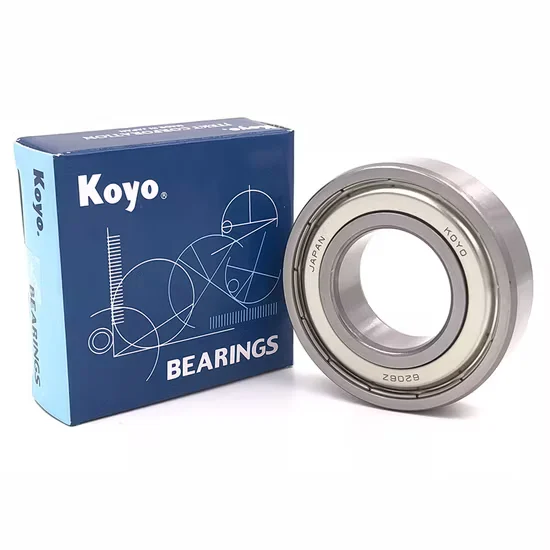
Deep Groove Ball Bearings
NSK 627 627-2Z 627-2RS Deep Groove Ball Bearing Genuine Wholesale Supplier
View ProductKeep reading
More bearing selection guides for repair shops
Practical guides from KOYO Bearing Supplier on identifying Koyo / JTEKT bearings for farm machinery, construction equipment and power transmission repairs.
 Applications & Industries
· 7 min read
Small Engine Crankshaft Bearings Wholesale Supplier
Selecting the correct Bearings in Small Engine Crankshafts requires strict clearance matching and material verification rather than simple part number lookup. Standard units often…
Read the Guide Applications & Industries · 7 min read
Forklift Mast Bearings Wholesale Supplier | Genuine SKF FAG NSK Bulk
Selecting forklift mast bearings requires matching groove profiles and clearances to harsh environments to prevent premature seizure. Sourcing only genuine SKF, FAG, and NSK…
Read the Guide Applications & Industries · 6 min read
Outboard Lower Unit Bearings Wholesale Supplier
Prevent catastrophic gearcase failures by selecting Bearings in Outboard Lower Units that balance high-speed load capacity with strict corrosion resistance. Learn why standard tapered…
Read the Guide
Bearing enquiry
Send your machine details. Get a written Koyo / JTEKT quote.
KOYO Bearing Supplier quotes a single bearing position or every bearing in an assembly on one enquiry, matched to your machine model and application, with model, quantity, price, lead time and quote validity in writing.
- WhatsApp+1 (702) 981-5880
- Emailinfo@koyoome.com
- Address8 Research Drive, Greenville, SC 20627, USA
"When a Koyo bearing failed on a harvest machine during the season, we needed a replacement urgently. The supplier identified the correct Koyo reference, shipped same-day, and the machine was back in the field within the day."

Request a Bearing Quote
Tell us the machine and the bearing position. Photos of the markings can follow on WhatsApp.