
Gulf Auto Parts Wholesalers: Genuine Bearings Bulk Supplier
Lowest unit price is a trap when customs rejects the container.
Gulf auto parts wholesalers require strict traceability and mixed-brand consolidation to balance bulk pricing with genuine quality, avoiding costly customs rejections. Sourcing from verified auto parts bearing suppliers Gulf markets demand involves more than just finding the cheapest quote; it requires ensuring every batch carries mill certificates and correct clearance specifications for high-temperature environments. Without these documents, even genuine bearings face detention at ports like Jebel Ali or Dammam, turning marginal savings into significant losses through demurrage fees and rejected cargo.
I still remember the sting of watching a full container sit idle at the port because the clearance specs did not match the tropical climate requirements of the region. The bearings were physically sound, but the paperwork was thin, and the internal clearance was standard rather than the required C3 or C4. That experience reshaped how I approach every shipment destined for the Middle East. It is not enough to simply ship metal rings and balls; one must ship confidence in the form of verifiable data and appropriate technical selection.
Navigating the complexities of the aftermarket requires a partner who understands that a single missing certificate can halt an entire distribution chain. This guide breaks down the critical steps to secure genuine inventory, optimize container space with mixed brands, and ensure your products survive both the shipping journey and the harsh operating conditions of the Gulf.
Why Do Gulf Customs Reject Bearing Containers?
Lack of traceability and incorrect clearance specs are the primary triggers for rejection.
Customs authorities in the Gulf Cooperation Council (GCC) countries have tightened inspections on automotive parts to combat counterfeit goods. A container arriving without a clear chain of custody often faces intense scrutiny. If the supplier cannot provide original mill certificates or batch-specific traceability documents, officials may detain the cargo for verification. This process does not just delay delivery; it incurs daily storage fees that quickly erode profit margins.
Furthermore, technical mismatches lead to functional rejections by end-users, which indirectly affects future import approvals if complaints are filed. In the Gulf’s high-ambient-temperature environment, standard clearance bearings often fail prematurely due to thermal expansion. When workshops report widespread failures, distributors face reputational damage and potential regulatory reviews. Using auto parts bearing suppliers Gulf regions trust means ensuring that every item shipped matches the local environmental demands.
| Risk Factor | Consequence | Mitigation Strategy |
|---|---|---|
| Missing Mill Certificates | Cargo detention at port | Require batch-level traceability docs before shipping |
| Incorrect Clearance (C0/C2) | Premature failure in heat | Specify C3/C4 clearance for Gulf climates |
| Mixed Brand without List | Customs suspicion of counterfeits | Provide detailed packing list with brand breakdown |
| Poor Anti-Rust Packaging | Surface corrosion upon arrival | Use vacuum-sealed or vapor-corrosion-inhibitor packaging |
A distributor in Riyadh once faced a situation where a competitor’s low-cost shipment was held for weeks due to inconsistent branding on the boxes compared to the invoice. The lack of proper documentation raised red flags about authenticity. By contrast, shipments accompanied by complete origin docs and clear brand authorization letters clear customs significantly faster.
The key is proactive compliance. Do not wait for customs to ask for proof. Include the manufacturer’s certificate of analysis, the packing list with exact SKU counts, and the commercial invoice with harmonized system codes that precisely describe the goods. This transparency builds a track record of reliability with customs brokers, smoothing future imports.
How to Verify Genuine Bearings Before Shipping?
Require mill certificates and batch traceability docs from suppliers as a non-negotiable condition.
Verifying authenticity starts long before the container leaves the factory floor. Many distributors rely solely on the physical appearance of the packaging, but sophisticated counterfeits can mimic logos and box designs. The only reliable method is document-based verification linked to physical batch numbers. Each bearing should have a unique identifier that traces back to the production line.
When working with auto parts bearing suppliers Gulf markets depend on, ask for the original material certification from the steel producer and the final inspection report from the bearing manufacturer. These documents should match the batch numbers printed on the product labels. If a supplier hesitates or provides generic templates instead of specific batch data, it is a major warning sign. Genuine suppliers maintain rigorous records and can produce these documents within hours.
Consider the case of a buyer in Dubai who requested samples from three different sources. Two provided glossy brochures and vague “quality guaranteed” statements. The third provided a scanned copy of the heat treatment log and the final dimensional inspection report for the specific lot. The difference in professionalism was stark. The buyer chose the third option, and subsequent lab tests confirmed the material composition matched the certificates.
Technical verification also involves checking the manufacturing marks. Genuine bearings from brands like SKF, FAG, NSK, or TIMKEN have precise laser etching or stamping that is difficult to replicate perfectly. However, relying on visual checks alone is risky. Combining visual inspection with document verification creates a robust defense against fakes. This dual-layer approach ensures that the auto parts bearing suppliers Gulf wholesalers engage with are delivering true value, not just convincing replicas.
What is the Best Way to Consolidate Mixed Brands?
Combine deep-groove and tapered rollers by workshop demand to optimize container space.
Most workshops in the Gulf do not specialize in a single vehicle make or model. They need a broad range of bearings to service diverse fleets, from Toyota Hiluxes to heavy-duty Mercedes trucks. Ordering full containers of a single brand often leads to overstocking slow-moving SKUs while running out of high-turnover items. Mixed-brand consolidation allows distributors to tailor their inventory to actual market demand.
Working with experienced auto parts bearing suppliers Gulf partners enables this flexibility. Instead of filling a 20ft container with one brand’s entire catalog, you can select high-volume deep groove ball bearings from one premium brand and specialized tapered roller bearings from another. This strategy maximizes the utility of every cubic meter. It also reduces the risk of obsolescence, as you are stocking what sells, not just what is available in bulk.
| Bearing Type | Typical Application | Consolidation Benefit |
|---|---|---|
| Deep Groove Ball | Wheel hubs, alternators | High turnover, fits many models |
| Tapered Roller | Wheel ends, differentials | Heavy load capacity, brand-specific preference |
| Spherical Roller | Suspension, heavy trucks | Niche but critical for fleet maintenance |
| Needle Bearing | Transmissions, engines | Compact, high-density packing possible |
A repair shop network in Kuwait found that by mixing brands, they could reduce their total inventory holding cost while increasing service level availability. They sourced standard sizes from cost-effective reliable lines and high-stress application bearings from premium brands. This hybrid approach satisfied both budget-conscious customers and those demanding top-tier performance.
The challenge lies in managing the complexity of multiple part numbers and brands. A competent supplier provides a consolidated packing list that clearly separates each brand and SKU. This clarity helps in warehouse receiving and inventory management. It also simplifies the customs declaration process, as each item is accurately described. Choosing auto parts bearing suppliers Gulf distributors prefer means selecting those who have the logistical capability to handle mixed loads without error.
How to Ensure Quality for High-Temp Gulf Climates?
Specify C3/C4 clearances and proper anti-rust packaging for longevity.
The Gulf region experiences extreme ambient temperatures, which directly affect bearing performance. Standard internal clearance (C0 or C2) may become insufficient as the bearing housing and shaft expand due to heat. This can lead to preload, increased friction, and eventual seizure. Specifying C3 or C4 clearance ensures there is enough room for thermal expansion, maintaining optimal operating conditions.
Packaging is equally critical. Humidity and salt air in coastal cities like Jeddah and Doha accelerate corrosion. Bearings stored in inadequate packaging can develop surface rust before they are even installed. High-quality suppliers use vapor-corrosion-inhibitor (VCI) paper or vacuum sealing to protect the metal surfaces during transit and storage. This attention to detail preserves the integrity of the product until it reaches the end-user.
I recall a shipment that arrived in Bahrain during the humid summer months. The bearings were packed in simple oiled paper, which had degraded during the sea voyage. Several units showed early signs of oxidation. Since then, I have insisted on VCI packaging for all shipments to the region. The small additional cost is negligible compared to the value of delivering pristine products.
Technical support from your supplier is vital here. They should understand the load ratings and speed requirements typical for Gulf vehicles. For instance, heavy-duty trucks operating in desert conditions require bearings with higher load capacities and robust seals to keep out sand and dust. Engaging with auto parts bearing suppliers Gulf experts ensures that the technical specifications align with real-world operating conditions, reducing warranty claims and enhancing customer satisfaction.
Conclusion
Traceability and technical suitability outweigh initial unit price.
Sourcing bearings for the Gulf market demands a strategic approach that prioritizes genuine quality and regulatory compliance. By insisting on complete documentation, optimizing mixed-brand containers, and specifying climate-appropriate clearances, wholesalers can build a resilient supply chain. Partnering with knowledgeable auto parts bearing suppliers Gulf professionals ensures that every shipment meets the high standards expected by regional distributors and end-users.
Mentioned in this article
Koyo / JTEKT bearings from this guide
These are the Koyo / JTEKT bearing types discussed above. Open any product to check its details, or quote it together with the rest of your repair.

Railway Bearings
Genuine Koyo 32011 32209 32212 Tapered Roller Bearing for Railway Locomotive Axle Boxes
View Product
Railway Bearings
Genuine Koyo Tapered Roller Bearings 32019 32020 32021 32022 32024 for Railway Machinery
View Product
Tapered Roller Bearings
Genuine Koyo Tapered Roller Bearing 32212 32213 32214 32215 32216 for Fan Spare Parts
View Product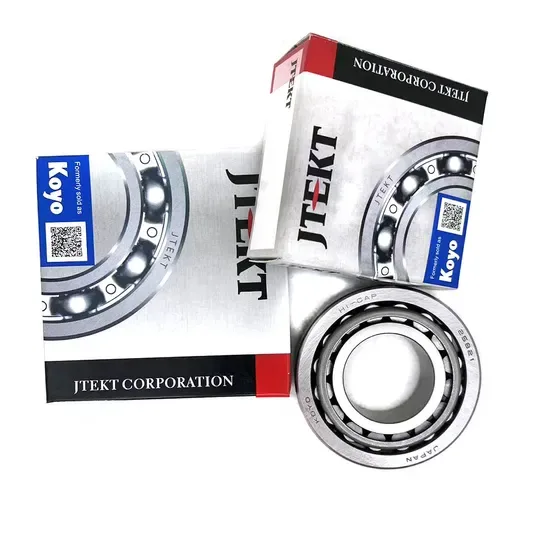
Tapered Roller Bearings
Koyo 32207 30208 30307 Tapered Roller Bearing Genuine Supplier
View ProductKeep reading
More bearing selection guides for repair shops
Practical guides from KOYO Bearing Supplier on identifying Koyo / JTEKT bearings for farm machinery, construction equipment and power transmission repairs.
 Procurement & Trade FAQs
· 7 min read
Rebuild Kit Supply for Transmission Shops: Wholesale Bearing Supplier
Transmission rebuild kit supply depends on accurate HS codes and detailed BOMs to prevent customs delays. Learn how mixed bearing consolidation and robust packaging…
Read the Guide Procurement & Trade FAQs · 7 min read
Genuine Bearing Stock Programs for Motorcycle Dealers: Wholesale Supplier
Optimize Motorcycle Dealer Stock Programs by balancing cross-brand bearing equivalency, genuine traceability, and flexible MOQs to prevent costly warranty claims. Verify dimensional tolerance and…
Read the Guide Procurement & Trade FAQs · 7 min read
Express Shipping for Urgent Bearing Repairs: Global Wholesale Supplier
Master express shipping for urgent bearing replacements by prioritizing customs clearance over flight speed to eliminate port bottlenecks. Optimize volumetric weight, consolidate mixed-brand orders,…
Read the Guide
Bearing enquiry
Send your machine details. Get a written Koyo / JTEKT quote.
KOYO Bearing Supplier quotes a single bearing position or every bearing in an assembly on one enquiry, matched to your machine model and application, with model, quantity, price, lead time and quote validity in writing.
- WhatsApp+1 (702) 981-5880
- Emailinfo@koyoome.com
- Address8 Research Drive, Greenville, SC 20627, USA
"When a Koyo bearing failed on a harvest machine during the season, we needed a replacement urgently. The supplier identified the correct Koyo reference, shipped same-day, and the machine was back in the field within the day."

Request a Bearing Quote
Tell us the machine and the bearing position. Photos of the markings can follow on WhatsApp.