
Global Auto Bearing Supplier: Genuine SKF, NSK, TIMKEN Wholesale for Sale
Cheapest freight often leads to the highest hidden costs.
Shipping auto bearings internationally requires strict moisture-proof packaging, accurate customs traceability documents, and reliable LCL consolidation to prevent transit damage and ensure genuine product delivery. Without these three pillars, even premium brands like SKF or TIMKEN can arrive as scrap metal due to rust or cage deformation, triggering costly customs seizures and production downtime.
The humidity inside a sealed shipping container is not constant. It fluctuates with daily temperature changes, creating a “container rain” effect that condenses on cold metal surfaces. I learned this the hard way in Surabaya, watching a batch of tapered roller bearings turn into reddish-brown lumps before they even cleared the port. The buyer had saved a few dollars on packaging but lost the entire order to corrosion. This is not just about logistics; it is about preserving the metallurgical integrity of the component. As a global auto bearing supplier, we see too many distributors treat shipping as an afterthought, only to face rejection from end-users who demand pristine, traceable parts.
Understanding the physics of transit is the first step. The second is navigating the bureaucratic maze of international trade. When you source mixed-brand orders, the complexity multiplies. You are not just moving boxes; you are moving liability.
How should auto bearings be packed for long-distance sea freight?
Industrial moisture-proof packaging and reinforced pallets are mandatory to prevent rust and physical deformation.
Standard export cartons are insufficient for ocean freight spanning multiple climatic zones. The primary enemy is not rough handling, but invisible water vapor. Bearings are precision-ground steel components with high surface area-to-volume ratios, making them exceptionally vulnerable to oxidation.
We utilize VCI (Volatile Corrosion Inhibitor) technology as a baseline. This involves wrapping individual bearings or sets in VCI paper or film, which releases microscopic molecules that form a protective layer on the metal surface. This is distinct from simple plastic wrapping, which can trap existing moisture and accelerate corrosion if the dew point is reached.
Consider the difference in failure rates. A comparison of shipments using standard polyethylene bags versus VCI-enhanced packaging reveals a stark contrast. Those using basic plastic often show surface rust upon arrival in tropical climates, while VCI-packaged units remain bright and clean.
Furthermore, the structural integrity of the package matters. Auto bearings, especially heavy-duty spherical roller bearings for truck hubs or construction equipment, are dense. If placed loosely in a carton, vibration during transit can cause brinelling—permanent indentations on the raceways caused by rolling elements impacting each other. We use custom-fit dividers and secure palletization with stretch wrap and corner boards to eliminate movement.
| Packaging Element | Standard Export Practice | Recommended Industrial Practice | Risk Mitigation |
|---|---|---|---|
| Inner Wrap | Polyethylene Bag | VCI Paper/Film | Prevents oxidative rust |
| Cushioning | Loose Foam Peanuts | Custom Cardboard Dividers | Prevents brinelling and cage deformation |
| Palletizing | Basic Shrink Wrap | Stretch Wrap + Corner Boards + Strapping | Ensures stack stability and moisture barrier |
| Labeling | Generic Description | Detailed Part Number & Batch ID | Facilitates quick inspection and traceability |
A client in Lagos once received a container where the outer cartons were intact, but the inner bearings were fused together by rust. The issue was not the ocean, but the lack of desiccants inside the cartons. By switching to a fully sealed VCI system with silica gel packs, their return rate dropped noticeably. This is why we insist on industrial-grade packing standards for every order, regardless of size.
What customs documents are required for genuine bearing imports?
Complete traceability files and correct HS codes prevent port seizures and ensure smooth clearance.
Customs authorities worldwide are increasingly scrutinizing intellectual property rights and origin declarations. For auto bearings, the Harmonized System (HS) code classification must be precise. Misclassification can lead to incorrect duty assessments or, worse, suspicion of counterfeit goods.
The most critical document is the Certificate of Origin. However, a generic certificate is often not enough. Buyers need traceability documents that link the physical product to the manufacturer’s production batch. This includes mill test certificates for material composition and factory inspection reports. When these documents are missing or inconsistent, shipments can be held for weeks, incurring demurrage charges that far exceed the freight cost.
I recall a shipment to a distributor in Chile that was held at Valparaiso port for ten days. The issue was a discrepancy between the brand name on the box and the invoice description. The customs officer suspected gray market goods. Because we provided a full chain of custody documentation, including the original purchase invoice from the brand’s authorized channel and a detailed packing list matching the serial numbers, the goods were released. Without that paper trail, the cargo would have been confiscated.
Key documents for smooth clearance include:
- Commercial Invoice with detailed part descriptions.
- Packing List with net and gross weights per carton.
- Certificate of Origin (legalized if required by the destination country).
- Bill of Lading.
- Insurance Certificate.
- Brand Authorization Letter (if applicable for specific markets).
Ensuring these documents are accurate before the vessel departs is non-negotiable. It transforms a potential logistical nightmare into a routine administrative process.
How can buyers optimize freight costs for mixed-brand orders?
Professional LCL consolidation and precise CBM planning significantly reduce per-unit shipping expenses.
Many regional distributors assume that Full Container Load (FCL) is always cheaper per unit. This is a misconception for smaller or mixed orders. If you do not have enough volume to fill a 20-foot or 40-foot container, you pay for empty air. Less than Container Load (LCL) consolidation allows you to mix different brands and types of bearings in one shipment, paying only for the space you use.
However, LCL comes with risks. Poor consolidation can lead to damage from incompatible cargo. For instance, placing heavy machinery parts next to delicate precision bearings without proper separation can result in crushing. Our approach involves calculating the exact Cubic Meter (CBM) weight ratio for heavy cargo to ensure optimal stowage.
By combining heavy-duty truck bearings with lighter automotive ball bearings, we maximize container utilization without compromising safety. This method allows buyers to maintain a diverse inventory without tying up capital in full containers. It also reduces the frequency of shipments, lowering overall administrative and handling fees.
A European repair group used to order single-brand FCLs, resulting in excess stock of slow-moving items. By switching to mixed-brand LCL consolidation, they reduced their inventory holding costs and improved cash flow. They could order exactly what they needed, when they needed it, without waiting to accumulate enough volume for a full container.
| Shipping Method | Best For | Cost Efficiency | Flexibility |
|---|---|---|---|
| FCL (Full Container) | Large, single-brand bulk orders | High for full loads | Low |
| LCL (Less than Container) | Mixed-brand, urgent spare parts | High for partial loads | High |
| Air Freight | Emergency breakdown replacements | Low | Very High |
Consolidation is not just about saving money; it is about agility. It enables distributors to respond quickly to market demands without the burden of overstocking.
What are the typical lead times and tracking methods?
Transparent tracking and buffer stock planning guarantee uninterrupted MRO and aftermarket supply.
Lead times vary based on origin, destination, and mode of transport. Sea freight from major Chinese ports to Southeast Asia typically takes one to two weeks, while shipments to Europe or North America can take four to six weeks. Air freight is faster but significantly more expensive, reserved for critical failures.
Reliable tracking is essential. Modern logistics providers offer real-time visibility, allowing buyers to monitor their shipment’s progress from the warehouse to the port of discharge. This transparency helps in planning inventory replenishment and communicating with end-customers.
Buffer stock is another critical element. Relying solely on just-in-time delivery for auto bearings is risky due to potential port congestion or weather delays. Maintaining a strategic buffer of high-turnover items ensures that you can meet urgent customer demands without disrupting your supply chain.
We provide detailed tracking updates and proactive communication regarding any potential delays. This allows our clients to adjust their sales forecasts and manage customer expectations effectively. In the aftermarket business, uptime is everything. A delayed bearing can mean a stranded truck or a halted assembly line. Predictable lead times are as valuable as the product itself.
Conclusion
Genuine products require genuine protection throughout the supply chain.
Shipping auto bearings internationally is a complex interplay of physical preservation and regulatory compliance. By prioritizing moisture-proof packaging, ensuring document traceability, and leveraging smart consolidation strategies, buyers can secure their margins and their reputation. The goal is not just to move goods, but to deliver reliability.
Mentioned in this article
Koyo / JTEKT bearings from this guide
These are the Koyo / JTEKT bearing types discussed above. Open any product to check its details, or quote it together with the rest of your repair.
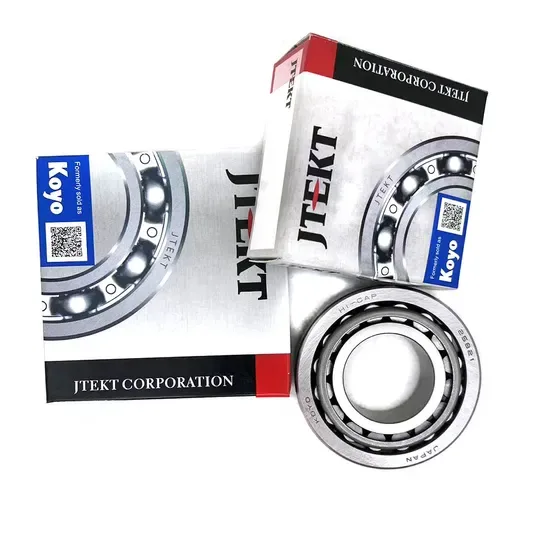
Tapered Roller Bearings
Koyo 32207 30208 30307 Tapered Roller Bearing Genuine Supplier
View Product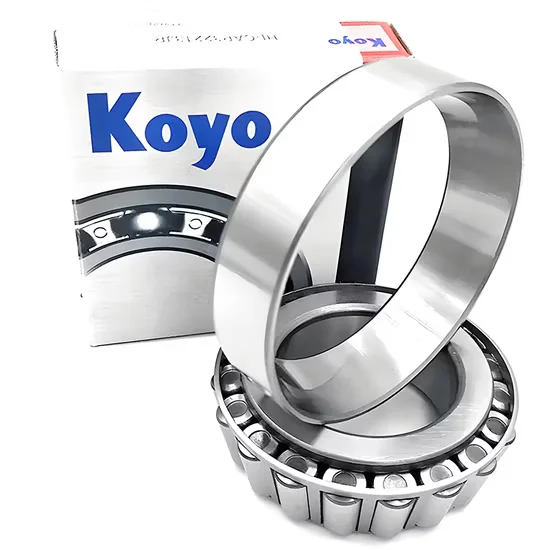
Tapered Roller Bearings
Genuine KOYO 30316 Tapered Roller Bearing Low Noise Original Supplier
View Product
Tapered Roller Bearings
Genuine KOYO 32007 Tapered Roller Bearing Wholesale Supplier
View Product
Tapered Roller Bearings
Genuine KOYO 32006 Taper Roller Bearing Wholesale Supplier
View ProductKeep reading
More bearing selection guides for repair shops
Practical guides from KOYO Bearing Supplier on identifying Koyo / JTEKT bearings for farm machinery, construction equipment and power transmission repairs.
Procurement & Trade FAQs · 7 min read
Rebuild Kit Supply for Transmission Shops: Wholesale Bearing Supplier
Transmission rebuild kit supply depends on accurate HS codes and detailed BOMs to prevent customs delays. Learn how mixed bearing consolidation and robust packaging…
Read the Guide Procurement & Trade FAQs
· 7 min read
Genuine Bearing Stock Programs for Motorcycle Dealers: Wholesale Supplier
Optimize Motorcycle Dealer Stock Programs by balancing cross-brand bearing equivalency, genuine traceability, and flexible MOQs to prevent costly warranty claims. Verify dimensional tolerance and…
Read the Guide Procurement & Trade FAQs · 7 min read
Express Shipping for Urgent Bearing Repairs: Global Wholesale Supplier
Master express shipping for urgent bearing replacements by prioritizing customs clearance over flight speed to eliminate port bottlenecks. Optimize volumetric weight, consolidate mixed-brand orders,…
Read the Guide
Bearing enquiry
Send your machine details. Get a written Koyo / JTEKT quote.
KOYO Bearing Supplier quotes a single bearing position or every bearing in an assembly on one enquiry, matched to your machine model and application, with model, quantity, price, lead time and quote validity in writing.
- WhatsApp+1 (702) 981-5880
- Emailinfo@koyoome.com
- Address8 Research Drive, Greenville, SC 20627, USA
"When a Koyo bearing failed on a harvest machine during the season, we needed a replacement urgently. The supplier identified the correct Koyo reference, shipped same-day, and the machine was back in the field within the day."

Request a Bearing Quote
Tell us the machine and the bearing position. Photos of the markings can follow on WhatsApp.