
Genuine Koyo Bearings for Small Engines Wholesale Supplier
The bearing itself is rarely the problem; the paperwork is.
Sourcing genuine KOYO bearings for small engines requires strict documentation and traceability to avoid customs delays and catastrophic field failures. Most buyers focus exclusively on dimensional tolerances and load ratings, assuming that a physically correct part will function as intended. However, in global trade, a genuine bearing means nothing if it gets stuck at the port due to incorrect HS codes or fails in the field because the supply chain was compromised by counterfeit infiltration. The core challenge for distributors and OEMs is not just finding the product, but verifying its authenticity through mill certificates and ensuring flawless customs classification before shipment leaves the origin country.
This reality became clear to me years ago while handling customs clearance for machinery parts. A Brazilian buyer importing components for agricultural harvesters messed up the HS codes on the commercial invoice for their bearing order. Customs held the shipment for weeks during peak season. Desperate to meet the harvest deadline, they sourced cheap local substitutes to keep their assembly lines moving. Those fake bearings seized up within a month, destroying hundreds of engines and costing far more than the original delay would have. That disaster highlighted that sourcing Koyo Bearings for Small Engines is fundamentally about supply chain integrity, not just component geometry.
Why Do Genuine KOYO Bearings Get Stuck at Customs?
Incorrect HS codes and missing traceability docs cause severe port delays.
Customs authorities worldwide are increasingly stringent regarding industrial components, particularly those used in agricultural and heavy machinery. The primary reason genuine shipments get detained is not suspicion of the product quality, but inconsistency in documentation. When importing Koyo Bearings for Small Engines, the Harmonized System (HS) code must precisely match the bearing type, material, and intended application. A mismatch between the declared code and the physical goods triggers manual inspection, which can halt logistics for weeks.
| Documentation Factor | Risk Level | Impact on Clearance |
|---|---|---|
| Missing Mill Certificate | High | Detention for authenticity verification |
| Incorrect HS Code | Critical | Reclassification fines and long delays |
| Vague Product Description | Medium | Manual inspection requests |
| Complete Traceability Docs | Low | Fast-track clearance |
A common error involves classifying deep-groove ball bearings under generic steel parts rather than specific bearing codes. This misclassification raises red flags for customs officers who suspect undervaluation or counterfeit goods. For a genuine KOYO bearings supplier, providing a detailed packing list that matches the commercial invoice and includes batch-specific serial numbers is non-negotiable. Without this level of detail, even authentic products face scrutiny that disrupts just-in-time manufacturing schedules.
The cost of these delays extends beyond storage fees. In seasonal industries like agriculture, a two-week delay can mean missing the entire harvest window. Buyers often panic and switch to unverified local sources, introducing inferior components into their supply chain. Ensuring that your supplier understands these classification rules and provides pre-shipment document reviews is essential for maintaining operational continuity.
How to Verify KOYO Bearing Authenticity for Small Engines?
Check packaging, serial numbers, and request mill certificates from suppliers.
Counterfeit bearings are a pervasive issue in the global market, particularly for high-demand brands like KOYO. Fake units may look identical to the genuine article but lack the precise heat treatment and material purity required for high-RPM small engine applications. Verifying authenticity requires a multi-layered approach that goes beyond visual inspection.
The first line of defense is the packaging. Genuine KOYO products feature specific holographic labels, consistent font printing, and batch codes that can be traced back to the manufacturer’s production facilities. However, sophisticated counterfeits now replicate packaging with high accuracy. Therefore, physical verification must include checking the bearing’s surface finish and marking clarity. Genuine bearings have laser-etched or stamped markings that are sharp and uniform, whereas fakes often show irregularities or shallow engraving.
Requesting mill certificates is the most reliable method for verification. These documents provide chemical composition data and heat treatment records for the specific batch of steel used. A reputable genuine KOYO bearings supplier will provide these certificates upon request, linking the serial number on the bearing to the test results. If a supplier cannot produce this documentation, the risk of receiving counterfeit goods increases significantly. For small engines, where failure rates can lead to costly warranty claims, this step is critical.
A European distributor once received a shipment that looked perfect externally. However, upon requesting the mill certificate, the supplier provided vague, generic documents that did not match the batch numbers. Further testing revealed the bearings had inconsistent hardness levels, leading to premature seizure. By insisting on verifiable documentation, buyers can filter out unreliable sources before the goods even ship.
What Are the Key Specs for Small Engine Applications?
Deep-groove ball and insert bearings dominate; match load ratings to engine RPM.
Small engines, such as those found in lawnmowers, generators, and agricultural tillers, operate under unique stress conditions. They often experience high rotational speeds combined with variable loads and potential contamination from dust or debris. Selecting the right small engine bearing cross reference requires understanding these operational parameters rather than just matching dimensions.
Deep-groove ball bearings are the most common type used in these applications due to their ability to handle both radial and axial loads. However, not all deep-groove bearings are suitable. The internal clearance, often designated as C3 or C4, must match the thermal expansion characteristics of the engine housing. Using a standard clearance bearing in a high-temperature environment can lead to preload issues and early failure.
| Bearing Type | Application Suitability | Key Consideration |
|---|---|---|
| Deep-Groove Ball | High-speed shafts | Internal clearance (C3/C4) |
| Insert Bearing | Agricultural linkages | Sealing effectiveness |
| Needle Roller | Compact spaces | Load capacity vs. size |
Insert bearings are also prevalent in agricultural machinery, where they connect rotating shafts to stationary frames. These units require robust sealing to prevent dirt ingress, which is a major cause of failure in field operations. When sourcing KOYO agricultural machinery bearings, it is essential to verify the seal material and design. Nitrile rubber seals are common, but for harsher environments, fluoroelastomer seals may be necessary to resist chemical exposure from fertilizers or fuels.
Matching load ratings to engine RPM is another critical factor. Small engines often operate at higher RPMs than industrial motors, generating significant centrifugal forces. Bearings must be selected with adequate dynamic load ratings to withstand these forces without overheating. A small engine bearing cross reference tool can help identify equivalents, but it must be used with caution. Cross-references often assume standard operating conditions, which may not apply to specific engine designs. Always consult the engine manufacturer’s specifications to ensure the selected bearing meets the required performance criteria.
How to Source Mixed-Batch KOYO Bearings Efficiently?
Use consolidated suppliers to meet flexible MOQs and ensure one-stop shipping.
Maintenance, Repair, and Operations (MRO) for small engines often requires a variety of bearing sizes and types. Ordering each SKU individually from different sources is inefficient and increases shipping costs. Consolidating orders through a single supplier who offers mixed-batch capabilities allows buyers to optimize container loads and reduce logistical complexity. This approach is particularly beneficial for regional distributors who need to stock a wide range of Koyo Bearings for Small Engines to serve diverse local markets.
A professional global full-range bearing supplier can provide genuine products from multiple premium brands, including KOYO, SKF, and NSK, in a single shipment. This consolidation ensures that all items arrive together, simplifying inventory management and customs clearance. Furthermore, working with a supplier who maintains massive spot inventory covering thousands of standard part numbers reduces lead times for urgent spare-part requirements.
Flexible Minimum Order Quantities (MOQs) are another advantage of using consolidated suppliers. Instead of meeting high MOQs for individual SKUs, buyers can mix various sizes and types to reach the total order value threshold. This flexibility is crucial for small businesses and workshops that need to maintain a broad inventory without tying up excessive capital in slow-moving stock. Additionally, these suppliers often provide technical support for model selection, helping buyers choose the right KOYO agricultural machinery bearings for specific applications.
By leveraging a one-stop sourcing solution, buyers can ensure genuine traceability for all items in the mixed batch. This prevents the risk of inadvertently introducing counterfeit parts into the supply chain through secondary vendors. The supplier’s ability to provide complete customs documentation for the entire consolidated shipment further streamlines the import process, reducing the likelihood of delays at the port.
Conclusion
Documentation is as critical as the bearing itself.
Sourcing genuine components requires a focus on traceability and compliance, not just product availability. By prioritizing verified suppliers and accurate customs paperwork, buyers protect their operations from costly delays and failures.
Mentioned in this article
Koyo / JTEKT bearings from this guide
These are the Koyo / JTEKT bearing types discussed above. Open any product to check its details, or quote it together with the rest of your repair.

Railway Bearings
Genuine Koyo 32011 32209 32212 Tapered Roller Bearing for Railway Locomotive Axle Boxes
View Product
Railway Bearings
Genuine Koyo Tapered Roller Bearings 32019 32020 32021 32022 32024 for Railway Machinery
View Product
Tapered Roller Bearings
Genuine Koyo Tapered Roller Bearing 32212 32213 32214 32215 32216 for Fan Spare Parts
View Product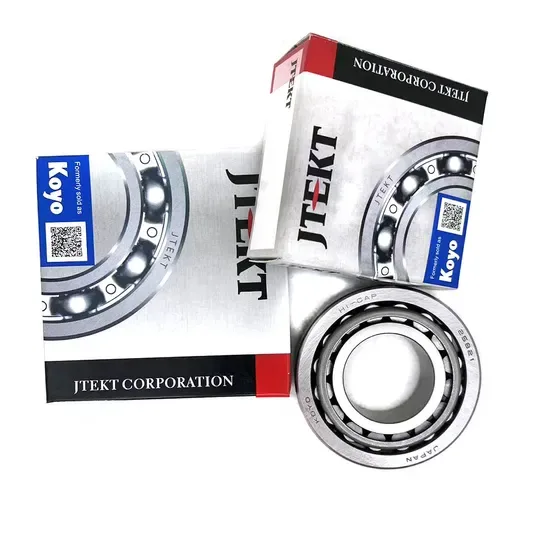
Tapered Roller Bearings
Koyo 32207 30208 30307 Tapered Roller Bearing Genuine Supplier
View ProductKeep reading
More bearing selection guides for repair shops
Practical guides from KOYO Bearing Supplier on identifying Koyo / JTEKT bearings for farm machinery, construction equipment and power transmission repairs.
 Buying Guide
· 7 min read
Koyo Auto Bearings Wholesale Supplier & Bulk Quote
Request a Quote for Koyo Auto Bearings that accounts for total landed cost, not just FOB price. Optimize margins through mixed-container consolidation and ensure…
Read the Guide Buying Guide · 7 min read
Koyo Auto Bearings Wholesale Supplier for Parts Stores
Stocking Koyo auto bearings requires strict verification of suffix codes and traceability to prevent costly assembly failures. Learn essential packaging checks and cross-brand alternatives…
Read the Guide Buying Guide
· 7 min read
Fake Auto Bearings: Neutral Buyer Checks Wholesale Supplier
Master Fake Auto Bearings Neutral Buyer Checks by shifting focus from packaging to internal physical inspections and traceability. Detect counterfeits through acidic rust oil…
Read the Guide
Bearing enquiry
Send your machine details. Get a written Koyo / JTEKT quote.
KOYO Bearing Supplier quotes a single bearing position or every bearing in an assembly on one enquiry, matched to your machine model and application, with model, quantity, price, lead time and quote validity in writing.
- WhatsApp+1 (702) 981-5880
- Emailinfo@koyoome.com
- Address8 Research Drive, Greenville, SC 20627, USA
"When a Koyo bearing failed on a harvest machine during the season, we needed a replacement urgently. The supplier identified the correct Koyo reference, shipped same-day, and the machine was back in the field within the day."

Request a Bearing Quote
Tell us the machine and the bearing position. Photos of the markings can follow on WhatsApp.