
Genuine Hino Truck Bearings Wholesale Supplier Bulk MOQ
Price does not guarantee longevity; correct sealing and traceability do.
Selecting the right bearings in Hino trucks requires prioritizing dynamic load ratings and genuine origin documentation over brand prestige alone. A genuine Hino truck bearings supplier must provide verifiable cross-references and complete batch traceability to prevent premature failure in heavy-duty applications. Sourcing from a partner who offers mixed-brand consolidation with strict quality controls ensures fleet reliability without the overhead of managing multiple official channels.
I still remember the smell of hot metal and grinding dust from my early days machining bearing rings in a local workshop. Back then, I viewed components purely as geometric shapes defined by tolerance classes. My perspective shifted dramatically when I entered the export trade. A client from the Middle East urgently needed a specific batch of wheel hub units for a mixed fleet of heavy haulers. The order volume was small—just two boxes—but he needed them consolidated into a larger container heading to Dubai to save on freight. In my eagerness to close the deal and meet his tight deadline, I sourced available stock that matched the part numbers but lacked the full suite of original manufacturer traceability documents. I assumed the physical dimensions were sufficient.
The result was catastrophic. The bearings were installed in trucks operating in a dusty mining environment. Within a few thousand kilometers, the units began to scatter. The client sent back the残件 (broken parts), and the visual evidence was undeniable: contamination had bypassed the seals, leading to rapid fatigue spalling. That incident taught me that in the heavy-duty aftermarket, especially for critical applications like Hino truck repairs, the paper trail is as vital as the steel itself. It is not just about having the part; it is about knowing exactly where it came from and how it was handled before it reached your warehouse. This experience drives my current approach to sourcing, where I prioritize verified authenticity and proper lubrication specifications over simple availability.
What Are the Critical Bearing Applications in Hino Trucks?
Wheel hubs and transmission gearboxes endure the highest dynamic loads and require precise selection criteria.
In heavy-duty commercial vehicles, not all bearings are created equal. The operational demands placed on a front wheel hub differ significantly from those on a rear axle or within the gearbox. For Hino trucks, which are often deployed in rigorous logistics and construction sectors, understanding these distinctions is crucial for minimizing downtime. The primary failure points usually occur in the wheel end assemblies, where tapered roller bearings must handle combined radial and axial loads while resisting water and dust ingress.
When evaluating options from a genuine Hino truck bearings supplier, one must look beyond the part number. The internal geometry, specifically the contact angle and roller profile, determines how well the bearing distributes stress under heavy payloads. Using a standard industrial bearing in place of a specifically engineered automotive unit can lead to edge loading and premature cage failure.
| Application Area | Load Type | Critical Failure Mode | Selection Priority |
|---|---|---|---|
| Front Wheel Hub | Combined Radial/Axial | Seal Leakage & Spalling | High Precision & Sealing |
| Rear Axle Differential | High Radial | Fatigue Cracking | Robust Cage Design |
| Transmission Gearbox | High Speed & Thrust | Heat Generation & Wear | Thermal Stability & Lubrication |
| Clutch Release | Intermittent Axial | Surface Distress | Hardness & Toughness |
A fleet manager in Southeast Asia once reported that switching to premium aftermarket brands with complete traceability, rather than sticking strictly to OEM-branded boxes, reduced their overall maintenance costs noticeably. The key was not the logo on the box, but the consistency of the steel quality and the precision of the manufacturing process. By working with a supplier who understands these technical nuances, buyers can ensure that every replacement part meets the original equipment specifications.
How to Identify Premature Bearing Failure in Hino Fleets?
Improper lubrication and contaminated environments are the primary causes of early scatter, not material defects.
Most maintenance teams assume that if a bearing fails quickly, it was defective from the factory. However, field data suggests that the majority of premature failures stem from installation errors or environmental exposure. In harsh conditions, such as mining or unpaved road transport, dust and moisture are constant threats. If the sealing system is compromised during installation, or if the wrong type of grease is used, the bearing will degrade rapidly regardless of its initial quality.
Identifying these issues early requires a systematic approach. Technicians should look for specific signs during routine inspections. Discoloration of the raceways often indicates overheating due to insufficient lubrication or excessive preload. Pitting or spalling on the roller surfaces suggests contamination or fatigue from overloading. By recognizing these patterns, fleets can adjust their maintenance protocols to extend service life meaningfully.
Consider the case of a heavy transport operator in Australia. They noticed a pattern of wheel bearing failures on their long-haul routes. Upon investigation, it was found that the greasing intervals were too long for the dusty conditions they operated in. By switching to a more robust sealing solution and adjusting the maintenance schedule, they extended the replacement cycle substantially. This highlights the importance of matching the bearing specification to the actual operating environment, not just the vehicle model. A knowledgeable genuine Hino truck bearings supplier can provide guidance on suitable sealing technologies and lubrication types for specific axle models.
Why Does Traceability Matter When Sourcing Hino Truck Bearings?
Lack of origin documents leads to counterfeit risks and catastrophic field failures.
In the global aftermarket, the line between genuine and counterfeit products can be blurry. Counterfeit bearings may look identical to the naked eye but often use inferior steel with higher inclusion levels. These impurities act as stress concentrators, leading to early fatigue failure. Without proper traceability documentation, it is impossible to verify the origin of the components. This risk is particularly high when sourcing from unauthorized distributors who mix stock from various unknown origins.
Traceability involves more than just a certificate of origin. It includes batch numbers, heat treatment records, and quality control reports from the manufacturer. These documents allow buyers to track the product back to the specific production run. In the event of a failure, this information is crucial for determining whether the issue was a manufacturing defect or an application error. For a genuine Hino truck bearings supplier, providing this level of transparency is non-negotiable. It builds trust and ensures that the buyer is receiving what they paid for.
A European repair group once encountered a batch of bearings that failed consistently after a short period. Laboratory analysis revealed that the steel purity was well below industry standards. Because they had purchased from a supplier who provided full traceability, they were able to identify the source and recover their losses. This incident reinforced the value of documentation in protecting both the buyer’s reputation and their bottom line.
How to Optimize Bearing Procurement for Aftermarket Distributors?
Mixed-brand consolidation and flexible MOQ ensure workshop availability without overstocking.
For regional distributors and large repair workshops, managing inventory for multiple vehicle brands can be challenging. Holding large stocks of slow-moving parts ties up capital, while running out of critical items leads to lost sales and dissatisfied customers. The solution lies in flexible procurement strategies that allow for mixed-brand and mixed-size orders. By consolidating shipments from a single reliable source, buyers can reduce freight costs and simplify logistics.
A professional global full-range bearing supplier can offer the flexibility needed to balance inventory levels. Instead of ordering full containers of a single brand, distributors can curate packages that include high-turnover items from premium brands like SKF, FAG, or NSK, alongside cost-effective options for less critical applications. This approach ensures that workshops have access to the right part at the right price, without the burden of excessive stock.
Furthermore, technical support plays a vital role in optimization. Suppliers who offer cross-reference lookup services help buyers identify equivalent models across different brands. This capability is essential for maintaining service continuity when a specific OEM part is unavailable. By leveraging these resources, distributors can enhance their value proposition to end-users, offering not just parts, but solutions. The key is to partner with a supplier who understands the complexities of the heavy-duty market and can provide the necessary technical and logistical support.
Conclusion
Authenticity and technical alignment drive fleet reliability, not just brand names.
Sourcing bearings for Hino trucks demands a focus on verified quality, proper application knowledge, and complete traceability. By partnering with a supplier who offers transparent documentation and flexible procurement options, businesses can mitigate risks and optimize their maintenance operations. The goal is to ensure that every bearing installed contributes to the longevity and efficiency of the vehicle, supporting the demanding needs of modern heavy-duty transport.
Mentioned in this article
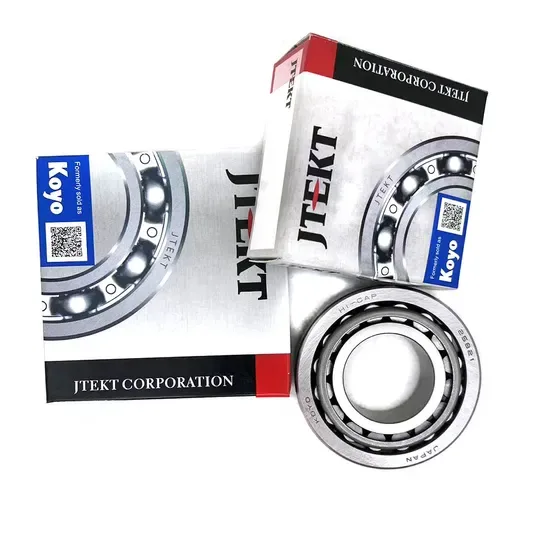
Koyo / JTEKT bearings from this guide
These are the Koyo / JTEKT bearing types discussed above. Open any product to check its details, or quote it together with the rest of your repair.
Tapered Roller Bearings
X&S 33209 Tapered Roller Bearing for Industrial Mining Gearbox
View Product Tapered Roller Bearings
Koyo 30213 30221 30228 Tapered Roller Bearing Single Row for Machinery Part
View Product
Marine Bearings
Koyo 32212 Tapered Roller Bearing for Marine Engines
View Product
Tapered Roller Bearings
Koyo Tapered Roller Bearing 31313 33215 33017 33214 30313 32919 30217 33016
View ProductKeep reading
More bearing selection guides for repair shops
Practical guides from KOYO Bearing Supplier on identifying Koyo / JTEKT bearings for farm machinery, construction equipment and power transmission repairs.
 Applications & Industries
· 7 min read
Small Engine Crankshaft Bearings Wholesale Supplier
Selecting the correct Bearings in Small Engine Crankshafts requires strict clearance matching and material verification rather than simple part number lookup. Standard units often…
Read the Guide Applications & Industries · 7 min read
Forklift Mast Bearings Wholesale Supplier | Genuine SKF FAG NSK Bulk
Selecting forklift mast bearings requires matching groove profiles and clearances to harsh environments to prevent premature seizure. Sourcing only genuine SKF, FAG, and NSK…
Read the Guide Applications & Industries · 6 min read
Outboard Lower Unit Bearings Wholesale Supplier
Prevent catastrophic gearcase failures by selecting Bearings in Outboard Lower Units that balance high-speed load capacity with strict corrosion resistance. Learn why standard tapered…
Read the Guide
Bearing enquiry
Send your machine details. Get a written Koyo / JTEKT quote.
KOYO Bearing Supplier quotes a single bearing position or every bearing in an assembly on one enquiry, matched to your machine model and application, with model, quantity, price, lead time and quote validity in writing.
- WhatsApp+1 (702) 981-5880
- Emailinfo@koyoome.com
- Address8 Research Drive, Greenville, SC 20627, USA
"When a Koyo bearing failed on a harvest machine during the season, we needed a replacement urgently. The supplier identified the correct Koyo reference, shipped same-day, and the machine was back in the field within the day."

Request a Bearing Quote
Tell us the machine and the bearing position. Photos of the markings can follow on WhatsApp.