
Genuine Dirt Bike Bearings Wholesale Supplier Bulk OEM
Cheap bearings do not save money; they destroy wheel hubs.
Selecting genuine, heavy-duty tapered roller and deep groove bearings with appropriate seal integrity is the only reliable method to prevent catastrophic failure in off-road motorcycles subjected to extreme mud, high temperatures, and heavy dynamic loads. Distributors must prioritize traceable authenticity over initial unit cost to avoid massive warranty claims and inventory loss.
Walking through the humid aisles of a parts warehouse in Hanoi, the smell of stale grease and wet rubber is unmistakable. I remember a local repair shop owner who insisted on sourcing non-standard, low-cost bearings for an OEM dirt bike rear hub assembly. He believed the price difference was pure profit. Within two thousand kilometers of racing in the tropical rainy season, the seals failed, mud ingressed, and the bearing cages disintegrated. The result was not just a replaced part, but a completely scrapped wheel hub and a mid-six-figure loss in compensation and reputational damage. That incident reinforced a simple truth: in off-road applications, the bearing is the heart of the drivetrain, and its failure is never isolated.
For any serious distributor or repair network, understanding why standard components fail is the first step toward building a resilient supply chain. This guide explores the technical realities of selecting the right components for harsh environments.
Why Do Standard Bearings Fail in Dirt Bikes?
Standard industrial bearings lack the specific sealing and thermal stability required for off-road abuse.
Most generic bearings are designed for clean, controlled environments with moderate loads. Dirt bikes operate in the opposite spectrum: abrasive mud, sudden impact loads, and sustained high temperatures from brake and engine proximity. When a standard deep groove ball bearing is forced into a dirt bike hub, the clearance is often too tight for thermal expansion, or the seal lip cannot handle the pressure of high-volume water jets during washing or river crossings.
The primary culprit is seal failure. In tropical mud racing conditions, the ingress of fine particulate matter acts as an abrasive paste inside the raceway. Once the seal is compromised, the lubricant washes out, and the grinding begins. This leads to a rapid drop in mileage before total seizure.
Furthermore, high-temperature transmission areas pose a silent threat. Standard lithium-based greases break down at elevated temperatures, losing their viscosity and protective film strength. Without a high-temperature stable grease and a bearing cage designed to handle thermal expansion, the rolling elements bind. This is not a manufacturing defect; it is a mismatch of application engineering.
Distributors often see these returns as “bad luck,” but they are predictable outcomes of using the wrong specification. The solution lies in recognizing that off-road demands require heavy-duty designs with specific clearance classes and robust sealing technologies.
Which Bearing Types Suit Specific Dirt Bike Parts?
Not all bearings are created equal; hub loads require tapered rollers, while engine sides need precision deep groove units.
Selecting the correct bearing type is critical for performance and longevity. A common mistake is using the same bearing series across all wheel positions. The front and rear hubs experience vastly different load vectors. Rear hubs handle drive torque and heavy vertical impacts, requiring the load-distributing capabilities of tapered roller bearings. Front hubs, dealing primarily with steering and braking forces, may use angular contact or deep groove variants depending on the chassis design.
| Application Area | Recommended Bearing Type | Key Requirement | Seal Performance |
|---|---|---|---|
| Rear Wheel Hub | Tapered Roller Bearing | High radial and axial load capacity | Robust, double-lip contact |
| Front Wheel Hub | Deep Groove / Angular Contact | Precision steering feel, moderate load | High-speed water resistance |
| Engine Side Covers | Deep Groove Ball Bearing | Low friction, high RPM stability | Standard dust protection |
| Swingarm Pivot | Spherical Roller / Bushing | Misalignment accommodation | Heavy-duty mud exclusion |
Tapered roller bearings are essential for dirt bike hubs because they can handle combined loads. When a rider lands a jump, the impact is both radial and axial. A deep groove ball bearing might survive a few such hits, but the raceways will eventually pit. Tapered rollers distribute this stress across a larger contact area, significantly extending service life.
However, not all tapered roller bearings are suitable. The internal clearance must be adjusted for off-road use. Too loose, and the wheel wobbles; too tight, and heat builds up rapidly. Genuine brands like SKF and NSK offer specific series designed for these harsh conditions, featuring optimized cage designs and high-grade steel that resists fatigue cracking under shock loads.
For distributors, stocking the correct mix is vital. Offering a generic substitute for a tapered hub application is a recipe for returns. The technical distinction must be clear in your catalog and communication with repair shops.
How to Verify Bearing Authenticity for Off-Road Use?
Counterfeit bearings look identical to genuine ones until they fail under load.
The market is flooded with high-quality fakes that mimic the packaging and laser etching of premium brands. For a distributor, selling a counterfeit bearing as genuine is not just a ethical breach; it is a business-ending risk. When a fake bearing fails in a customer’s bike, the blame falls on the supplier, leading to lost trust and potential legal liabilities.
Verification starts with traceability documentation. Genuine bearings from manufacturers like NTN, FAG, or TIMKEN come with batch numbers that can be traced back to the production facility. Requesting these documents is not a sign of distrust; it is standard professional practice.
Physical inspection also reveals clues. Genuine bearings have consistent, high-quality laser etching that is sharp and deep. Counterfeits often have faint, uneven marking. The packaging material is another indicator; authentic boxes use specific cardboard grades and printing techniques that are difficult to replicate perfectly. However, visual checks are not enough. The only surefire method is sourcing from authorized channels or suppliers with proven track records and direct manufacturer relationships.
A European wind farm operator once faced similar issues with industrial gearbox bearings. They switched to a supplier who provided full material certification and batch traceability. The initial cost was higher, but the reduction in unplanned downtime paid for the difference within months. The same principle applies to dirt bike parts. The cost of a single warranty claim for a seized wheel hub far exceeds the price difference between a genuine and a fake bearing.
Distributors should insist on seeing these credentials. If a supplier cannot provide proof of origin, the risk is too high. Building a reputation for selling only verified, genuine products attracts serious buyers who value reliability over the lowest possible price.
What Are the Best Sourcing Strategies for Distributors?
Consolidating genuine brands into mixed-brand shipments optimizes inventory and reduces logistics costs.
Sourcing bearings for the off-road market requires a strategic approach. Buying full containers of a single SKU is rarely efficient for distributors serving diverse repair shops. Instead, consolidating orders across multiple brands and sizes allows for a broader inventory without tying up excessive capital. This strategy ensures that you can meet urgent requests for various models, from vintage enduros to modern motocross bikes.
Flexible minimum order quantities (MOQs) are crucial. A distributor needs the ability to order small batches of high-turnover items while stocking larger quantities of slow-moving special sizes. Suppliers who offer mixed-brand consolidation enable this flexibility. By combining SKF, NSK, and NTN products in one shipment, you reduce freight costs per unit and simplify customs clearance.
Technical support is another key factor. A good supplier does not just ship boxes; they provide cross-reference data and selection guidance. When a repair shop asks for a replacement for an obsolete model, having access to technical datasheets and equivalent model suggestions adds significant value. This transforms the supplier from a vendor into a partner.
Consider a Middle East steel mill that streamlined its MRO procurement by switching to a one-stop sourcing provider. They reduced their supplier base from twelve to three, simplifying management and improving negotiation power. For a dirt bike parts distributor, the principle is similar. Consolidating your bearing purchases with a reliable global supplier simplifies operations and ensures consistent quality across your entire product range.
The goal is to build a supply chain that is resilient, cost-effective, and technically supported. By focusing on genuine products and strategic consolidation, distributors can protect their margins and their reputation.
Conclusion
Authenticity and technical suitability are non-negotiable in off-road bearing supply.
Selecting the right bearings for dirt bikes requires understanding the extreme conditions they face. Genuine heavy-duty tapered roller and deep groove bearings, sourced through traceable channels, prevent costly failures and protect brand reputation. Distributors who prioritize quality and strategic consolidation will thrive in this demanding market.
Mentioned in this article
Koyo / JTEKT bearings from this guide
These are the Koyo / JTEKT bearing types discussed above. Open any product to check its details, or quote it together with the rest of your repair.

Tapered Roller Bearings
OEM 30204 30205 30206 30207 30208 32008X 32010X Tapered Roller Bearing
View Product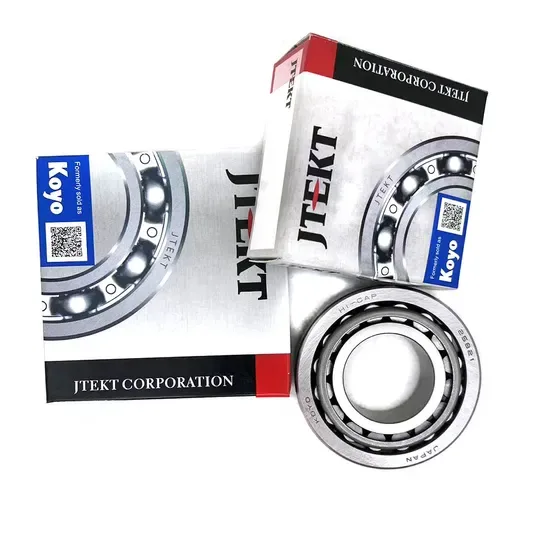
Tapered Roller Bearings
X&S 33209 Tapered Roller Bearing for Industrial Mining Gearbox
View Product Tapered Roller Bearings
Koyo 30213 30221 30228 Tapered Roller Bearing Single Row for Machinery Part
View Product
Marine Bearings
Koyo 32212 Tapered Roller Bearing for Marine Engines
View ProductKeep reading
More bearing selection guides for repair shops
Practical guides from KOYO Bearing Supplier on identifying Koyo / JTEKT bearings for farm machinery, construction equipment and power transmission repairs.
 Applications & Industries
· 7 min read
Small Engine Crankshaft Bearings Wholesale Supplier
Selecting the correct Bearings in Small Engine Crankshafts requires strict clearance matching and material verification rather than simple part number lookup. Standard units often…
Read the Guide Applications & Industries · 7 min read
Forklift Mast Bearings Wholesale Supplier | Genuine SKF FAG NSK Bulk
Selecting forklift mast bearings requires matching groove profiles and clearances to harsh environments to prevent premature seizure. Sourcing only genuine SKF, FAG, and NSK…
Read the Guide Applications & Industries · 6 min read
Outboard Lower Unit Bearings Wholesale Supplier
Prevent catastrophic gearcase failures by selecting Bearings in Outboard Lower Units that balance high-speed load capacity with strict corrosion resistance. Learn why standard tapered…
Read the Guide
Bearing enquiry
Send your machine details. Get a written Koyo / JTEKT quote.
KOYO Bearing Supplier quotes a single bearing position or every bearing in an assembly on one enquiry, matched to your machine model and application, with model, quantity, price, lead time and quote validity in writing.
- WhatsApp+1 (702) 981-5880
- Emailinfo@koyoome.com
- Address8 Research Drive, Greenville, SC 20627, USA
"When a Koyo bearing failed on a harvest machine during the season, we needed a replacement urgently. The supplier identified the correct Koyo reference, shipped same-day, and the machine was back in the field within the day."

Request a Bearing Quote
Tell us the machine and the bearing position. Photos of the markings can follow on WhatsApp.