
Garage Warranty Claim Process: Genuine Bearing Wholesale Supplier
Most warranty rejections stem from missing paperwork, not bearing defects.
The Garage Warranty Claim Process succeeds or fails based on the completeness of your traceability chain at the point of purchase, not the technical nature of the failure. If you cannot produce a continuous document trail linking the failed component to its original manufacturing batch and customs entry, the claim is void before inspection begins.
I learned this the hard way in a previous role managing procurement for a mechanical plant. When a main shaft bearing failed prematurely, we expected a straightforward replacement under warranty. The manufacturer’s agent rejected the claim immediately. The reason was not the metallurgy or the load conditions; it was our inability to match the batch number on the failed unit with a specific import declaration and original certificate of conformity. We had bought genuine stock, but the paper trail had fragmented across multiple distributors. That loss covered more than just the part cost; it included days of unplanned downtime. Since shifting to the supply side, I ensure every shipment of SKF, FAG, and other premium brands leaves with a locked set of documents. This approach prevents the administrative deadlock that plagues many MRO and automotive workshops.
Understanding this administrative reality changes how you should approach sourcing. The following sections detail why claims fail, what documents are non-negotiable, and how to build a system that protects your operational continuity.
Why Do Most Garage Warranty Claim Process Attempts Fail?
The primary cause of rejection is a broken chain of custody, not product quality.
Many workshop owners assume that if a bearing fails within the specified service life, the manufacturer is obligated to replace it. This assumption ignores the commercial and legal frameworks governing industrial components. Manufacturers require proof that the part is genuine, that it was stored correctly, and that it belongs to the specific batch sold to the claimant. Without this, they cannot verify if the failure resulted from a manufacturing defect or external factors like improper installation or contamination.
In my experience handling returns for a Middle East steel mill, a batch of spherical roller bearings showed early signs of fatigue. The maintenance team had installed them correctly and operated within load limits. However, their purchasing department had consolidated orders from three different local traders to save on logistics. When the failure occurred, they could not link the specific serial numbers on the failed units to a single, unbroken import record. The manufacturer refused to honor the warranty because the provenance was ambiguous. This is a common pitfall in the Garage Warranty Claim Process.
Another frequent issue involves mixed-batch procurement. A European wind farm operator once faced a similar hurdle. They had purchased replacement bearings for a gearbox overhaul from a generalist supplier who did not specialize in industrial transmission parts. The supplier provided invoices, but these lacked the detailed batch codes required by the OEM. When the bearings failed after a short period, the OEM requested the original material certificates. The supplier could not provide them because they had sourced the items from a secondary market pool. The claim was denied, and the operator had to bear the cost of another shutdown.
To avoid this, you must treat documentation as part of the product. If your supplier cannot provide immediate, batch-specific traceability, you are buying a liability, not just a component.
What Documents Are Mandatory for a Successful Claim?
A valid claim requires a triad of documents: commercial invoice, customs declaration, and original certificate of conformity.
Not all papers are created equal. A simple sales receipt is insufficient for high-value industrial claims. The Garage Warranty Claim Process demands a specific set of verifiable documents that prove the item’s journey from the factory floor to your workshop.
First, the commercial invoice must explicitly list the batch or lot number of the bearings. Generic descriptions like “10 units of 6205 bearings” are useless. The invoice must match the physical markings on the packaging and the component itself. Second, the customs declaration is critical for international purchases. This document proves that the goods entered your country legally and clears any doubts about parallel imports or counterfeit goods that might have slipped through unofficial channels. Third, the original certificate of conformity (COC) or quality certificate from the manufacturer links the batch number to the production data. This document confirms that the specific batch met the required ISO standards at the time of manufacture.
| Document Type | Verification Level | Risk if Missing |
|---|---|---|
| Commercial Invoice with Batch No. | High | Claim rejected due to unverified source |
| Customs Declaration | High | Claim rejected due to potential counterfeit risk |
| Original Certificate of Conformity | Critical | Claim rejected due to lack of quality proof |
| Standard Sales Receipt | None | Insufficient for any industrial warranty claim |
I recall a case involving an automotive repair group in Southeast Asia. They attempted to claim warranty on a set of tapered roller bearings used in heavy truck axles. They had the invoice and the COC, but the batch numbers on the COC did not match the ones on the invoice due to a clerical error by their previous supplier. The manufacturer’s quality team flagged the discrepancy immediately. Even though the bearings were genuine, the administrative mismatch voided the warranty. It took weeks to resolve the dispute, during which the trucks remained off the road.
Ensuring these documents align perfectly before you even install the bearing is the only way to secure your position. As a global supplier, we include these documents in every shipment of NSK, NTN, and TIMKEN products, ensuring that our clients never face this administrative barrier.
How to Build a Traceability System Before Failure Happens?
Traceability must be established at intake, not at the time of failure.
Waiting until a bearing fails to look for paperwork is a recipe for disaster. The Garage Warranty Claim Process is significantly smoother when you have a proactive system in place. This involves creating a digital or physical archive for every batch of bearings that enters your inventory.
Start by verifying the documents upon receipt. Check that the batch numbers on the physical boxes match the invoice and the COC. Take photos of the packaging and the labels. Store these images alongside the digital copies of the documents. This creates a visual audit trail that can be referenced quickly if a claim arises. For larger operations, integrate this data into your inventory management system. Link each SKU to its specific batch documentation.
A mining company in Africa implemented this strategy after suffering several rejected claims. They began scanning the barcode and batch label of every bearing box upon arrival. These scans were linked to the digital folder containing the corresponding invoice and customs docs. When a cylindrical roller bearing failed in a crusher six months later, the maintenance team pulled up the record instantly. They had the exact batch number, the import date, and the original quality certs ready to send to the manufacturer. The claim was approved within days, minimizing the downtime impact.
This method also helps in identifying potential counterfeits early. If the packaging looks suspicious or the batch number format does not match the manufacturer’s standard, you can flag it before installation. This proactive stance saves significant resources and protects your reputation with end-users.
What Are the Step-by-Step Actions When a Bearing Fails?
Preserve the evidence and follow a strict protocol to maximize claim success.
When a bearing fails, the instinct is often to remove it and replace it quickly to restore operations. However, hasty removal can destroy the evidence needed for a warranty analysis. The Garage Warranty Claim Process requires a disciplined approach to failure handling.
- Stop and Document: Before removing the bearing, take clear photos of the installation context. Note the operating hours, load conditions, and any unusual noises or temperatures recorded prior to failure.
- Protect the Component: Remove the bearing carefully without causing additional damage. Do not clean it aggressively if surface analysis is required. Place it in a clean, sealed bag to prevent contamination.
- Verify Batch Identity: Locate the batch number on the bearing or its original packaging. Match this with your archived documents. Ensure you have the invoice, customs declaration, and COC ready.
- Contact the Supplier: Reach out to your authorized supplier immediately. Provide them with the failure details and the document set. A reputable supplier will guide you through the manufacturer’s specific submission portal.
I assisted a machinery OEM in Latin America with a failed angular contact ball bearing in a high-speed spindle. The technician had initially cleaned the bearing with solvent, which removed some lubricant residue that could have indicated overheating. However, because we had the full traceability package and detailed operational logs, the manufacturer agreed to proceed with a visual inspection of the raceways. The analysis revealed a subtle material defect, and the warranty was honored. Without the precise operational data and the verified supply chain documents, the claim would likely have been attributed to lubrication failure.
Following these steps ensures that you present a compelling, evidence-based case to the manufacturer. It shifts the burden of proof from you to the technical analysis, where genuine defects are clearly identifiable.
Conclusion
Success in warranty claims is determined by preparation, not just product quality.
The Garage Warranty Claim Process is a test of your supply chain integrity. By securing complete traceability documents at the point of purchase and maintaining a rigorous intake protocol, you eliminate the most common reasons for rejection. Genuine bearings from brands like SKF, FAG, and NSK come with the necessary paperwork when sourced correctly. Treat these documents as essential components of your inventory, and you will protect your operations from costly administrative delays.
Mentioned in this article
Koyo / JTEKT bearings from this guide
These are the Koyo / JTEKT bearing types discussed above. Open any product to check its details, or quote it together with the rest of your repair.
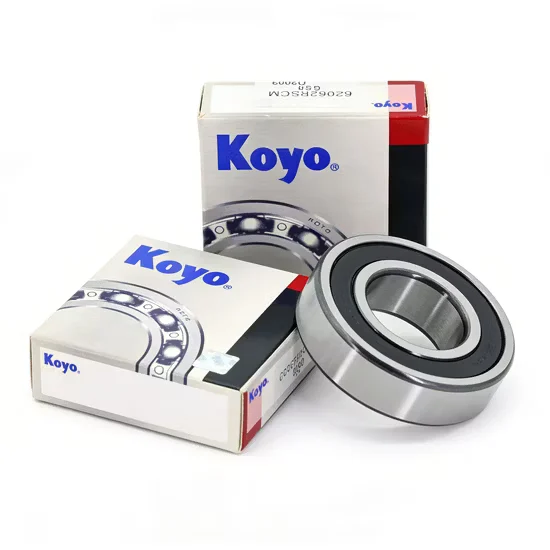
Deep Groove Ball Bearings
Koyo 6003 6205 6301 6004 Sealed Deep Groove Ball Bearing for Automotive Aftermarket
View Product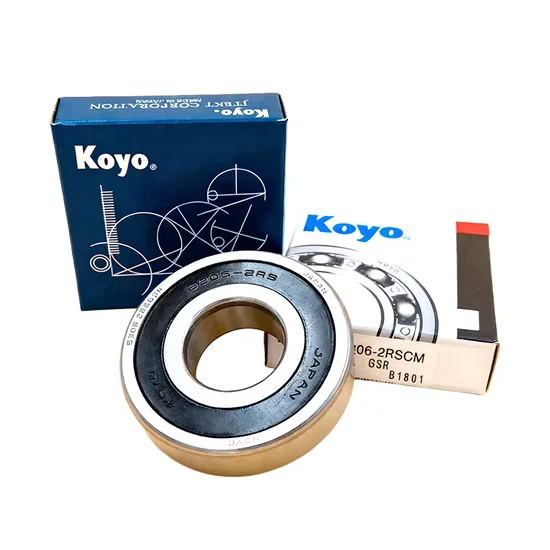
Deep Groove Ball Bearings
6203/6204/6205 Deep Groove Ball Bearing for Generator Equipment
View Product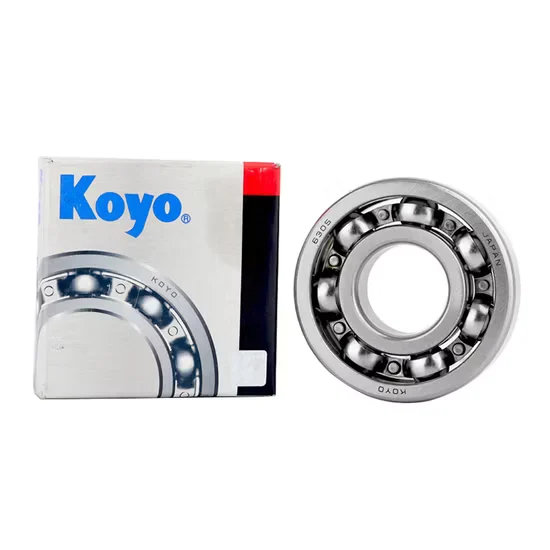
Deep Groove Ball Bearings
KOYO Deep Groove Ball Bearings 6201 6202 6203 6204 6205 Zz 2RS C3
View Product
Tapered Roller Bearings
Genuine KOYO 32007 Tapered Roller Bearing Wholesale Supplier
View ProductKeep reading
More bearing selection guides for repair shops
Practical guides from KOYO Bearing Supplier on identifying Koyo / JTEKT bearings for farm machinery, construction equipment and power transmission repairs.
Procurement & Trade FAQs · 7 min read
Rebuild Kit Supply for Transmission Shops: Wholesale Bearing Supplier
Transmission rebuild kit supply depends on accurate HS codes and detailed BOMs to prevent customs delays. Learn how mixed bearing consolidation and robust packaging…
Read the Guide Procurement & Trade FAQs
· 7 min read
Genuine Bearing Stock Programs for Motorcycle Dealers: Wholesale Supplier
Optimize Motorcycle Dealer Stock Programs by balancing cross-brand bearing equivalency, genuine traceability, and flexible MOQs to prevent costly warranty claims. Verify dimensional tolerance and…
Read the Guide Procurement & Trade FAQs · 7 min read
Express Shipping for Urgent Bearing Repairs: Global Wholesale Supplier
Master express shipping for urgent bearing replacements by prioritizing customs clearance over flight speed to eliminate port bottlenecks. Optimize volumetric weight, consolidate mixed-brand orders,…
Read the Guide
Bearing enquiry
Send your machine details. Get a written Koyo / JTEKT quote.
KOYO Bearing Supplier quotes a single bearing position or every bearing in an assembly on one enquiry, matched to your machine model and application, with model, quantity, price, lead time and quote validity in writing.
- WhatsApp+1 (702) 981-5880
- Emailinfo@koyoome.com
- Address8 Research Drive, Greenville, SC 20627, USA
"When a Koyo bearing failed on a harvest machine during the season, we needed a replacement urgently. The supplier identified the correct Koyo reference, shipped same-day, and the machine was back in the field within the day."

Request a Bearing Quote
Tell us the machine and the bearing position. Photos of the markings can follow on WhatsApp.