
EPS Bearings Wholesale Supplier: Genuine SKF, NSK, FAG for Bulk
Standard grease is not enough for electric power steering.
Sourcing bearings in Electric Power Steering systems requires strict adherence to application-specific tolerances, anti-corrosion packaging protocols, and genuine traceability to prevent critical steering failures. The core challenge lies not just in finding the right part number, but in ensuring the component survives transit without micro-pitting and performs with the low-friction characteristics demanded by torque sensors.
I still remember the chill of a Chicago winter during an agricultural machinery exhibition. A Midwest buyer had consolidated a mixed container of deep-groove ball bearings from different batches to save on freight. I was young and eager to close the deal, so I focused on the paperwork but neglected the humidity control inside the container. When the goods arrived at his warehouse, several boxes showed floating rust on the outer rings. The buyer was furious. We spent the night generating failure reports and arranging replacements at our own cost to save the relationship. That incident changed how I view logistics. Now, even for a single pallet of loose stock, I insist on verifying the direction and thickness of the anti-rust film. Original premium brands cannot withstand careless handling.
This experience underscores why distributors and OEMs must look beyond simple part matching. When you source bearings in Electric Power Steering applications, you are dealing with components that define vehicle safety and driver feel. The margin for error is nonexistent.
Why Are Bearings Critical in EPS Systems?
EPS relies on low-friction bearings for precise torque sensing and smooth motor assist.
In traditional hydraulic systems, mechanical linkage dominated the steering feel. In Electric Power Steering, the bearing is no longer just a support element; it is a signal transducer. The torque sensor, which detects the driver’s intent, often integrates directly with the steering column bearings. If these bearings have high internal friction or inconsistent preload, the sensor reads false torque values. This leads to erratic assist levels, causing the steering to feel stiff or overly sensitive.
Most buyers assume that any standard automotive bearing will work. This is a dangerous misconception. EPS bearings require specialized low-torque grease and precise clearance classes. Standard grease can be too viscous, creating drag that mimics mechanical binding. During my early years in sourcing, I saw a batch of generic bearings installed in a pilot EPS unit. The vehicles passed initial static tests but failed dynamic road tests due to noticeable stiffness at low speeds. The root cause was not the bearing geometry, but the lubricant’s resistance at operating temperatures.
When selecting bearings in Electric Power Steering systems, you must prioritize the interaction between the rolling elements and the lubricant. The bearing must allow the motor to assist seamlessly without introducing hysteresis. This is why premium brands like SKF, NSK, and FAG engineer specific variants for steering applications. They control the surface finish of the raceways to minimize friction while maintaining load capacity. For a distributor, understanding this nuance separates a successful supply chain from one plagued by warranty claims.
How to Select the Right EPS Bearings?
Match bearing types like deep-groove ball or needle bearings to specific EPS locations.
An EPS system is not a monolith; it consists of the column, the pinion, and the motor. Each location has distinct mechanical demands. Using a one-size-fits-all approach leads to premature wear. I once consulted for a repair group in Southeast Asia that was experiencing high noise complaints. Upon inspection, we found they were using standard radial bearings in the pinion area, where axial loads from gear meshing were significant. The correct solution involved angular contact or specialized needle bearings designed to handle combined loads.
To simplify selection, consider the following functional mapping:
| EPS Location | Primary Load Type | Recommended Bearing Type | Key Performance Requirement |
|---|---|---|---|
| Steering Column | Radial + Moderate Axial | Deep-Groove Ball Bearing | Low noise, consistent preload |
| Pinion Gear | Combined Radial/Axial | Angular Contact or Needle Bearing | High rigidity, gear mesh stability |
| Assist Motor | High Speed, Low Load | Precision Deep-Groove Ball Bearing | Low friction, high-speed capability |
Selecting bearings in Electric Power Steering systems requires cross-referencing these functional needs with manufacturer specifications. It is not enough to match the dimensions. You must verify the internal clearance and the cage material. Polymer cages are often preferred in motor applications for their lightweight and self-lubricating properties, whereas steel cages might be suitable for high-load pinion areas.
A common pitfall is ignoring the thermal environment. The motor bearing operates at higher temperatures than the column bearing. If you source a bearing with a standard grease limit for a motor application, the lubricant will degrade, leading to increased friction and eventual seizure. Always check the temperature rating of the lubricant alongside the bearing type. This level of detail is what prevents field failures and builds trust with your end-users.
What Packaging Prevents Transit Damage?
Strict anti-rust protocols and VCI wrapping are mandatory for mixed-container shipments.
Transit rust is often dismissed as cosmetic, but in precision steering components, it is catastrophic. Micro-pitting from moisture exposure ruins the smooth surface required for torque sensor precision. Once the raceway is pitted, the bearing will never run smoothly, regardless of how well it is lubricated later.
During the Chicago incident, the rust was visible to the naked eye. However, in many cases, the damage is microscopic until the bearing is installed and rotated. This is why I now enforce strict rules for consolidation. When mixing brands like FAG, NSK, and SKF in one container, the packaging standards must meet the highest common denominator. Volatile Corrosion Inhibitor (VCI) paper is not optional; it is essential. The thickness and placement of the VCI film matter. It must completely envelop the bearing, with no gaps where humid air can penetrate.
Humidity control during ocean freight is another critical factor. A container traveling from Asia to South America passes through various climate zones. Condensation forms when temperatures drop at night. Without proper desiccants and vapor barriers, this moisture settles on the metal surfaces. I recommend using desiccant bags calculated based on the container volume and voyage duration. Furthermore, the direction of the VCI film matters. The active side must face the bearing, not the cardboard box.
When you source bearings in Electric Power Steering systems, ask your supplier about their packaging protocol. Do they use double-layer VCI wrapping? Do they include humidity indicator cards in the boxes? These questions reveal whether the supplier understands the fragility of precision components. A supplier who cuts corners on packaging will likely cut corners on quality verification.
How to Verify Quality and Avoid Failures?
Demand traceability docs and conduct failure analysis to spot counterfeits or moisture damage.
Counterfeit bearings are a persistent threat in the aftermarket. They may look identical to genuine SKF or NSK products but lack the metallurgical quality and precision grinding. Installing a counterfeit bearing in an EPS system can lead to sudden failure, posing a severe safety risk. Verification starts with documentation. Genuine products come with batch numbers that can be traced back to the manufacturing facility.
I advise distributors to implement a simple incoming inspection routine. Check the laser etching on the bearing ring. Genuine brands use high-precision lasers that create clean, sharp marks. Counterfeits often have fuzzy or uneven etching. Additionally, inspect the packaging box. Premium brands use high-quality cardboard with specific printing techniques that are difficult to replicate.
Failure analysis is also a powerful tool. If a customer returns a failed bearing, do not just replace it. Examine the failure mode. Is there evidence of electrical erosion? This suggests improper grounding in the vehicle. Is there uniform wear? This indicates misalignment. Is there pitting? This points to moisture ingress during transit or storage. By analyzing the failure, you can identify systemic issues in your supply chain or provide valuable technical feedback to your customers.
Sourcing bearings in Electric Power Steering systems is not just about buying parts; it is about managing risk. By demanding traceability and understanding failure modes, you protect your reputation and ensure the safety of the end-user. This proactive approach distinguishes professional suppliers from mere traders.
Conclusion
Precision, protection, and proof define reliable EPS bearing sourcing.
Success in this niche depends on recognizing that bearings in Electric Power Steering are high-precision safety components, not commodity items. From selecting the correct low-friction type for torque sensors to enforcing rigorous VCI packaging standards, every step impacts performance. Trust is built through transparency in traceability and a deep understanding of how these components fail. By prioritizing genuine quality and robust logistics, suppliers can deliver value that goes far beyond the price per unit.
Mentioned in this article
Koyo / JTEKT bearings from this guide
These are the Koyo / JTEKT bearing types discussed above. Open any product to check its details, or quote it together with the rest of your repair.
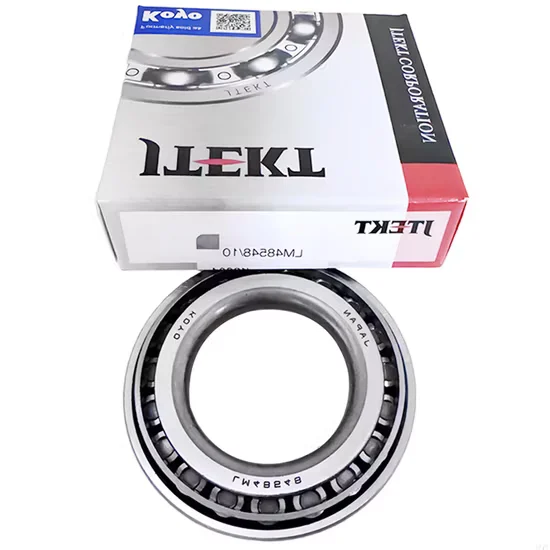
Tapered Roller Bearings
Genuine KOYO 32007 Tapered Roller Bearing Wholesale Supplier
View Product
Tapered Roller Bearings
Genuine KOYO 32006 Taper Roller Bearing Wholesale Supplier
View Product
Cylindrical Roller Bearings
Koyo NSK N408e Cylindrical Roller Bearing Genuine Wholesale Supplier
View Product
Cylindrical Roller Bearings
Koyo N2305e Cylindrical Roller Bearing Genuine Wholesale Supplier
View ProductKeep reading
More bearing selection guides for repair shops
Practical guides from KOYO Bearing Supplier on identifying Koyo / JTEKT bearings for farm machinery, construction equipment and power transmission repairs.
Applications & Industries · 7 min read
Small Engine Crankshaft Bearings Wholesale Supplier
Selecting the correct Bearings in Small Engine Crankshafts requires strict clearance matching and material verification rather than simple part number lookup. Standard units often…
Read the Guide Applications & Industries · 7 min read
Forklift Mast Bearings Wholesale Supplier | Genuine SKF FAG NSK Bulk
Selecting forklift mast bearings requires matching groove profiles and clearances to harsh environments to prevent premature seizure. Sourcing only genuine SKF, FAG, and NSK…
Read the Guide Applications & Industries · 6 min read
Outboard Lower Unit Bearings Wholesale Supplier
Prevent catastrophic gearcase failures by selecting Bearings in Outboard Lower Units that balance high-speed load capacity with strict corrosion resistance. Learn why standard tapered…
Read the Guide
Bearing enquiry
Send your machine details. Get a written Koyo / JTEKT quote.
KOYO Bearing Supplier quotes a single bearing position or every bearing in an assembly on one enquiry, matched to your machine model and application, with model, quantity, price, lead time and quote validity in writing.
- WhatsApp+1 (702) 981-5880
- Emailinfo@koyoome.com
- Address8 Research Drive, Greenville, SC 20627, USA
"When a Koyo bearing failed on a harvest machine during the season, we needed a replacement urgently. The supplier identified the correct Koyo reference, shipped same-day, and the machine was back in the field within the day."

Request a Bearing Quote
Tell us the machine and the bearing position. Photos of the markings can follow on WhatsApp.