Auto Bearing Prices: OE vs Aftermarket Wholesale Supplier
The cheapest quote on your spreadsheet is often the most expensive line item in your P&L.
When evaluating Auto Bearing Prices: OE vs Aftermarket Wholesale Supplier options, the initial unit cost difference is misleading. The true metric for procurement decisions is the Total Cost of Ownership (TCO), which aggregates upfront pricing, failure rates, warranty claims, and reverse logistics expenses. For distributors and fleet operators, selecting aftermarket components based solely on low entry prices frequently results in net losses due to premature fatigue failures and reputational damage, whereas strategic sourcing of genuine OE bearings through consolidated channels can neutralize the price gap while securing reliability.
I still remember the smell of burnt grease and the silence in the workshop when a batch of hub assemblies failed simultaneously. It was not a manufacturing defect in the traditional sense, but a material purity issue that only revealed itself under sustained heavy loads. Standing by the docks in Ningbo later, watching containers of those same bearings being returned, I realized that the freight cost for the return shipment exceeded the original cargo value. This was not an isolated incident but a systemic miscalculation of risk. Many buyers focus exclusively on the invoice price, ignoring the hidden volatility of supply chains that lack traceability.
Understanding this dynamic requires looking beyond the sticker price. The market is flooded with components that look identical to the naked eye but differ fundamentally in metallurgical integrity. To make informed decisions, one must dissect the structural differences that dictate performance and calculate the real financial exposure of each sourcing strategy.
What is the real price difference between OE and aftermarket bearings?
Upfront unit price is a static number; total lifecycle cost is a dynamic variable that determines actual profitability.
The visible gap between Original Equipment (OE) and aftermarket bearing prices often ranges from moderate to significant, depending on the brand tier. However, this differential shrinks or even reverses when factoring in the cost of failure. OE bearings are manufactured to strict dimensional tolerances and material specifications defined by the vehicle or machinery manufacturer. Aftermarket products vary wildly, from premium equivalents that meet or exceed OE standards to budget options that compromise on steel cleanliness and heat treatment consistency.
Consider the procurement process for a regional distributor. A budget aftermarket wheel bearing might cost thirty percent less than its OE counterpart. If the failure rate remains within acceptable limits, the savings are real. But if the failure rate spikes, the cost structure collapses. Each failed unit triggers a warranty claim, which involves labor hours for removal and installation, administrative processing, and potentially compensation for customer downtime. In heavy-duty applications, a single bearing failure can halt an entire production line or immobilize a commercial fleet vehicle, generating losses that dwarf the initial savings.
| Cost Component | OE Bearing Sourcing | Budget Aftermarket Sourcing |
|---|---|---|
| Upfront Unit Price | Higher | Lower |
| Material Traceability | Full Batch-Level | Often None or Self-Reported |
| Failure Rate Risk | Low | Variable to High |
| Warranty Administration | Standardized | Complex and Disputed |
| Reverse Logistics | Minimal | Significant Burden |
| Reputation Impact | Positive/Neutral | Negative if Failures Occur |
A South American buyer once sourced a large volume of hub bearings from a low-cost supplier. The initial savings were substantial on paper. Within months, workshops reported widespread noise issues and premature wear. The return freight alone consumed the entire profit margin of the order, and the buyer had to absorb the cost of replacing the units with genuine parts to retain client trust. This case illustrates that Auto Bearing Prices: OE vs Aftermarket Wholesale Supplier comparisons must include the probability of failure. When you buy cheap, you are effectively self-insuring against quality risks, and the premium for that insurance is often higher than the price difference.
How do manufacturing differences affect bearing lifespan?
Material purity and heat treatment precision dictate fatigue life, not just the brand name on the box.
The core differentiator between high-quality OE bearings and inferior aftermarket alternatives lies in the metallurgy. Bearing steel must be exceptionally clean, with minimal non-metallic inclusions that can act as stress concentrators. Under heavy loads, these microscopic impurities initiate cracks that propagate through the raceway, leading to spalling and eventual catastrophic failure. Premium manufacturers use vacuum degassing and controlled cooling processes to achieve consistent microstructures.
Heat treatment is equally critical. The hardness profile must be uniform throughout the component to resist deformation. Inconsistent heat treatment can leave soft spots that wear rapidly or create brittle zones prone to cracking. OE suppliers maintain rigorous control over these parameters, ensuring batch-to-batch consistency. Aftermarket producers, particularly those targeting the lowest price segment, may cut corners by using lower-grade steel or skipping essential tempering steps to reduce energy costs.
A fleet maintenance manager in the mining sector observed that trucks equipped with premium OE bearings ran substantially longer between service intervals compared to those fitted with budget alternatives. The difference was not marginal; it was enough to alter the entire maintenance schedule. The OE units maintained their preload and smoothness under extreme vibration and load cycles, while the aftermarket units developed play and noise much earlier. This disparity underscores why technical specifications matter more than marketing claims. When evaluating Auto Bearing Prices: OE vs Aftermarket Wholesale Supplier options, asking for material certificates and heat treatment logs is not bureaucratic overhead; it is a necessary due diligence step.
What are the hidden costs of choosing cheap aftermarket bearings?
Return freight, warranty disputes, and brand erosion often outweigh the initial purchase savings.
The allure of low-priced aftermarket bearings is strong, especially in competitive markets where price sensitivity is high. However, the hidden costs emerge quickly once the products enter the field. Warranty claims are not just administrative tasks; they are resource drains. Processing a claim involves verifying the failure mode, determining liability, and arranging replacements. If the supplier is unresponsive or disputes the claim, the buyer is left holding the bag.
Labor costs are another significant factor. In many regions, the cost of skilled labor to replace a bearing far exceeds the price of the bearing itself. If a cheap bearing fails prematurely, the customer pays for the labor twice. This leads to dissatisfaction and churn. Workshops begin to distrust the distributor’s recommendations, shifting their purchases to competitors who offer more reliable products. The loss of customer lifetime value is difficult to quantify but devastating to long-term business health.
A European repair group noted a sharp increase in customer complaints after switching to a cheaper bearing source. The noise levels were unacceptable, leading to repeated comebacks. The labor compensation paid to technicians for rework eroded the margins gained from the lower procurement cost. Furthermore, the reputation of the repair group suffered, as customers perceived the work as substandard. This scenario highlights that Auto Bearing Prices: OE vs Aftermarket Wholesale Supplier decisions have ripple effects across the entire value chain. The cheapest option often carries the highest risk of operational disruption.
How to source genuine OE bearings at competitive prices?
Consolidated global sourcing from authorized suppliers balances cost efficiency with authenticity assurance.
The misconception that OE bearings are always prohibitively expensive stems from fragmented purchasing habits. Buying small quantities from local distributors incurs multiple layers of markup. By consolidating demand and sourcing directly from global suppliers with access to primary markets, buyers can secure OE quality at prices that compete with premium aftermarket lines. This approach requires leveraging volume and building long-term relationships with suppliers who prioritize traceability.
Key strategies include mixing brands and sizes in container loads to optimize shipping costs and negotiating based on total annual volume rather than single-order quantity. Suppliers with extensive spot inventory and multi-brand portfolios can offer flexibility, allowing buyers to source SKF, FAG, NSK, TIMKEN, and other premium brands in a single shipment. This reduces administrative complexity and ensures that all components meet genuine standards.
Traceability is non-negotiable. Genuine OE bearings come with complete documentation, including batch numbers and origin certificates. This protects the buyer from counterfeit risks and simplifies warranty processes. A professional supplier acts as a gatekeeper, vetting sources and ensuring that every unit shipped is authentic. This level of security is worth the slight premium over unverified channels, as it eliminates the risk of receiving fake or refurbished parts sold as new.
For distributors and large fleets, partnering with a supplier who offers technical support and cross-reference services adds further value. Accurate model selection prevents installation errors and ensures optimal performance. When analyzing Auto Bearing Prices: OE vs Aftermarket Wholesale Supplier options, consider the supplier’s ability to provide this holistic support. It transforms the transaction from a simple commodity purchase into a strategic partnership that enhances operational reliability.
Conclusion
Price is what you pay; value is what you get.
Choosing between OE and aftermarket bearings is not a binary decision based on sticker price. It is a strategic calculation of risk, reliability, and total lifecycle cost. While budget aftermarket options may offer short-term cash flow relief, they often introduce significant hidden expenses through failures and warranty claims. Genuine OE bearings, sourced through consolidated and authorized channels, provide the stability and performance required for demanding applications. By focusing on TCO and prioritizing traceability, buyers can secure the best balance of cost and quality, ensuring long-term profitability and customer satisfaction.
Mentioned in this article
Koyo / JTEKT bearings from this guide
These are the Koyo / JTEKT bearing types discussed above. Open any product to check its details, or quote it together with the rest of your repair.

Tapered Roller Bearings
P5 Koyo 33010 30211 33110 32307 33208 Tapered Roller Bearing for Motor Auto Pump
View Product
Tapered Roller Bearings
Jtekt Koyo Tapered Roller Bearing 32010 30302 30303 30304 30305 30306 for Auto Parts
View Product
Railway Bearings
X&S 30304 30306 30307 Tapered Roller Bearings for Railway Axle Auto Parts
View Product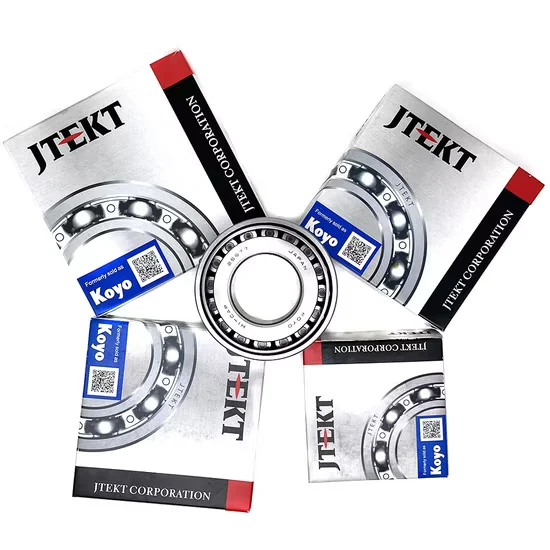
Tapered Roller Bearings
Koyo Tapered Roller Bearing 30203 30204 30205 30206 30207 for Auto Parts Wholesale
View ProductKeep reading
More bearing selection guides for repair shops
Practical guides from KOYO Bearing Supplier on identifying Koyo / JTEKT bearings for farm machinery, construction equipment and power transmission repairs.
Buying Guide · 7 min read
Koyo Auto Bearings Wholesale Supplier & Bulk Quote
Request a Quote for Koyo Auto Bearings that accounts for total landed cost, not just FOB price. Optimize margins through mixed-container consolidation and ensure…
Read the Guide Buying Guide · 7 min read
Koyo Auto Bearings Wholesale Supplier for Parts Stores
Stocking Koyo auto bearings requires strict verification of suffix codes and traceability to prevent costly assembly failures. Learn essential packaging checks and cross-brand alternatives…
Read the Guide Buying Guide · 7 min read
Fake Auto Bearings: Neutral Buyer Checks Wholesale Supplier
Master Fake Auto Bearings Neutral Buyer Checks by shifting focus from packaging to internal physical inspections and traceability. Detect counterfeits through acidic rust oil…
Read the Guide
Bearing enquiry
Send your machine details. Get a written Koyo / JTEKT quote.
KOYO Bearing Supplier quotes a single bearing position or every bearing in an assembly on one enquiry, matched to your machine model and application, with model, quantity, price, lead time and quote validity in writing.
- WhatsApp+1 (702) 981-5880
- Emailinfo@koyoome.com
- Address8 Research Drive, Greenville, SC 20627, USA
"When a Koyo bearing failed on a harvest machine during the season, we needed a replacement urgently. The supplier identified the correct Koyo reference, shipped same-day, and the machine was back in the field within the day."

Request a Bearing Quote
Tell us the machine and the bearing position. Photos of the markings can follow on WhatsApp.